


How to Evaluate Polyvinyl Chloride Grades for Pipes, Cables, and Film Production
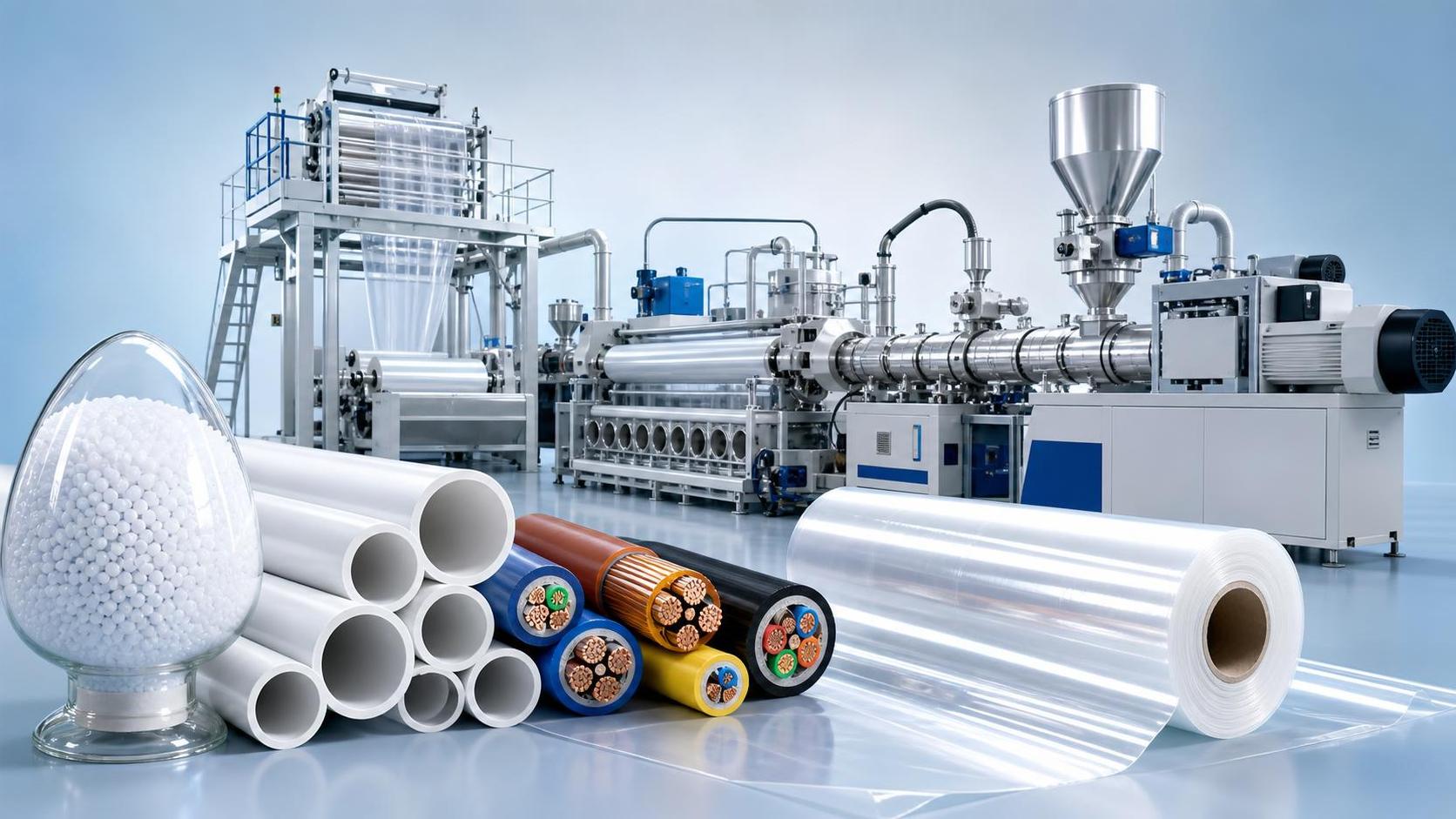
How to Evaluate Polyvinyl Chloride Grades for Pipes, Cables, and Film Production
Selecting a Polyvinyl chloride grade sounds straightforward until the same resin has to behave well in three very different factories. A pipe producer wants stiffness, pressure resistance, and consistent extrusion. A cable compounder worries more about electrical performance, plasticizer compatibility, and thermal aging. A film line often cares about clarity, gel count, seal behavior, and gauge stability. The resin sits at the center of all of that, but resin selection is rarely just a matter of reading one data sheet and choosing the cheapest line item.
In practice, technical evaluation is a balancing exercise between molecular structure, processing window, formulation freedom, regulatory needs, and supply reliability. That is where many sourcing discussions become too simplistic. A grade that runs beautifully on one line can create fusion instability, fisheyes, or brittle finished goods on another. The right decision usually comes from understanding how the PVC grade interacts with the full formulation and the actual process conditions rather than looking at one index in isolation.
For teams evaluating materials across regions, the supply side also matters. Companies active in chemical raw materials and global trade, such as Luxi Chemical (Shandong) Co., Ltd., are often involved not only in product supply but in coordinating compliant product categories, documentation, and shipment stability across multiple markets. That matters because a technically suitable grade still becomes a problem if lot-to-lot consistency or paperwork cannot support the project.
Start with the application, not the resin name
PVC grades are commonly discussed through K-value, viscosity, bulk density, porosity, and particle size distribution. Those are useful, but the evaluation should begin with end-use demands. For rigid pressure pipes, the resin needs to support high mechanical strength and stable fusion behavior, often in formulations with low or no plasticizer. For cable compounds, especially flexible types, resin absorption characteristics and compatibility with plasticizers and stabilizer systems become more relevant. Film production adds another layer: surface quality, transparency, low defect frequency, and smooth behavior on calendering or blown film equipment.
This is the first practical filter: decide whether the job is rigid or flexible, pressure-bearing or cosmetic, insulation-focused or packaging-focused. Too many evaluations skip this and compare grades from different application families as if they were interchangeable. They usually are not.
Why K-value and molecular weight still matter so much
For most evaluators, K-value is the quickest shorthand for resin molecular weight and, by extension, mechanical performance and processing behavior. Higher K-values generally point toward higher molecular weight, which can help strength-related applications, but they also tend to increase melt viscosity and make processing less forgiving. Lower K-values are often easier to process and can support smoother surface finish in some flexible or film applications, though they may not provide the same rigidity or impact profile required for demanding pipe uses.
That does not mean “higher is better” for pipes and “lower is better” for film. The practical question is whether the grade matches your machine energy input and formulation strategy. A high molecular weight suspension PVC may look attractive on paper for pipe, but if the extrusion line struggles with fusion control, output and quality can both suffer. On the other hand, a film line using a grade that gels too aggressively may fight haze, die buildup, or unstable thickness.
When resin suppliers share a technical range rather than a single value, that range deserves attention. Broad variation can translate into wider process adjustments from lot to lot. In stable production environments, narrow consistency often matters more than chasing a nominal “best” specification.
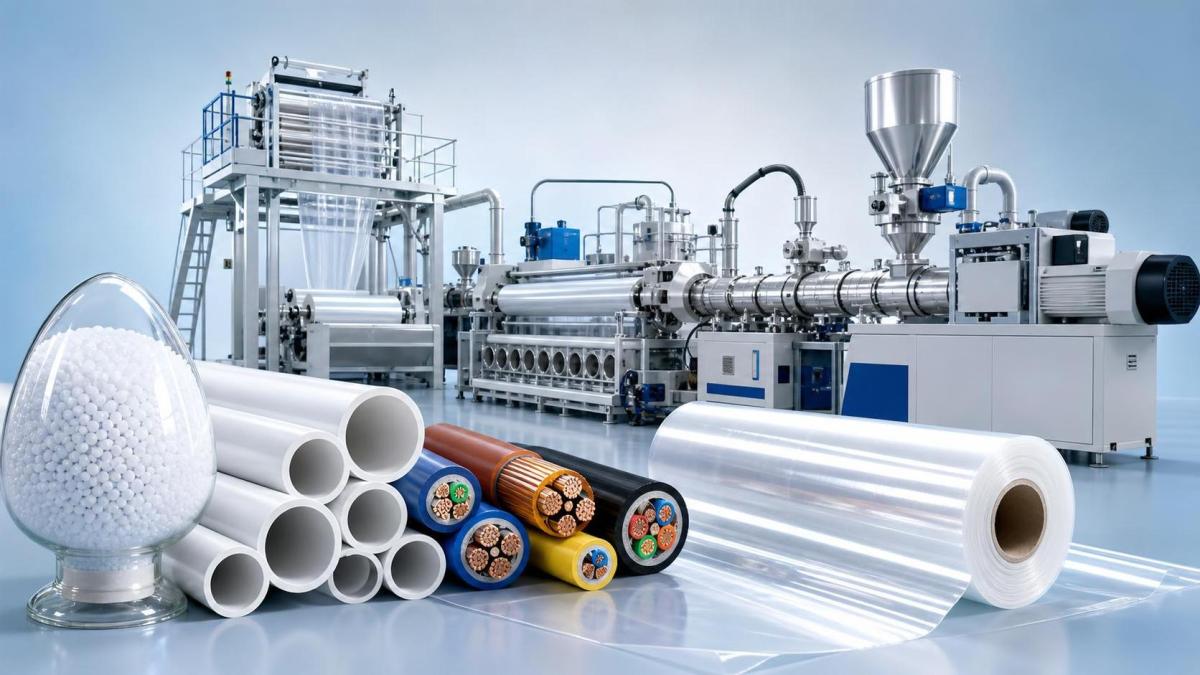
The less visible properties that often decide success
A lot of production issues come from properties that are less prominent in sales summaries. Bulk density affects feeding behavior and throughput. Porosity influences plasticizer absorption, especially in cable and flexible film formulations. Residual volatiles can matter in odor-sensitive or appearance-sensitive products. Particle morphology has a real effect on dry blending, fusion speed, and final surface quality.
This is where lab evaluation should imitate real processing as closely as possible. A resin may pass a simple compound test but still create problems at commercial line speed. For cable compounds, slow absorption can leave unincorporated plasticizer or require longer mixing cycles. For film, poor particle characteristics may show up as gels or visual defects only after scale-up. For rigid extrusion, inconsistent particle structure may narrow the processing window enough that normal shop-floor fluctuations start causing reject rates.
It is also worth checking how the PVC interacts with the full additive package. Thermal stabilizers, lubricants, impact modifiers, fillers, and processing aids all shift the behavior of the same base resin. In some systems, changing the PVC grade is more efficient than repeatedly adjusting additives to force an unsuitable resin to work.
How the evaluation criteria differ by application
The table looks tidy, but actual projects rarely are. Pipe producers may need impact toughness in cold environments. Cable manufacturers may be dealing with flame-retardant systems that change viscosity and aging behavior. Film users may prioritize printability or seal performance over maximum transparency. That is why the first trial should test the most failure-sensitive property, not just general processability.
Compliance and end-market standards cannot be checked later
A technical grade that performs well in the plant may still be unusable if it does not fit the destination market. Pipe applications may need alignment with local drinking water or infrastructure requirements. Cable compounds may face restrictions linked to heavy metals, fire performance systems, or customer-specific environmental lists. Film applications, especially in packaging or consumer-facing products, can involve tighter scrutiny around additives and migration-related issues, depending on the market and structure.
The resin itself is only one piece of compliance, but it is a foundational one. Evaluators should request technical data sheets, safety documentation, and where relevant, statements on restricted substances early in the sourcing process. Waiting until commercial approval to ask for these documents often delays qualification.
This is also where broad chemical sourcing experience can help. Suppliers serving many industries and export destinations usually understand that “acceptable” in one market may not be acceptable in another. The same procurement team may be buying food additives, intermediates, fertilizers, and polymer-related materials across different jurisdictions; documentation discipline becomes part of technical risk control, not just purchasing admin.
Run trials like a production engineer, not like a catalog reader
A useful PVC trial is designed to answer specific decision questions. Can the grade maintain stable torque? Does it need more lubricant than the current material? How sensitive is it to temperature drift? Does the finished product pass the internal quality checks that matter commercially?
A practical approach is to hold the additive package as steady as possible in the first comparison and change only the resin. If performance is close but not ideal, a second-round formulation adjustment can reveal whether the new grade has workable compatibility. If the resin needs major additive changes just to become processable, that is already a signal about total cost and operational risk.
Sometimes evaluators also compare adjacent materials used elsewhere in the plant. For example, a team working with coatings or laminates may already source materials such as Resin epoxy CAS#24969-06-0 for unrelated process streams. That does not make epoxy a substitute for PVC, of course, but it is a reminder that cross-functional purchasing often benefits from a supplier base that can support more than one chemistry family while keeping documentation and logistics manageable.
Common mistakes in grade evaluation
One common mistake is treating a supplier’s “equivalent grade” claim as sufficient proof. Equivalent usually means similar positioning, not guaranteed identical behavior. Another is optimizing only raw material price. Lower resin cost can disappear quickly if output drops, scrap rises, or mixing cycles become longer. This is especially true in cable compounding and film production, where visual and processing defects are expensive.
A subtler mistake is ignoring supply continuity. A good qualification result has limited value if the grade is only sporadically available, or if there is weak control over lot consistency. For global buyers, port timing, packaging condition, and export document accuracy can influence plant performance more than expected. Moisture pickup, damaged bags, or delayed clearance can turn a technically approved material into a scheduling problem.
What a sound decision usually looks like
A sound selection decision usually comes down to three aligned results. The resin fits the end-use requirements. It runs on the actual equipment without heroic adjustments. And it can be supplied with stable quality and the right paperwork for the target market. If one of those three is weak, the decision is not finished yet.
For pipes, that often means favoring grades with predictable fusion and mechanical balance over grades that merely advertise high strength potential. For cables, it means checking absorption behavior and long-term compound stability rather than judging by softness alone. For film, it means watching defects and processing smoothness closely, because appearance issues tend to expose resin mismatch very quickly.
If you are narrowing down suppliers, ask for representative lot data, not just a brochure. Review the resin together with your stabilizer and additive suppliers if needed. And before approving a new Polyvinyl chloride grade for full-scale use, make sure the trial conditions reflect your real line speed, your real formulation, and your real customer requirements. That is usually where the right answer becomes obvious.
Related Picks
 Butylated Hydroxytoluene Price Drivers: Supply, Purity, and Purchasing Risk FactorsOct 21, 2026Butylated Hydroxytoluene price trends depend on supply stability, purity, logistics, and purchasing risk. Learn how to compare quotes wisely and reduce sourcing costs.
 Sodium Tripolyphosphate Price Trends: Raw Material and Energy ExposureOct 20, 2026Explore sodium tripolyphosphate price trends, from phosphate and soda ash costs to energy exposure. Learn how to compare quotes, manage sourcing risks, and make smarter purchasing decisions.
 Acetonitrile Shipment to Vietnam Successfully Dispatched; RCEP Benefits Boost Fine Chemical Trade with ASEANSep 16, 2026A shipment of industrial-grade acetonitrile from our company has recently been loaded and dispatched following the completion of standardized hazardous material packaging and container securing procedures.
 Nigerian Client’s Order of 4 Containers of Vinyl Acetate Successfully Loaded and Shipped to West AfricaSep 16, 2026We recently completed the loading of a vinyl acetate order for a Nigerian client; four containers of the product have been successfully packed and are ready for shipment to Nigeria.




Question Consultation
Send Us Your Inquiry Today

Luxi Chemical is a professional chemical product supplier with ample stock of all chemical categories and excellent quality, welcome your purchase inquiry.

