


How to Evaluate a Citric Acid Manufacturer: 7 Technical & Compliance Criteria Buyers Overlook
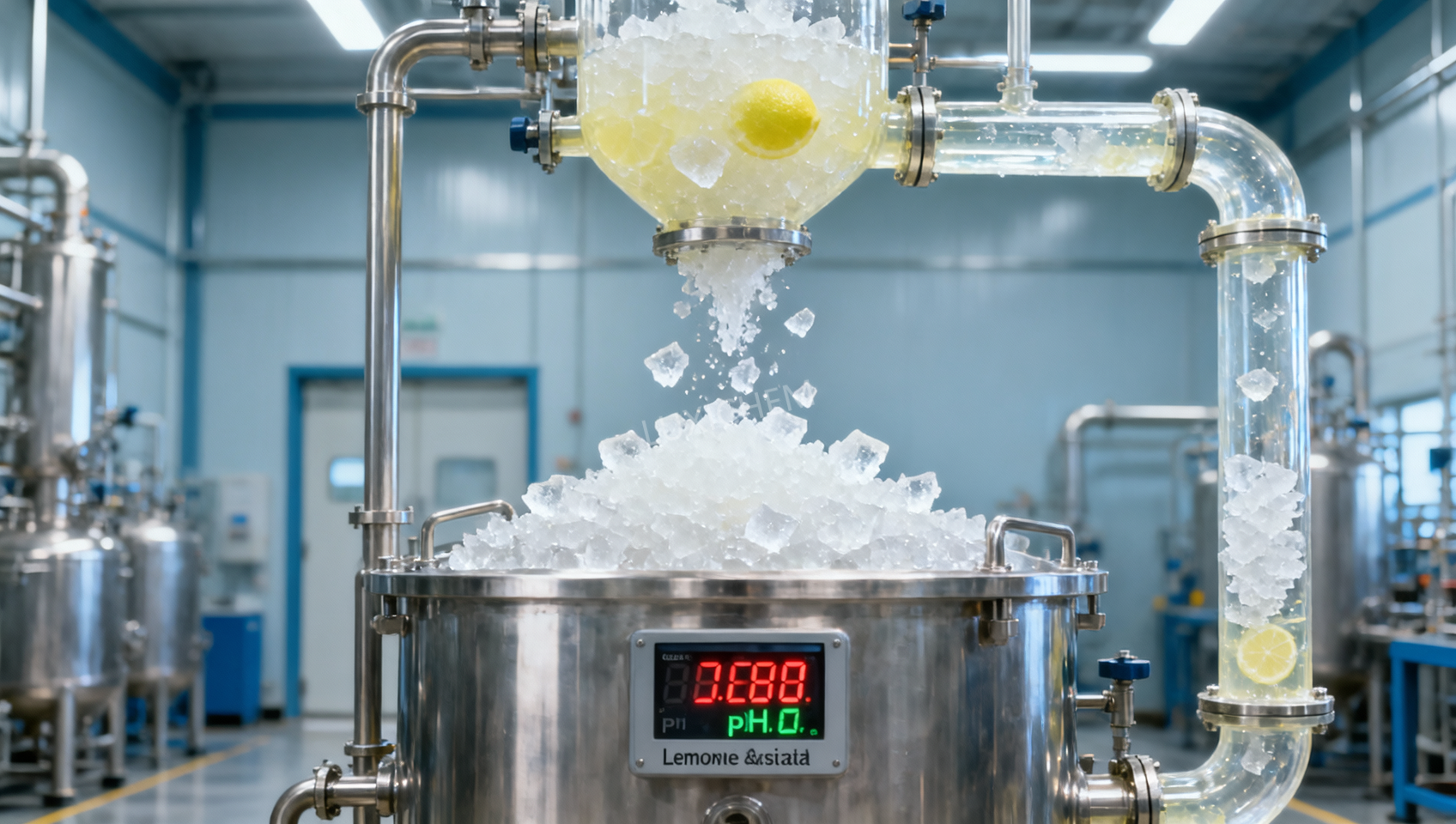
Choosing the right citric acid manufacturer isn’t a line-item cost exercise—it’s a technical and compliance risk assessment disguised as procurement. When your production line depends on consistent pH control, chelation performance, or microbial safety across batches, a 5% price difference becomes irrelevant if the supplier lacks traceable heavy metal testing, GMP-aligned process controls, or regulatory alignment for your target markets. Procurement professionals often focus on MOQ, lead time, and COA format—while overlooking criteria that directly determine whether citric acid will perform as expected in food emulsions, fertilizer blends, or pharmaceutical excipient systems.
This guide identifies seven evaluation criteria routinely missed during supplier vetting—each tied to measurable technical capability or verifiable compliance evidence—not marketing claims. These aren’t theoretical benchmarks. They’re the thresholds that separate suppliers who can ship compliant material on schedule from those whose documentation gaps trigger customs holds, audit findings, or formulation failures months after contract signing.
1. Certification Scope Must Match Your Use Case—Not Just the Certificate Itself
A supplier may hold ISO 22000—but does the scope explicitly cover citric acid manufacturing (not just trading), and is it issued by an IAF-accredited body? More critically: does the certificate include the specific grade you require—food-grade, fertilizer-grade, or industrial-grade? Many auditors accept generic “chemical manufacturing” scopes, but regulators in the EU, Japan, and Saudi Arabia require product-specific scope statements. If your application involves direct food contact, verify that the FSSC 22000 or BRCGS certification includes Annex I compliance for food additives—not just general food safety management.
2. Heavy Metal Testing Isn’t Optional—It’s Batch-Specific & Method-Validated
Compliance with USP/EP limits for arsenic, lead, cadmium, and mercury requires more than a single annual test. Look for documented batch-level analysis using ICP-MS or AAS—not just “tested per specification.” Ask for method validation reports confirming detection limits meet ≤0.1 ppm for lead and ≤0.2 ppm for arsenic. Suppliers who only provide summary COAs without raw instrument data or LOD/LOQ statements increase your risk of non-conformance during third-party lab verification.
3. Crystalline Form Consistency Impacts Dissolution & Stability
Citric acid exists in monohydrate and anhydrous forms—with different hygroscopicity, flow characteristics, and solubility profiles. If your process relies on rapid dissolution in aqueous systems, inconsistent crystalline form between batches causes variability in mixing time, pH drift, and final product clarity. Request XRD reports—not just “conforms to USP”—to confirm phase purity. This matters especially when citric acid serves as a buffer in formulations where pH precision affects shelf life.
4. Residual Solvent Control Is Critical for Pharma & Cosmetics Applications
Manufacturing via fermentation followed by solvent-based crystallization introduces ethanol, methanol, or acetone residues. While GRAS status covers the compound itself, residual solvents fall under ICH Q3C guidelines. Verify that the supplier monitors and reports residual solvents at ≤5000 ppm (ethanol) or ≤3000 ppm (methanol)—with GC-FID or GC-MS confirmation—not just “meets internal standards.” This detail rarely appears on standard COAs but is mandatory for DMF submissions.
5. Traceability Extends Beyond Batch Numbers—It Includes Raw Material Origin
When citric acid is used in organic-certified fertilizers or non-GMO food products, sugar feedstock origin matters. Suppliers must document whether molasses or corn-derived glucose was used—and whether that source complies with NOP, COSMOS, or other relevant standards. A “non-GMO” claim on the final product means nothing without upstream chain-of-custody records for the carbon source.
6. Packaging Integrity Testing Data Should Be Provided—Not Assumed
Moisture uptake degrades citric acid’s flowability and increases caking risk—especially in tropical climates or long-haul shipping. Yet few buyers request accelerated stability data for packaging: e.g., water vapor transmission rate (WVTR) testing of multi-wall bags with polyethylene liners under 40°C/75% RH for 90 days. Without this, you’re relying on supplier assumptions—not empirical evidence—that the packaging prevents >0.5% moisture gain over transit.
7. Regulatory Support Documentation Must Be Actionable—Not Generic
A supplier claiming “global regulatory support” should provide country-specific documentation—not just a master dossier. For example: KSA SFDA registration numbers, ANVISA sanitary registration for Brazil, or MFDS notification documents for Korea. If your buyer needs a Certificate of Free Sale for Vietnam, confirm they issue it within 5 business days—and that it references your exact product code and batch range. Delays here stall customs clearance far longer than any MOQ negotiation saves.
These seven points reflect actual pain points observed across procurement cycles—not hypothetical risks. They surface during audits, when batches fail release testing, or when new markets reject shipments due to incomplete documentation. Luxi Chemical (Shandong) Co., Ltd., for instance, maintains separate production lines and QC protocols for food-grade versus fertilizer-grade citric acid, publishes full heavy metal chromatograms with every COA, and provides pre-submitted regulatory dossiers for 12 major export destinations—including verified MFDS notification files for Korean importers.
That same rigor applies across related chemical intermediates where functional consistency is non-negotiable. For applications requiring precise pH buffering, thermal stability, or flame-retardant synergy—such as in polymer composites or pharmaceutical antacid formulations—the choice of co-materials matters just as much. Aluminum hydroxide CAS#21645-51-2, for example, is frequently paired with citric acid in controlled-release systems due to its amphoteric nature and predictable slurry behavior at pH 8–9. Its insolubility, thermal conversion to alumina, and compatibility with acidic environments make it a functional complement—not just an additive.
Ultimately, evaluating a citric acid manufacturer comes down to verifying what’s documented—not what’s promised. It means requesting the XRD report before approving the first sample shipment. It means cross-checking the FSSC 22000 scope against your exact product grade. It means treating the COA not as a receipt, but as the first layer of your own quality system. When procurement decisions are grounded in verifiable technical evidence—not just price or reputation—you reduce supply chain friction before it begins.
Related Picks
 Butylated Hydroxytoluene Price Drivers: Supply, Purity, and Purchasing Risk FactorsOct 21, 2026Butylated Hydroxytoluene price trends depend on supply stability, purity, logistics, and purchasing risk. Learn how to compare quotes wisely and reduce sourcing costs.
 Sodium Tripolyphosphate Price Trends: Raw Material and Energy ExposureOct 20, 2026Explore sodium tripolyphosphate price trends, from phosphate and soda ash costs to energy exposure. Learn how to compare quotes, manage sourcing risks, and make smarter purchasing decisions.
 Acetonitrile Shipment to Vietnam Successfully Dispatched; RCEP Benefits Boost Fine Chemical Trade with ASEANSep 16, 2026A shipment of industrial-grade acetonitrile from our company has recently been loaded and dispatched following the completion of standardized hazardous material packaging and container securing procedures.
 Nigerian Client’s Order of 4 Containers of Vinyl Acetate Successfully Loaded and Shipped to West AfricaSep 16, 2026We recently completed the loading of a vinyl acetate order for a Nigerian client; four containers of the product have been successfully packed and are ready for shipment to Nigeria.




Question Consultation
Send Us Your Inquiry Today

Luxi Chemical is a professional chemical product supplier with ample stock of all chemical categories and excellent quality, welcome your purchase inquiry.

