


How to compare PVC resin suppliers when quality consistency matters most
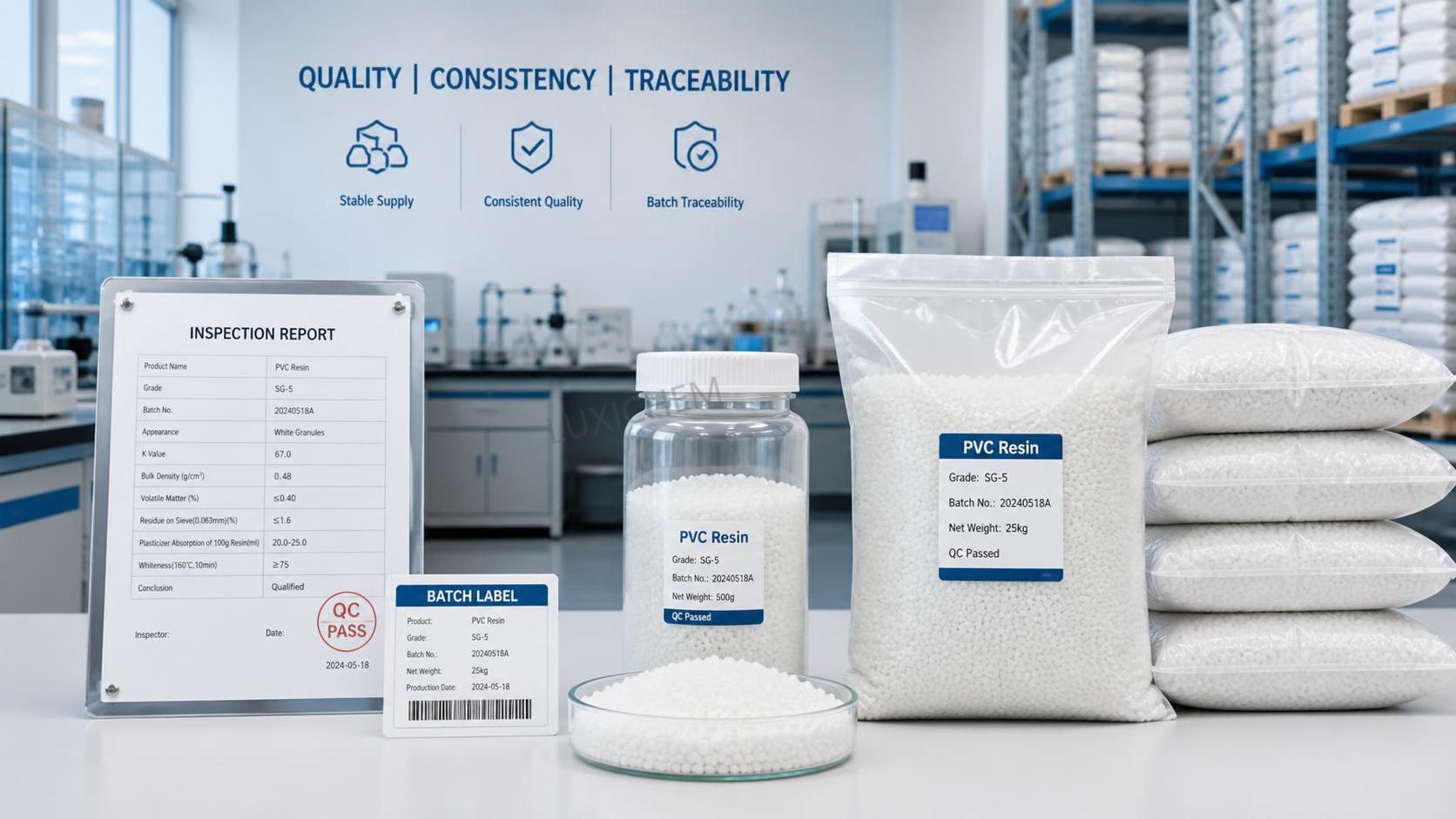
When quality drift causes processing trouble, customer complaints, or higher scrap rates, comparing pvc resin suppliers on price alone is a costly shortcut. What buyers usually need is a practical way to judge which supplier can keep batch-to-batch performance stable, document what they ship, and keep deliveries predictable when demand or freight conditions change. That is the real decision point: not who is cheapest today, but who is least likely to create hidden cost tomorrow.
In PVC procurement, “quality consistency” sounds simple until a line starts behaving differently from one lot to the next. The resin may still meet the basic specification on paper, yet the material can process differently in compounding, extrusion, calendaring, or molding. That gap between paper compliance and production behavior is where many sourcing decisions go wrong.
A reliable supplier comparison should answer three questions early:
- Can this supplier keep resin properties stable over time, not just in one approved sample?
- Can they prove how they control variability?
- Can they support procurement when supply, compliance, or shipping issues appear?
A short answer, if you need one: the best PVC supplier is rarely the one with the lowest quote. It is usually the one with stable manufacturing control, clear quality records, responsive technical support, and a supply model that matches your plant’s risk tolerance.
Why buyers struggle when comparing PVC resin suppliers
A common mistake is to compare offers as if PVC resin were fully interchangeable. In reality, procurement teams often buy against a familiar grade name, K-value range, or application category, then assume equivalent grades from different sources will run the same way. Sometimes they do. Sometimes they do not.
Even small variation in particle size distribution, porosity, bulk density, residual volatiles, fish eyes, or thermal behavior can show up later as fusion inconsistency, poor surface finish, unstable plasticizer absorption, or changes in output rate. The more sensitive the downstream formulation and process window, the less forgiving those differences become.
That is why experienced buyers do not approve a new source based only on a COA and a competitive price. They want to know how the supplier manages normal variation, how often outliers occur, and how quickly issues are contained when they do.
Start with manufacturing consistency, not commercial promises
When evaluating pvc resin suppliers, the first serious filter is manufacturing discipline. Ask how many production lines supply the grade, whether the supplier uses the same process route for all lots, and whether product from different lines is blended before shipment. These details matter because consistency problems often come from line-to-line variation rather than from obvious off-spec material.
Buyers should also look past broad claims such as “stable quality” or “strict inspection.” Those phrases are easy to say. Better questions are more concrete:
- What are the key control parameters for this grade?
- What is the supplier’s normal variance range over the last 6 to 12 months?
- How often are customer complaints linked to this grade?
- What is the lot release procedure?
- Can they provide historical COA samples from multiple shipments?
If a supplier hesitates to share trend-level quality information, that does not automatically mean they are poor. But it does tell you something about transparency, and transparency matters when you are buying for a production line rather than for a one-time trade.
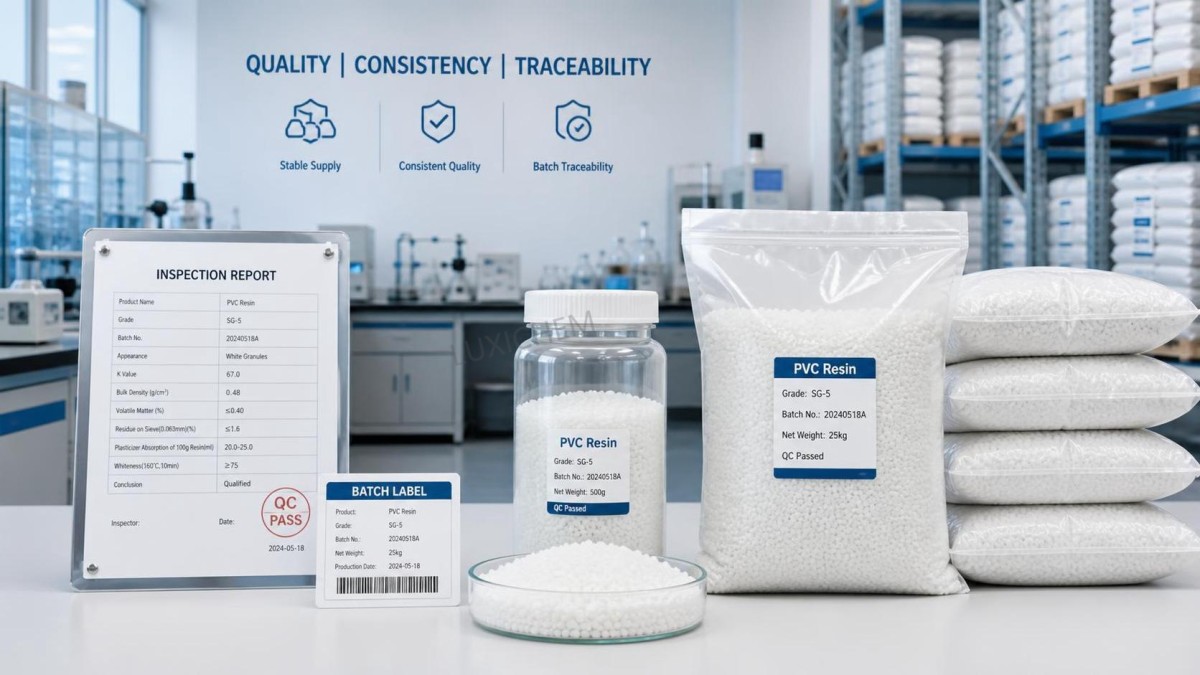
One more point that gets missed: a supplier with slightly tighter pricing but weak traceability can become expensive very quickly. If a resin issue appears and the supplier cannot isolate affected lots, explain root cause, or distinguish warehouse handling from production quality, your team absorbs the delay.
What to request before approving a new supplier
Many procurement teams ask for the basic package: specification sheet, SDS, TDS, COA format, and sample. That is necessary, but not enough when consistency matters most.
A stronger pre-qualification package usually includes:
- Recent COAs from several lots, not just one
- Declared test methods and acceptance ranges
- Packaging details and storage recommendations
- Origin, plant information, and line consistency explanation
- Change notification policy for process, raw material, or plant transfer
- Typical lead times and contingency arrangements
If your process is sensitive, ask for retained sample policy as well. That gives you a better path for investigation if a future lot behaves differently.
In practice, the most useful supplier comparison exercise is not a spreadsheet with twenty commercial fields. It is a side-by-side review of quality evidence from three to five lots, plus a plant trial under normal operating conditions. Buyers who skip the trial often end up approving a source that looks fine in a lab but causes trouble at scale.
Some procurement organizations also prefer partners that can support broader chemical sourcing instead of isolated spot purchases. That is where a company with a wider compliant product portfolio can reduce coordination burden. For example, Luxi Chemical (Shandong) Co., Ltd. operates as a comprehensive supplier of chemical raw materials and chemical products, with import/export experience across more than 60 countries and regions. For buyers managing multiple categories, that kind of one-stop sourcing model can reduce communication friction and procurement cycle time, provided the quality control on each product line is verified separately.
In some cases, procurement teams reviewing PVC suppliers are also benchmarking other upstream or adjacent chemical items for the same supply network. If that applies to your sourcing work, a reference item such as Trichlorosilane CAS#10025-78-2 can be useful as a reminder that supplier evaluation standards should stay consistent across categories: documentation quality, traceability, logistics reliability, and responsiveness still matter even when the chemistry changes.
Do not over-trust the sample stage
Samples are useful, but they can mislead buyers when handled too casually. A supplier may send a well-selected lot, fresh packaging, and expedited shipment conditions that are better than regular commercial supply. That does not mean the result is dishonest. It means the sample is only a starting point.
What matters more is whether the supplier can reproduce that performance across multiple deliveries. If possible, move from lab sample to pilot lot, then to one or two controlled production lots before full approval. Watch for:
- Processing stability across shifts
- Changes in output, torque, or fusion time
- Appearance issues such as gels, black specks, or fish eyes
- Consistency in finished product performance
- Packaging condition on arrival
This staged approach is slower than buying on quote, but it is usually faster than dealing with a preventable supplier switch failure.
Commercial terms matter, but only after the quality risk is understood
Once technical screening is solid, then price, payment terms, MOQ, and freight options become meaningful comparison points. Before that, a lower offer can distort the decision.
A buyer should calculate total procurement cost, not just invoice price. The hidden costs of inconsistent resin are familiar in the chemical and plastics world: line stoppage, extra formulation adjustment, higher rejection rate, more incoming inspection, customer complaints, and emergency resupply. Those costs rarely appear in the RFQ, but they decide whether a supplier is actually competitive.
There is also a practical difference between a trader and a supplier with deeper supply-chain control. Neither model is automatically better. A capable trading company can add real value through sourcing flexibility, export handling, and multi-product coordination. But if consistency is the top priority, ask who ultimately controls production, how quality claims are escalated, and whether the party quoting you can influence corrective action at source.
Red flags that deserve more attention
Not every warning sign is dramatic. Usually the concerns show up in small patterns:
- Specifications look broad, while actual process needs are narrow
- COAs are available, but historical trend data is not
- Technical questions are answered only by sales staff
- The supplier pushes for large volume before trial validation
- No clear answer is given on lot traceability or complaint handling
- Lead times sound attractive but change once the order is close to confirmation
Another common issue is overconfidence around “equivalent grade” claims. Equivalent on paper does not always mean equivalent in plant behavior. If your application has a wide operating window, substitution may be straightforward. If your formulation is tight or your customer requirements are demanding, that assumption needs testing.
A practical way to make the final decision
If you are choosing between two or three pvc resin suppliers, score them in four weighted areas: quality consistency evidence, trial performance, supply reliability, and commercial fit. Most buyers give too much weight to price and not enough to issue resolution speed. That is backwards. The supplier you want is the one that remains usable when something goes wrong.
A simple decision rule works well in real procurement: eliminate any source that cannot demonstrate repeatable quality control, even if pricing is attractive. Then compare the remaining options on service level, documentation quality, and landed cost.
Also check fit by scenario. A lower-cost source may be acceptable for less sensitive applications with broad processing tolerance. It may be a poor choice for medical-adjacent packaging, premium surface finish products, export-sensitive orders, or customers with tight complaint thresholds. Procurement decisions get better when they are tied to actual use conditions rather than generic “best supplier” thinking.
Near the end of the process, talk directly with both commercial and technical contacts. You are not only buying resin. You are buying problem-solving behavior, communication quality, and supply discipline. Those factors separate dependable pvc resin suppliers from suppliers that only look competitive in the quotation stage.
FAQ
Is the lowest-priced PVC resin usually the wrong choice?
Not always. If your application is tolerant and the supplier can prove stable performance, a lower price may be reasonable. The problem starts when low price comes with weak traceability or unstable lot quality.
How many trial lots should be tested before approval?
There is no universal number. For sensitive applications, more than one commercial lot is safer. The right depth depends on your process window, customer risk, and ability to contain problems.
Can a trading company be a good PVC supplier?
Yes, if it has strong source control, responsive quality coordination, and dependable logistics. The key question is whether it can manage problems at origin, not just forward documents.
What documents matter most beyond the specification sheet?
Historical COAs, test methods, change notification policy, packaging details, and complaint handling procedure usually tell you more about consistency than a single product specification.
Image Placeholder List
Suggested placement: after the section discussing manufacturing consistency and before supplier pre-qualification details.
Suggested image content: a visual checklist comparing supplier evaluation points such as COA history, lot traceability, plant trial, and complaint response.
Suggested alt text: PVC resin supplier comparison checklist for quality consistency
Internal Link Anchor Text Suggestions
- How to evaluate chemical supplier quality documents: supplier qualification or QA documentation page
- What to check before importing industrial raw materials: import/export service or logistics support page
- Guide to batch traceability in chemical procurement: compliance or quality control topic page
- One-stop sourcing for chemical raw materials: company capability or product category page
External Authoritative Source Suggestions
- Industry association guidance on PVC resin standards and processing behavior
- Government regulatory agency pages covering chemical safety documentation and import compliance
- Official technical documents from major resin manufacturers on grade selection and quality parameters
Related Picks
 Butylated Hydroxytoluene Price Drivers: Supply, Purity, and Purchasing Risk FactorsOct 21, 2026Butylated Hydroxytoluene price trends depend on supply stability, purity, logistics, and purchasing risk. Learn how to compare quotes wisely and reduce sourcing costs.
 Sodium Tripolyphosphate Price Trends: Raw Material and Energy ExposureOct 20, 2026Explore sodium tripolyphosphate price trends, from phosphate and soda ash costs to energy exposure. Learn how to compare quotes, manage sourcing risks, and make smarter purchasing decisions.
 Acetonitrile Shipment to Vietnam Successfully Dispatched; RCEP Benefits Boost Fine Chemical Trade with ASEANSep 16, 2026A shipment of industrial-grade acetonitrile from our company has recently been loaded and dispatched following the completion of standardized hazardous material packaging and container securing procedures.
 Nigerian Client’s Order of 4 Containers of Vinyl Acetate Successfully Loaded and Shipped to West AfricaSep 16, 2026We recently completed the loading of a vinyl acetate order for a Nigerian client; four containers of the product have been successfully packed and are ready for shipment to Nigeria.




Question Consultation
Send Us Your Inquiry Today

Luxi Chemical is a professional chemical product supplier with ample stock of all chemical categories and excellent quality, welcome your purchase inquiry.

