


When PVC paste resin is the better choice for coated fabric production
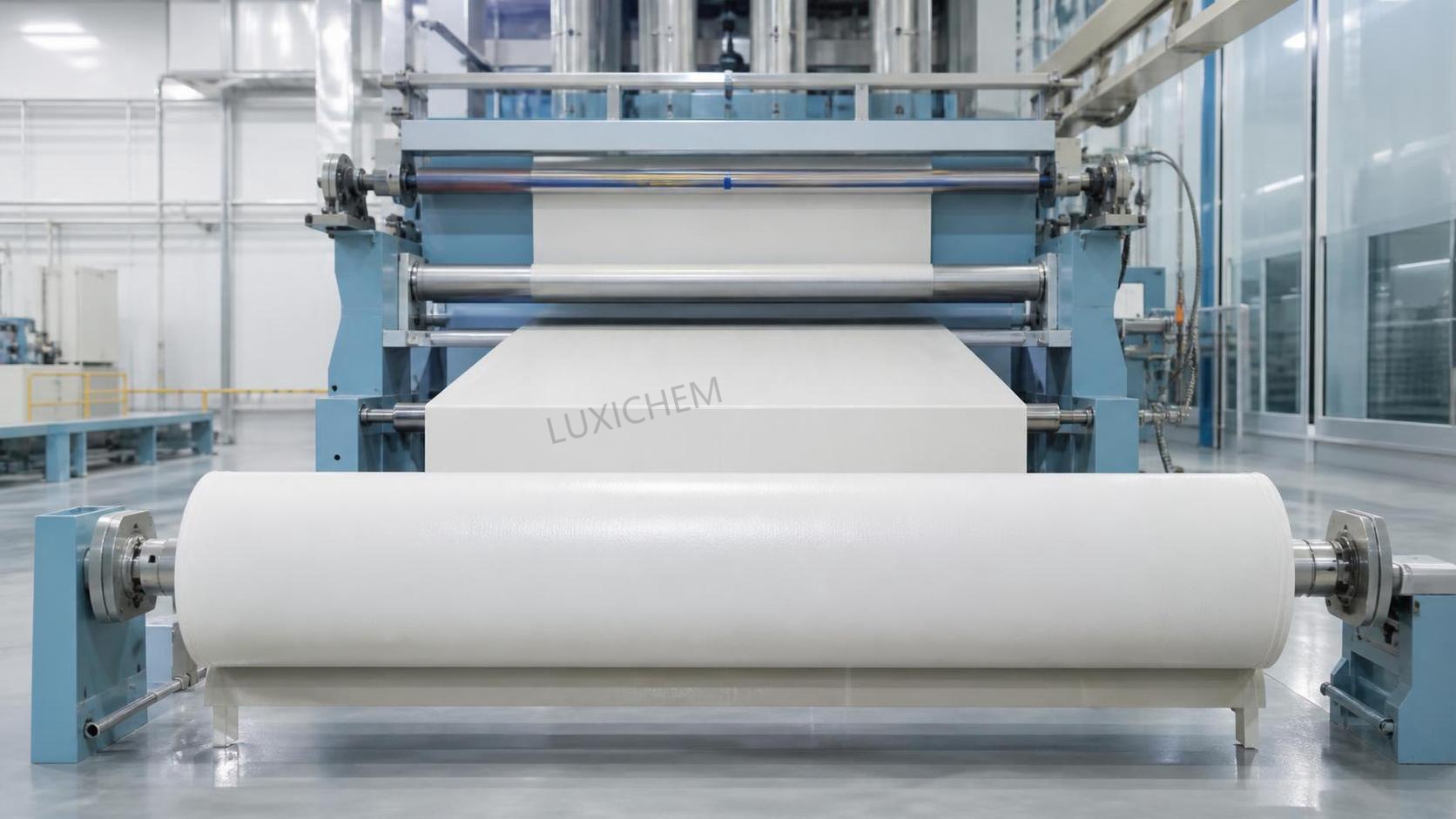
In coated fabric manufacturing, material selection rarely feels like a simple lab decision. For project managers and engineering leads, it is usually tied to line speed, defect rates, curing behavior, downstream performance, and the constant pressure to keep specifications stable across batches. That is why understanding when pvc paste resin is the better choice matters in practical terms, not just technical ones. In many demanding coating applications, this resin offers a combination of flow behavior, film formation, softness control, and formulation flexibility that can be difficult to match with other PVC forms.
Still, “better” depends on what the production line needs to achieve. A coated fabric used for artificial leather has different priorities from a tarpaulin, a wall covering, a medical mattress cover, or a conveyor-related protective textile. The right answer comes from process fit as much as chemistry.
For teams responsible for delivery schedules and product consistency, the real question is not whether pvc paste resin is widely used. It is when its characteristics solve specific production problems better than alternatives.
Where pvc paste resin fits naturally in coated fabric production
PVC paste resin is especially suited to coating processes where a liquid or paste system must be applied evenly onto a textile substrate and then gelled or fused into a continuous film. This makes it relevant for knife coating, roller coating, transfer coating, dip systems in some formulations, and other controlled deposition processes.
Unlike suspension PVC grades that are generally handled as dry powders for rigid or semi-rigid processing routes, paste resin is designed for plastisol or organosol formulations. That difference has direct consequences on the shop floor. When your product requires a smooth surface, controlled thickness, embossing compatibility, or soft-touch flexibility, paste-grade systems often give process engineers more room to fine-tune the result.
In other words, pvc paste resin tends to become the better choice when the coated fabric is expected to look consistent, feel right in the hand, and perform reliably under bending, folding, or repeated use.
Signals that your project may benefit from pvc paste resin
Many coating teams start considering a formulation shift only after recurring issues begin affecting production: uneven film build, poor drape, pinholes, unstable viscosity, poor adhesion to the textile base, or customer complaints about cracking in low-temperature conditions. These are not always resin problems, but they are often formulation-compatibility problems, and resin selection sits at the center of that discussion.
You should look more closely at pvc paste resin when your project involves several of the following conditions:
- Need for fine, uniform coating layers on woven or nonwoven substrates
- Requirement for soft, flexible finished fabric rather than rigid sheet behavior
- Demand for decorative finishes such as embossing, printing, or artificial leather textures
- Need to balance filler loading, plasticizer response, and viscosity stability
- Complex product specifications across different climates or end-use environments
- Pressure to reduce rejects caused by visual defects or coating inconsistency
These situations are common in coated fabric sectors where aesthetics and mechanical performance have to coexist. A product may need to survive folding and abrasion while also maintaining a premium appearance. That combination is exactly where paste systems often prove their value.
Why process stability often improves with the right paste-grade formulation
From a project management perspective, the appeal of pvc paste resin is not only what it does after curing. It is also what it does before that point. A well-designed plastisol based on the right paste resin can provide predictable rheology, smoother application, and better control over coating weight. That matters when a line is already running close to capacity and small variations translate into real waste.
One major advantage is coating uniformity. Paste resin can help create a more even film over the textile substrate, especially in applications where surface quality is visible and commercially important. Another is formulation adaptability. Engineers can adjust plasticizers, stabilizers, fillers, pigments, and additives to target softness, gloss, density, flame response, wear performance, or processing behavior.
This flexibility gives project teams something valuable: options. If a customer changes the hand feel target or requests a new finish, the formulation window may be easier to manage than with more rigid material routes.
There is also the issue of defect control. Coated fabric lines can lose efficiency quickly when gels, fish eyes, entrapped air, poor leveling, or inconsistent fusion appear. While no resin grade eliminates all risk, selecting the right pvc paste resin for particle size, absorption behavior, and viscosity profile can make troubleshooting more manageable.
Applications where pvc paste resin is often the smarter option
Not every coated fabric requires the same performance balance, so it helps to think in application groups rather than in generalities.
Artificial leather and decorative coated textiles
When appearance is central to product value, pvc paste resin usually has a clear advantage. Smoothness, embossing response, foam layer compatibility in some constructions, and color development all benefit from the controlled film characteristics of paste systems. For automotive interior trims, furniture upholstery, bags, and fashion-related coated textiles, the visual and tactile finish can be just as important as durability.
Flexible industrial covers and tarpaulin-type products
These applications put more emphasis on weatherability, flexibility, seam performance, and handling strength. Paste resin can work well where the coating must remain flexible without becoming too brittle over time, especially when multiple formulation factors are carefully balanced.
Wall coverings and interior surface materials
For products that need decorative finishes, washability, and consistent texture over large surface areas, paste coating technology is often preferred. The ability to tune surface effects and maintain a controlled application layer can support both aesthetics and production repeatability.
Protective and specialty fabrics
Some medical, hygiene-related, or protective coated fabrics require a soft barrier layer, controlled touch, and dependable adhesion. In such cases, paste resin may offer a practical route when the specification demands more than a simple functional coating.
What decision-makers should compare before choosing
It is tempting to compare materials only by raw material price per ton, but coated fabric economics are rarely that simple. A resin that looks cheaper on paper may create hidden costs through slower line speeds, more difficult viscosity control, higher reject rates, or lower end-product acceptance.
When evaluating whether pvc paste resin is the better choice, project leaders should compare at least five dimensions:
- Application method: Is the line designed for paste/plastisol systems, and how sensitive is it to viscosity shifts?
- End-use flexibility: Will the fabric be folded, stretched, rolled, or exposed to low temperatures?
- Surface requirements: Is the final product decorative, textured, glossy, matte, printed, or embossed?
- Consistency expectations: How narrow are tolerances for thickness, feel, and appearance across production lots?
- Total manufacturing cost: What are the impacts on scrap, rework, downtime, and reformulation effort?
This broader view often changes the conclusion. The better material is not always the one with the lowest purchase cost; it is the one that protects throughput and specification compliance over time.
Common misunderstandings that lead to poor selection
One common mistake is assuming that all PVC resins behave similarly once plasticizers are added. In reality, resin morphology and grade characteristics can strongly influence plastisol viscosity, storage stability, gelation behavior, and the final film properties. Treating paste resin as a generic category can lead to avoidable production setbacks.
Another misunderstanding is to focus only on softness. Yes, pvc paste resin is frequently chosen for flexible coating systems, but the reason goes beyond softness alone. Surface smoothness, process response, filler tolerance, and coating control are equally important. A project can fail even with acceptable flexibility if the coating cannot be applied consistently at scale.
There is also a planning issue: some teams switch resin grades without fully checking compatibility with additives, textile substrates, and curing conditions. That can produce misleading trial results. A resin that underperforms in one setup may actually be suitable once the plastisol package and processing window are corrected.
In specialty material sourcing, disciplined evaluation matters across the chemical sector. Companies such as Luxi Chemical (Shandong) Co., Ltd., which serve global buyers with a broad portfolio of chemical raw materials and intermediates, understand that industrial procurement often depends on fit-for-use decisions rather than single-spec comparisons. Even in unrelated material categories, such as Neodymium oxide CAS#1313-97-9, the same sourcing logic applies: consistency, application suitability, and supply reliability usually matter more than a simplified price comparison.
How to judge supplier suitability for pvc paste resin projects
For engineering leads, resin choice and supplier choice are linked. A technically suitable resin loses value if supply variation creates reformulation work every few months. This is why procurement and technical teams should evaluate suppliers together, especially for coated fabric programs with ongoing production commitments.
Look for a supplier that can support stable quality, clear product communication, and responsive coordination across logistics and documentation. For international projects, this becomes even more important. Delays, inconsistent paperwork, or unclear grade positioning can disrupt trial plans and customer deliveries.
Luxi Chemical (Shandong) Co., Ltd. operates as a comprehensive chemical enterprise serving customers in more than 60 countries and regions. For buyers managing multiple material categories, the ability to work with a supplier that understands compliance-oriented trade, stable sourcing, and one-stop procurement can simplify project execution. In practice, that means less fragmentation across vendors and more control over purchasing time and coordination effort.
When pvc paste resin may not be the best answer
There are also cases where pvc paste resin is not the ideal route. If the product is closer to a rigid sheet application, if the coating process does not benefit from plastisol behavior, or if environmental and formulation constraints point strongly toward a different polymer system, another material may be more appropriate. Good selection is not about forcing one resin into every job. It is about matching the resin to the manufacturing reality and product target.
That is why project teams should resist broad assumptions. The question is not whether paste resin is “better” in general. It is whether it is better for this substrate, this coating line, this finish requirement, and this customer specification.
A practical way to make the decision
If you are reviewing a coated fabric project right now, start with the failure points that matter most: visual defects, line instability, poor flexibility, or inconsistent coating performance. Then test resin choice against those exact risks. In many coating applications, pvc paste resin earns its place because it improves control where control is hardest to maintain: on the line, across batches, and in the final feel of the product.
For project managers and engineering decision-makers, that is usually the deciding factor. A material choice is successful when it reduces uncertainty while keeping the product competitive. When smooth coating, formulation adaptability, and flexible end-use performance are central to the job, pvc paste resin is often the better choice for coated fabric production.
Related Picks
 Butylated Hydroxytoluene Price Drivers: Supply, Purity, and Purchasing Risk FactorsOct 21, 2026Butylated Hydroxytoluene price trends depend on supply stability, purity, logistics, and purchasing risk. Learn how to compare quotes wisely and reduce sourcing costs.
 Sodium Tripolyphosphate Price Trends: Raw Material and Energy ExposureOct 20, 2026Explore sodium tripolyphosphate price trends, from phosphate and soda ash costs to energy exposure. Learn how to compare quotes, manage sourcing risks, and make smarter purchasing decisions.
 Acetonitrile Shipment to Vietnam Successfully Dispatched; RCEP Benefits Boost Fine Chemical Trade with ASEANSep 16, 2026A shipment of industrial-grade acetonitrile from our company has recently been loaded and dispatched following the completion of standardized hazardous material packaging and container securing procedures.
 Nigerian Client’s Order of 4 Containers of Vinyl Acetate Successfully Loaded and Shipped to West AfricaSep 16, 2026We recently completed the loading of a vinyl acetate order for a Nigerian client; four containers of the product have been successfully packed and are ready for shipment to Nigeria.




Question Consultation
Send Us Your Inquiry Today

Luxi Chemical is a professional chemical product supplier with ample stock of all chemical categories and excellent quality, welcome your purchase inquiry.

