


How to incorporate polyglutamic acid into a skincare serum
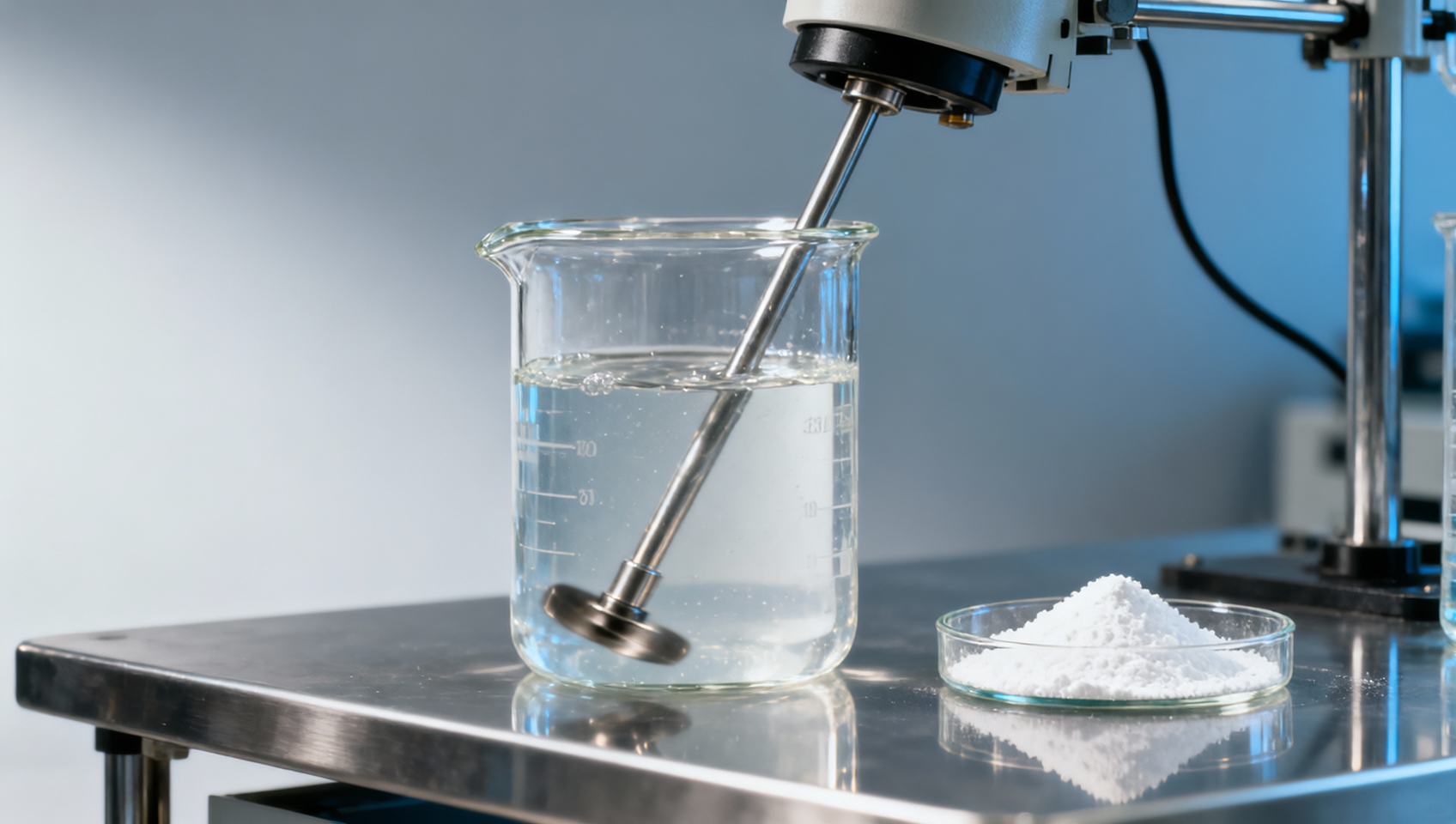
To incorporate Polyglutamic Acid into a skincare serum, select a cosmetic-grade material, follow its supplier’s recommended use level, and disperse it into the water phase using the specified mixing method. Allow it to hydrate fully before making final viscosity and pH adjustments, then assess the finished formula for stability, preservation and skin compatibility.
The practical challenge is often not getting the powder into the vessel but getting it evenly hydrated. A rushed addition can leave gel-like lumps, while an otherwise clear serum may become sticky, stringy or unstable after other ingredients are added. A small trial batch makes those problems easier to identify before scaling up.
Start with the material specification, not just the ingredient name
Polyglutamic Acid is a water-soluble humectant: it helps attract and retain water in a formulation and can contribute a smooth, moisturized skin feel. Commercial materials are not necessarily interchangeable, however. They may differ in molecular weight, supplied concentration, salt form, particle characteristics and the viscosity they develop in water.
Before weighing, review the supplier’s technical data sheet and safety information. Confirm whether the material is supplied as a powder or a premade solution, the recommended use range, the suitable pH and temperature range, and any instructions for dispersion. A percentage suitable for one grade should not automatically be transferred to another.
Also check whether the stated use level refers to the material as supplied or to its active content. For example, when working with a diluted solution, the amount weighed into the formula is not necessarily the same as the amount of active polymer. Record both figures so that a later substitution does not inadvertently change the serum’s composition.
For an initial trial, choose a level within the supplier’s range that leaves room to adjust the texture. More polymer is not automatically better: a higher level can increase film formation or tack without producing the light finish intended for a serum.
Prepare a workable water phase
Use clean, suitable equipment and water of a quality appropriate for cosmetic manufacture. The mixing vessel should provide enough room for a controlled vortex without pulling excessive air into the batch. Have a calibrated scale and pH meter available, and document the batch size, ingredient lot numbers, addition order and mixing conditions.
Set aside part of the formula’s water for later rinsing or adjustments if the manufacturing procedure allows. This can help transfer material from a premix container into the main vessel and make small pH corrections without exceeding the planned batch weight. Include every addition in the final calculation.
Powder handling deserves care. A dry polymer can form clumps when its surface wets rapidly and creates a hydrated outer layer around dry material. Avoid tipping the entire quantity into still water. The exact method depends on the grade, but gradual addition under moderate agitation is a sensible starting point when it is consistent with the supplier’s instructions.
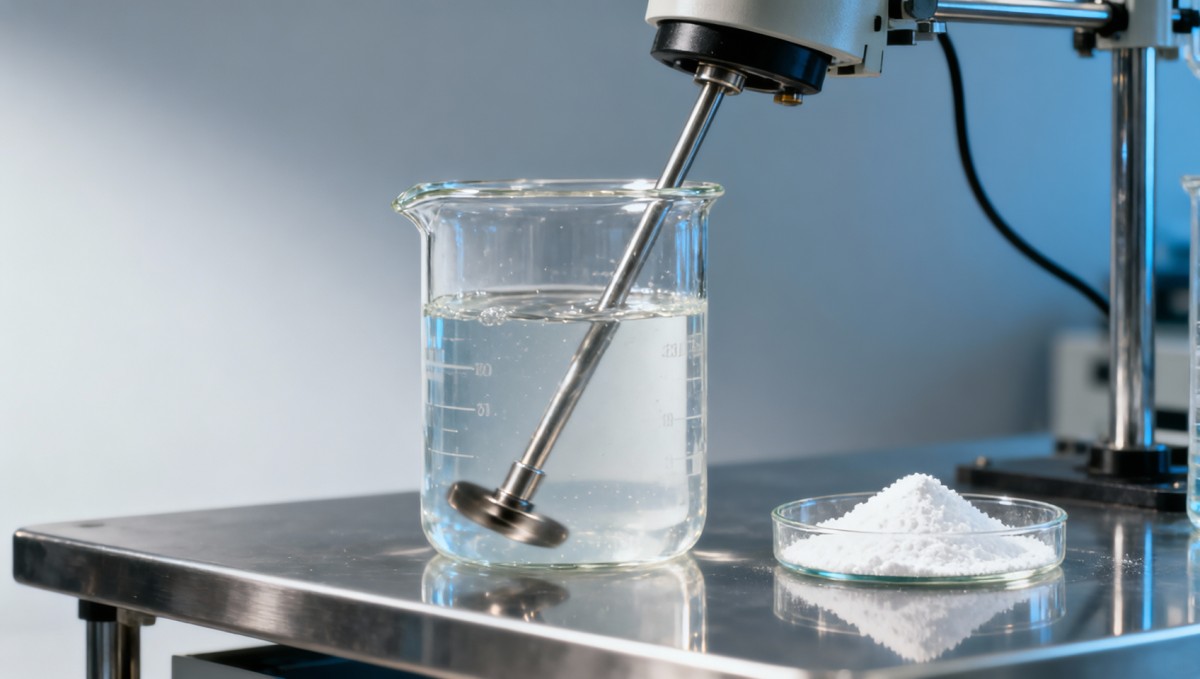
A practical mixing sequence
- Weigh the ingredients accurately. Calculate the polymer quantity from the complete formula, not from the water phase alone, unless the supplier specifies otherwise. Keep the preservative, pH adjusters and any heat-sensitive ingredients identified separately.
- Begin stirring the water phase. Establish steady movement throughout the liquid. A deep, air-entraining vortex is not the goal; trapped air can make a serum look cloudy and interfere with a meaningful viscosity assessment.
- Add the polymer gradually. Sprinkle the powder into the moving liquid at a rate that allows it to disperse. Some grades may be easier to handle after a suitable premix with a compatible humectant; use that approach only when supported by the material’s instructions and the formula.
- Allow hydration. Continue mixing for the period recommended for the grade, then inspect for undissolved particles or gel pockets. Do not assume the final viscosity has developed immediately after the powder disappears from view.
- Add the remaining ingredients in their appropriate phases. Introduce dissolved ingredients and other water-phase components according to their own solubility and temperature requirements. Add heat-sensitive materials during cool-down where their suppliers recommend it.
- Adjust and recheck. Measure pH after the ingredients have been incorporated and the batch is uniform. Adjust gradually with suitable, prepared pH-adjusting solutions, mix thoroughly, and measure again. Top up to the intended final weight if required by the procedure.
Use the supplier’s temperature guidance rather than assuming that heat will speed up every formulation safely. Excessive temperature or prolonged high shear may alter the behavior of some polymers or damage other ingredients. Equally, insufficient mixing can leave material unevenly distributed. The appropriate settings depend on the grade, equipment and batch size.
Once the serum is homogeneous, let it rest long enough for entrained air to dissipate and for hydration to progress before judging clarity or thickness. Record the observation time: a reading taken immediately after mixing may not represent the texture after the batch has settled.
Fit the polymer into the rest of the formula
A basic water-based serum typically needs more than a humectant and water. Its composition may include additional humectants, a preservative system, pH adjusters and other ingredients selected for the intended skin feel and product claims. Each addition can change the way the finished serum behaves.
Humectants and texture
Glycerin or other compatible humectants can help shape the skin feel, but their combined level matters. A formula containing several moisture-binding ingredients may feel pleasant when first applied and tacky after drying. Evaluate the complete formula on skin rather than attributing every sensation to the polymer alone.
When the serum feels too stringy or forms visible rolls under another product, first reduce the amount applied and check whether the application method affects the result. In development, compare a lower polymer level against the original formula while keeping other ingredients constant. Film-forming polymers, thickeners and excess solids can all contribute to pilling, so changing several variables at once makes the cause harder to isolate.
Salts, actives and pH
Electrolytes and other dissolved ingredients can affect polymer behavior and viscosity. Some combinations may remain clear; others may become thinner, hazy or uneven. Add a new active to a small portion of the base first, using the intended concentration, and observe both the immediate appearance and the settled sample. A clear beaker immediately after mixing is not proof of long-term compatibility.
Choose a finished-product pH that satisfies the requirements of the polymer, preservative and other ingredients, while remaining appropriate for the intended cosmetic application. The usable range is the overlap of those requirements, not simply the range printed on one raw-material sheet. Measure pH again during stability assessment because drift can affect both product performance and preservation.
Keep raw-material identity separate from apparent usefulness. Testosterone CAS#58-22-0 is a different substance supplied for uses including biochemical research and hormone therapy; it is not a substitute for Polyglutamic Acid in a moisturizing serum. Verify the ingredient name, intended grade and documentation before introducing any material to the batch.
Troubleshooting a serum that does not look or feel right
Keep a retained sample of each trial in a labeled, closed container. Note appearance, odor, pH and viscosity or flow behavior at defined intervals using consistent methods. Comparing samples under the same conditions is more useful than relying on an initial impression of thickness.
Confirm the finished serum before routine use
A water-containing serum requires a suitable preservative system. Selecting a preservative by name or adding it at a supplier’s suggested level does not by itself establish that the finished product is adequately protected. The full formula, pH, manufacturing hygiene and packaging can affect preservation. Arrange appropriate microbiological quality and preservative efficacy testing for the finished product.
Assess stability in the intended packaging, not only in an open laboratory vessel. Look for changes in color, odor, clarity, separation, pH and dispensing behavior under relevant storage conditions. A serum that flows well from a beaker may be too thick for a dropper or may trap air in a pump. Packaging compatibility and the closure’s ability to limit contamination also deserve attention.
Before any skin evaluation, confirm that all ingredients are suitable for their intended cosmetic use and that the formula has passed the necessary safety and quality assessment. Individual skin responses vary; discontinue use if irritation develops. For a product intended for sale, check applicable requirements and substantiation for the market and claims involved.
When moving from a small trial to a larger batch, do not copy mixing speed alone: vessel shape, impeller design and fill level can change circulation and air incorporation. Recheck dispersion, hydration, pH and texture at the larger scale, and keep the approved process and raw-material specifications with the batch record.
Related Picks
 Butylated Hydroxytoluene Price Drivers: Supply, Purity, and Purchasing Risk FactorsOct 21, 2026Butylated Hydroxytoluene price trends depend on supply stability, purity, logistics, and purchasing risk. Learn how to compare quotes wisely and reduce sourcing costs.
 Sodium Tripolyphosphate Price Trends: Raw Material and Energy ExposureOct 20, 2026Explore sodium tripolyphosphate price trends, from phosphate and soda ash costs to energy exposure. Learn how to compare quotes, manage sourcing risks, and make smarter purchasing decisions.
 Acetonitrile Shipment to Vietnam Successfully Dispatched; RCEP Benefits Boost Fine Chemical Trade with ASEANSep 16, 2026A shipment of industrial-grade acetonitrile from our company has recently been loaded and dispatched following the completion of standardized hazardous material packaging and container securing procedures.
 Nigerian Client’s Order of 4 Containers of Vinyl Acetate Successfully Loaded and Shipped to West AfricaSep 16, 2026We recently completed the loading of a vinyl acetate order for a Nigerian client; four containers of the product have been successfully packed and are ready for shipment to Nigeria.




Question Consultation
Send Us Your Inquiry Today

Luxi Chemical is a professional chemical product supplier with ample stock of all chemical categories and excellent quality, welcome your purchase inquiry.

