


How to reduce dust exposure when handling fumed silica
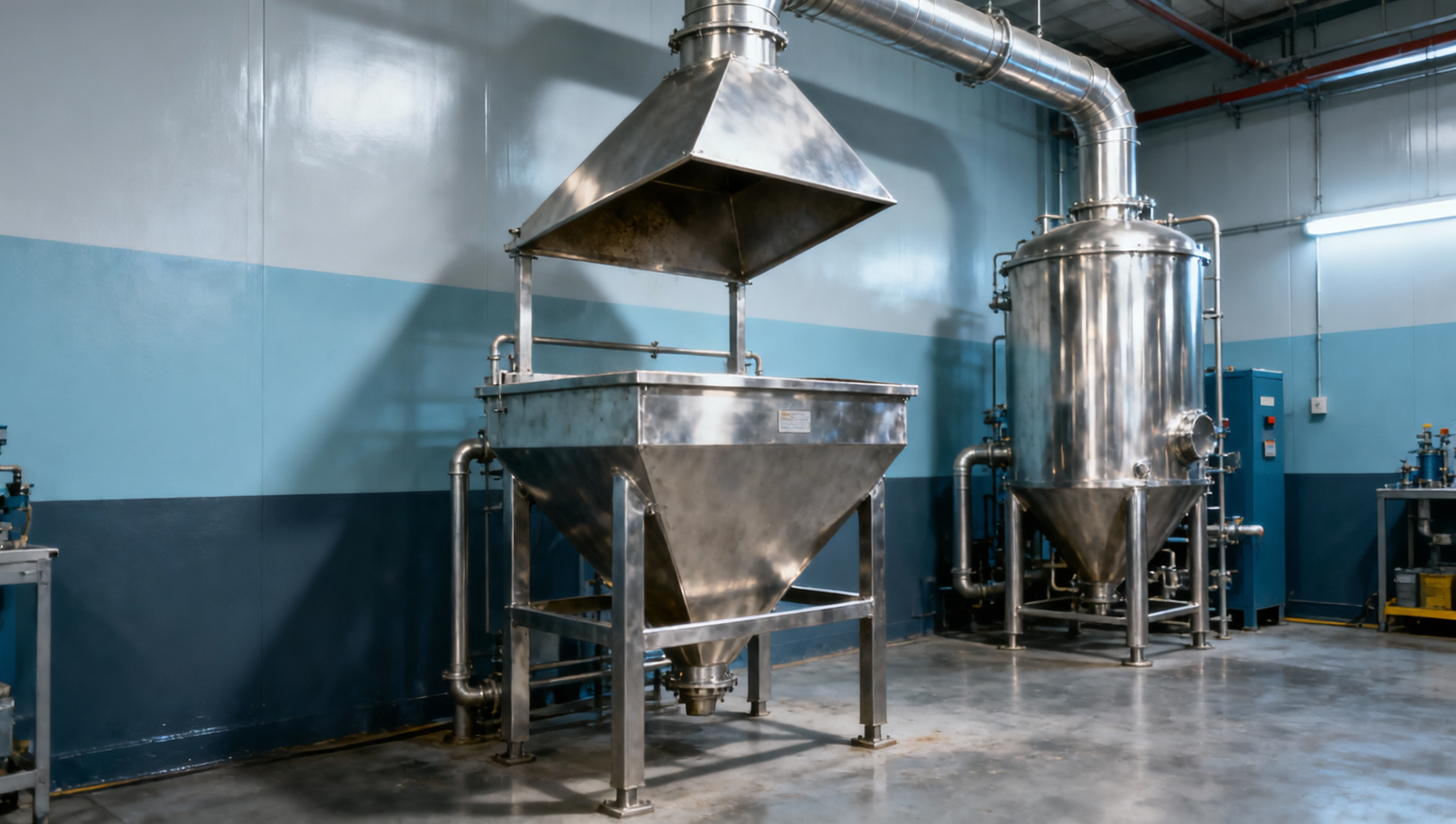
The most effective way to reduce exposure to fumed silica is to keep it enclosed from the moment a container is opened until the powder is incorporated into the process. Where open handling cannot be avoided, local exhaust ventilation should capture dust close to its release point. Respiratory protection is an additional safeguard, not a substitute for controlling dust at the source.
Fumed silica is a fine, low-density powder, so small disturbances during bag opening, tipping, weighing or cleanup can create airborne dust. Visible dust indicates a loss of control, but a clear-looking work area does not establish that exposure is acceptable. Effective management combines suitable equipment, consistent handling procedures and exposure assessment under representative operating conditions.
Locate the points where powder can escape
Map the powder’s route through the facility, including infrequent activities such as changing containers and clearing blockages. The highest release potential is not necessarily at the main mixer; it may occur during a short manual task that is absent from normal production observations.
- Receiving and staging: Damaged bags, residue on packaging and rough handling can release powder before production begins.
- Opening and emptying: Cutting bags, shaking out their contents and dropping powder into a hopper can generate concentrated clouds near the worker’s breathing zone.
- Weighing and sampling: Scooping into small containers can expose workers even when the quantities handled are modest.
- Charging and mixing: Dust can escape from open vessel lids, charging ports, poorly sealed connections and displaced air vents.
- Cleanup and maintenance: Deposits can be disturbed when filters are changed, equipment is opened or accumulated powder is removed.
For each task, record the quantity handled, duration, frequency, worker position and existing controls. Include contractors and personnel working nearby. This task-level view helps distinguish a continuous background issue from a short, high-exposure operation that needs its own control.
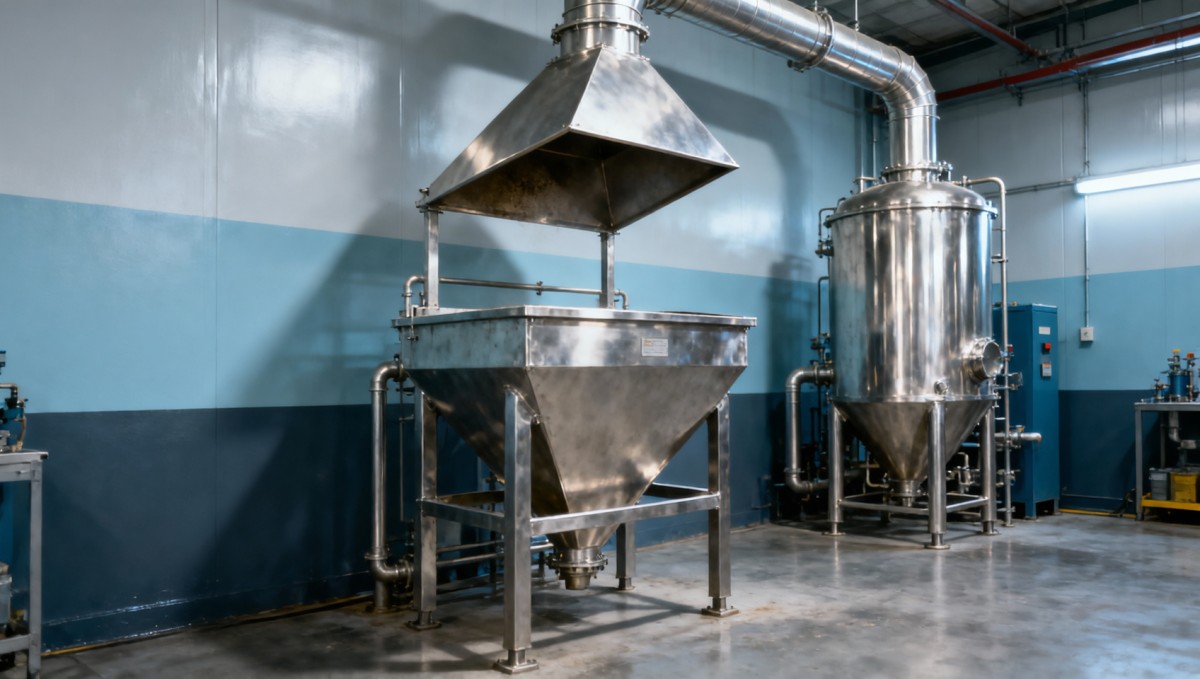
Choose containment before relying on room ventilation
Closed transfer limits the opportunity for dust to enter the workplace. Depending on batch size and equipment layout, options include enclosed feeders, sealed transfer connections, contained bag-emptying stations and engineered vacuum-conveying systems. The important distinction is whether the powder remains contained during connections, disconnections and abnormal events—not simply whether a pipe is installed between two pieces of equipment.
For bagged material, a partially enclosed tipping station with an appropriately designed extraction point can reduce releases compared with emptying bags into an open vessel. Position the bag opening and tipping area within the capture zone. Avoid shaking empty bags or compressing them in the open; place them carefully into a contained waste system that is itself connected to suitable dust control.
Bulk bags require attention to the discharge spout and the connection to the receiving equipment. A sealed docking arrangement, controlled discharge and filtered displacement air can help prevent dust escaping when the bag is connected or emptied. Connections should be checked for wear, and any powder trapped around the spout should be removed safely before disconnection.
Where powder is charged into a liquid, introducing it below the liquid surface or through a suitable contained induction system can reduce exposure at the vessel opening. The arrangement must also suit the formulation: adding powder too quickly can create agglomerates, compromise dispersion or overload the equipment. Confirm process performance and dust control together rather than assuming that a closed-looking charging port solves both problems.
Make local exhaust ventilation capture the release
General room ventilation can dilute residual airborne dust, but it is less effective than capture close to the source when powder is being poured or handled. Local exhaust ventilation should draw dust away from the breathing zone and into a suitable collection and filtration system. A hood positioned behind the operator, for example, may pull contaminated air across the face before it reaches the exhaust.
Hood position, enclosure, airflow, cross-drafts and the way the task is performed all affect performance. A well-designed hood may underperform if workers must reach outside it to handle a bag, if a nearby fan disrupts airflow or if process changes move the release point away from the capture area. Use a qualified ventilation specialist to design and assess the system for the actual task and material.
Check that extracted air and collected dust are managed in accordance with applicable requirements. Recirculating filtered air requires particular care: filtration performance, leak detection and applicable rules must be assessed before air is returned to the workplace. A filter that appears intact is not, by itself, evidence that the system is controlling exposure.
Routine checks should cover airflow indicators where fitted, damaged seals, blocked ductwork, filter condition and changes in the way operators use the station. Establish a response for failed checks: restrict the affected operation, arrange maintenance and assess whether additional protection or a temporary alternative process is needed. Verification after repair is as important as reporting the defect.
Reduce dust during manual tasks
Some operations cannot immediately be automated or enclosed. In those cases, the handling method should minimize the energy transferred to the powder and keep the release inside the ventilated area.
- Open containers carefully at the designated extraction point rather than moving an already open bag through the room.
- Pour slowly and keep the discharge point close to the receiving opening; avoid dropping powder from height.
- Keep lids and access ports closed except when needed for the task.
- Use dedicated scoops and transfer containers that fit inside the enclosure and can be closed between steps.
- Reseal partially used bags or place them in suitable closed secondary containers.
- Do not use compressed air to clear powder from equipment, clothing or work surfaces.
Training should show workers where to position the container, how to recognize a ventilation problem and what to do when a bag tears. A written instruction alone is unlikely to control exposure if the equipment layout makes the preferred method awkward or prevents the operator from seeing the fill point.
Consider whether a different supplied form, such as a pre-dispersed material or another lower-dusting presentation, is technically suitable. A change in form can affect concentration, viscosity, storage stability and dispersion behavior. It should therefore be evaluated through formulation and quality procedures before replacing the existing grade.
Clean without putting settled powder back into the air
Powder on ledges, equipment frames and floors can become a secondary exposure source when disturbed. Remove deposits promptly using an industrial vacuum designed for fine hazardous dust and fitted with appropriate high-efficiency filtration, such as a HEPA filter. The vacuum, hoses and emptying arrangement should be suitable for the material and site hazards; a standard domestic vacuum is not an appropriate substitute.
Where compatible with the material, equipment and site procedures, damp wiping can be useful for small residues. Avoid dry sweeping and compressed-air blowdown because they can re-suspend settled dust. Used wipes and vacuum contents should be contained and disposed of according to the product safety data sheet and local requirements.
For a spill, stop the release if it is safe to do so, restrict access and prevent people from tracking powder into clean areas. Use the site’s spill procedure and appropriate protective equipment. Large spills, damaged containers or releases involving other substances may require isolation and a response by trained personnel rather than routine housekeeping.
Housekeeping also protects product quality. Separate tools, controlled cleaning sequences and verification between materials reduce the chance that silica residue will enter an unrelated batch. In a facility handling other fine powders, including food ingredients such as Lycopene CAS#502-65-8, containment and cleaning should address cross-contact as well as airborne exposure. The cleaning method must be compatible with each material and the applicable product-quality requirements.
Use respiratory protection as part of a complete program
Respirators may be needed during open handling, maintenance, spill response or while engineering improvements are being implemented. Selection should be based on the contaminant, measured or reasonably assessed exposure, task conditions and applicable legal requirements. A respirator suitable for particles is relevant to dust exposure, but the required type and protection level cannot be chosen reliably from the powder name alone.
Where tight-fitting respirators are used, the program should address fit testing, user training, seal checks, maintenance and storage, along with any medical assessment required in the jurisdiction. Facial hair in the sealing area can prevent an effective seal. Workers should also know when filters or equipment need replacement under the site program and manufacturer’s instructions.
Respiratory protection does not prevent dust from settling on equipment or contaminating adjacent processes. Nor does it compensate for poorly maintained extraction. Its role is to reduce individual exposure where residual risk remains, while containment and ventilation address the release.
Verify performance with exposure measurements
Review the safety data sheet for the specific fumed silica grade and identify the applicable occupational exposure limits in the jurisdiction. Confirm that the substance identity, relevant particle fraction and measurement method match the limit being used. Do not apply a limit for crystalline silica automatically to fumed silica: the material’s identity and composition must be established, including any relevant impurities or other substances present.
Personal air sampling in the breathing zone provides a more direct basis for assessing worker exposure than visual observation or room measurements alone. An occupational hygienist can develop a sampling plan covering representative tasks, durations and workers, including short operations such as bag tipping or filter changes when relevant. Area measurements can help locate releases and evaluate controls, but they do not necessarily represent an individual’s exposure.
Compare results with the applicable limit using the averaging period and sampling requirements associated with that limit. Where operations vary substantially, a single sample may not describe the full range of exposure. Reassess after changes to the material, batch size, equipment, ventilation or work method, and investigate results that indicate controls are not performing as expected.
Keep the findings linked to corrective actions: what was changed, who is responsible, when the work was completed and how effectiveness was checked. A repeat assessment after an enclosure or ventilation modification closes the loop between installing a control and demonstrating that it works under normal operating conditions.
Plan for maintenance and abnormal conditions
Dust collectors and transfer systems concentrate powder in filters, ducts and collection containers. Before opening them, isolate equipment and follow the site’s energy-control and maintenance procedures. Plan how filters will be removed, bagged and disposed of without releasing their contents. Maintenance personnel may need different controls from those used during routine production because they work directly on contaminated components.
Assess the full process for fire or explosion hazards rather than assuming that the behavior of one ingredient describes the entire mixture. Fumed silica may be handled alongside combustible powders, solvents or contaminated residues, and dust-collection equipment must be suitable for the actual materials collected. Use product information and a competent site-specific hazard assessment to determine the necessary safeguards.
The strongest control program makes the safe method practical: powder enters through contained connections, extraction is checked before use, spills are handled without re-suspension, and exposure measurements confirm whether the arrangement is working. When a task changes, the assessment should change with it.
Related Picks
 Butylated Hydroxytoluene Price Drivers: Supply, Purity, and Purchasing Risk FactorsOct 21, 2026Butylated Hydroxytoluene price trends depend on supply stability, purity, logistics, and purchasing risk. Learn how to compare quotes wisely and reduce sourcing costs.
 Sodium Tripolyphosphate Price Trends: Raw Material and Energy ExposureOct 20, 2026Explore sodium tripolyphosphate price trends, from phosphate and soda ash costs to energy exposure. Learn how to compare quotes, manage sourcing risks, and make smarter purchasing decisions.
 Acetonitrile Shipment to Vietnam Successfully Dispatched; RCEP Benefits Boost Fine Chemical Trade with ASEANSep 16, 2026A shipment of industrial-grade acetonitrile from our company has recently been loaded and dispatched following the completion of standardized hazardous material packaging and container securing procedures.
 Nigerian Client’s Order of 4 Containers of Vinyl Acetate Successfully Loaded and Shipped to West AfricaSep 16, 2026We recently completed the loading of a vinyl acetate order for a Nigerian client; four containers of the product have been successfully packed and are ready for shipment to Nigeria.




Question Consultation
Send Us Your Inquiry Today

Luxi Chemical is a professional chemical product supplier with ample stock of all chemical categories and excellent quality, welcome your purchase inquiry.

