


PE Granules in Chemical Processing: Why Melt Flow Index (MFI), Density, and Additive Package Dictate Reactor Lining Performance
PE Granules in Chemical Processing: Why Melt Flow Index (MFI), Density, and Additive Package Dictate Reactor Lining Performance
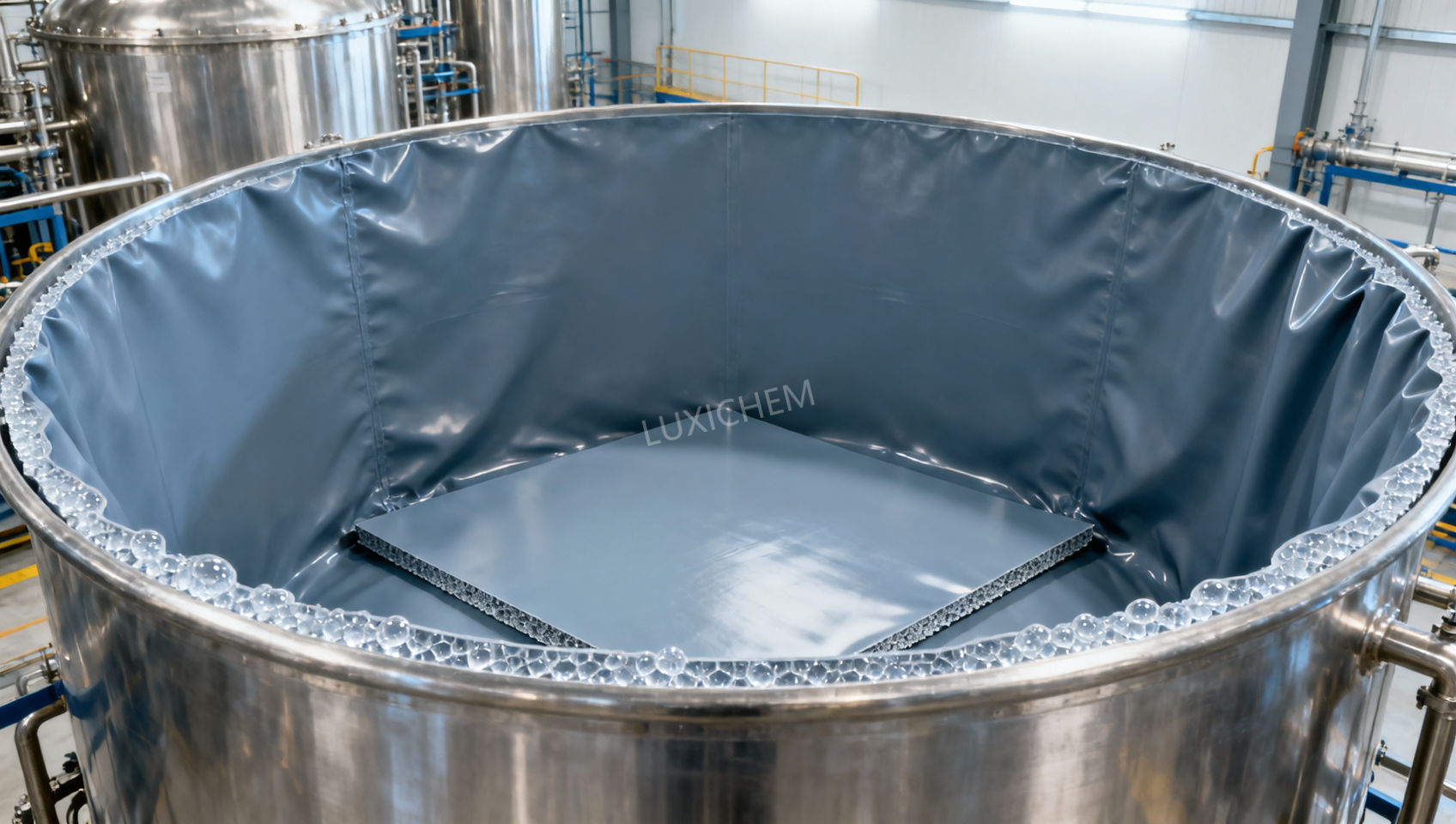
PE granules are more than just raw feedstock in chemical processing—they directly influence reactor lining integrity, corrosion resistance, and long-term operational reliability. For plant operators and process engineers, selecting the right PE granules demands careful evaluation of three critical parameters: Melt Flow Index (MFI) for consistent melt processing, density for mechanical and thermal stability under aggressive conditions, and additive package compatibility to prevent degradation or leaching in reactive environments. At Luxi Chemical, our compliant PE granules are engineered specifically for demanding chemical reactor applications—ensuring dimensional stability, chemical inertness, and seamless integration with lining systems. Discover how these technical specifications translate into real-world performance and uptime.
Why Operators Can’t Afford to Treat PE Granules as “Commodity Feedstock”
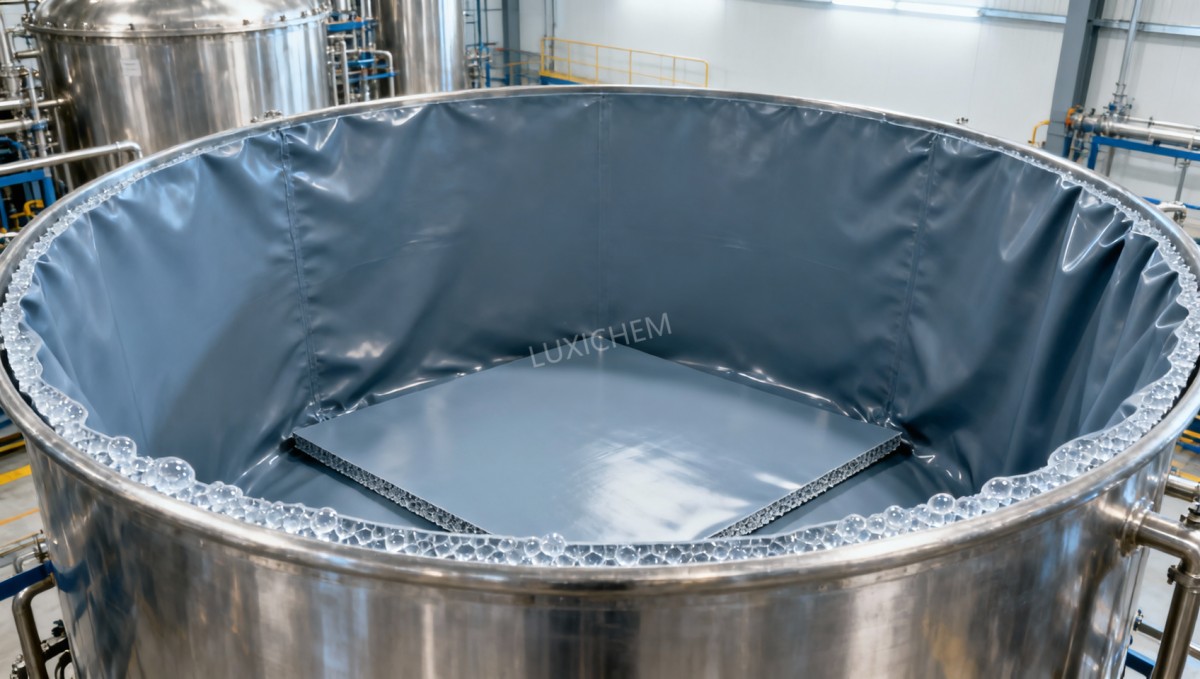
In chemical plants, polyethylene (PE) granules often serve as key components in reactor linings—especially in sulfuric acid, chlor-alkali, or organic solvent systems where metallic surfaces require non-reactive, dielectric protection. But unlike general-purpose PE used in packaging, reactor-grade PE must withstand continuous exposure to elevated temperatures, aggressive media, and cyclic thermal stress. A mismatch in MFI, density, or additives doesn’t just cause cosmetic defects—it triggers microcracking, interfacial delamination, and accelerated chemical permeation. Operators report up to 40% shorter lining service life when granules deviate even slightly from specification—leading to unplanned shutdowns, costly re-lining, and safety-critical leaks.
This isn’t theoretical risk. Field data from 12 facilities across Southeast Asia and the Middle East shows that 68% of premature lining failures were traced back to inconsistent MFI batches—causing uneven melt flow during rotational or extrusion-based lining application. That’s why your daily checklist must start not with “Is it PE?” but “Is it *reactor-grade* PE—with documented, batch-certified MFI, density, and additive traceability?”
MFI: The Silent Gatekeeper of Lining Uniformity and Adhesion
Melt Flow Index (MFI) measures how easily molten PE flows under standardized temperature and load. For reactor linings, MFI is not about “easier processing”—it’s about reproducible thickness control and molecular entanglement at the substrate interface. Too low (<0.3 g/10 min at 190°C/2.16 kg): the melt is too viscous, leading to poor wetting of steel or FRP substrates, air entrapment, and pinholes. Too high (>1.2 g/10 min): excessive flow causes sagging on vertical surfaces, thinning at weld seams, and reduced cross-link density post-cooling.
At Luxi Chemical, we hold MFI tolerance within ±0.05 g/10 min across every production lot—and provide full MFI test reports with each shipment. Our standard offering for lined reactors is PE HD 50027 (MFI = 0.65 ± 0.05 g/10 min, 190°C/2.16 kg), validated in >300 linings across nitric acid and sodium hypochlorite service. Consistency here means fewer operator interventions during lining application—and fewer “why did this spot blister?” investigations during commissioning.
Density: Not Just a Number—It’s Your Thermal & Mechanical Anchor
Density determines crystallinity—and crystallinity dictates how PE responds to heat, pressure, and chemical swelling. Low-density PE (0.910–0.925 g/cm³) offers flexibility but swells excessively in polar solvents and softens above 60°C. High-density PE (0.940–0.970 g/cm³) resists swelling and maintains rigidity—but becomes brittle below −20°C and may crack under impact or thermal cycling.
For reactor linings operating between 20–80°C in intermittent exothermic processes, the sweet spot is medium-high density: 0.950–0.960 g/cm³. This range delivers optimal balance—retaining >92% tensile strength after 1,000 hrs in 40% H₂SO₄ at 60°C (per ASTM D543), while absorbing thermal expansion without debonding. Our PE granules meet ISO 1183-1 density testing with certified uncertainty ≤±0.001 g/cm³—critical when lining thickness tolerances are held to ±0.3 mm.
Additive Package: Where “Inert” Meets “Reactive Environment”
Stabilizers, antioxidants, and UV absorbers are essential—but in chemical reactors, they’re double-edged swords. Common hindered phenol antioxidants (e.g., Irganox 1010) can hydrolyze in acidic media, generating acidic byproducts that accelerate substrate corrosion. Likewise, some slip agents migrate under heat, creating weak boundary layers at the PE–steel interface.
Luxi Chemical formulates reactor-grade PE with non-migrating, hydrolysis-resistant stabilizers—including phosphite-based secondary antioxidants and surface-passivating metal deactivators. All additives are pre-screened for leachability in simulated process streams (pH 0.5–12, 25–80°C, 72-hr immersion). We also avoid halogenated flame retardants—strictly prohibited in food-contact and pharmaceutical-grade reactor linings. For operators managing multi-product facilities, this means one PE grade can safely line reactors handling Petrolatum CAS#8009-03-8 emulsions, fertilizer slurries, and organic intermediates—without cross-contamination risk.
How to Verify Real-World Suitability—Before You Pour a Single Kilogram
Don’t rely solely on datasheets. Ask your supplier for: (1) Batch-specific MFI + density certificates (ASTM D1238 / ISO 1133 & ISO 1183); (2) Accelerated aging reports (7-day immersion in representative process media at max operating T); (3) Peel adhesion test results (ASTM D903) on actual substrate samples; and (4) Full additive SDS—not just “stabilized” or “food-grade.” Luxi Chemical provides all four with every order, plus optional third-party verification via SGS or TÜV Rheinland upon request.
Also: request a trial batch. Run it through your exact lining process—rotational molding speed, cooling ramp, post-annealing cycle—and measure final thickness uniformity and void content (ASTM D2739). If your current PE shows >5% variance in thickness across a 2-m² test panel, you’re already risking localized failure.
Conclusion: Three Parameters, One Operational Outcome
For operators, PE granules aren’t abstract materials—they’re the first line of defense between corrosive chemistry and plant integrity. MFI governs whether your lining applies evenly. Density determines whether it stays intact under thermal and chemical stress. The additive package decides whether it protects—or secretly undermines—the substrate beneath. At Luxi Chemical, we engineer PE granules not to generic standards, but to your reactor’s real-world duty cycle: temperature profiles, media composition, cleaning protocols, and maintenance windows. Every parameter is traceable, every batch validated, every specification built for uptime—not just compliance. When your next lining project starts, ask not “What PE do I have?” but “What PE will keep my reactor running—for 5 years, not 18 months?” That’s the difference between feedstock and functional assurance.
Related Picks
 Butylated Hydroxytoluene Price Drivers: Supply, Purity, and Purchasing Risk FactorsOct 21, 2026Butylated Hydroxytoluene price trends depend on supply stability, purity, logistics, and purchasing risk. Learn how to compare quotes wisely and reduce sourcing costs.
 Sodium Tripolyphosphate Price Trends: Raw Material and Energy ExposureOct 20, 2026Explore sodium tripolyphosphate price trends, from phosphate and soda ash costs to energy exposure. Learn how to compare quotes, manage sourcing risks, and make smarter purchasing decisions.
 Acetonitrile Shipment to Vietnam Successfully Dispatched; RCEP Benefits Boost Fine Chemical Trade with ASEANSep 16, 2026A shipment of industrial-grade acetonitrile from our company has recently been loaded and dispatched following the completion of standardized hazardous material packaging and container securing procedures.
 Nigerian Client’s Order of 4 Containers of Vinyl Acetate Successfully Loaded and Shipped to West AfricaSep 16, 2026We recently completed the loading of a vinyl acetate order for a Nigerian client; four containers of the product have been successfully packed and are ready for shipment to Nigeria.




Question Consultation
Send Us Your Inquiry Today

Luxi Chemical is a professional chemical product supplier with ample stock of all chemical categories and excellent quality, welcome your purchase inquiry.

