


PVC SG5 for Pipe Production: What Technical Buyers Should Check Before Ordering
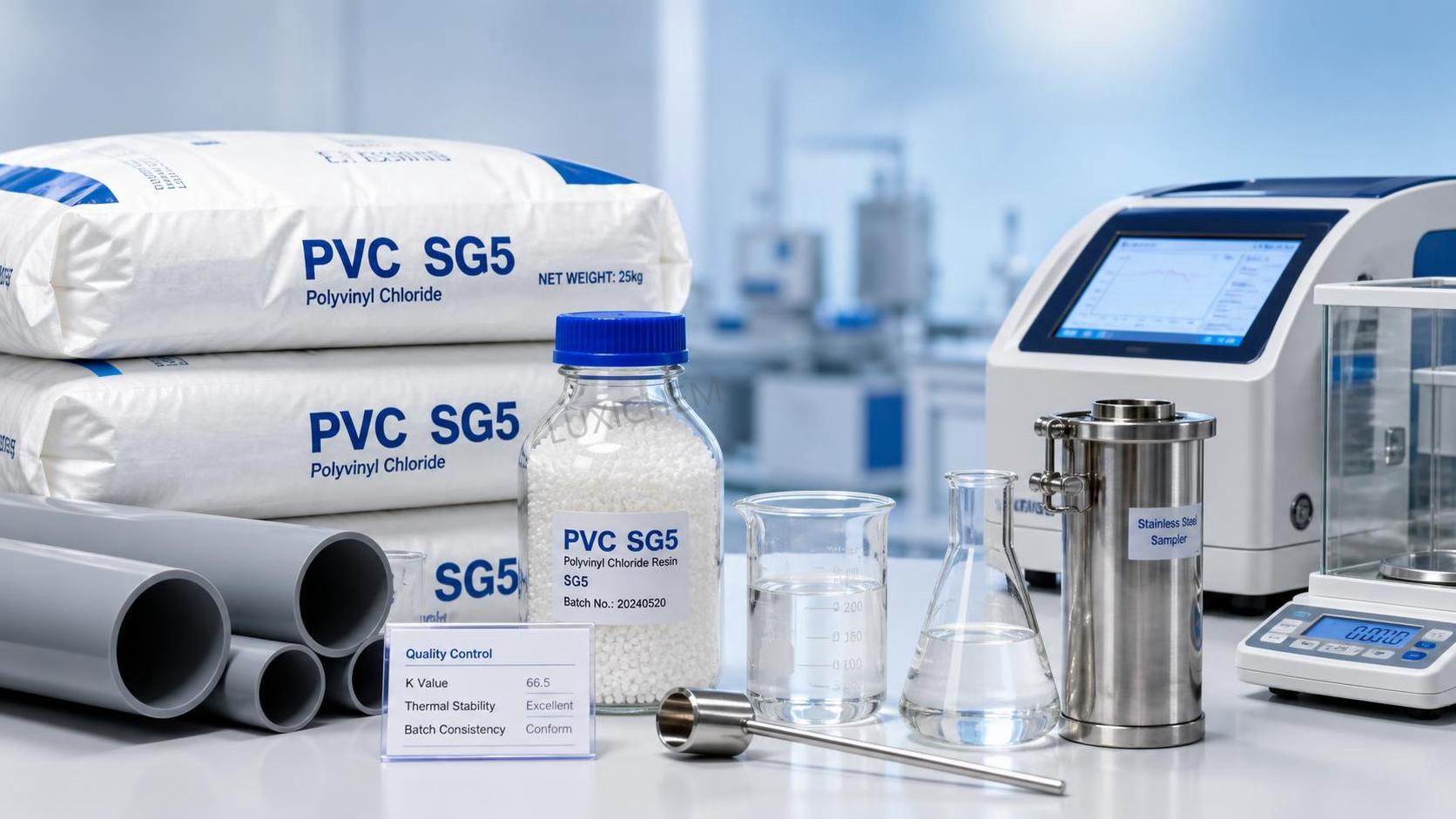
Technical buyers searching for pvc sg5 for pipe production are usually not looking for a generic material overview. Their core intent is to verify whether a specific grade can deliver stable extrusion performance, compliant pipe quality, and predictable procurement outcomes before placing an order.
They care most about measurable indicators: K value, apparent density, volatile content, impurity level, whiteness, thermal stability, fish eyes, batch consistency, and how these properties affect formulation, throughput, and final pipe performance.
The most useful content for this audience is practical evaluation guidance. That includes what to ask suppliers for, which data points to compare, what risks poor resin quality creates in pipe extrusion, and how to screen for supply reliability beyond a quoted price.
The article should therefore focus on technical checkpoints, supplier verification, application impact, and ordering risk control. General introductions to PVC chemistry or overly broad corporate promotion should be kept light and secondary.
For technical buyers sourcing pvc sg5 for pipe manufacturing, performance data matters more than price alone. Before ordering, it is essential to verify K value, thermal stability, impurity control, bulk density, and consistency between batches to ensure smooth processing and reliable pipe quality. This article outlines the key technical checkpoints that help evaluation teams reduce risk, improve procurement accuracy, and choose a supplier with stable quality assurance.
Why pvc sg5 Is Commonly Selected for Pipe Extrusion
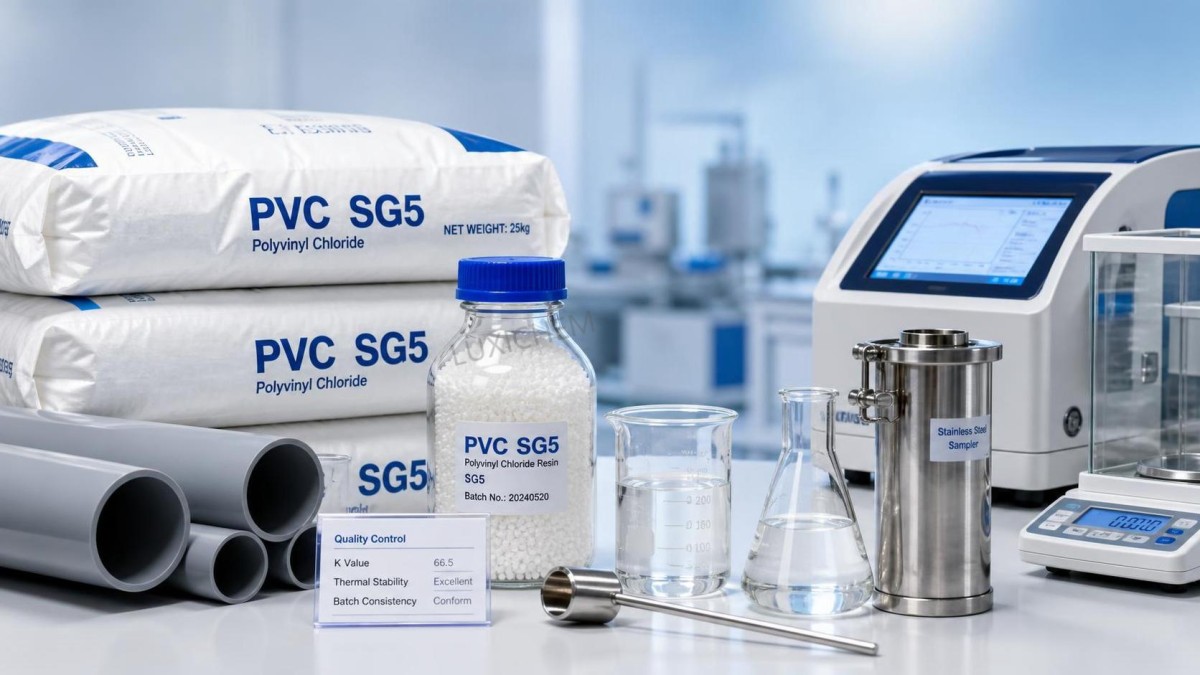
PVC SG5 is widely used in rigid pipe applications because it offers a practical balance between strength, processability, and formulation flexibility in standard extrusion systems.
For technical evaluation teams, the key point is not simply that a resin is labeled SG5. The real question is whether its production profile matches your pipe formulation, line speed, and quality targets.
In many factories, small resin differences create visible processing changes. Output rate, melt behavior, die pressure, fusion balance, and surface finish can all shift when resin properties drift outside the expected range.
That is why experienced buyers review material data in connection with the actual end use. A pipe-grade purchase decision should be made against processing reality, not against a product name alone.
Which Technical Properties Should Be Checked First
The first checkpoint is K value, since it strongly influences molecular weight, melt viscosity, and mechanical performance. For pipe production, buyers usually want SG5 resin with a consistent, application-appropriate K value range.
If the K value is too low, the pipe may lose part of its mechanical strength potential. If it is too high, processing may become less stable and fusion control may be harder.
The second key property is apparent or bulk density. This affects material feeding, mixing efficiency, plasticizer-free dry blend behavior, and output consistency on the extrusion line.
Stable bulk density helps reduce feeding fluctuations and supports more predictable residence time. When density varies too much between lots, processors may experience uneven melting or less stable dimensional control.
Porosity also deserves attention because it influences additive absorption and blend homogeneity. Resin with suitable porosity can support more uniform stabilizer and processing aid distribution in dry blends.
Volatile matter should also be checked carefully. Excess volatiles can contribute to bubbles, poor surface appearance, and instability during extrusion, especially on lines running at higher output.
Impurity content matters for both product quality and equipment cleanliness. Foreign particles, black specks, or off-spec contamination can damage appearance, increase scrap, and create unnecessary customer complaints.
How Thermal Stability Affects Pipe Quality and Production Efficiency
Thermal stability is one of the most practical screening points when evaluating pvc sg5 for pipes. It directly affects how the resin behaves under shear and heat during extrusion.
Pipe producers need a resin that can tolerate normal processing windows without early discoloration or degradation. Weak thermal stability narrows the operating window and makes production more sensitive to minor line changes.
In practical terms, poor stability can show up as yellowing, rough surfaces, plate-out, unstable pressure, or reduced output. It may also force operators to lower line speed to keep quality under control.
That creates a hidden procurement cost. A cheaper resin can become expensive if it reduces production efficiency, increases scrap rates, or causes extra downtime for cleaning and adjustment.
When buyers ask for stability information, they should not rely only on broad marketing claims. It is better to request test methods, typical values, and if possible, trial feedback from comparable pipe applications.
Why Batch-to-Batch Consistency Is Often More Important Than a Low Offer Price
For long-run pipe production, consistency between batches is often the most critical procurement factor. A line can usually be optimized around a stable resin, even if the resin is not the cheapest option.
The real problem begins when one shipment performs differently from the last. Operators then need to re-adjust formulation, temperatures, screw settings, or haul-off conditions just to maintain acceptable pipe quality.
That instability consumes labor and increases risk across the entire process. It can also complicate quality traceability when a customer asks why one production lot differs from another.
Technical buyers should therefore compare not only single test reports, but also the supplier’s ability to control variation over time. Ask for historical batch data if available, especially for core parameters.
A reliable supplier should be able to explain how raw material control, polymerization management, inspection procedures, and shipment release standards support consistency across regular deliveries.
What Documents and Data Technical Buyers Should Request Before Ordering
Before confirming an order, technical teams should request a current specification sheet, certificate of analysis, safety documentation, packaging details, and typical application guidance for pipe processing.
The certificate of analysis should match the actual shipment standard rather than a generic template. Buyers should confirm whether key indicators are tested batch by batch or only monitored periodically.
It is also useful to ask about test items such as K value, bulk density, volatile matter, fish eyes, impurity count, whiteness, and thermal stability time where applicable.
Fish eyes and ungelled particles may not always be the first item buyers ask about, but they can affect melt uniformity and pipe surface quality. For visible-finish products, this becomes more important.
Packaging and storage conditions should not be overlooked. Resin quality can be affected by moisture exposure, poor bag integrity, or weak pallet handling during international shipment and warehousing.
In some procurement systems, buyers also compare cross-category sourcing capability. A diversified chemical supplier can simplify vendor management, especially for companies purchasing several raw materials together.
For example, some buyers working across multiple product lines may also source specialty materials such as Mangiferin CAS#4773-96-0 from the same trade partner when broader procurement efficiency matters.
How to Evaluate Supplier Capability Beyond the Product Datasheet
A datasheet is necessary, but it is not enough. Technical buyers should examine whether the supplier can support repeat orders, stable lead times, and responsive issue handling after delivery.
First, check whether the supplier has a clear quality control system and export experience. This is especially important for buyers managing customs, compliance documents, and shipment planning across different regions.
Second, assess communication quality. When technical questions are raised, strong suppliers respond with specific data, realistic tolerances, and application-related explanations rather than generic sales language.
Third, ask about complaint handling and replacement policy. Even when a supplier has strong controls, buyers still need to know how non-conforming lots are investigated and resolved.
Fourth, review supply breadth and operational maturity. Companies with broader chemical trade experience may offer better coordination, documentation speed, and procurement continuity across changing market conditions.
Luxi Chemical (Shandong) Co., Ltd., for example, operates as a comprehensive chemical enterprise serving customers in more than 60 countries and regions, with experience in chemical raw materials, chemical products, and international trade support.
For technical buyers, that kind of operational background can matter because procurement risk is rarely limited to the resin itself. Documentation, shipment control, and responsiveness can directly affect production continuity.
What Warning Signs Suggest a Higher Procurement Risk
Several red flags should trigger deeper review before ordering pvc sg5. One is when a supplier provides only a broad product introduction but avoids batch-level technical data.
Another warning sign is an unusually aggressive price with no clear explanation of quality control, production source, or consistency history. Low price alone is not evidence of value.
Buyers should also be cautious if sample performance looks acceptable but the supplier cannot explain whether the commercial lot will come from the same production conditions as the sample.
Incomplete export documentation, slow technical responses, and vague answers about testing frequency can also indicate supply-side weakness. These gaps often become expensive only after the order has shipped.
Even unrelated portfolio items can reveal whether a supplier is operating with discipline. A company that manages different product lines, including items like Mangiferin CAS#4773-96-0, should still show clear specification control for each category rather than generic trading language.
A Practical Pre-Order Checklist for Technical Evaluation Teams
Before final approval, technical buyers should align procurement and production teams around a simple checklist that turns product evaluation into a repeatable decision process.
Confirm the target K value range and ensure it matches your formulation and pipe performance requirements. Verify bulk density, porosity, volatile matter, impurity level, and thermal stability indicators.
Request a recent certificate of analysis and compare it with the standard specification. Review whether the supplier can provide stable batch history, not just one favorable test result.
Check sample performance on actual equipment whenever possible. Focus on fusion behavior, output stability, pipe appearance, color, dimensional consistency, and any need for formulation adjustment.
Review packaging method, shipment terms, storage recommendations, lead time, and complaint response procedures. These details influence the practical reliability of the order as much as the nominal specification.
Finally, compare total procurement value instead of unit price only. The best purchasing outcome is the resin that supports stable production, lower reject rates, and fewer avoidable disruptions.
Conclusion
For pipe manufacturers, selecting pvc sg5 should be a technical qualification process, not a price-first shortcut. The right resin is the one that performs consistently in your actual extrusion environment.
Technical buyers should prioritize K value, bulk density, porosity, volatile matter, impurity control, and thermal stability, then verify whether those values remain stable from batch to batch.
Supplier evaluation should go beyond the datasheet to include documentation quality, export capability, communication accuracy, and problem-solving reliability. Those factors often determine whether procurement remains smooth after the first shipment.
When evaluation teams use clear technical checkpoints before ordering, they reduce sourcing risk, improve production predictability, and make better long-term decisions for pipe quality and operational efficiency.
Related Picks
 Butylated Hydroxytoluene Price Drivers: Supply, Purity, and Purchasing Risk FactorsOct 21, 2026Butylated Hydroxytoluene price trends depend on supply stability, purity, logistics, and purchasing risk. Learn how to compare quotes wisely and reduce sourcing costs.
 Sodium Tripolyphosphate Price Trends: Raw Material and Energy ExposureOct 20, 2026Explore sodium tripolyphosphate price trends, from phosphate and soda ash costs to energy exposure. Learn how to compare quotes, manage sourcing risks, and make smarter purchasing decisions.
 Acetonitrile Shipment to Vietnam Successfully Dispatched; RCEP Benefits Boost Fine Chemical Trade with ASEANSep 16, 2026A shipment of industrial-grade acetonitrile from our company has recently been loaded and dispatched following the completion of standardized hazardous material packaging and container securing procedures.
 Nigerian Client’s Order of 4 Containers of Vinyl Acetate Successfully Loaded and Shipped to West AfricaSep 16, 2026We recently completed the loading of a vinyl acetate order for a Nigerian client; four containers of the product have been successfully packed and are ready for shipment to Nigeria.




Question Consultation
Send Us Your Inquiry Today

Luxi Chemical is a professional chemical product supplier with ample stock of all chemical categories and excellent quality, welcome your purchase inquiry.

