


Plant Growth Regulators: Matching Active Ingredients to Crop Development Stages
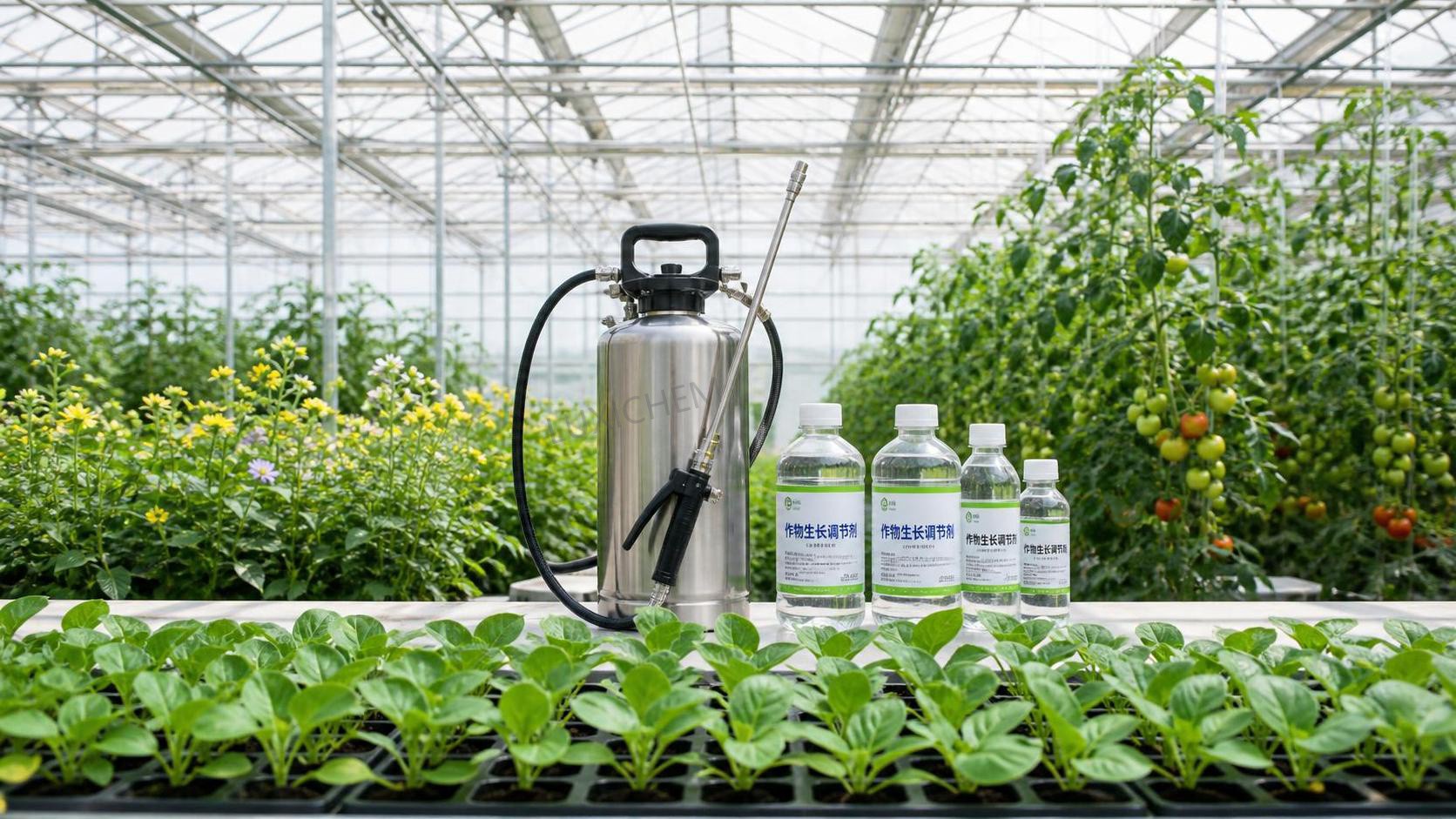
Plant growth regulators work best when they are treated as stage-specific tools rather than general crop “boosters.” The same active ingredient can be useful at one point in crop development and harmful or ineffective at another. A gibberellin application that supports elongation or fruit sizing may weaken compact seedlings; an ethylene-releasing treatment used to coordinate ripening can reduce marketable quality if applied before fruit has reached physiological maturity. The practical question is not simply which plant growth regulator to use, but what developmental process needs to be influenced now.
Crop stage, plant condition, target organ, weather, water status, cultivar response, and label restrictions all affect the answer. Operators should therefore begin with a field or greenhouse diagnosis: identify the crop stage accurately, define the required response in observable terms, and rule out nutrition, irrigation, pest, disease, salinity, or temperature stress before applying a regulator. Plant Growth Regulators can modify physiological signals; they do not correct the root cause of poor crop establishment or chronic stress.
Start with the crop process, not the product category
Growth regulation is most reliable when the intended result is specific. “Improve growth” is too broad to guide selection. More useful objectives include reducing excessive internode extension, improving root initiation on propagation material, increasing fruit set under a defined production program, thinning excess flowers or young fruit, delaying senescence, or coordinating ripening before harvest.
Each objective corresponds to a different physiological process. Auxins are closely associated with rooting, apical dominance, fruit development, and abscission responses. Cytokinins influence cell division, bud activity, and delayed leaf senescence. Gibberellins affect elongation, dormancy release, flowering behavior in some crops, and fruit growth. Abscisic acid is associated with stress signaling, stomatal regulation, and dormancy-related responses. Ethylene and ethylene-releasing compounds influence ripening, senescence, abscission, and flowering in selected crops. Growth retardants reduce gibberellin biosynthesis and are used where compact growth or improved structural balance is the desired outcome.
These descriptions are only a starting point. Crop species and cultivar determine whether a response is commercially useful. Rate, application method, timing, temperature, and the crop’s existing hormone balance can change the result substantially. An operator should never assume that an active ingredient used successfully on one crop can be transferred directly to another.
Seed, propagation, and seedling establishment
The establishment phase is defined by germination, emergence, root formation, leaf expansion, and adaptation to the growing environment. At this point, uniformity matters more than visible top growth. Stretching seedlings, forcing rapid leaf expansion, or applying regulators to stressed young plants can create weak, uneven material that is harder to manage later.
Auxin-based rooting treatments are most relevant where cuttings, liners, transplants, or vegetative propagation are involved. Their role is to support adventitious root initiation, not to compensate for poor cutting quality, unsuitable substrate temperature, excess moisture, or poor sanitation. Application concentration and contact time are critical: insufficient exposure may produce inconsistent rooting, while excessive concentration can cause basal injury, callusing without adequate roots, or distorted early growth.
Gibberellins may be used in certain labeled seed-treatment or dormancy-management programs, but their use around emergence requires discipline. A response that promotes germination or elongation can become undesirable if it produces soft tissue or uneven plant height. For plug and transplant production, growers commonly focus on environmental control first: light intensity, day-night temperature difference, irrigation cycles, substrate conductivity, and spacing often have a larger influence on seedling form than a regulator correction applied after stretching has already occurred.
Where seedlings are under drought, chilling, heat, root-zone salinity, or transplant shock, avoid treating them merely because the schedule calls for it. Hormone signaling under stress is already altered. Applying a PGR to plants that have not resumed active growth can produce variable uptake and irregular responses across the crop.
Managing vegetative growth: balance canopy and structure
During vegetative development, the operational challenge is often balance. A crop needs enough leaf area and stem extension to build photosynthetic capacity, but excessive extension creates shading, poor air movement, weak stems, lodging risk, and uneven flowering. This is the phase where gibberellin-inhibiting growth retardants are commonly considered for ornamental crops, compact transplants, and other systems where plant architecture directly affects handling or production quality.
Timing determines whether a growth-retarding treatment moderates future extension or simply suppresses a crop that is already under pressure. Applications are generally more predictable on actively growing plants with a functioning root system and even moisture. When plants are drought-stressed, root-restricted, nutritionally imbalanced, or exposed to low light, a standard rate may act more strongly than expected because the crop’s natural growth rate is already limited.
Method matters as much as active ingredient. A foliar spray acts mainly where droplets contact plant tissue; uniform coverage is essential. Drench applications place the active ingredient in the root zone and can produce longer-lasting effects, but substrate volume, irrigation practice, container size, and leaching potential influence the final response. Spray equipment must be calibrated for output, pressure, nozzle pattern, and walking or boom speed. “Per tank” calculations are not a substitute for knowing the delivered amount per unit area or per plant.
Do not use a PGR to hide poor crop density decisions. Excessively close spacing and insufficient light produce a canopy problem, not merely a stem-length problem. A growth regulator may reduce elongation while leaving lower leaves shaded and humidity trapped within the canopy. Correcting plant spacing, ventilation, pruning, and irrigation management may be necessary before any chemical intervention can produce a stable result.
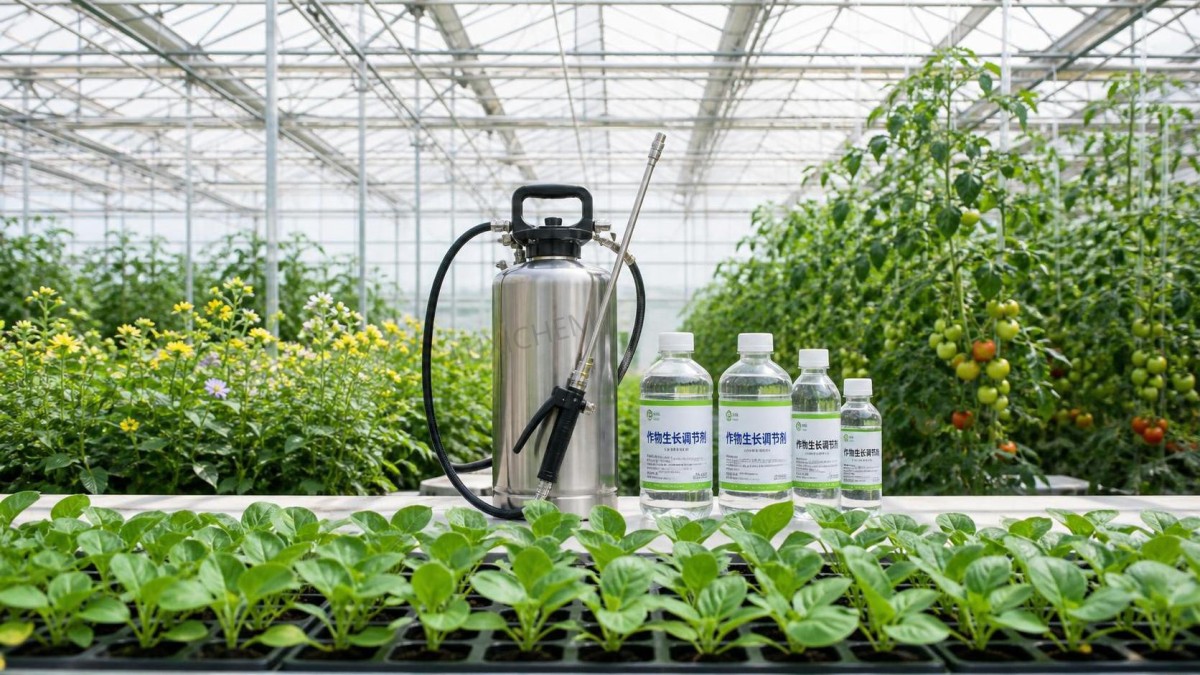
Transition to flowering: avoid treating the calendar as the crop stage
Flower initiation and visible flowering are not the same stage. Many crops begin floral induction before buds become obvious, and the timing may depend on day length, temperature accumulation, plant maturity, carbohydrate status, and cultivar. A product selected for flowering management must be matched to the biological stage specified on its label, not just to a planned production week.
Cytokinin-containing programs may be used in selected horticultural systems where bud activity, branching, or cell division is the target. Gibberellins may influence flowering behavior in certain species. Ethylene-related treatments can induce flowering in particular crops under carefully defined conditions. These are crop-specific uses, not universal flowering solutions.
Before treating, inspect a representative sample of plants rather than relying on the most advanced or most delayed section of the block. Check bud development, internode condition, shoot maturity, leaf color, irrigation uniformity, and pest pressure. If the crop is uneven, a single blanket application can widen the gap: advanced plants may be pushed too far while delayed plants show little response. Splitting blocks by developmental stage is often more reliable than increasing or decreasing the rate for the entire area.
Flowering-stage applications also require attention to spray timing. High temperature, low relative humidity, and rapidly drying leaf surfaces can reduce uniform absorption or raise crop-safety risk. Rainfall or overhead irrigation soon after treatment may reduce effective deposit on foliage. Conversely, prolonged wetness may increase uptake for some formulations. Product-specific labels and local agronomic guidance should determine acceptable weather and re-entry conditions.
Fruit set, thinning, and early fruit development
Fruit set is one of the most sensitive periods for PGR decisions because small changes in timing can influence crop load, fruit shape, seed development, and subsequent vegetative balance. Auxin- or gibberellin-based products may be used in specific fruit crops to influence set, thinning, fruit retention, or fruit growth. Yet the correct window may be measured by bloom stage, fruit diameter, days after full bloom, or another crop-specific growth marker. Applying outside that window can produce little effect or an unwanted one.
It is important to separate a pollination problem from a hormone-management problem. Poor fruit set may result from low or high temperatures during flowering, insufficient pollinator activity, poor pollen viability, water deficit, excessive nitrogen-driven vegetative growth, disease, or cultivar incompatibility. A PGR cannot reliably correct every cause. Applying it without diagnosis risks irregular set and makes later crop-load management more difficult.
For thinning programs, the desired outcome is not maximum fruit removal. The target is an economically appropriate crop load that supports fruit size, return bloom, branch strength, and harvest efficiency. Operators should assess bloom density, tree or plant vigor, prior crop load where relevant, weather around the treatment period, and the label-defined rate range. Do not judge thinning immediately after application; abscission responses require time and may be affected by weather after spraying.
During early fruit enlargement, gibberellin or cytokinin-related responses may be used in crop-specific programs to support size, shape, or surface quality. The crop must have adequate water and nutrient supply to translate a growth signal into usable development. A fruit-sizing treatment on a water-limited crop can increase variability rather than improve uniformity.
Nutrition supports the response but is not a plant growth regulator
PGR decisions are frequently complicated by nutrient symptoms that resemble hormonal imbalance. Magnesium deficiency, for example, can reduce chlorophyll formation and photosynthetic performance, often appearing first as interveinal chlorosis on older leaves because magnesium is mobile within the plant. Reduced carbohydrate production can limit root growth, flowering, and fruit fill. Treating this condition with a growth regulator alone does not address the limiting factor.
In compatible fertilizer programs, a soluble magnesium source may be selected to correct a documented nutrient need. Materials such as Magnesium L-lactate trihydrate CAS#18917-93-6 are magnesium-containing chemical materials, not PGR active ingredients. Its suitability for an agricultural formulation depends on the applicable fertilizer rules, formulation design, water quality, crop requirements, and compatibility testing. The distinction matters operationally: nutrition supplies a mineral input, whereas a PGR changes a signaling response. They should not be substituted for one another.
Tank mixing deserves particular caution. A mixture that remains clear in a jar may still be unsuitable for crop application because pH, water hardness, surfactants, formulation solvents, micronutrients, and pesticides can affect stability, uptake, or phytotoxicity. Check each product label for mixing restrictions, use clean water, add materials in the recommended sequence, maintain agitation where required, and test a small representative area before treating the full crop. Never assume that a fertilizer-compatible spray is automatically compatible with a PGR program.
Maturation, ripening, and harvest coordination
Late-season growth regulation is often about synchronizing a process that is already underway, not forcing immature produce into market condition. Ethylene-releasing products and related treatments may be used in labeled crops to manage ripening, coloration, degreening, abscission, or harvest timing. Their response depends on crop maturity, temperature, canopy condition, and dose.
Premature application is a common error. Fruit can change color before it develops the flavor, dry matter, firmness profile, or storage behavior required by the intended market. A visually advanced crop is not necessarily physiologically mature. The harvest decision should still rely on the crop’s established maturity indicators, such as size, internal quality measures, firmness, dry matter, starch conversion, or other crop-appropriate criteria.
Drift control is especially important with ethylene-active materials and growth regulators that influence sensitive neighboring crops. Select nozzles and pressure for the required droplet spectrum, avoid spraying under conditions that favor off-target movement, maintain buffer practices required by the label, and clean equipment thoroughly before using it on another crop. Residues in hoses, filters, booms, or handheld equipment can be enough to cause unexpected effects on sensitive plants.
Build each application around verification
A disciplined PGR application begins before the spray tank is filled. Confirm the active ingredient, formulation, crop, variety where listed, growth stage, target response, application method, rate unit, water volume, maximum seasonal use, pre-harvest interval where applicable, and local legal status. Agricultural uses are jurisdiction-specific; a product label valid in one market is not an authorization to use the same product elsewhere.
Maintain an application record that captures the block, crop stage, date and time, product batch, rate, water volume, equipment settings, weather, irrigation status, and observations before and after treatment. This record is not only for traceability. It helps distinguish a timing problem from a rate problem, an equipment issue from a crop-condition issue, and a genuine treatment response from changes caused by weather or crop management.
The most dependable approach is to use Plant Growth Regulators only where the crop stage and intended physiological response clearly match the labeled active ingredient. When stage identification is uncertain, plants are stressed, or the problem may be nutritional or environmental, delay the application and diagnose the crop first. Precision in timing and execution is what turns a regulator from a source of variability into a useful production tool.
Related Picks
 Butylated Hydroxytoluene Price Drivers: Supply, Purity, and Purchasing Risk FactorsOct 21, 2026Butylated Hydroxytoluene price trends depend on supply stability, purity, logistics, and purchasing risk. Learn how to compare quotes wisely and reduce sourcing costs.
 Sodium Tripolyphosphate Price Trends: Raw Material and Energy ExposureOct 20, 2026Explore sodium tripolyphosphate price trends, from phosphate and soda ash costs to energy exposure. Learn how to compare quotes, manage sourcing risks, and make smarter purchasing decisions.
 Acetonitrile Shipment to Vietnam Successfully Dispatched; RCEP Benefits Boost Fine Chemical Trade with ASEANSep 16, 2026A shipment of industrial-grade acetonitrile from our company has recently been loaded and dispatched following the completion of standardized hazardous material packaging and container securing procedures.
 Nigerian Client’s Order of 4 Containers of Vinyl Acetate Successfully Loaded and Shipped to West AfricaSep 16, 2026We recently completed the loading of a vinyl acetate order for a Nigerian client; four containers of the product have been successfully packed and are ready for shipment to Nigeria.




Question Consultation
Send Us Your Inquiry Today

Luxi Chemical is a professional chemical product supplier with ample stock of all chemical categories and excellent quality, welcome your purchase inquiry.

