


Polypropylene Plastic Pellets: How Grade Selection Affects Production Cost
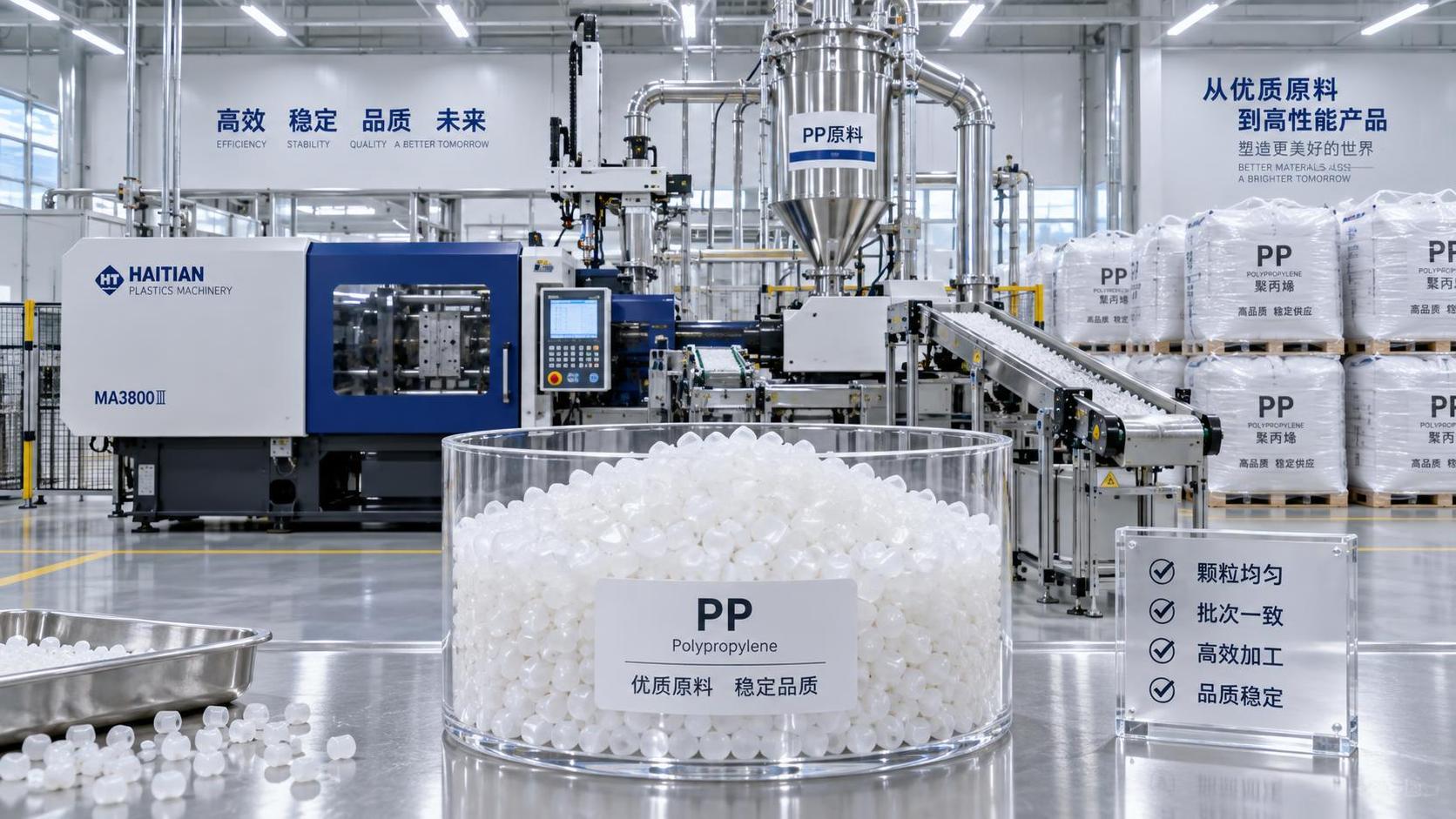
Choosing polypropylene plastic pellets by purchase price alone can lower the apparent material cost while increasing the cost of molding, extrusion, rejected parts, customer claims, or production interruptions. For a business evaluator, the most useful starting point is to ask a narrower question: which grade delivers the required part performance at the lowest stable conversion cost on the equipment that will actually process it?
That answer depends on more than whether a supplier labels the material as homopolymer, random copolymer, or impact copolymer. Melt flow behavior, stiffness, impact performance, contamination control, additive package, lot consistency, and documentation can all change the economics of production. A lower-cost grade may be appropriate when specifications are forgiving and output is stable. It becomes expensive when it causes short shots, warpage, long cooling times, poor surface appearance, excessive regrind, or a quality problem that reaches the customer.
Material cost is only one part of the grade decision
The resin invoice is visible and easy to compare. The less visible costs are often more important over a production run: kilograms consumed per acceptable part, machine time per cycle, operator intervention, energy used for drying or processing, scrap disposal, rework, and the cost of holding safety stock for inconsistent supply. Procurement teams should therefore evaluate polypropylene plastic pellets as a conversion input, not simply as a traded commodity.
For a molded product, a small difference in density, shrinkage behavior, or flow can alter part weight and dimensional stability. For an extrusion line, variation in melt flow can affect pressure, throughput, gauge control, and downstream handling. A grade that is slightly more expensive per tonne may still reduce the cost per acceptable unit if it allows faster cycles, lower reject rates, or a thinner wall without compromising the required performance.
Conversely, a premium grade is not automatically the economical choice. Paying for high impact strength, low-temperature toughness, optical clarity, food-contact suitability, enhanced ultraviolet resistance, or unusually narrow property tolerances makes little sense if the end product does not need those characteristics. The objective is not to buy the highest specification. It is to buy a grade whose performance range matches the application with enough processing margin to absorb normal production variation.
Start with the failure mode the grade must prevent
Grade selection becomes clearer when the purchasing discussion begins with the product failure that would create the largest cost. A rigid household item may fail through warpage or hinge cracking. A packaging component may fail through poor appearance, inconsistent wall thickness, odor, or regulatory nonconformance. An automotive or industrial part may require impact retention under a defined temperature range. A woven or nonwoven application may be constrained by drawability, filament breaks, or stiffness.
These risks lead to different material priorities:
- For stiffness-driven parts: a homopolymer may provide an efficient balance of rigidity and heat resistance, but brittleness and impact requirements must be checked rather than assumed.
- For transparent or flexible packaging: random copolymer grades can offer improved clarity and lower sealing or processing temperatures in appropriate applications, although the trade-off in stiffness may matter.
- For impact-sensitive molded components: impact copolymer grades may reduce cracking risk, particularly where handling or lower-temperature use is relevant, but their flow and surface characteristics need to suit the tool and finish requirement.
- For high-output processing: melt flow rate and its lot-to-lot control may matter as much as the nominal grade family, because stable flow supports predictable filling, pressure, and cycle settings.
These categories are useful screening tools, not a final specification. Two grades in the same category can behave differently because of molecular structure, additive formulation, ash content, volatiles, pellet quality, or production control. A data sheet should narrow the shortlist; it should not replace validation on the intended line.
Melt flow rate affects output, scrap, and operating margin
Melt flow rate is often the first property reviewed because it strongly influences processing behavior. Higher-flow material generally fills thin sections and complex molds more easily, while lower-flow material can support applications needing greater melt strength or certain mechanical characteristics. But a nominal melt flow number is not a universal instruction to buy high or low.
In injection molding, a grade with insufficient flow for the tool may require higher pressure, elevated melt temperature, or longer fill time. The direct result can be short shots, visual defects, internal stress, higher energy use, or a narrower operating window. In extrusion, an unsuitable flow level may limit line speed or destabilize the melt. Both situations turn a material decision into a productivity problem.
Buying the highest-flow option can also create costs. Excessive flow for the application may weaken the part, increase flash risk, change shrinkage, or produce a surface result that fails customer expectations. In some cases, processors compensate with tool or machine adjustments that reduce the benefit they expected from easier flow. The commercial question is therefore whether the grade provides enough flow for efficient processing while retaining the property profile the finished product needs.
More important than a single nominal figure is the permitted variation. A converter may be able to run a target melt flow rate efficiently but lose stability when incoming lots move materially around that target. The supplier specification, certificate of analysis format, and history of lot consistency should be reviewed alongside the nominal value. Procurement should also establish what action is available when a shipment sits within the supplier’s broad specification but falls outside the plant’s practical processing window.
Mechanical properties should be translated into part economics
Tensile strength, flexural modulus, impact resistance, elongation, and heat performance are often compared as isolated data-sheet values. That approach is useful only when evaluators connect each property to a product requirement. A higher flexural modulus might enable a thinner-wall design, improve stackability, or reduce deformation during transport. Yet it may also increase brittleness if the geometry includes stress concentrators. Higher impact resistance can prevent field breakage, but may not justify a cost premium for a thick, protected part with low mechanical exposure.
The lowest-cost formulation is frequently the one that avoids over-specification. A buyer should define the minimum functional threshold for the finished article, including the environment in which it is used. Indoor use, outdoor exposure, repeated flexing, contact with chemicals, cold handling, and prolonged loading all change the value of a property claim.
There is also a difference between resin performance and part performance. Gate location, wall thickness, weld lines, fiber or mineral fillers, pigments, recycled content, mold temperature, cooling rate, and assembly stresses can all alter the outcome. A resin grade may meet a target test value while the molded part fails its own use condition. Cost evaluation should therefore include a representative part trial or a well-defined process qualification, especially when substituting an established grade.
Quality consistency is a cost-control variable
A grade can be technically suitable and still be commercially risky if quality varies shipment to shipment. Changes in pellet size distribution, fines, color, moisture exposure, contamination, odor, volatile content, or additive dispersion can interrupt production even where core mechanical properties appear acceptable. The cost is rarely limited to the affected material. A line stoppage can disrupt labor schedules, delivery commitments, tooling utilization, and downstream packaging operations.
For this reason, a sourcing assessment should examine the supplier’s ability to maintain a clear and repeatable product specification. Useful controls include traceable batch identification, certificates of analysis linked to each lot, retained samples where appropriate, defined procedures for nonconforming material, and agreed change-notification requirements. The procurement team should know whether a plant, catalyst system, additive package, source of recycled feedstock, or packaging method can change without prior notice.
Packaging deserves attention because poor handling can erase the value of a well-made resin. Damaged bags, weak pallet protection, unclear batch markings, mixed lots, and poor warehouse rotation raise the chance of contamination or traceability gaps. For production sites using pneumatic conveying or automated feeding, pellet cleanliness and fines control may have measurable effects on filters, housekeeping, and feeding stability.
Recycled content changes the evaluation method
Recycled polypropylene can reduce material expenditure or support a product’s recycled-content target, but it should not be treated as a direct drop-in replacement merely because the resin is described as PP. Post-consumer and post-industrial streams can differ in polymer history, residual additives, odor, color stability, contamination risk, and property variability. The economic case depends on the tolerance of the application and the controls surrounding the recycled stream.
For noncritical products with broad dimensional and cosmetic tolerances, a controlled recycled blend may be commercially attractive. For thin-wall packaging, visible parts, odor-sensitive products, food-contact applications, or components with demanding mechanical requirements, the buyer may need tighter qualification, virgin-content blending, or a different sourcing strategy. The relevant calculation compares total usable output, not the quoted price per kilogram.
A practical trial should measure reject rate, part weight consistency, appearance, cycle time, odor where relevant, and mechanical performance after the proposed blend is introduced. It should also assess whether regrind generation and regrind reuse will change. A lower-cost recycled formulation that increases scrap can create a compounding material loss because both the virgin and recycled portions of the rejected part are affected.
Evaluate the supplier relationship around change control and delivery risk
Material qualification is often performed once, while supply risk develops later. A sound commercial review considers lead time, shipping route, minimum order quantity, lot size, packaging options, inventory strategy, and the supplier’s ability to provide the same grade over the expected life of the product. For an evaluator, an alternate source is only useful if it has been technically qualified or can be qualified without extended disruption.
Documentation requirements should be tied to the intended market and application. Depending on the use case, buyers may need declarations related to food contact, restricted substances, heavy metals, odor, migration, or other customer-specific requirements. These should be requested before commercial commitment, with the exact grade, manufacturing location, and intended application identified. A generic statement that applies to a product family may not be enough for a customer audit or regulated end use.
Broad chemical sourcing can be efficient for organizations that purchase multiple categories, but qualification should remain product-specific. A supplier’s availability of specialty materials, such as Polyvinylpyrrolidone CAS#9003-39-8, may support consolidated procurement for other operations, yet it does not establish the suitability of that supplier’s polypropylene grade for a molding or extrusion application. Each material needs its own technical documentation, application review, and incoming-quality controls.
A practical purchasing sequence
Before requesting quotations, create a concise grade brief that describes the part or product, process, annual volume, target properties, visual requirements, approved colorants or fillers, recycled-content policy, regulatory needs, and known processing limitations. Include the current grade and the reason for evaluation where one exists: cost reduction, supply diversification, design change, capacity expansion, or a quality concern. This prevents suppliers from quoting a technically adjacent but commercially unsuitable resin.
Then compare candidates in three stages. First, screen documents for grade family, melt flow range, mechanical profile, compliance information, packaging, and supply terms. Second, run controlled production trials using agreed process settings and record output, cycle time, scrap causes, part weight, dimensions, appearance, and relevant functional tests. Third, calculate the delivered cost per accepted unit rather than comparing only resin prices.
The final approval should define a workable operating range, not just a named product. This includes acceptable material-property limits, process settings, part acceptance criteria, documentation requirements, and escalation procedures for deviations. Such discipline makes later supplier comparisons faster and reduces the risk that a purchasing change becomes a production problem.
For polypropylene plastic pellets, the grade with the lowest price is often the correct choice only when its process behavior, performance margin, and supply consistency are already proven. Where those factors are uncertain, a modest saving at purchase can be overwhelmed by lost throughput or rejected output. The strongest procurement decision is the one that makes total manufacturing cost predictable.
Related Picks
 Butylated Hydroxytoluene Price Drivers: Supply, Purity, and Purchasing Risk FactorsOct 21, 2026Butylated Hydroxytoluene price trends depend on supply stability, purity, logistics, and purchasing risk. Learn how to compare quotes wisely and reduce sourcing costs.
 Sodium Tripolyphosphate Price Trends: Raw Material and Energy ExposureOct 20, 2026Explore sodium tripolyphosphate price trends, from phosphate and soda ash costs to energy exposure. Learn how to compare quotes, manage sourcing risks, and make smarter purchasing decisions.
 Acetonitrile Shipment to Vietnam Successfully Dispatched; RCEP Benefits Boost Fine Chemical Trade with ASEANSep 16, 2026A shipment of industrial-grade acetonitrile from our company has recently been loaded and dispatched following the completion of standardized hazardous material packaging and container securing procedures.
 Nigerian Client’s Order of 4 Containers of Vinyl Acetate Successfully Loaded and Shipped to West AfricaSep 16, 2026We recently completed the loading of a vinyl acetate order for a Nigerian client; four containers of the product have been successfully packed and are ready for shipment to Nigeria.




Question Consultation
Send Us Your Inquiry Today

Luxi Chemical is a professional chemical product supplier with ample stock of all chemical categories and excellent quality, welcome your purchase inquiry.

