


PP Raw Material Explained: Grades, Processing Methods, and End-Use Applications
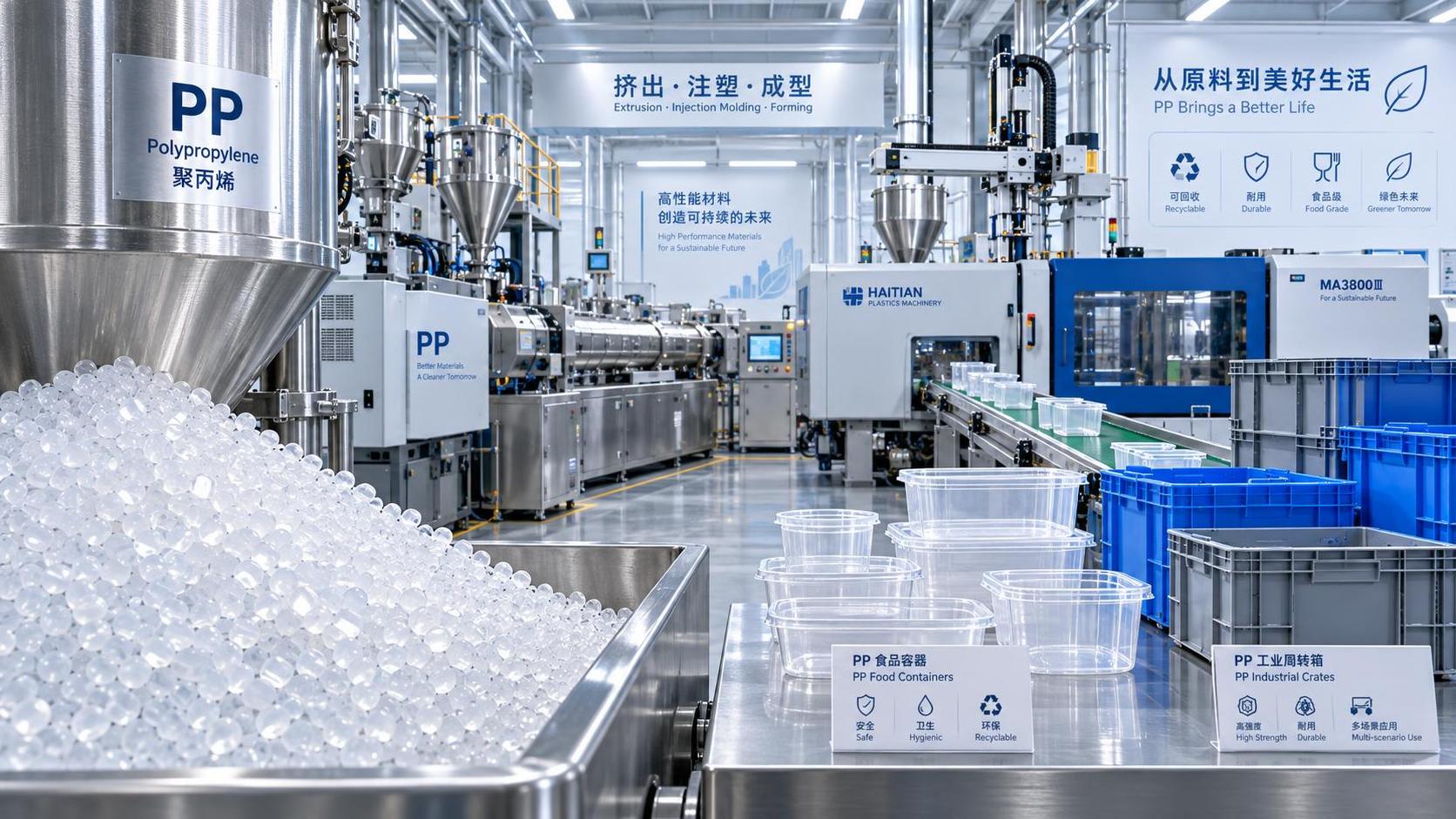
PP Raw Material Explained: Grades, Processing Methods, and End-Use Applications
PP raw material is one of the most widely used thermoplastics in modern manufacturing. Known chemically as polypropylene, it is valued because it combines low density with useful mechanical strength, broad chemical resistance, and the ability to be processed into films, fibers, molded parts, sheets, and many other forms. For a buyer or researcher, however, “polypropylene” is only the starting point. The right material choice depends on polymer grade, additives, processing route, product design, service environment, and applicable market requirements.
A resin that performs well in a rigid food container may be unsuitable for a low-temperature automotive component. A grade selected for high-speed injection molding may not deliver the melt strength needed for thermoforming or extrusion coating. Understanding these distinctions early helps avoid a familiar and expensive problem: approving a resin based on a general data sheet, then discovering that it does not behave as expected on the production line.
What PP Raw Material Is and Why Its Structure Matters
Polypropylene is a polyolefin made from propylene monomer. In commercial use, it is commonly supplied as pellets or granules and compounded with stabilizers, pigments, mineral fillers, impact modifiers, nucleating agents, or other additives. These formulation choices can substantially change stiffness, impact resistance, appearance, processing behavior, and long-term performance.
Its low density is a practical advantage in applications where part weight affects transport, handling, or material consumption. PP also resists many aqueous chemicals, acids, alkalis, and cleaning agents better than many other common plastics. At the same time, it has limitations that should not be overlooked. Standard polypropylene can become less impact-resistant at low temperatures, can degrade under prolonged ultraviolet exposure without appropriate stabilization, and may be affected by certain hydrocarbons, oxidizing media, or demanding thermal conditions.
The term PP raw material therefore does not describe one fixed substance with one predictable result. It describes a family of resin systems. Molecular structure, copolymer composition, melt flow behavior, and additive package determine whether a grade is better suited to a thin-wall cap, a woven sack, a household appliance housing, or a pipe fitting.
The Main Polypropylene Grades
Commercial polypropylene is often grouped into three core categories: homopolymer, random copolymer, and impact copolymer. The names sound technical, but the practical differences are straightforward once connected to an end use.
Homopolymer PP is widely used where rigidity, chemical resistance, and efficient processing are central requirements. It is common in woven products, injection-molded components, and certain packaging formats. Random copolymer PP incorporates a relatively small amount of comonomer, which can improve optical properties and flexibility. It is often considered when transparent or translucent appearance matters, although the required visual result should always be evaluated on the actual part rather than assumed from resin type alone.
Impact copolymer PP is designed to provide a more durable balance under impact loading. It is frequently used for larger molded goods and automotive applications, but not every impact grade is interchangeable. A bumper-related component, battery casing, storage crate, and appliance shell can have very different stiffness, paintability, odor, filler-content, and environmental-aging needs.
Beyond these broad groups, suppliers may offer talc-filled, glass-fiber-reinforced, flame-retardant, UV-stabilized, antistatic, mineral-filled, or recycled-content polypropylene compounds. These materials should be assessed as separate engineered systems. Adding filler can raise stiffness and dimensional stability, for example, but may reduce impact performance or alter surface finish. There is no universal “better” PP grade—only a more appropriate fit for a defined application.
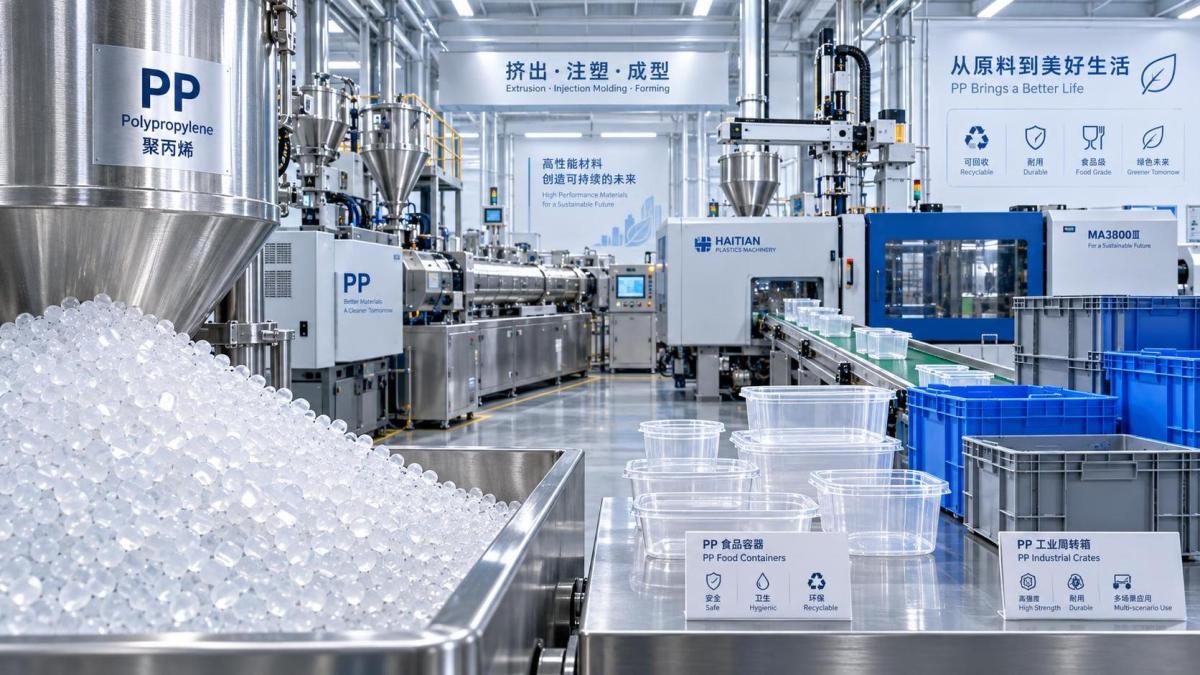
Processing Methods Shape the Grade Decision
Processing is not a downstream detail. It is one of the main reasons a polypropylene grade succeeds or fails. Melt flow rate, molecular-weight distribution, additive package, moisture control, mold design, cooling conditions, and cycle time all influence the final part.
Injection Molding
Injection molding is used for caps, closures, pails, household products, automotive parts, furniture components, and many technical items. Higher-flow grades can help fill thin sections and complex geometries, particularly in fast cycles. Yet high flow alone is not enough. Warpage, shrinkage, weld-line strength, gate placement, and part ejection must be considered. A resin selected only for easy flow may create dimensional variation in a part with uneven wall thickness.
Extrusion and Film Production
PP is processed through extrusion into sheet, pipe, profiles, cast film, blown film, and extrusion-coated structures. Film and sheet applications often demand a careful balance of melt strength, drawability, stiffness, sealing behavior, and optical quality. In packaging, the resin decision may also be linked to whether the structure is monomaterial, multilayer, printed, metallized, or intended for a specific recycling stream.
Fiber, Raffia, and Nonwoven Processing
Polypropylene is a major raw material for spunbond nonwovens, meltblown media, staple fibers, yarns, woven sacks, and bulk packaging fabrics. These applications place strong emphasis on controlled flow behavior and process consistency. In raffia production, for example, tape orientation and tensile performance are closely tied to both resin characteristics and line settings. For nonwovens, the suitability of a grade depends on the process—spunbond and meltblown operations do not make the same demands on the polymer.
Thermoforming and Blow Molding
Thermoformed trays, cups, and containers require adequate melt strength and uniform sheet behavior. Blow-molded bottles and containers likewise need a grade that supports the desired parison control and final mechanical performance. It is sensible to review actual machine conditions, scrap ratio, color masterbatch use, and regrind policy before finalizing the resin. Processing trials remain important, particularly when replacing an established grade or changing suppliers.
Where Polypropylene Is Used
Packaging is one of the most visible uses of PP raw material. It appears in rigid containers, caps, lids, food tubs, microwaveable formats, woven bulk bags, and flexible packaging structures. The material is attractive where chemical resistance, low weight, and reasonable heat tolerance are needed. For food-contact use, the key question is not simply whether the resin is called “food grade.” Buyers generally need to confirm the relevant declaration, additive status, intended conditions of use, and local regulatory expectations for the destination market.
Automotive applications include interior trim, battery-related housings, under-hood components, bumpers, dashboards, and various reinforced or filled parts. Here, resin selection tends to involve a wider set of criteria: impact behavior, heat aging, emissions, odor, surface appearance, dimensional stability, paint adhesion where applicable, and compatibility with the component specification.
In agriculture, polypropylene is used in woven sacks, ropes, twines, nonwoven crop covers, irrigation-related components, and certain storage products. UV exposure is a practical issue in outdoor applications. A standard indoor grade should not be assumed to provide adequate weatherability without a stabilization package and application-specific verification.
Consumer goods range from storage boxes and furniture to appliances, toys, reusable containers, and cleaning-product packaging. Medical and hygiene-related uses may include nonwoven materials and selected molded items, but these applications require especially careful review of traceability, cleanliness, documentation, and the applicable technical or regulatory framework.
A Practical Way to Compare PP Grades
A productive comparison begins with the finished product, not the resin name. Ask what the part must withstand, how it will be made, and which properties cannot be compromised. A supplier quotation becomes more meaningful when it is matched to a clear technical brief.
- Define the processing method, machine type, mold or die conditions, and target cycle rate.
- Identify essential performance factors such as stiffness, impact resistance, transparency, heat resistance, chemical exposure, or outdoor durability.
- Check whether fillers, colorants, regrind, or masterbatches will be used, since these can change final performance.
- Clarify documentation needs before shipment, especially for food, medical, consumer, or export-oriented applications.
- Request a representative technical data sheet and evaluate a production trial where the application is sensitive or highly specified.
Melt flow rate is often one of the first values reviewed, but it should not be treated as a complete selection tool. Two grades with similar flow values can still differ in impact performance, additive composition, odor, color stability, filler content, or processing window. Likewise, tensile and flexural values from a data sheet are useful reference points, but finished-part performance depends on geometry, orientation, weld lines, processing history, and operating conditions.
Recycled polypropylene adds another dimension. It can be appropriate in many non-critical applications, but consistency must be assessed carefully. Feedstock origin, contamination control, odor, color variation, mechanical-property range, and traceability can all affect whether recycled material is suitable. The right question is not whether recycled PP is inherently acceptable or unacceptable; it is whether the material is controlled well enough for the specific product and its end market.
Supply, Documentation, and Chemical Portfolio Coordination
For international buyers, material selection is also linked to continuity of supply, packaging configuration, batch consistency, shipping documentation, and communication across technical and commercial teams. A stable supply arrangement is particularly valuable when a resin is used in continuous conversion, seasonal agricultural packaging, or export products subject to customer approval procedures.
Luxi Chemical (Shandong) Co., Ltd. operates across chemical raw materials, chemical products, and import/export trade, serving customers in more than 60 countries and regions. Its broader portfolio includes compliant products for food processing, agriculture, daily chemical, and organic-intermediate supply chains. That breadth can be useful for buyers managing more than one chemical category, although each material should still be reviewed against its own technical, handling, and regulatory requirements.
For example, procurement teams that source polymers alongside pharmaceutical or specialty chemical inputs need to keep application boundaries clear. A product such as Dexamethasone CAS#50-02-2 is a synthetic glucocorticoid API rather than a polymer material; its documented storage conditions, light sensitivity, and pharmaceutical-use considerations are fundamentally different from those for polypropylene resin. Combining categories under one supply relationship can simplify coordination, but it does not reduce the need for application-specific quality review.
The Most Useful Next Step
The best way to evaluate PP raw material is to translate a broad requirement into a short, testable specification: product type, processing method, critical properties, service environment, color or appearance target, compliance needs, and expected annual volume. That information makes it easier to distinguish between a general-purpose resin and a grade that is genuinely suitable for production.
Polypropylene is versatile precisely because it can be tailored across many applications. The trade-off is that grade selection cannot safely be reduced to price per kilogram or a single flow value. When performance, processing, documentation, and delivery expectations are considered together, the material decision becomes much more reliable.
Related Picks
 Butylated Hydroxytoluene Price Drivers: Supply, Purity, and Purchasing Risk FactorsOct 21, 2026Butylated Hydroxytoluene price trends depend on supply stability, purity, logistics, and purchasing risk. Learn how to compare quotes wisely and reduce sourcing costs.
 Sodium Tripolyphosphate Price Trends: Raw Material and Energy ExposureOct 20, 2026Explore sodium tripolyphosphate price trends, from phosphate and soda ash costs to energy exposure. Learn how to compare quotes, manage sourcing risks, and make smarter purchasing decisions.
 Acetonitrile Shipment to Vietnam Successfully Dispatched; RCEP Benefits Boost Fine Chemical Trade with ASEANSep 16, 2026A shipment of industrial-grade acetonitrile from our company has recently been loaded and dispatched following the completion of standardized hazardous material packaging and container securing procedures.
 Nigerian Client’s Order of 4 Containers of Vinyl Acetate Successfully Loaded and Shipped to West AfricaSep 16, 2026We recently completed the loading of a vinyl acetate order for a Nigerian client; four containers of the product have been successfully packed and are ready for shipment to Nigeria.




Question Consultation
Send Us Your Inquiry Today

Luxi Chemical is a professional chemical product supplier with ample stock of all chemical categories and excellent quality, welcome your purchase inquiry.

