


What to Check Before Choosing a Polypropylene Factory for Bulk Orders
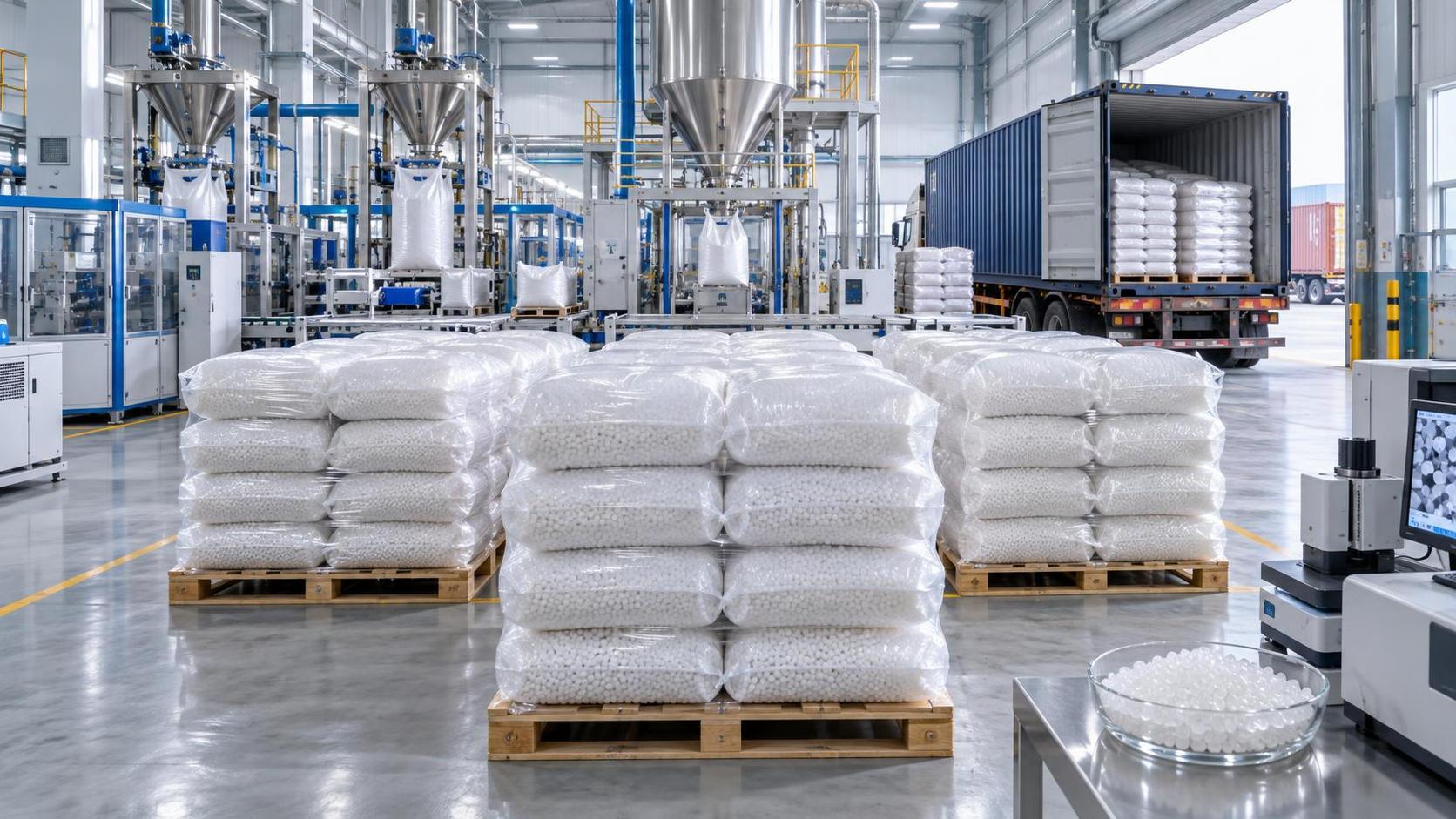
A bulk polypropylene purchase rarely fails because a buyer overlooked the lowest quoted price. More often, problems emerge later: a grade behaves differently from the approved sample, a shipment misses a production window, a certificate does not match the delivered lot, or a supplier cannot maintain allocation when demand tightens. For procurement teams, choosing a polypropylene factory is therefore a supply-risk decision as much as a purchasing decision.
Polypropylene is used across packaging, woven products, injection-molded parts, fibers, household goods, automotive components, pipes, and numerous industrial applications. In each case, a small variation in melt flow rate, moisture, ash content, color, or additive package can affect processing efficiency and finished-product quality. Before committing to a large-volume order, buyers need evidence that the factory can reproduce the required material—not merely supply a plausible specification sheet.
Begin with the grade, not the price list
“PP” is too broad to be a purchasing specification. A polypropylene factory may produce homopolymer, random copolymer, impact copolymer, fiber grades, raffia grades, film grades, injection grades, or grades modified for particular performance needs. Two products described as “injection molding PP” may still differ substantially in flow behavior, stiffness, impact strength, odor, appearance, and suitability for food-contact or other regulated uses.
Before requesting a commercial quotation, prepare a concise technical brief. It should state the intended process, end-use requirements, target melt flow rate range, preferred color or natural appearance, additive expectations, packing format, and any necessary regulatory documentation. If the material will run on a high-speed line or be blended with recycled content, include that context. A factory can only recommend an appropriate grade when it understands the real processing environment.
Ask for a current technical data sheet and compare it against your internal acceptance criteria. The important question is not whether the numbers look attractive in isolation, but whether they are measured by a recognized method and controlled within a practical range from batch to batch. For ongoing supply, request typical values as well as specification limits where available.
Questions that reveal whether the proposed grade is truly suitable
- Is the grade designed for injection molding, extrusion, fiber spinning, film, raffia, or another specific process?
- Which indicators are controlled for each production lot, such as melt flow rate, density, moisture, volatile content, ash, color, or impact performance?
- What additives are present, and are they suitable for the intended end use?
- Can the supplier provide a retained sample or reference batch for comparison after delivery?
- Has the factory identified any storage, drying, or processing conditions that may affect performance?
A supplier that responds clearly to these questions is generally easier to work with when a technical issue needs to be traced. Vague answers such as “standard quality” are not enough for a bulk procurement decision.
Look beyond nameplate capacity
Production capacity matters, but the number printed in a company profile is only the beginning. A plant may have substantial annual capacity while allocating much of it to internal demand, contractual customers, or only a limited set of grades. Conversely, a smaller producer with stable feedstock access and disciplined production planning may be a more dependable partner for a defined order schedule.
Ask the polypropylene factory how it manages regular output, maintenance periods, order lead times, and grade changeovers. For buyers placing repeat orders, it is useful to understand whether the grade is a routine production item or a product made only during occasional campaign runs. Campaign-produced grades can be commercially workable, but they require better forecasting and earlier purchase planning.
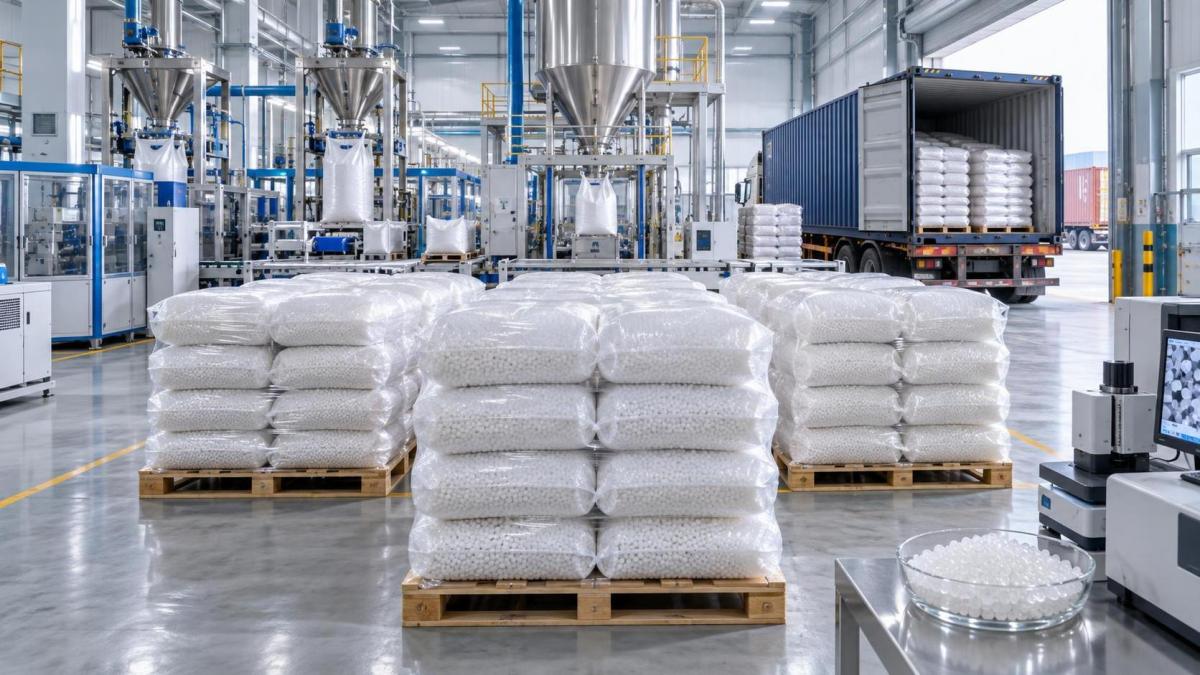
Capacity should also be assessed at the loading point. A factory that manufactures material reliably but has limited warehouse space, slow bagging operations, or weak container-loading coordination can still create expensive delays. For containerized exports, discuss palletization, bag weight tolerance, moisture protection, container availability, loading photographs, and the process for sealing and documenting each shipment.
Quality control is a system, not a certificate
Most procurement professionals expect a certificate of analysis with each lot. That document is essential, but its value depends on how it is produced and how closely it is connected to the actual shipment. A responsible supplier should be able to explain its sampling procedures, laboratory testing routines, batch identification method, and release process.
When evaluating a polypropylene factory, ask whether incoming raw materials, in-process material, and finished resin are checked under defined controls. You do not need to audit every laboratory instrument remotely, yet the conversation should establish whether quality management is embedded in production or treated as paperwork after the fact.
For the first sizeable order, consider agreeing on a pre-shipment quality process. This may include confirmation of the lot number, certificate of analysis, packaging inspection, and—when risk or order value justifies it—independent sampling or inspection. The purpose is not to burden the supplier; it is to establish a common method before a nonconforming shipment becomes a dispute.
Traceability should be non-negotiable
Every bag, pallet, or other agreed unit should be traceable to a production batch. Clear traceability allows the buyer to isolate material if a processing issue appears, rather than placing an entire warehouse on hold. It also gives both parties a factual starting point for investigating complaints.
Confirm how long samples and production records are retained, how a complaint is handled, and who has authority to respond when the issue concerns quality rather than sales. A prompt, technical response is often more valuable than a supplier claiming that defects never occur.
Check compliance according to the destination and end use
Compliance requirements vary widely. A polypropylene grade used for industrial molded components may require a different documentation package from resin used in food packaging, children’s goods, medical-adjacent applications, or products sold across several regulatory jurisdictions. Procurement teams should identify requirements early instead of assuming that a general statement of conformity covers the intended market.
Depending on the application and destination, relevant documents may include safety data sheets, technical data sheets, statements regarding restricted substances, food-contact declarations where applicable, and information concerning additives. Importers should also verify customs classification, labeling requirements, and whether local rules impose additional responsibilities on the importer of record.
Do not confuse the polymer’s general identity with proof that a particular grade is appropriate for a regulated application. Ask for documents specific to the offered material, current revision dates, and a clear statement of their scope. If your downstream customer has a strict approved-vendor process, share the documentation checklist before samples are submitted.
Calculate the delivered cost, including the cost of uncertainty
A low ex-works or FOB quotation can look compelling until freight, inland delivery, finance charges, customs clearance, demurrage exposure, quality claims, and line disruption are included. For large orders, the relevant figure is total landed cost over the supply cycle—not simply the resin price on the day the quote is issued.
Create a comparison sheet that includes Incoterms, shipment quantity, bagging and pallet conditions, port of loading, transit assumptions, payment terms, validity period, and any surcharge mechanisms. Polypropylene pricing can be influenced by feedstock movements, regional supply balance, energy costs, and logistics conditions. A quotation that omits its commercial basis may be difficult to manage when market conditions change.
It is also sensible to evaluate the cost of a delayed or inconsistent delivery. If a low-cost supplier causes a factory shutdown, rejected production, or emergency spot buying, the apparent saving disappears quickly. That does not mean buyers should always select the highest-priced source. It means price should be assessed alongside predictability, response speed, and the supplier’s ability to meet the agreed order pattern.
Export experience changes the practical outcome
For international orders, resin quality is only one part of performance. The supplier or trading partner must coordinate commercial documents, packing lists, invoices, transport arrangements, customs-facing paperwork, and communication across time zones. Small errors in a consignee name, weight declaration, or document timing can hold cargo at the port and complicate payment or clearance.
Ask prospective suppliers which markets they regularly serve and how they support export documentation. Experience does not need to mean a long list of famous destinations; it should mean the team understands the working details of cross-border delivery and can communicate clearly about milestones, exceptions, and document revisions.
Companies with wider chemical procurement needs may also benefit from working with a partner able to consolidate compatible sourcing discussions. For example, a buyer handling polymer materials alongside other chemical inputs may review products such as Polyvinyl Chloride Paste Resin CAS#9002-86-2 for separate applications including coatings, artificial leather, wire insulation, and molded consumer goods. This does not make PVC paste resin interchangeable with polypropylene; the materials have distinct processing profiles. It can, however, simplify supplier communication when procurement teams need support across several compliant chemical categories.
Use samples as a process test, not a formality
A sample is useful only when tested under conditions close to real production. Rather than approving it based solely on appearance, run it through the relevant equipment where possible. Observe feeding behavior, cycle time, extrusion stability, surface finish, odor, color consistency, shrinkage, weld-line performance, and the properties that matter to your finished product.
Record the lot number of the sample and compare it with the batch supplied commercially. If a factory offers a sample but cannot explain whether it represents normal production, treat the result cautiously. A meaningful trial should include a defined evaluation method, acceptance criteria, and feedback shared with the supplier before the purchase order is finalized.
Red flags worth taking seriously
Some warning signs are commercial rather than technical. Be careful if a supplier refuses to identify the exact grade, provides inconsistent product names across documents, repeatedly changes lead-time estimates, or cannot explain the relationship between itself and the manufacturing site. A trader can be a valuable supply partner, but transparency about source, responsibility, and documentation is essential.
Other concerns include unusually broad specifications, an incomplete safety data sheet, reluctance to issue lot-specific certificates, pressure to place a large order before samples are assessed, and prices that are materially below the market without a credible explanation. These signs do not automatically prove a problem, but they justify additional due diligence.
Build the first order as a controlled relationship test
Even when the supplier looks suitable, a first transaction should be structured to verify the full chain: technical conformity, packaging, documentation, shipment timing, communication, and post-delivery support. Define quality tolerances, claim procedures, delivery windows, document requirements, and payment conditions in writing. Keep the initial order large enough to test normal operations, but proportionate to the risk of a new relationship.
Luxi Chemical (Shandong) Co., Ltd. supports global customers with chemical raw materials, chemical products, and import/export coordination across categories including food additives, organic intermediates, fertilizers, and polymer-related materials. For buyers, the practical value of a broad chemical sourcing partner lies in clearer communication, organized documentation, and the ability to coordinate procurement needs without losing sight of each product’s individual technical requirements.
The best polypropylene factory is not necessarily the one with the most persuasive brochure or the lowest opening quote. It is the supplier that can demonstrate grade suitability, repeatable quality, realistic production planning, traceable documentation, and dependable delivery. When those checks are made before a bulk order is placed, procurement teams gain something more useful than a favorable price: a supply arrangement they can plan around.
Related Picks
 Butylated Hydroxytoluene Price Drivers: Supply, Purity, and Purchasing Risk FactorsOct 21, 2026Butylated Hydroxytoluene price trends depend on supply stability, purity, logistics, and purchasing risk. Learn how to compare quotes wisely and reduce sourcing costs.
 Sodium Tripolyphosphate Price Trends: Raw Material and Energy ExposureOct 20, 2026Explore sodium tripolyphosphate price trends, from phosphate and soda ash costs to energy exposure. Learn how to compare quotes, manage sourcing risks, and make smarter purchasing decisions.
 Acetonitrile Shipment to Vietnam Successfully Dispatched; RCEP Benefits Boost Fine Chemical Trade with ASEANSep 16, 2026A shipment of industrial-grade acetonitrile from our company has recently been loaded and dispatched following the completion of standardized hazardous material packaging and container securing procedures.
 Nigerian Client’s Order of 4 Containers of Vinyl Acetate Successfully Loaded and Shipped to West AfricaSep 16, 2026We recently completed the loading of a vinyl acetate order for a Nigerian client; four containers of the product have been successfully packed and are ready for shipment to Nigeria.




Question Consultation
Send Us Your Inquiry Today

Luxi Chemical is a professional chemical product supplier with ample stock of all chemical categories and excellent quality, welcome your purchase inquiry.

