


Rigid PVC Formulations: Balancing Impact Strength, Stiffness, and Cost
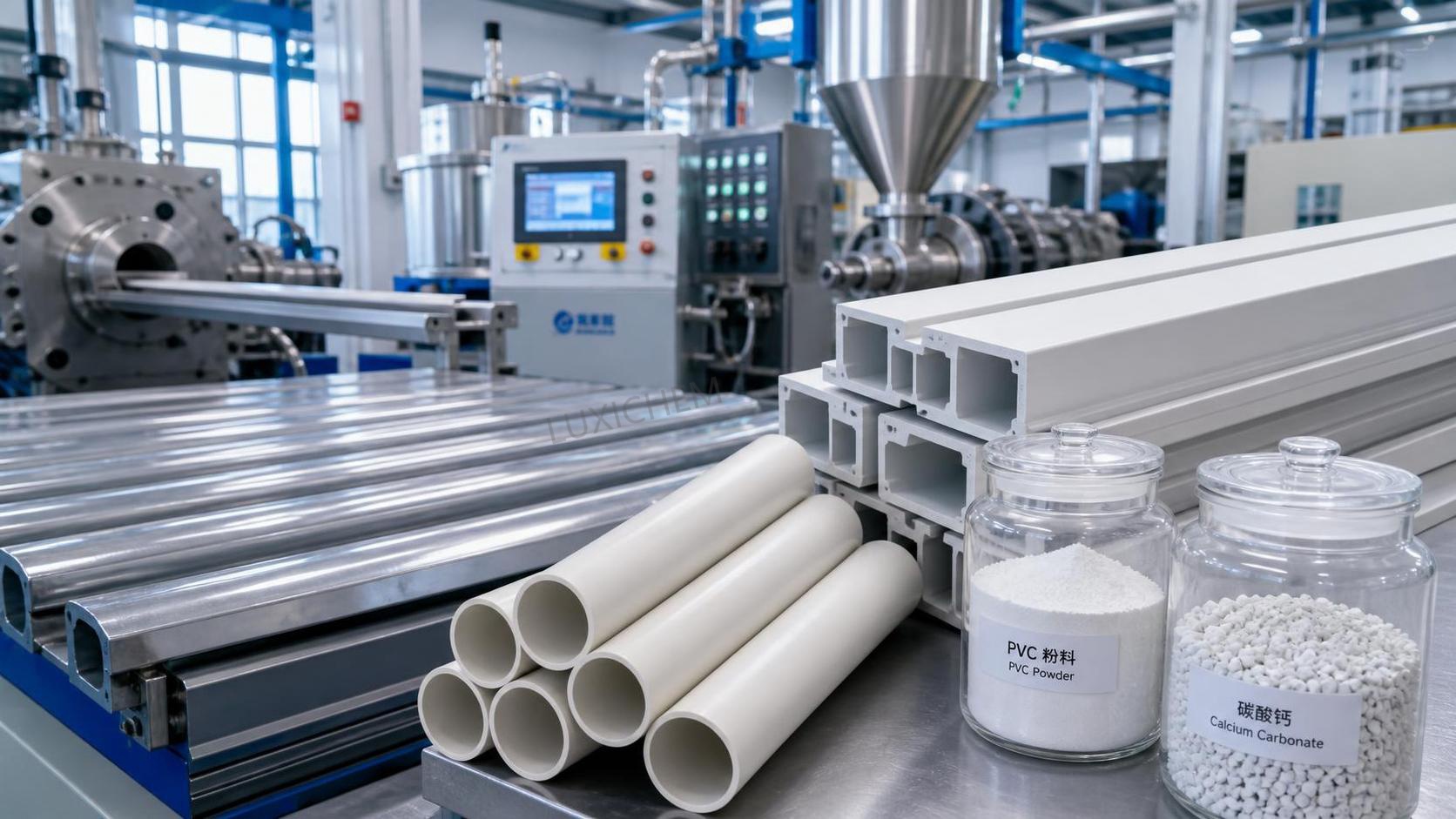
A rigid PVC part can look satisfactory at the extrusion line and still become a problem later. A profile may pass through the die smoothly but chip during cutting, crack around a screw boss, or show too much deflection after installation. In another common situation, an impact modifier is added to stop brittle failure, only for the compound to become less stiff, harder to process, or too expensive for the intended market.
These trade-offs are the reason pvc rigid formulation work should begin with the failure mode and service conditions rather than with a preferred additive package. The useful question is not simply “How can impact strength be increased?” It is “Which property is actually limiting performance, and what adjustment addresses it without creating a larger processing, durability, or cost issue?”
Start with the part, not the ingredient list
Rigid PVC is used in applications with very different stress patterns. A pipe fitting may need resistance to internal pressure and installation damage. A window profile must retain stiffness over a long span while tolerating handling and weather exposure. Injection-molded components can fail at weld lines, corners, snap features, or around inserts. Sheet and conduit may be judged by flatness, surface quality, impact behavior, and consistent dimensions.
Those differences matter because a formulation that improves one failure mode may have little value in another. If a thick-wall pipe fails under a drop test, the cause may be inadequate matrix toughness, poor fusion, excessive filler loading, low processing temperature, or a notch introduced by the part design. Raising modifier dosage before separating these possibilities can increase cost without reliably improving the finished article.
Before changing raw materials, define the operating window in plain terms: expected temperature range, load duration, impact type, wall thickness, geometry, joining method, appearance requirements, and relevant test methods. Material decisions are easier when the evaluation criteria are connected to a real service condition rather than a broad request for “stronger PVC.”
Where the balance usually shifts
Rigid PVC has inherent stiffness, chemical resistance, and dimensional stability, but unmodified material can be notch-sensitive, especially at lower temperatures or in complex geometries. The formulation is therefore built around a PVC resin and a set of functional materials that influence fusion, melt flow, toughness, thermal stability, surface finish, and cost.
Resin selection is a foundational decision. Molecular-weight-related resin characteristics affect melt strength, fusion behavior, processing torque, and mechanical performance. A resin that gives desirable impact behavior may require more demanding processing conditions, while a resin chosen for easier flow can affect strength or heat performance. The correct direction depends on equipment capability and the geometry of the product. Changing resin grade should not be treated as a minor purchasing substitution.
Impact modifiers are often the most visible lever. Acrylic modifiers, chlorinated polyethylene-based modifiers, methyl methacrylate-butadiene-styrene systems, and other modifier families can perform differently depending on the required weatherability, processing route, temperature exposure, and appearance. Their effect also depends on whether they are properly dispersed and whether the PVC has reached an appropriate fusion state.
Stiffness is commonly influenced by resin choice, filler type and loading, modifier level, and plasticization state during processing. In practice, a compound can become tougher yet less rigid as elastomeric content rises. That is not necessarily a failure of the modifier; it may be the expected consequence of changing the material balance. The decision should be based on whether the retained modulus is sufficient for the actual part design.
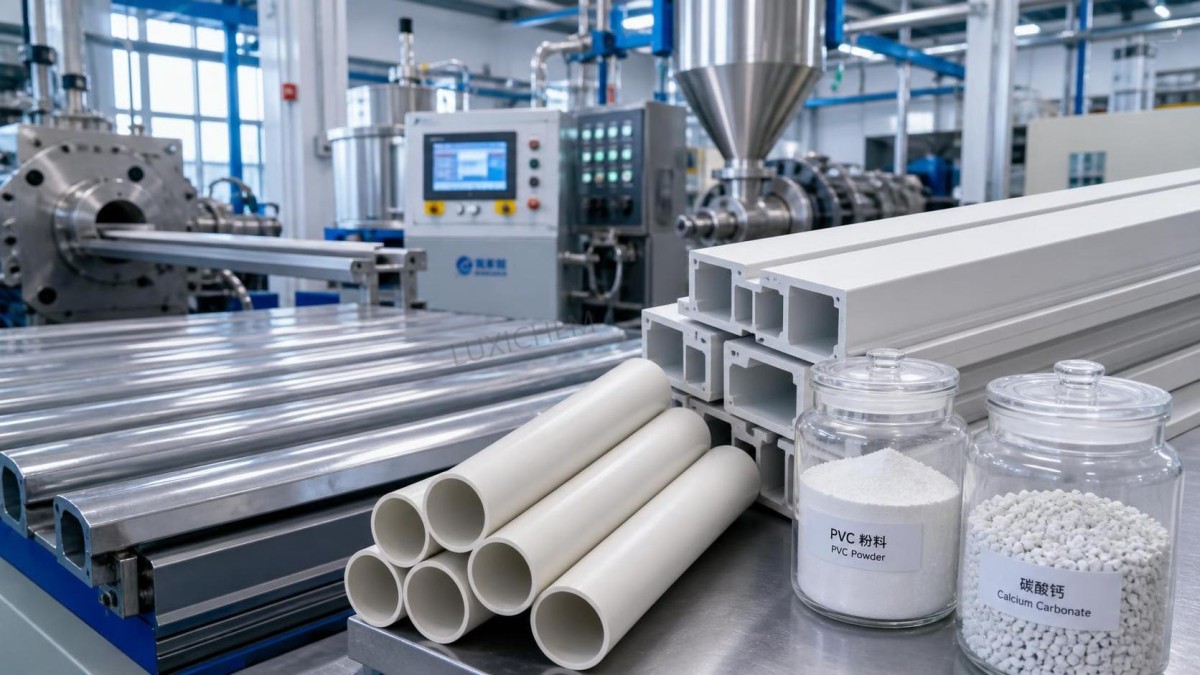
Do not confuse poor fusion with poor formulation toughness
A frequent source of confusion is a part that behaves brittle because the PVC was not fused adequately. In dry-blend processing, the ingredients may appear well distributed before extrusion or molding, but the final mechanical behavior depends on the development of a coherent PVC melt. Insufficient fusion can leave a weak structure with poor impact response. Excessive shear or excessive residence time, on the other hand, can contribute to degradation and surface defects.
When impact performance changes unexpectedly, examine the processing record alongside the formulation. Look at material temperature, torque or pressure trends where available, screw configuration, throughput, cooling conditions, and the appearance of fracture surfaces. A dull, irregular fracture can suggest a different issue from a clean, brittle fracture, but visual inspection alone is not a substitute for controlled testing.
It is also important to distinguish dry-blend consistency from final compound consistency. Variations in additive particle size, mixing sequence, bulk density, moisture, or storage conditions can alter feeding and fusion behavior. If the same nominal formula gives variable results from batch to batch, process stability and incoming-material control deserve attention before major formulation changes are made.
Impact strength: target the relevant kind of impact
“Impact strength” is not one universal property. A material can perform acceptably in one laboratory method and still fail during assembly, transport, or cold-weather handling. For this reason, the test selection should reflect the likely damage mechanism. Notched tests are useful for examining notch sensitivity; falling-weight or dart-style evaluations may be more relevant for some sheet and pipe applications; part-level testing can reveal weaknesses around gates, weld lines, corners, or fasteners.
Modifier selection should follow the intended environment. For exterior applications, weather resistance and color stability may narrow the suitable choices. For indoor molded parts, flow and surface appearance may receive greater emphasis. For low-temperature service, evaluate the compound at temperatures that resemble actual handling or installation conditions rather than relying entirely on room-temperature results.
Increasing impact modifier content is not always the best first move. If the part has a sharp internal corner or an overly aggressive notch, a design adjustment may be more efficient than adding more modifier. If a high filler level is reducing ductility, the more appropriate response may be to rebalance filler loading or particle treatment. If fusion is incomplete, processing corrections may unlock performance already expected from the current material set.
Filler is a cost tool, but it changes the mechanical picture
Calcium carbonate and other mineral fillers are widely used in rigid PVC to manage cost, processing behavior, and certain physical properties. Their influence cannot be judged by loading alone. Particle size distribution, surface treatment, moisture level, dispersion quality, and interaction with the rest of the formulation all matter.
At a suitable level, filler may support stiffness and improve dimensional behavior. At an excessive level for a demanding application, it can reduce impact performance, increase sensitivity to poor dispersion, and complicate the response to modifier additions. Fine grades may behave differently from coarser grades, while surface treatment can influence compatibility and processing. A lower-cost filler choice can become expensive if it introduces surface defects, unstable extrusion, increased scrap, or a need for additional modifier.
Instead of asking for the highest possible filler content, establish the maximum loading that still meets the required part-level performance and processing window. That limit should be verified after realistic aging, conditioning, or temperature exposure where the end use requires it. A formulation that passes an initial test but loses margin after routine production variation is not a robust cost reduction.
Stabilizers, lubricants, and processing aids are not background details
Heat stabilizer systems protect PVC during mixing and melt processing, but their selection also interacts with color, plate-out tendency, initial fusion, long-term heat performance, and the use of other additives. A compound that appears stable over a short run may behave differently during longer production campaigns. The stabilizer package should therefore be evaluated in the actual processing environment, including normal stops and restarts where these are part of operations.
Lubrication requires similar care. Internal lubricants can influence fusion and melt viscosity, while external lubricants can affect metal release and friction at processing surfaces. Too little lubrication may raise torque and promote sticking; too much external lubrication may delay fusion and reduce cohesion. The symptom is sometimes misread as a resin or modifier problem.
Processing aids can improve melt strength, fusion behavior, and surface quality, particularly in profiles, foam applications, and some extrusion conditions. Their value is often greatest when they stabilize a narrow process window. They should not be used to conceal a fundamentally unsuitable resin, filler level, or lubrication balance.
When a plasticizer enters the discussion
Rigid PVC formulations are generally designed to avoid significant plasticization because stiffness, heat resistance, and dimensional stability are central requirements. Still, a development team may consider a low-level plasticizer or related processing adjustment when evaluating a specific issue such as brittleness, flow behavior, or temporary flexibility during manufacturing. This is a decision that requires caution rather than a default formulation step.
For example, Dibutyl sebacate CAS#109-43-3 is a sebacate ester that may be reviewed in systems where plasticization behavior is relevant. In a rigid PVC application, its suitability cannot be assumed merely because it can influence flexibility. Any evaluation should consider the possible effects on modulus, heat behavior, volatility, migration, compatibility, processing, odor requirements, and the specification for the final article. It should be assessed through controlled trials against the actual performance criteria, not treated as a universal remedy for impact failure.
A practical development sequence that reduces false conclusions
When several properties are moving at once, changing multiple ingredients together makes the result difficult to interpret. A more reliable approach is to establish a stable baseline formula and process condition, then alter one meaningful variable or one closely related package at a time. Keep resin source, mixing procedure, processing settings, specimen conditioning, and test method controlled as far as practical.
First, verify whether the baseline compound is fully fused and thermally stable. Next, identify the most important limiting property: low-temperature impact, stiffness, heat resistance, surface quality, extrusion stability, or cost. Make a limited adjustment in the most relevant direction, such as modifier type, modifier level, filler loading, lubrication balance, or resin grade. Then evaluate not only the target property but also the properties most likely to deteriorate.
For instance, if a tougher formulation is being considered, record its stiffness, heat behavior, surface condition, processing torque, fusion response, and part dimensions as well as impact results. If a lower-cost filler package is under review, evaluate the same broad set of responses rather than judging only raw-material cost. The objective is to find a workable region, not a single impressive test value.
Reading results with the production line in mind
Laboratory-scale trials are valuable, but rigid PVC is sensitive to the transition from trial conditions to routine production. Equipment size, screw design, shear history, feed consistency, cooling rate, and die geometry can all change the material response. A compound that processes well on one line may need adjustment on another, even when the nominal resin and additive levels are identical.
For this reason, retain samples and processing notes from both successful and unsuccessful trials. Compare fracture appearance, color, gloss, dimensions, and melt behavior with measured test results. Over time, this creates a practical internal reference for recognizing whether a new issue is more likely associated with fusion, thermal history, dispersion, formulation balance, or part design.
The best rigid PVC formulation is rarely the one with the highest impact modifier loading, the maximum filler content, or the easiest flow in isolation. It is the composition that consistently meets the required service behavior while remaining controllable on the intended equipment. By separating processing faults from material limitations, testing the impact mode that actually matters, and treating each additive change as a trade-off, formulation decisions become more defensible and less dependent on trial-and-error adjustments.
Related Picks
 Butylated Hydroxytoluene Price Drivers: Supply, Purity, and Purchasing Risk FactorsOct 21, 2026Butylated Hydroxytoluene price trends depend on supply stability, purity, logistics, and purchasing risk. Learn how to compare quotes wisely and reduce sourcing costs.
 Sodium Tripolyphosphate Price Trends: Raw Material and Energy ExposureOct 20, 2026Explore sodium tripolyphosphate price trends, from phosphate and soda ash costs to energy exposure. Learn how to compare quotes, manage sourcing risks, and make smarter purchasing decisions.
 Acetonitrile Shipment to Vietnam Successfully Dispatched; RCEP Benefits Boost Fine Chemical Trade with ASEANSep 16, 2026A shipment of industrial-grade acetonitrile from our company has recently been loaded and dispatched following the completion of standardized hazardous material packaging and container securing procedures.
 Nigerian Client’s Order of 4 Containers of Vinyl Acetate Successfully Loaded and Shipped to West AfricaSep 16, 2026We recently completed the loading of a vinyl acetate order for a Nigerian client; four containers of the product have been successfully packed and are ready for shipment to Nigeria.




Question Consultation
Send Us Your Inquiry Today

Luxi Chemical is a professional chemical product supplier with ample stock of all chemical categories and excellent quality, welcome your purchase inquiry.

