


Safe PVC Powder Handling: Reducing Dust Risks in Compounding Workshops
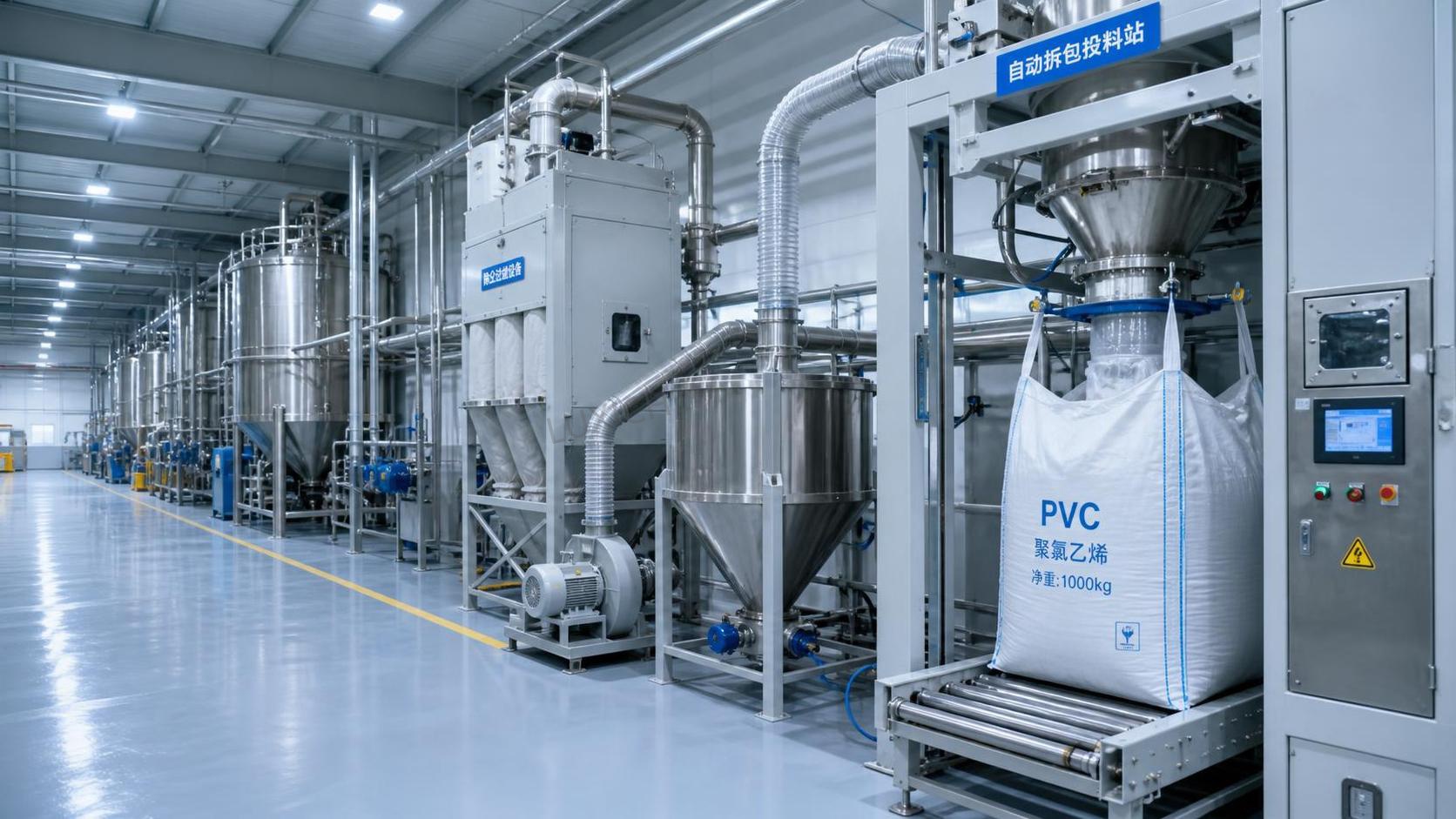
Dust control begins before a bag of pvc powder is opened. In a compounding workshop, fine particles can escape during receiving, unloading, bag cutting, charging, conveying, screening, and cleanup. Once airborne, dust may settle on equipment, contaminate adjacent formulations, obscure leaks, and create avoidable exposure concerns. A reliable handling program treats every transfer point as a potential release point and keeps material movement contained from storage through final blending.
The practical objective is simple: keep pvc powder dry, contained, identifiable, and moving through equipment designed for the actual material flow. Good results depend on the combined condition of packaging, local exhaust, transfer connections, cleaning methods, and work instructions. A high-capacity ventilation system alone will not compensate for torn liners, open charging ports, poor duct maintenance, or uncontrolled sweeping.
Start with the material path
Map the full route of pvc powder from delivery vehicle or warehouse receipt to the mixer. Include temporary holding areas, weighing stations, bag-dump units, bulk bag discharge frames, pneumatic lines, intermediate hoppers, and any manual additions. The map should show where packaging is opened, where material falls freely, and where displaced air is released. These locations usually deserve the closest inspection because powder becomes airborne when it is dropped, shaken, or forced out of a confined space.
Receiving inspections should look beyond the outer bag. Check for punctures, damp areas, weak seams, loose closures, and residue around pallets. Damaged packaging should be isolated before it reaches the main storage area. A small leak can become a larger housekeeping problem during pallet movement, especially where forklift traffic spreads powder across aisles and into drainage channels, cable trays, or equipment bases.
Storage conditions also influence dust behavior. Keep bags and bulk containers away from moisture, direct weather exposure, and locations where pallets may be struck. Moisture can cause caking and irregular flow; attempts to break up compacted powder later can generate a sudden dust release. Use clear lot identification and separation practices so that a container is not reopened repeatedly while staff search for the correct grade. Repeated opening increases both contamination risk and the chance that an imperfect closure is overlooked.
Contain dust where the powder enters the process
Bag-dump stations are often the most visible dust source in a workshop. The enclosure should capture air at the point where the liner is cut and where empty bags are shaken or removed. Open-sided tables with a general overhead hood are usually less effective because dust can pass through the breathing zone before reaching the hood. A properly arranged station draws air inward through the access opening while allowing enough working space to handle bags without damaging the enclosure or filter connections.
Airflow should be verified under normal loading conditions, not only when the station is empty. A hood may appear effective until a full bag blocks the capture path, a side panel is left open, or the connected hopper pressurizes during filling. Smoke visualization, pressure indication, and routine inspection of access curtains can reveal whether air is moving into the enclosure as intended. Where a dust collector is connected, pressure drop trends can indicate loading, filter blinding, damaged media, or duct restrictions.
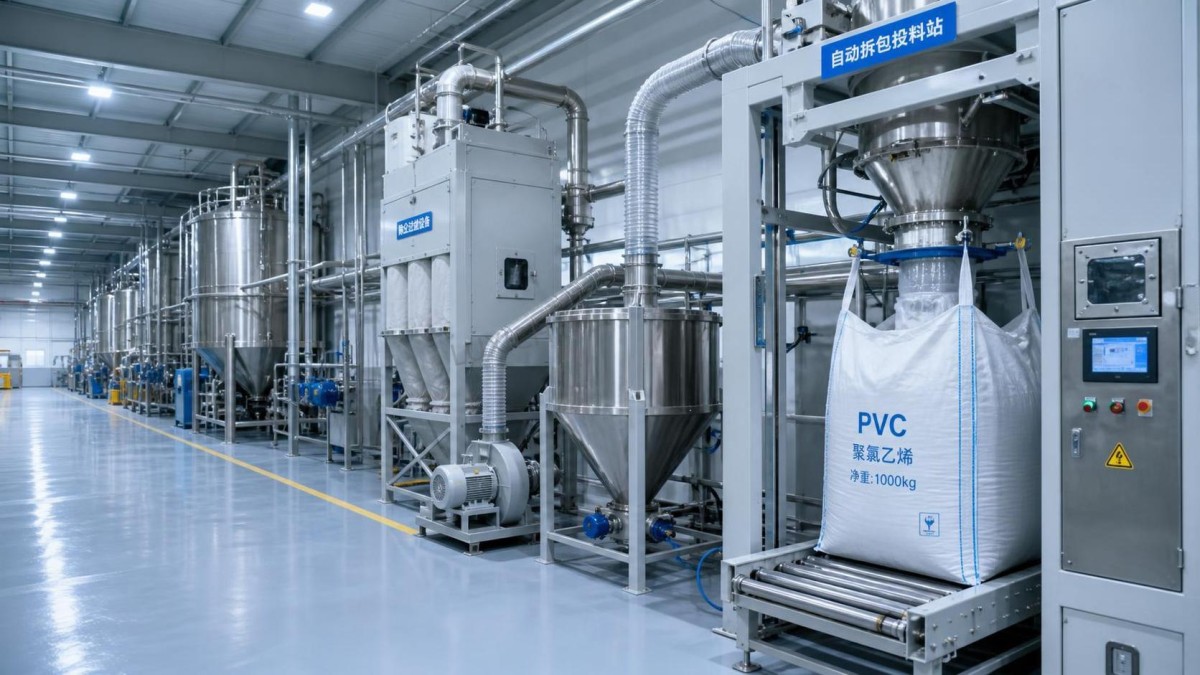
At charging ports, reduce the distance that powder falls. A long free-fall stream entrains surrounding air and disperses fine material after impact. Chutes, sleeves, telescopic loading devices, or sealed flexible connections can reduce this effect when they are compatible with cleaning and formulation requirements. Avoid forcing a connection into place with improvised tape or clamps that make removal difficult; such arrangements tend to remain in service after they have deteriorated.
Bulk bag discharge needs similar attention. The bag spout should connect to a sealed interface before the inner tie is released. If a bag is conditioned or massaged to improve flow, make sure the enclosure and extraction system are operating first. Empty bags and liners should be folded or contained immediately rather than left beside the frame, where residual powder can be disturbed by nearby movement.
Choose transfer methods that match the powder
Pneumatic conveying can reduce manual exposure, but it introduces different control points. Leaks at couplings, diverter valves, receiving filters, and worn flexible hoses may be difficult to see until powder has accumulated. Inspect joints after startup and after maintenance, when fittings are most likely to have been disturbed. A small amount of residue at a connection is a signal to investigate, not simply to wipe away.
Conveying settings should be established for the grade, transfer distance, moisture condition, and required throughput. Excessive air velocity may increase abrasion and carryover, while inadequate velocity can leave deposits in lines and create unstable discharge. The receiving vessel must vent displaced air through a suitable filtration arrangement. If the filter is undersized, blocked, or incorrectly cleaned, pressure can force powder out through access covers and gasketed joints.
Mechanical conveyors require enclosed covers, sound seals, and controlled loading points. Screw conveyors can release dust at inlet and outlet transitions if the downstream hopper is full or if the material feed is inconsistent. Bucket elevators, where used, need particular attention to boot areas, inspection doors, and return paths. Open transfer points should be viewed as design exceptions and protected with local extraction or physical enclosure.
When additives are introduced alongside pvc powder, sequence matters. Some ingredients may be supplied as powders with different bulk density, particle size, or flow properties. Do not assume that a transfer setting suitable for PVC will behave the same way with every material. For example, a separate material such as Cryolite CAS#15096-52-3 should remain clearly segregated and be handled according to its own safety and compatibility requirements rather than being treated as interchangeable with resin powder.
Ventilation needs maintenance, not just installation
Local exhaust ventilation should be positioned to collect dust before it spreads into the room. General room ventilation can dilute airborne material but rarely provides sufficient control at a bag opening or discharge point. Airflow direction is affected by doors, supply air diffusers, fans, vehicle movement, and nearby process equipment. A station that works during a quiet inspection may perform poorly when a large door is open or another extraction system starts.
Keep duct runs as short and direct as practical, with accessible points for inspection. Powder deposits inside ducts can reduce capture performance and may be released later when vibration or airflow changes. Flexible ducting deserves frequent review because it can sag, crack, or become partially blocked. Filter collectors require scheduled examination of filter elements, pulse-cleaning components, hopper discharge devices, gaskets, and waste containers. A collector hopper that bridges or fails to discharge can eventually interfere with normal filtration.
Do not judge performance only by visible dust. Fine airborne particles may be present even when the area appears clean. Use an agreed inspection routine that considers hood condition, pressure indicators, residue patterns, and observations during actual material charging. Any persistent deposit on the outside of equipment should be traced back to a source. Repeated cleaning without source correction converts a containment issue into a labor-intensive routine.
Housekeeping should avoid making dust airborne again
Dry sweeping and compressed-air blowdown can turn settled pvc powder into a broad airborne cloud. Use vacuum equipment designed for fine powder service, with filtration and grounding arrangements appropriate to the material and site assessment. Vacuum hoses, collection containers, and attachments should remain intact and be emptied in a controlled location. A domestic-style vacuum or an unsealed collection drum may simply move dust from one place to another.
Cleaning frequency should follow actual accumulation patterns. Focus on horizontal ledges, structural beams, motor housings, cable trays, scale platforms, and the floor around bag-dump stations. These areas can hold powder long after the source has stopped releasing it. Wet cleaning may be appropriate only where it will not create slippery surfaces, affect electrical equipment, or produce difficult-to-manage residues. The chosen method needs to fit the surrounding equipment and drainage arrangement.
- Remove spills promptly with suitable vacuum equipment or a controlled collection method.
- Keep unopened bags and clean packaging away from dusty cleanup zones.
- Inspect under platforms and behind guards during planned maintenance, where residue can remain hidden.
- Record recurring spill locations so equipment faults, handling practices, or layout problems can be corrected.
Prevent quality issues at the same time
Dust control and product quality are closely linked. Uncontained powder can settle into adjacent raw materials, color systems, lubricants, or finished compound handling areas. It may also carry material from one batch into another when scales, scoops, hopper lids, or mobile containers are not cleaned between uses. Clear identification, dedicated tools where required, and controlled staging reduce the risk of cross-contact.
During weighing, keep containers covered whenever material is not actively being added. A scale placed directly in a traffic route is likely to collect residue from nearby activity and may be affected by air currents. Positioning the station near its extraction point, with a stable platform and an easily cleaned surface, supports both accurate additions and lower dust release. Avoid overfilling small containers; powder that sits above the rim is easily lost during transport to the mixer.
Process records should distinguish between a normal small residue and a deviation that requires investigation. Sudden changes in powder flow, unusual filter pressure, repeated spills at one valve, or dust on the clean side of an enclosure can indicate a problem with material condition or equipment integrity. The response should include examination of the immediate cause, such as a damaged seal or blocked vent, rather than only a cleanup entry.
Use clear actions during interruptions
Many releases happen outside routine production: a hose is disconnected for maintenance, a hopper is opened to clear a blockage, a bag tears during movement, or a filter collector is serviced. These tasks require a defined sequence. Isolate material flow, allow dust to settle where appropriate, maintain extraction until the enclosure is clear, and contain any remaining material before opening equipment. Restarting should include confirmation that covers, clamps, gaskets, and extraction connections have been restored.
Blockages should not be cleared by striking vessels indiscriminately or by using compressed air without a controlled containment arrangement. Mechanical vibration, bridging aids, or controlled access may be suitable depending on the equipment design, but each method should be evaluated for the risk of a sudden discharge. If manual intervention is necessary, the area around the opening should be prepared so released powder remains within the enclosure or can be collected immediately.
Personal protective equipment has a role when exposure cannot be eliminated by engineering controls or during nonroutine tasks, but it should not become the primary method for managing a continuously dusty station. Select protective measures based on the material safety information, task conditions, and the site risk assessment. Storage, inspection, replacement, and correct use all matter; poorly maintained protective equipment can create false confidence.
Keep procedures connected to real conditions
Written instructions are most useful when they match the installed equipment and reflect normal exceptions. Include the correct order for starting extraction, connecting bags or hoses, opening valves, responding to a spill, and removing collected waste. Photographs or simple equipment-specific diagrams may be useful where several similar connections exist, especially after layout changes or maintenance work.
Short observations during routine operation can reveal details that formal audits miss: a bag is consistently dragged across a sharp edge, an enclosure door does not close fully, a vacuum point is too far from the spill area, or a worker must lean outside the capture zone to reach a control. Correcting these small conditions often reduces dust more effectively than adding another general rule.
A clean PVC compounding area is sustained through controlled transfers, maintained extraction, disciplined cleanup, and prompt attention to abnormal residue. When dust remains inside the intended process path, material handling becomes easier to verify, equipment stays more reliable, and the workshop is better prepared for stable, repeatable production.
Related Picks
 Butylated Hydroxytoluene Price Drivers: Supply, Purity, and Purchasing Risk FactorsOct 21, 2026Butylated Hydroxytoluene price trends depend on supply stability, purity, logistics, and purchasing risk. Learn how to compare quotes wisely and reduce sourcing costs.
 Sodium Tripolyphosphate Price Trends: Raw Material and Energy ExposureOct 20, 2026Explore sodium tripolyphosphate price trends, from phosphate and soda ash costs to energy exposure. Learn how to compare quotes, manage sourcing risks, and make smarter purchasing decisions.
 Acetonitrile Shipment to Vietnam Successfully Dispatched; RCEP Benefits Boost Fine Chemical Trade with ASEANSep 16, 2026A shipment of industrial-grade acetonitrile from our company has recently been loaded and dispatched following the completion of standardized hazardous material packaging and container securing procedures.
 Nigerian Client’s Order of 4 Containers of Vinyl Acetate Successfully Loaded and Shipped to West AfricaSep 16, 2026We recently completed the loading of a vinyl acetate order for a Nigerian client; four containers of the product have been successfully packed and are ready for shipment to Nigeria.




Question Consultation
Send Us Your Inquiry Today

Luxi Chemical is a professional chemical product supplier with ample stock of all chemical categories and excellent quality, welcome your purchase inquiry.

