


Selecting polyester polyol for rigid foam in cold storage panels
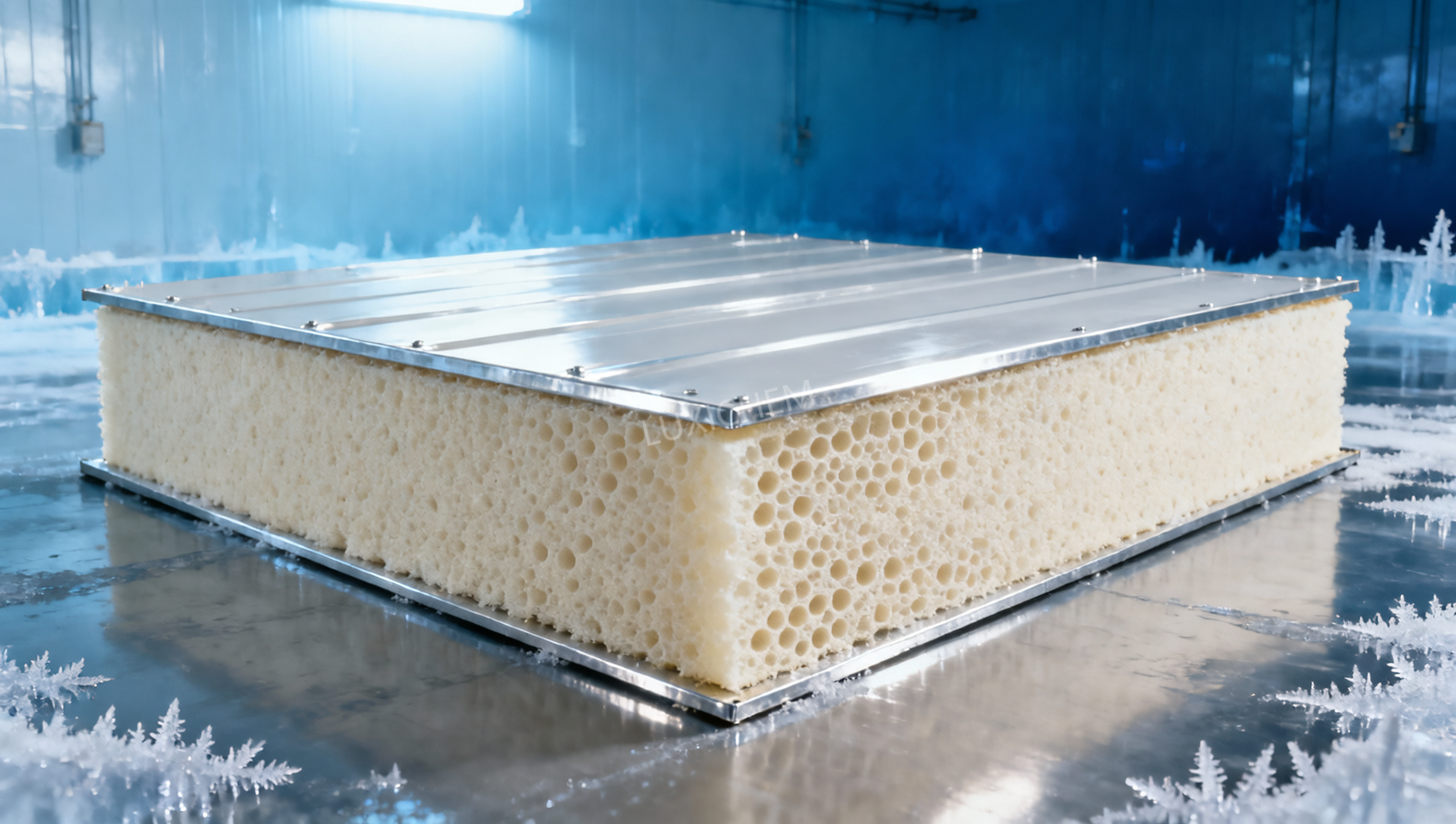
Start with the panel duty, not the polyol data sheet
For cold storage panels, polyester polyol selection should begin with the panel’s operating duty and manufacturing route. A grade that performs well in a standard rigid polyurethane or polyisocyanurate foam formulation may still create problems when the panel faces low-temperature cycling, high humidity during installation, long spans, or demanding fire-performance requirements.
The initial decision is therefore not simply “polyester versus another polyol family.” It is whether a particular polyester polyol can support the required balance of thermal insulation, compressive strength, adhesion to facing materials, dimensional stability, processing latitude, and long-term panel integrity in the intended cold-chain environment.
Project managers should avoid treating the polyol as an isolated procurement item. The foam system is an interacting package: polyester polyol, isocyanate, blowing agent, catalyst, surfactant, fillers or flame-retardant components where used, steel or other facings, adhesive interfaces, panel geometry, and production conditions. A change in polyol can alter reactivity, cell structure, foam density distribution, and curing behavior even when the nominal insulation target remains unchanged.
For a cold room wall, freezer enclosure, refrigerated warehouse roof, or insulated door assembly, the best polyester polyol for rigid foam is usually the one that gives predictable performance in the finished panel at the project’s actual operating conditions, not the one with the most attractive standalone specification.
Define the failure modes before comparing grades
Cold storage panels are exposed to a combination of stresses that is more demanding than a simple room-temperature insulation application. The outer and inner facings may experience different temperatures. Moisture can enter through damaged joints, incomplete seals, penetrations, or installation defects. Panel movement can be repeated over many cooling and defrost cycles. A foam formulation must remain sufficiently stable as those loads accumulate.
Before requesting samples or quotations, establish which risks matter most for the panel design.
- Thermal performance: The foam must support the target insulation level without excessive density, poor cell uniformity, or unstable cell gas retention.
- Dimensional stability: Low-temperature shrinkage, internal stress, and deformation can affect joints, seals, panel flatness, and door alignment.
- Mechanical support: The core must resist compression and retain adequate cohesion so the facing material and panel geometry remain stable during handling, installation, and service.
- Bonding to facings: In metal-faced sandwich panels, adhesion quality is central to panel durability. Poor bonding may first appear as local delamination, edge lifting, or reduced resistance to handling damage.
- Moisture-related durability: Polyester chemistry can offer useful rigidity and adhesion characteristics, but hydrolytic resistance and moisture control must be assessed against the intended environment and system design.
- Factory robustness: A panel line needs a formulation with workable mixing, flow, rise, cure, and demolding behavior. A narrow processing window can turn a technically acceptable formulation into a production risk.
The relative priority changes by project. A compact cold room with frequent door openings may place particular emphasis on joint integrity and condensation management. A large warehouse panel system may place more weight on flatness, long-panel dimensional control, logistics damage resistance, and repeatable line output. A panel intended for deep-freeze conditions should be assessed with more caution than one operating close to chilled-food temperatures.
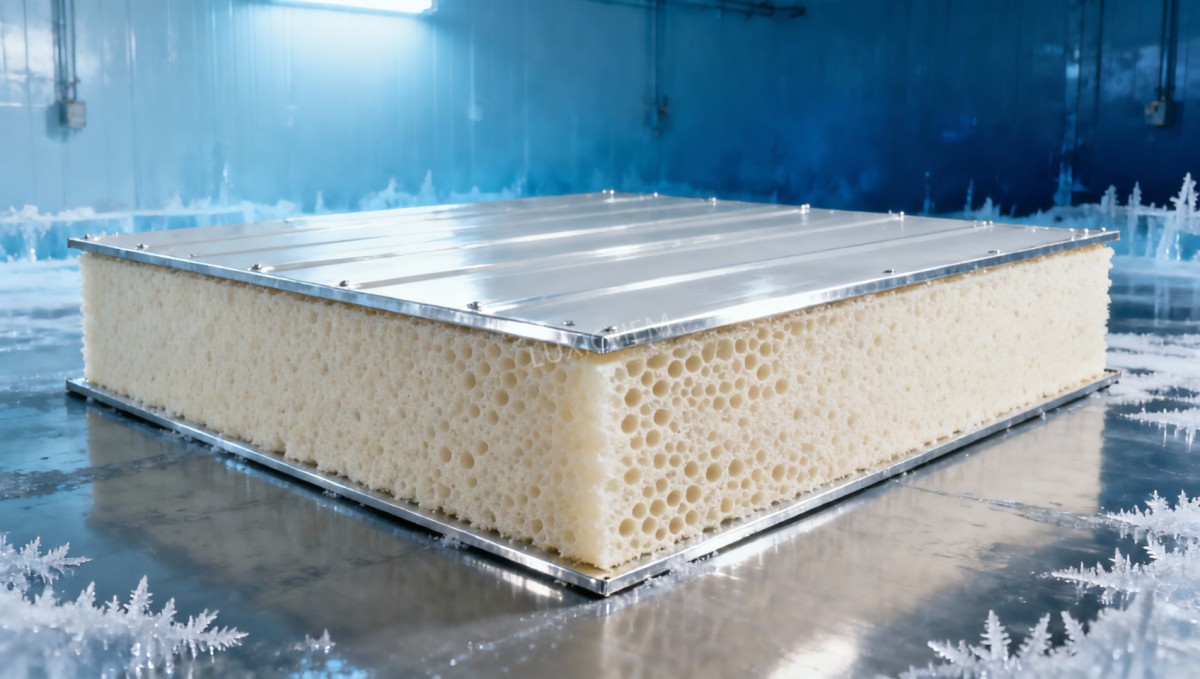
What polyester polyol properties actually influence panel behavior
Specifications such as hydroxyl value, acid value, viscosity, water content, and functionality are useful starting points, but they are not a direct ranking of cold-storage performance. Their value lies in explaining how the polyol will behave in a defined formulation and process.
Hydroxyl value and functionality
These properties influence crosslink density and reaction behavior. In broad terms, a system designed for a rigid foam core needs enough network structure to provide strength and stability. Pushing rigidity too far, however, can reduce toughness and make the foam more sensitive to handling damage or stress concentration around fasteners, joints, and cut edges.
For a project manager, the practical question is whether the proposed system can meet compressive and dimensional requirements without creating a brittle panel core. That question should be answered through finished-foam and finished-panel testing, not inferred from hydroxyl value alone.
Acid value and chemical consistency
Residual acidity can affect reaction control, storage stability, compatibility, and batch-to-batch formulation behavior. A low and controlled acid value is generally desirable for predictable system performance, but the acceptable range depends on the complete formulation. What matters during sourcing is consistency: a panel producer should be able to maintain catalyst balance, reactivity profile, and processing conditions without repeatedly adjusting the line for incoming raw-material variation.
Viscosity and processing window
Viscosity affects pumping, blending, metering, and mixing, especially when raw materials are handled in varying ambient temperatures. In continuous panel production, inconsistent viscosity can contribute to ratio-control errors or poor dispersion of additives. In discontinuous production, it can affect mold fill and foam distribution.
A lower-viscosity material is not automatically preferable. The formulation must retain stable emulsification and cell control while remaining practical for the equipment and temperature conditions at the production site. Ask suppliers for viscosity data at relevant temperatures rather than relying on a single reference condition.
Water content and moisture discipline
Water reacts with isocyanate and can alter blowing behavior, cell structure, pressure development, and final foam properties. This makes water content a particularly important incoming-control item. Storage, tank management, container sealing, transfer hoses, and sampling practices can be as important as the supplier’s release specification.
Where cold-storage panels will face a high moisture load in service, distinguish between moisture introduced during manufacturing and moisture reaching the panel after installation. The first is controlled through material handling and process discipline; the second is controlled through panel design, facings, joints, vapor-barrier continuity, and installation quality. Changing polyester polyol alone cannot compensate for poor sealing architecture.
Thermal conductivity is necessary, but it is not the whole insulation decision
Panel buyers often focus on initial thermal conductivity because it directly affects wall thickness, energy demand assumptions, and project cost. That focus is justified, but it can lead to an incomplete selection process.
A foam core may show an attractive initial insulation result while presenting challenges in density control, shrinkage, facing adhesion, or aging behavior. The panel’s operating performance also depends on joints, fasteners, cutouts, penetrations, and installation details. A high-performing foam in a laboratory specimen does not remove thermal bridging or air-leakage risks at the building level.
When comparing polyester polyol systems, require thermal performance to be considered alongside foam density, cell morphology, dimensional stability, compressive properties, and panel adhesion. Use samples produced under representative processing conditions. If the intended project includes unusually low temperatures or sustained temperature differentials, ensure the evaluation reflects those conditions rather than relying only on room-temperature measurements.
It is also sensible to separate two decisions that are often combined too early: selecting a chemistry platform and optimizing panel thickness. The chemistry decision should first establish a stable route to the needed performance. Thickness can then be optimized against energy objectives, structural design, installation constraints, and total installed cost.
Assess compatibility with the complete panel system
Polyester polyols are widely used in rigid foam applications because they can contribute rigidity, adhesion, and formulation flexibility. Their suitability still depends on the other raw materials and the panel construction.
For metal-faced panels, examine adhesion on the actual coil coating or facing material. Surface treatments, coating chemistry, oils, contaminants, and line conditions can materially affect bond performance. A formulation that bonds well to one facing may not behave identically on another. This is particularly relevant where a project changes coil supplier, coating system, or panel line settings after foam development has been completed.
For PIR-oriented systems, the relationship between polyester polyol, isocyanate index, catalysts, and flame-retardant strategy requires careful formulation control. Higher crosslinking and different reaction pathways may support specific performance goals, but can also narrow the processing window or change foam friability. The polyol supplier should be able to provide formulation guidance that is compatible with the producer’s equipment and validation process, while the panel manufacturer remains responsible for qualifying the final system.
Blowing-agent compatibility deserves the same level of attention. Cell structure and foam thermal performance are highly sensitive to the interaction among polyol blend, surfactant, blowing agent, and reaction profile. Substituting a polyester polyol because its core properties appear similar can change solubility behavior and cell-opening tendencies. A controlled trial should confirm that the formulation remains stable through mixing, rise, cure, cutting, and panel conditioning.
Use a staged qualification process
For project-led procurement, the most effective approach is to qualify the material in stages rather than making a final decision from a technical data sheet and a small hand-mix sample.
The panel trial is the stage most likely to reveal issues that technical data sheets do not show: uneven core distribution across width, poor edge fill, surface defects, unexpected cure behavior, or a reduction in line speed. For a project with fixed commissioning dates, those manufacturing effects may matter as much as a small difference in raw-material purchase price.
Do not let raw-material price decide the formulation
A lower-cost polyester polyol may increase total project cost if it requires higher foam density, causes unstable throughput, raises scrap rates, complicates handling, or leads to more stringent quality checks. Conversely, a higher-priced grade is difficult to justify if its claimed benefit cannot be translated into measurable panel-level performance or a more reliable production process.
Build the commercial comparison around cost per conforming square meter of panel, not cost per kilogram of polyol. Include density, yield, additive demand, line speed, rework exposure, storage loss, freight conditions, and the cost of qualification. For projects with tight construction schedules, assess the consequence of a delayed or inconsistent raw-material delivery separately from the material price itself.
Supply continuity is especially important when a formulation has been qualified around a specific grade. A supplier change can require renewed trials because subtle differences in reactivity, viscosity, water content, or composition may affect panel performance. The purchasing team should obtain a clear product specification, certificate-of-analysis format, batch traceability approach, packaging details, storage conditions, and notification process for any material or manufacturing change.
Questions to put to the supplier and formulation team
- Which control parameters are guaranteed for each batch, and what are the stated test methods?
- How does the material behave at the storage and processing temperatures used at the panel plant?
- Has the grade been formulated for continuous panel production, discontinuous pressing, spray application, or another route?
- What changes in catalyst, surfactant, isocyanate ratio, or blowing-agent package are expected when replacing the current polyol?
- What panel-level properties should be validated for the intended temperature range and facing material?
- What storage life, tank handling, moisture-control measures, and packaging practices are required?
- How are changes to feedstocks, manufacturing location, specification limits, or quality-control methods communicated?
A strong answer includes limits, operating conditions, and a proposed validation route. Broad claims about “better insulation,” “stronger foam,” or “universal compatibility” are not enough for a cold-storage panel decision.
A practical selection rule for cold-storage projects
Select polyester polyol for rigid foam only after defining the panel duty, confirming compatibility with the formulation and facing system, and validating the result in a representative panel process. Start with thermal performance, but do not stop there. Low-temperature dimensional stability, bonding, moisture discipline, processing consistency, and supply control determine whether a promising foam formulation becomes a dependable cold-storage panel.
For an engineering team, the final approval should be tied to documented panel-level acceptance criteria and a controlled supply specification. That creates a more reliable basis for balancing insulation performance, manufacturing productivity, installation quality, and lifecycle risk.
Related Picks
 Butylated Hydroxytoluene Price Drivers: Supply, Purity, and Purchasing Risk FactorsOct 21, 2026Butylated Hydroxytoluene price trends depend on supply stability, purity, logistics, and purchasing risk. Learn how to compare quotes wisely and reduce sourcing costs.
 Sodium Tripolyphosphate Price Trends: Raw Material and Energy ExposureOct 20, 2026Explore sodium tripolyphosphate price trends, from phosphate and soda ash costs to energy exposure. Learn how to compare quotes, manage sourcing risks, and make smarter purchasing decisions.
 Acetonitrile Shipment to Vietnam Successfully Dispatched; RCEP Benefits Boost Fine Chemical Trade with ASEANSep 16, 2026A shipment of industrial-grade acetonitrile from our company has recently been loaded and dispatched following the completion of standardized hazardous material packaging and container securing procedures.
 Nigerian Client’s Order of 4 Containers of Vinyl Acetate Successfully Loaded and Shipped to West AfricaSep 16, 2026We recently completed the loading of a vinyl acetate order for a Nigerian client; four containers of the product have been successfully packed and are ready for shipment to Nigeria.




Question Consultation
Send Us Your Inquiry Today

Luxi Chemical is a professional chemical product supplier with ample stock of all chemical categories and excellent quality, welcome your purchase inquiry.

