Silicone Oil Manufacturers: How to Verify Production and Quality Controls

The lowest quotation from silicone oil manufacturers can become expensive when viscosity varies between deliveries, volatile residues interfere with processing, or the production source changes without notice. A defensible purchase starts with three connected pieces of evidence: an identifiable manufacturing site, batch results measured by suitable methods, and records linking the delivered containers to the material that was tested.
Price comparisons become meaningful only after the silicone chemistry, release specification, packaging, and acceptance conditions are aligned. Two offers described simply as “silicone oil, same viscosity” can represent materials with different end groups, impurity profiles, and processing behavior.
Establish what is being manufactured and where
“Silicone oil” covers several fluid chemistries. A conventional polydimethylsiloxane fluid is not interchangeable with a hydroxyl-terminated, hydrogen-functional, amino-functional, or phenyl-containing silicone fluid. Even within one family, nominal viscosity alone does not establish equivalence. Confirm the chemical description, functional groups where relevant, intended application, and whether the quotation covers neat fluid, an emulsion, or a formulated blend.
Then establish the supplier’s actual production role. Polymer synthesis, viscosity adjustment by blending, purification, and repacking are different activities. A facility that purchases base fluids and blends them can supply suitable material, provided its process and responsibility are clearly disclosed. Describing that operation as integrated synthesis creates a verification problem because the upstream source remains unidentified.
Request the legal name and address of the production site, the activities performed there, and the relationship between that site and the contracting entity. A trading company can manage a dependable supply arrangement when the manufacturing source, document access, and responsibility for nonconforming batches are explicit.
A useful process discussion follows the material through reaction or receipt of base fluid, removal of volatile components where applicable, blending, filtration, storage, and filling. Ask which operations apply to the quoted grade. Generic equipment photographs establish little unless the equipment, product route, and site identity can be connected.
Look for controls at the points where batches can diverge
Production capability is demonstrated by controlled operating records. For silicone fluids made through polymerization or equilibration, reaction conditions, molecular-weight control, catalyst handling, and subsequent treatment influence the finished material. The relevant evidence is a documented process with defined operating limits, recorded deviations, and an authorized release decision.
Where the process includes stripping or devolatilization, review how temperature, vacuum, residence time, and completion criteria are controlled. A batch can meet its viscosity specification while retaining an unsuitable amount of low-molecular-weight material. That distinction matters when heating, vacuum exposure, odor, or contamination of adjacent surfaces affects the application.
For blended grades, focus on incoming-fluid approval, weighing accuracy, mixing uniformity, and sampling position. A sample taken before adequate mixing can produce a compliant laboratory result that does not represent the entire tank. The record should identify when the sample was drawn and whether further adjustment occurred afterward.
Shared equipment introduces a different concern. Residues from functional silicone fluids, emulsions, cleaning agents, or previous products can affect compatibility or surface behavior. Cleaning procedures should address the preceding material and the sensitivity of the next grade. Filtration removes particles within its operating capability; it does not establish the absence of dissolved contamination.

A site review, whether remote or in person, becomes more useful when it follows one selected batch from raw-material receipt through filling. Confidential formulas need not be disclosed to demonstrate that material identities, quantities, processing steps, and release records agree.
Read the certificate of analysis as evidence, not as a specification sheet
A specification states the permitted limits. A certificate of analysis, or COA, records the release information for an identified batch. A document containing only typical values offers little evidence about the shipment under consideration.
Request the COA for the actual available lot before dispatch. It should identify the product grade, batch number, applicable specification, test results, units, and release authorization. Production, testing, and retest or expiry dates should be distinguishable where they are used. An expiry claim requires a storage and stability basis; an unexplained date does not establish shelf life.
Request results from several recent production lots when continuity matters. Look at whether values vary within a plausible operating range and whether methods or specifications changed. Repeated identical results deserve a question about rounding, reporting conventions, or the use of typical values. They do not, by themselves, prove that the records are unreliable.
Resolve test-method differences before treating results as failures
Viscosity is a frequent source of avoidable disputes. Kinematic viscosity and dynamic viscosity are different quantities. Centistokes and millipascal-seconds cannot be exchanged directly without accounting for density at the relevant temperature. A comparison also requires consistent temperature control and a method suited to the fluid’s viscosity range.
Ask for the test-method identifier and revision, instrument type, temperature conditions, and calibration or verification records. For viscous materials, sample conditioning and trapped air deserve attention. With rotational methods, spindle or geometry and measurement settings can affect comparability, especially for formulated or non-Newtonian materials.
Volatile-loss testing needs equally careful interpretation. A gravimetric heating test measures mass lost under its stated conditions; it does not identify every substance that leaves the sample. Where individual cyclic siloxanes or other specified components matter, an appropriate analytical method must address those compounds directly. A low total loss result does not establish that every restricted constituent meets its limit.
Method selection must follow the material and the question being asked. For example, a plant-derived flavonoid such as Rutin CAS#153-18-4 requires identity and assay controls suited to that chemistry; those methods provide no evidence of silicone-fluid quality. The same principle applies within silicone grades: evidence of chemical identity cannot substitute for a quantitative release test.
If laboratories disagree, compare procedures before commissioning repeated tests. Use representative portions of the same retained sample, agree on conditioning and reporting, and define how measurement uncertainty will be considered near a specification boundary. Otherwise, repeated testing can consume time without resolving the cause.
Make traceability reach the delivered container
A batch number is useful only when it connects to records. The traceability chain should link incoming materials, processing or blending records, laboratory samples, release approval, filling records, and shipment identification. Where bulk material is divided into packaging lots, that relationship should remain visible.
Ask how rework, returned material, and blended batches are recorded. If two production lots enter a common tank, the resulting batch identity and associated testing need a defined basis. Reusing an earlier COA after additional blending breaks the connection between the tested sample and the dispatched product.
Container controls also affect acceptance. Confirm packaging material, closure type, labeling, and protection against contamination during filling. Reused containers require an established suitability and cleaning process. For sensitive applications, obtaining acceptable fluid in an unsuitable container can defeat the upstream controls.
Retained samples should represent the released material and remain identifiable under documented storage conditions. Agree on their retention period and availability during a dispute. A sealed retention sample is particularly useful when investigation must distinguish a production issue from contamination introduced during transport, transfer, or subsequent handling.
Use qualification samples to test the application boundary
A small sample can establish compatibility, but it does not prove routine production consistency. Identify whether it came from normal stock, a pilot batch, or a specially prepared blend. Record its batch number and compare its COA with the proposed commercial specification.
Application testing should reproduce the conditions that are most likely to expose a difference. Elevated temperature brings attention to volatile loss and residue formation. Contact with plastics, elastomers, coatings, or other formulation ingredients makes compatibility relevant. For reactive grades, functional-group content and reaction behavior require attention alongside viscosity.
Set acceptance criteria before the trial. “Performs well” is difficult to enforce; an agreed observation or measurement tied to the actual process is more useful. Keep laboratory release requirements separate from application acceptance so that a successful trial does not silently replace the purchasing specification.
The first commercial delivery should be compared with the approved sample using the agreed tests. A passing sample followed by a different production source is a new qualification question, even when the grade name remains unchanged.
Put quality obligations into the purchase terms
A price quotation should identify the specification revision, test basis, packaging, delivery quantity, and production source covered by the offer. Include access to batch-specific release documents and a defined process for reporting and investigating nonconformity. Clarify the disposition of rejected material before a shipment is needed urgently.
Change control deserves explicit wording. Relevant changes include the manufacturing site, base-fluid source, production route, blending practice, purification conditions, test method, or packaging where those changes affect agreed requirements. The agreement should distinguish changes requiring advance approval from those requiring notification, with enough time for application assessment.
For cost comparison, include qualification testing, incoming inspection, transfer losses, and the consequences of a held or rejected batch alongside the delivered price. These costs should be evaluated against the actual application; elaborate testing adds little value when it does not address a credible failure mechanism.
When essential evidence remains unavailable, the unresolved point should determine the order decision. Missing method details call for analytical alignment. An unidentified production source calls for source verification. An unexplained sample-to-shipment difference calls for requalification before the material enters routine use.
Related Picks
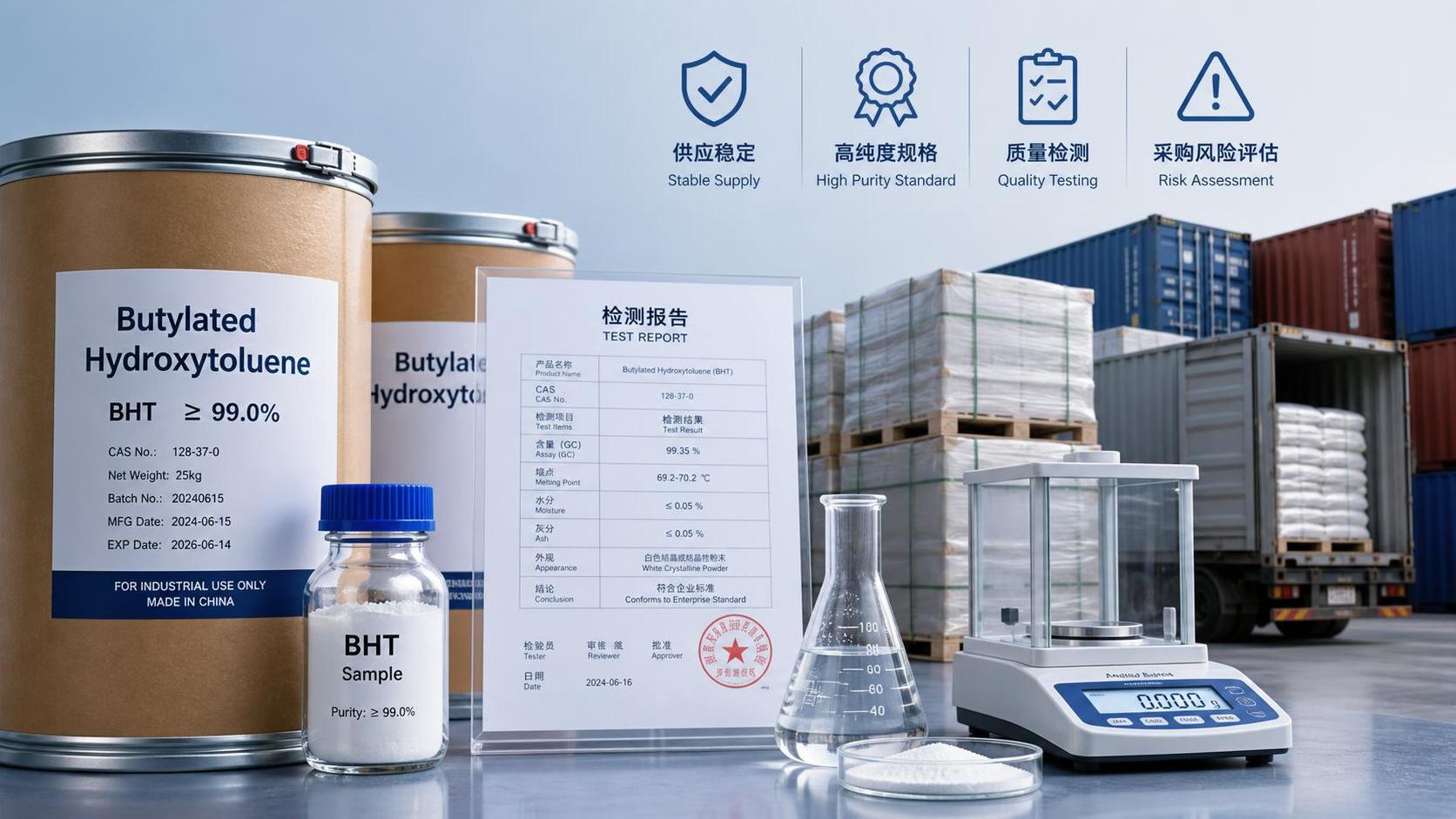
 Butylated Hydroxytoluene Price Drivers: Supply, Purity, and Purchasing Risk FactorsOct 21, 2026Butylated Hydroxytoluene price trends depend on supply stability, purity, logistics, and purchasing risk. Learn how to compare quotes wisely and reduce sourcing costs.
 Sodium Tripolyphosphate Price Trends: Raw Material and Energy ExposureOct 20, 2026Explore sodium tripolyphosphate price trends, from phosphate and soda ash costs to energy exposure. Learn how to compare quotes, manage sourcing risks, and make smarter purchasing decisions.
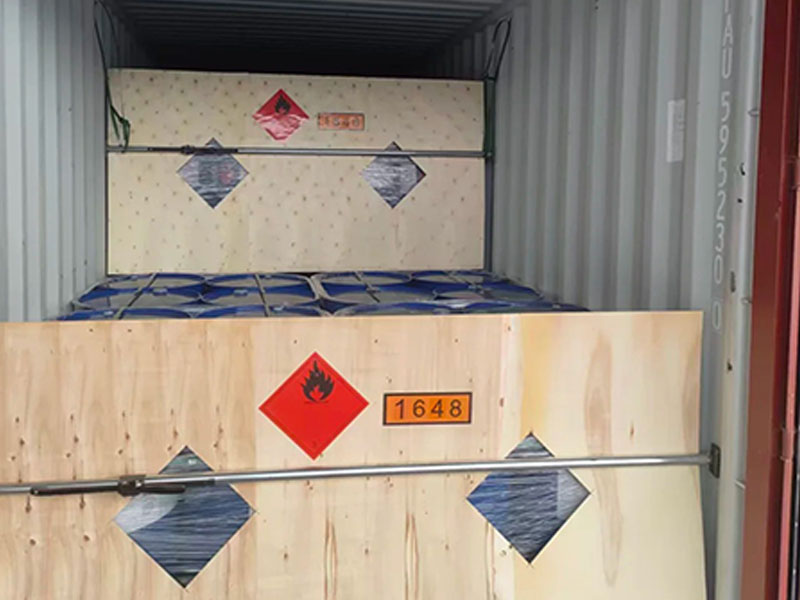
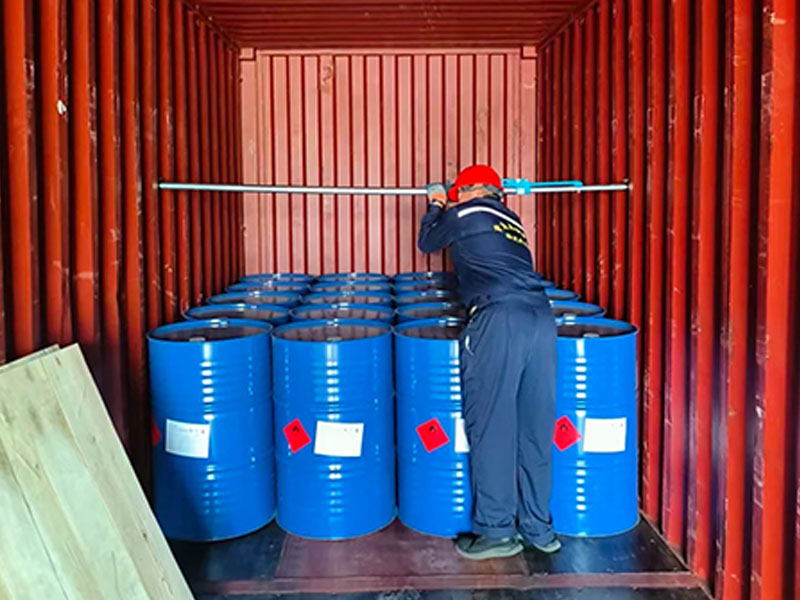
 Acetonitrile Shipment to Vietnam Successfully Dispatched; RCEP Benefits Boost Fine Chemical Trade with ASEANSep 16, 2026A shipment of industrial-grade acetonitrile from our company has recently been loaded and dispatched following the completion of standardized hazardous material packaging and container securing procedures.
 Nigerian Client’s Order of 4 Containers of Vinyl Acetate Successfully Loaded and Shipped to West AfricaSep 16, 2026We recently completed the loading of a vinyl acetate order for a Nigerian client; four containers of the product have been successfully packed and are ready for shipment to Nigeria.

Question Consultation
Send Us Your Inquiry Today

Luxi Chemical is a professional chemical product supplier with ample stock of all chemical categories and excellent quality, welcome your purchase inquiry.