Pure Silicone Oil: Which Tests Verify Purity and Batch Consistency?

A delivery of pure silicone oil can look clear and match the nominal viscosity yet still contain excess moisture, low-molecular-weight siloxanes, or contamination from handling. Such differences can affect evaporation, electrical performance, formulation stability, and process cleanliness. Reliable verification combines identity testing, controlled-temperature viscosity and density measurements, moisture analysis, and targeted impurity testing. No single result establishes purity or guarantees that successive batches will behave identically.
The starting point is an agreed material definition and test specification. For a conventional polydimethylsiloxane (PDMS) fluid, routine receiving checks can confirm identity and physical consistency; chromatographic and other targeted methods investigate substances those checks cannot distinguish. Acceptance limits must reflect the exact grade, intended use, and analytical method—not a generic claim such as “100% pure.”
Define what “pure” means before choosing tests
Silicone oil describes a family of materials, not one chemical with a universal purity requirement. Dimethyl silicone fluids, phenyl-modified fluids, and functional silicone fluids have different compositions and expected properties. Even an unmodified PDMS oil contains a distribution of polymer chain lengths. That distribution is not automatically contamination.
A useful purchasing specification identifies the polymer chemistry, nominal viscosity grade, permitted additives, and relevant impurity limits. It should also define test temperatures, reporting units, methods, and acceptance rules. Otherwise, two laboratories can report different values without either having tested incorrectly.
Separate three questions when reviewing a batch:
- Identity: Is the delivered material the specified silicone fluid?
- Purity: Are unwanted substances below application-specific limits?
- Consistency: Does this batch remain within the agreed physical and compositional profile?
A passing viscosity result answers only part of the third question. It does not establish the absence of water, organic solvents, cyclic siloxanes, or trace metals.
The core tests and what their results actually prove
Identity: use a reference spectrum, not appearance alone
Fourier-transform infrared spectroscopy is a practical identity check for PDMS. Compare the sample spectrum with an approved reference, looking at characteristic siloxane and methyl-group features as well as unexpected bands. Consistent sample preparation, instrument settings, and comparison criteria make this more defensible than a subjective statement that the spectra “look similar.”
FTIR is a screening tool, not a universal trace-impurity assay. A closely related silicone fluid may have a very similar spectrum. Where substitution, functional modification, or disputed composition is suspected, nuclear magnetic resonance spectroscopy or another suitable structural method may be needed.
Viscosity and density: temperature control comes first
Viscosity is often the most sensitive routine indicator of grade consistency. However, temperature differences, trapped bubbles, unsuitable measurement geometry, and inadequate equilibration can create apparent batch variation. Use a method suitable for the viscosity range and confirm whether the specification requires kinematic or dynamic viscosity.
These quantities are not interchangeable. Kinematic viscosity is commonly expressed in mm²/s or cSt; dynamic viscosity is commonly expressed in mPa·s. Conversion requires density at the corresponding temperature. A certificate reporting “viscosity” without a temperature and unit is insufficient for release decisions.
Density and refractive index provide useful cross-checks when measured at defined temperatures. A viscosity shift accompanied by a density change warrants investigation, but unchanged density does not rule out contamination. For unexplained differences between otherwise acceptable batches, size-exclusion chromatography may help compare molecular-weight distributions, provided calibration and data interpretation suit the polymer.
Water, volatile components, and impurities need separate methods
Water and volatile siloxanes can both contribute to heating loss, but they require different controls and corrective actions. Combining them into one “volatile matter” result can conceal the actual cause of a problem.
Karl Fischer analysis is generally more specific for water than loss on drying. Direct addition may be suitable when the oil disperses or dissolves adequately in a compatible reagent system. An oven-transfer approach may be preferable where direct analysis gives poor recovery or matrix interference. Validate the chosen conditions: insufficient transfer can under-report water, while excessive heating may introduce decomposition-related interference.
Keep moisture samples sealed and minimize exposure during transfer. At low water concentrations, wet syringes, humid air, and unsuitable containers can influence results. Blanks, suitable check materials, and recovery studies help distinguish a product issue from an analytical one.
Gas chromatography is appropriate for specified low-molecular-weight siloxanes, including D4, D5, and D6 when these are relevant to the grade or application. GC-FID supports quantification with appropriate calibration; GC-MS adds identification evidence. Sample preparation, internal standards, calibration range, and reporting limits must suit the target substances.
A chromatographic area percentage should not be presented as overall silicone-oil purity unless the method genuinely supports that calculation. High-molecular-weight PDMS may not pass through a conventional GC system, and detector responses differ between substances. An apparently clean chromatogram therefore does not establish a complete mass balance.
Heating-loss tests and thermogravimetric analysis remain useful for comparing evaporation behavior. Specify temperature, duration, atmosphere, and relevant sample geometry. Results from different conditions are not directly interchangeable, and heating loss alone cannot separate water, solvent, and volatile siloxanes.
Build sampling controls before interpreting batch differences
A detailed analytical program cannot compensate for an unrepresentative sample. Contamination can enter through transfer hoses, pumps, reused containers, or sampling tools. Water or particulate contamination may also be unevenly distributed within a delivery.
- Identify the sampling unit. Record whether the sample represents a manufacturing batch, tanker compartment, drum, or intermediate bulk container.
- Follow an approved sampling plan. Define container selection, sampling locations, any mixing requirement, and precautions against introducing air or moisture.
- Use compatible, clean equipment. Select containers and closures suitable for both the oil and the intended tests; use separate aliquots where necessary.
- Preserve traceability. Record the supplier lot, container identity, collection date, sampler, and any unusual appearance or handling event.
- Retain a sealed sample. Keep enough material under defined conditions to support investigation or comparison with the supplier’s retained sample.

Shared chemical-handling areas require particular attention to equipment segregation. For example, o-Cresol CAS#95-48-7 is a phenolic intermediate used in resins, pharmaceuticals, and analytical applications; it is not a silicone-oil purity standard or a routine reagent for these tests. Where different chemical streams share a facility, dedicated sampling tools or validated cleaning help prevent cross-contamination and misleading results.
Do not investigate unexpected odor by deliberately smelling the sample. Treat it as a potential contamination signal, review the safety data sheet, and use controlled analytical identification where justified.
Read the certificate of analysis as evidence, not a release decision
A useful certificate of analysis connects results to the delivered batch. Check the product designation, viscosity grade, batch number, and whether each entry is an actual batch measurement, a typical value, or a specification statement. “Conforms” may be acceptable for some qualitative checks, but numerical results provide better visibility into drift.
Review the method and its sensitivity alongside the number. A result reported as “not detected” does not mean zero: it means the analyte was not detected under that method’s conditions. Where compliance depends on a low impurity limit, the detection or quantification capability must support that decision.
Also establish which standard, if any, applies. A general industrial PDMS grade does not automatically meet requirements for food-contact, pharmaceutical, medical, or electrical applications. Use the relevant current specification or compendial monograph when applicable, including its prescribed methods. A supplier’s general statement of purity cannot replace application-specific evidence.
For a new source or changed manufacturing process, broader independent verification is sensible. A reduced receiving-test program may be justified after documented qualification and stable performance, but critical impurity checks should not be dropped solely because viscosity has remained consistent.
When every batch passes but the process still changes
Specification compliance and batch consistency are related but different. Two lots can sit at opposite ends of an approved viscosity range while both pass. A process sensitive to spreading, dosing, or evaporation may respond differently to those lots.
Trend actual results using consistent methods and conditions. Review viscosity, density, moisture, selected volatile components, and any application-critical characteristic. Include measurement uncertainty when judging small changes. Statistical control limits describe observed process behavior; specification limits define acceptance. Neither should be substituted for the other.
Use the pattern of results to choose the next investigation:
- Only viscosity shifts: verify temperature control, instrument performance, sample identity, and measurement procedure before investigating polymer distribution.
- Moisture rises while identity remains normal: examine closures, storage, transfer exposure, and sampling contamination.
- Heating loss increases: use moisture analysis and targeted chromatography to determine what is leaving the sample.
- Appearance, density, or spectrum changes: hold the material and investigate mix-up or contamination rather than blending away the difference.
For an out-of-specification result, preserve the original finding, quarantine the affected material, and investigate laboratory and sampling causes under a documented procedure. Retesting should answer a defined question, not continue until a passing number appears.
Release criteria are strongest when they state which tests apply to every delivery, which are periodic qualification checks, and what triggers expanded analysis. That makes a clear-looking, correctly labeled oil only the start of verification—not the end of it.
Related Picks
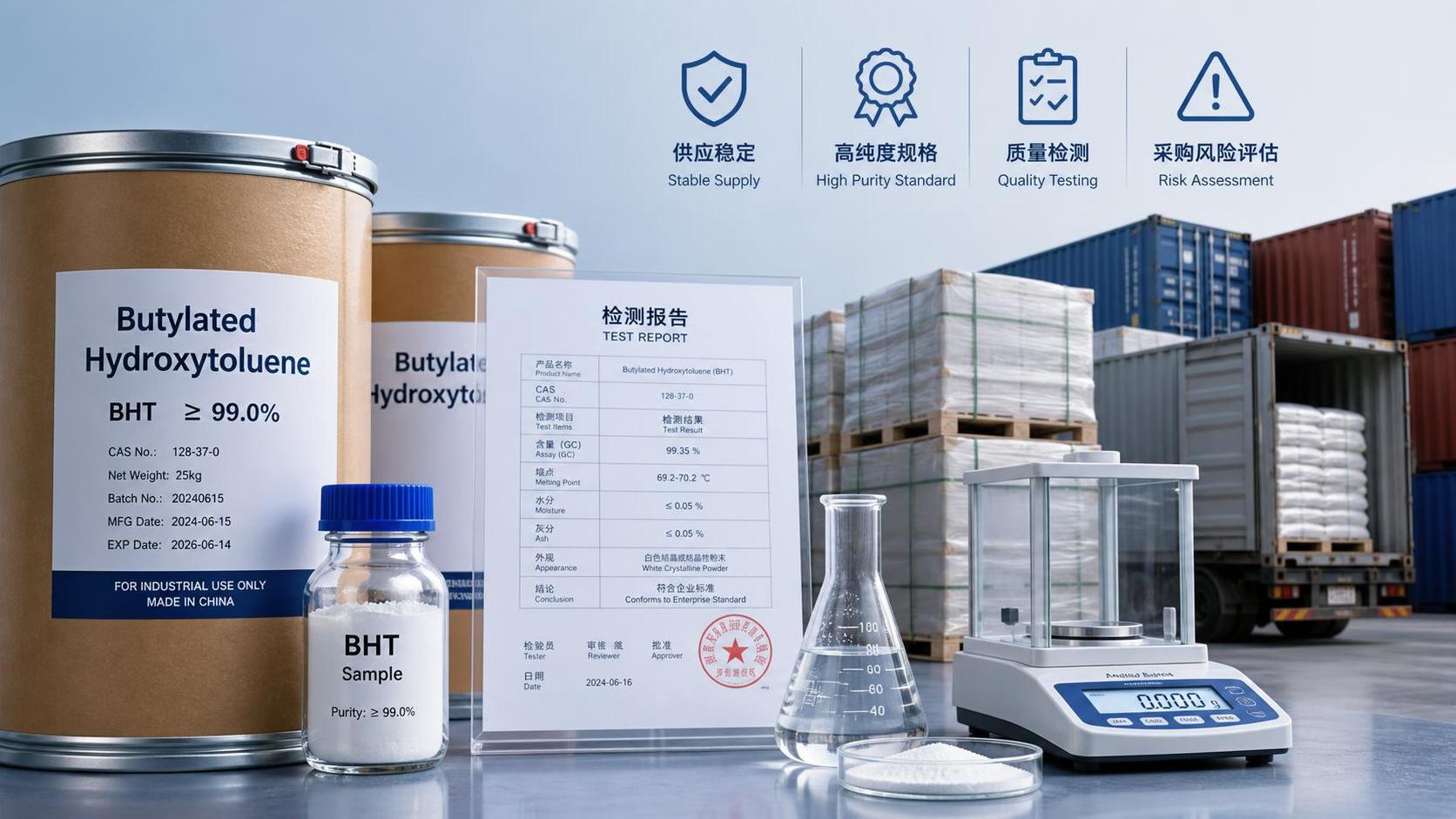
 Butylated Hydroxytoluene Price Drivers: Supply, Purity, and Purchasing Risk FactorsOct 21, 2026Butylated Hydroxytoluene price trends depend on supply stability, purity, logistics, and purchasing risk. Learn how to compare quotes wisely and reduce sourcing costs.
 Sodium Tripolyphosphate Price Trends: Raw Material and Energy ExposureOct 20, 2026Explore sodium tripolyphosphate price trends, from phosphate and soda ash costs to energy exposure. Learn how to compare quotes, manage sourcing risks, and make smarter purchasing decisions.
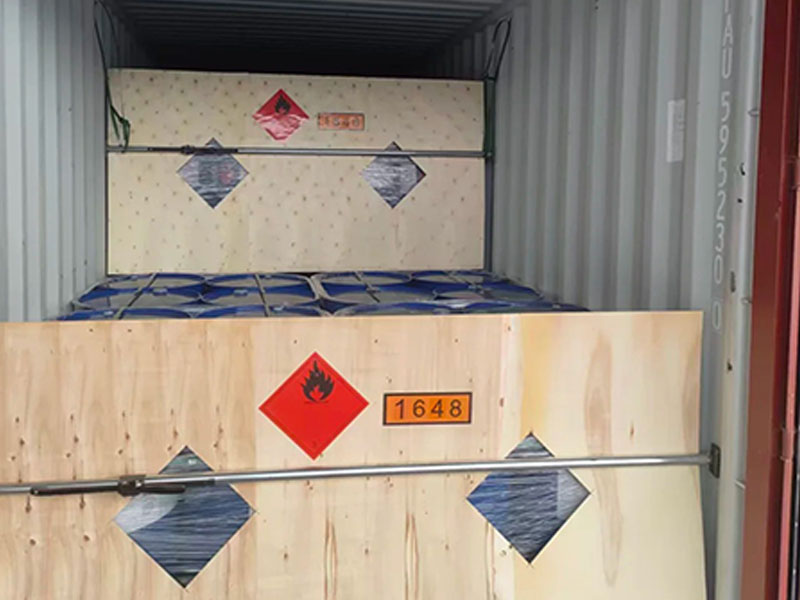
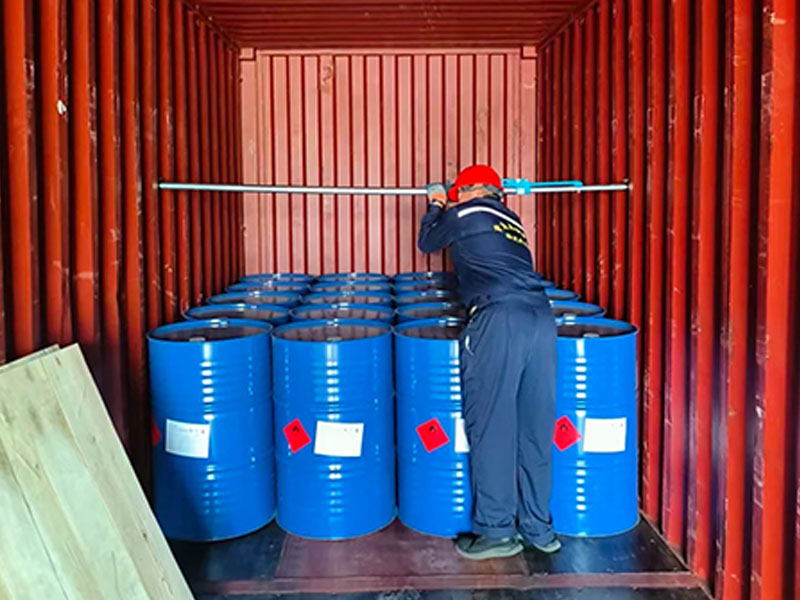
 Acetonitrile Shipment to Vietnam Successfully Dispatched; RCEP Benefits Boost Fine Chemical Trade with ASEANSep 16, 2026A shipment of industrial-grade acetonitrile from our company has recently been loaded and dispatched following the completion of standardized hazardous material packaging and container securing procedures.
 Nigerian Client’s Order of 4 Containers of Vinyl Acetate Successfully Loaded and Shipped to West AfricaSep 16, 2026We recently completed the loading of a vinyl acetate order for a Nigerian client; four containers of the product have been successfully packed and are ready for shipment to Nigeria.

Question Consultation
Send Us Your Inquiry Today

Luxi Chemical is a professional chemical product supplier with ample stock of all chemical categories and excellent quality, welcome your purchase inquiry.