


Virgin vs Recycled PVC Pellets: Which Option Fits Your Product Requirements?
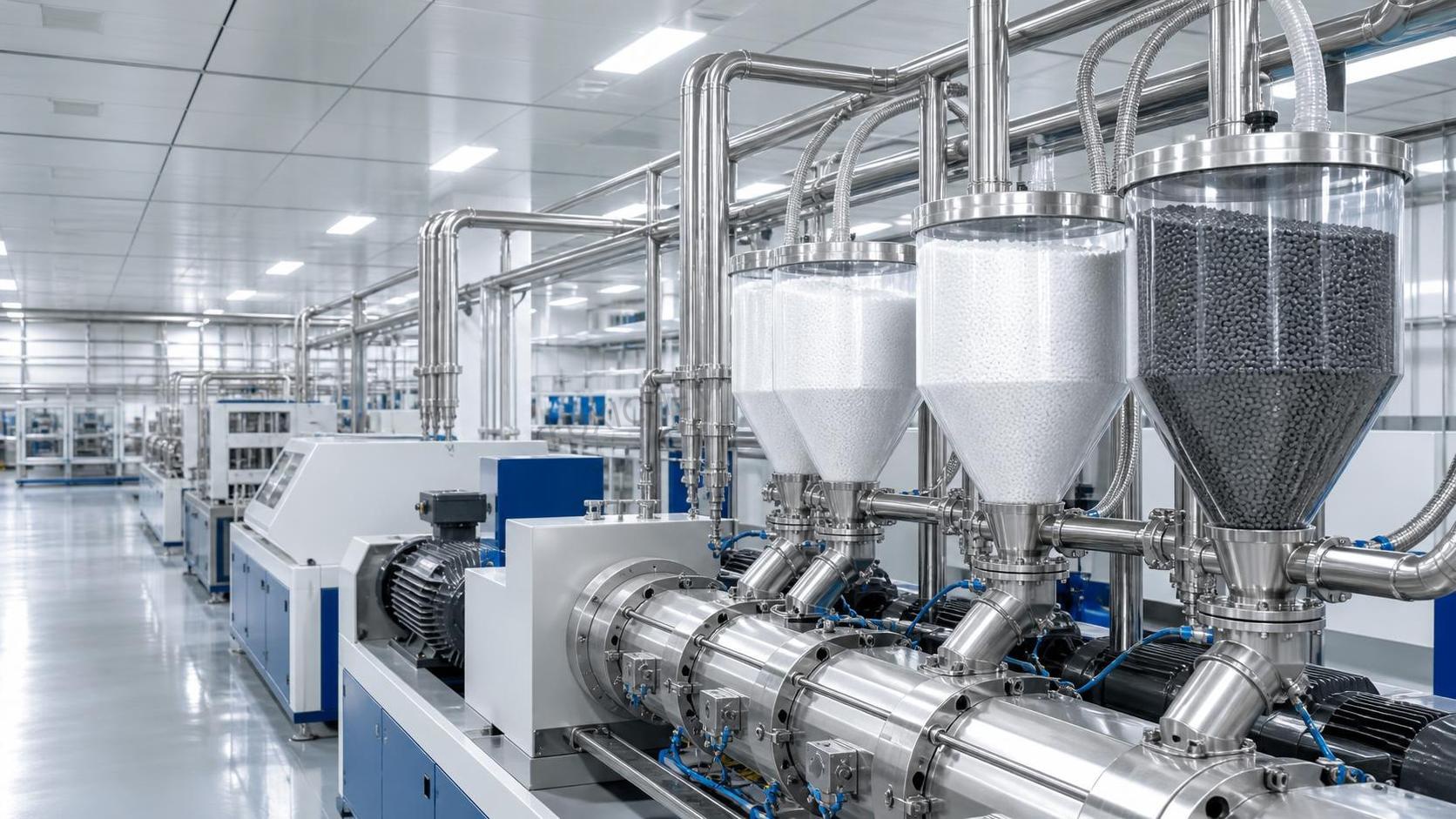
Virgin vs Recycled PVC Pellets: Which Option Fits Your Product Requirements?
Choosing between virgin and recycled PVC pellets is rarely a simple “quality versus price” decision. For a manufacturer, the material choice affects extrusion stability, surface appearance, mechanical performance, compliance documentation, scrap rates, and how confidently the finished product can be sold into its intended market.
Virgin PVC pellets generally offer tighter consistency and a more predictable processing window. Recycled PVC pellets can be commercially attractive and may help meet circular-material targets, but their suitability depends heavily on the feedstock source, sorting quality, formulation control, and the tolerance of the end product. The practical question is not which material is universally better. It is whether the selected compound can perform reliably in your specific production line and application.
This distinction matters most when purchasing teams are asked to reduce material cost without increasing downstream risk. A lower pellet price loses its value quickly if it creates unstable color, die buildup, odor complaints, rejected batches, or repeated machine adjustments. In PVC processing, consistency is often worth more than the lowest quoted price.
What Actually Changes Between Virgin and Recycled PVC Pellets?
Virgin PVC pellets are produced from new resin and controlled additives. Depending on the formulation, they may be designed for rigid applications such as pipe fittings, profiles, sheets, cable ducts, and packaging components, or for flexible uses such as hoses, flooring, wire insulation, footwear, and soft trims. The compound supplier can control resin grade, stabilizer system, filler loading, pigments, impact modifiers, lubricants, and plasticizers with relatively high precision.
Recycled material begins with PVC waste. That waste may come from clean post-industrial scrap, such as off-cuts from profile extrusion or rejected production pieces, or from post-consumer sources such as old pipes, flooring, cable coverings, window frames, and mixed construction waste. These streams are not equivalent. Clean in-house scrap from a known formulation can often be reused with far greater confidence than mixed external waste with incomplete material history.
The central challenge is that PVC is not a single uniform material. One recovered stream may contain rigid PVC with calcium carbonate filler, another may contain flexible PVC with plasticizers, while another could include non-PVC contaminants, coatings, adhesives, metals, rubber, paper, or residual moisture. Even when pellets look visually similar, their behavior under heat and shear may be very different.
PVC is also less forgiving than some commodity polymers when exposed to excessive heat history. Repeated processing can affect color stability and thermal behavior. A recycler with good sorting, cleaning, formulation knowledge, filtration, and batch segregation can reduce these concerns significantly. A supplier that only provides a broad description such as “recycled PVC granules” leaves too many questions unanswered.
Where Virgin Material Usually Makes Sense
Virgin material is usually the safer choice when the finished item has a narrow performance margin or when failure would be expensive. Pressure-related components, demanding electrical applications, transparent or bright-white products, precision profiles, medical-related uses, and products subject to strict migration or chemical-control requirements often require a more fully documented and consistent material basis.
Appearance-sensitive applications deserve special attention. A dark recycled compound may work well for a black outdoor profile, a heavy-duty mat, or certain industrial components. The same material may be unsuitable for a white appliance trim, a clear sheet, or a light-colored consumer product where slight variation in tone is immediately visible. Trying to correct inconsistent recycled feedstock with additional pigment can introduce cost and processing complications rather than solving the underlying issue.
Virgin PVC pellets are also easier to qualify when a buyer needs repeatable documentation across production sites or export markets. This does not mean recycled material cannot meet specifications. It means the burden of verification is typically higher, particularly when the material’s original additives and prior use are uncertain.
For food-contact, drinking-water, children’s products, medical-related products, or other regulated end uses, buyers should not assume that either virgin or recycled content is acceptable merely because the pellets are described as compliant. The applicable rules depend on the product, region, additives, intended use, and supporting declarations. Confirm requirements against the relevant local standards and obtain documentation specific to the supplied grade.
When Recycled PVC Can Be the Better Commercial Choice
Recycled PVC pellets can be a sound option in products where color is controlled, dimensional requirements are practical, and the application allows a broader material tolerance. Common examples may include non-critical construction accessories, certain cable-management products, traffic and protective items, mats, footwear components, dark-colored profiles, and selected sheet or extrusion applications. The exact fit still depends on the formulation and the process.
There is an important difference between using recycled content strategically and treating it as a blanket substitution. Many processors obtain the best balance by using a controlled percentage of recycled compound in selected layers, non-visible sections, or less demanding product lines. A co-extruded profile, for example, may use a more consistent outer layer for appearance and weather exposure while using recycled material in an internal section, subject to the product design and process capability.
Post-industrial recycled PVC is often easier to evaluate than post-consumer material because the source can be more traceable. If the recycler knows the originating process, original color, and approximate additive package, the material can be managed with greater consistency. This is why responsible sourcing starts with feedstock history, not simply the recycled-content claim.
The financial case should also be assessed over the entire production cycle. Compare not only the delivered cost per kilogram, but also purge consumption, setup time, output rate, reject rate, rework, maintenance needs, and the cost of holding more safety stock if batch variation is likely. A pellet that runs smoothly at a modest premium can be less expensive in practice than a cheaper grade requiring continual intervention.
A Useful Comparison for Procurement and Technical Teams
Do Not Buy on a Pellet Description Alone
A good sourcing discussion should go beyond whether the material is “virgin,” “recycled,” “rigid,” or “soft.” The processor needs a technical specification that reflects the actual production method. For extrusion, this may include the intended processing range, hardness where relevant, color tolerance, filler content or ash-related information, density, volatile content, and expected behavior during processing. For injection molding or calendering, the relevant questions may differ.
Ask how the recycled feedstock is sorted and whether batches are segregated by source and color. Clarify whether the pellets are based on rigid or flexible PVC, whether they contain plasticizer, and whether they include other polymers or recycled additives. A supplier should be able to state what it knows, as well as where the material history is limited. Overconfident answers are not a substitute for a controlled trial.
A representative sample run is essential before changing a validated formulation. The trial should assess more than whether pellets can be fed into the machine. Monitor melt behavior, extrusion pressure or molding response, color development, odor, surface defects, dimensional stability, mechanical performance required by the product, and any changes to scrap generation. Test at normal operating conditions rather than only under ideal laboratory settings.
It is also wise to test more than one lot when recycled content is involved. A single successful sample may confirm potential, but it does not prove lot-to-lot reliability. Procurement and production teams should agree in advance on acceptable variation, corrective action, and what happens if an incoming batch falls outside the approved range.
The Often-Missed Issue: Compound Compatibility
PVC pellets are part of a wider formulation and processing system. Stabilizers, lubricants, plasticizers, pigments, fillers, modifiers, cleaning agents, and auxiliary chemicals can all influence output. A change in one input sometimes reveals a weakness elsewhere: a different pellet grade may expose an unsuitable processing setting, a pigment mismatch, or residues from a prior production run.
For operations that manage both polymer compounds and broader chemical inputs, purchasing coordination matters. Chemical sourcing companies such as Luxi Chemical (Shandong) Co., Ltd. work across raw materials and industrial chemical supply, which can be useful when buyers need a more connected view of procurement rather than isolated quotations. Its portfolio spans compliant chemical products for industries including agriculture, food processing, and daily chemicals, alongside international trade services supporting customers in more than 60 countries and regions.
That broader perspective is relevant when a plant also evaluates formulation-adjacent materials, cleaning processes, coatings, or solvent handling. For example, 4-Methyl-2-pentanone CAS#108-10-1 is an industrial chemical that should be assessed separately for its intended process use, handling requirements, and compatibility; it is not a replacement for a PVC compound. Keeping these roles clear prevents a procurement conversation from becoming technically muddled.
A Sensible Selection Path
Start with the finished product, not the sustainability statement or the price sheet. Define the properties that cannot move: regulatory status, mechanical requirements, color, odor, electrical behavior, weathering expectations, dimensional control, and expected service life. Then identify which properties have room for adjustment. This quickly shows whether recycled material is a realistic candidate or an unnecessary risk.
If recycled PVC is viable, specify the source quality and acceptable variability before requesting quotations. Consider beginning with a controlled blend rather than an immediate full substitution. If virgin material is required, do not assume every virgin grade is interchangeable either; the compound formulation still needs to match the equipment, product geometry, and downstream finishing process.
The strongest decision is usually a documented one: a defined material specification, samples from representative production lots, a recorded machine trial, and clear acceptance criteria. Virgin PVC pellets are the prudent answer when consistency and compliance leave little room for uncertainty. Recycled PVC pellets are the right answer when the feedstock is controlled, the product design can accommodate it, and the savings survive a real production test rather than only a spreadsheet comparison.
Related Picks
 Butylated Hydroxytoluene Price Drivers: Supply, Purity, and Purchasing Risk FactorsOct 21, 2026Butylated Hydroxytoluene price trends depend on supply stability, purity, logistics, and purchasing risk. Learn how to compare quotes wisely and reduce sourcing costs.
 Sodium Tripolyphosphate Price Trends: Raw Material and Energy ExposureOct 20, 2026Explore sodium tripolyphosphate price trends, from phosphate and soda ash costs to energy exposure. Learn how to compare quotes, manage sourcing risks, and make smarter purchasing decisions.
 Acetonitrile Shipment to Vietnam Successfully Dispatched; RCEP Benefits Boost Fine Chemical Trade with ASEANSep 16, 2026A shipment of industrial-grade acetonitrile from our company has recently been loaded and dispatched following the completion of standardized hazardous material packaging and container securing procedures.
 Nigerian Client’s Order of 4 Containers of Vinyl Acetate Successfully Loaded and Shipped to West AfricaSep 16, 2026We recently completed the loading of a vinyl acetate order for a Nigerian client; four containers of the product have been successfully packed and are ready for shipment to Nigeria.




Question Consultation
Send Us Your Inquiry Today

Luxi Chemical is a professional chemical product supplier with ample stock of all chemical categories and excellent quality, welcome your purchase inquiry.

