


PVC Resin Manufacturer Trends: Regional Capacity and Supply Risks to Watch
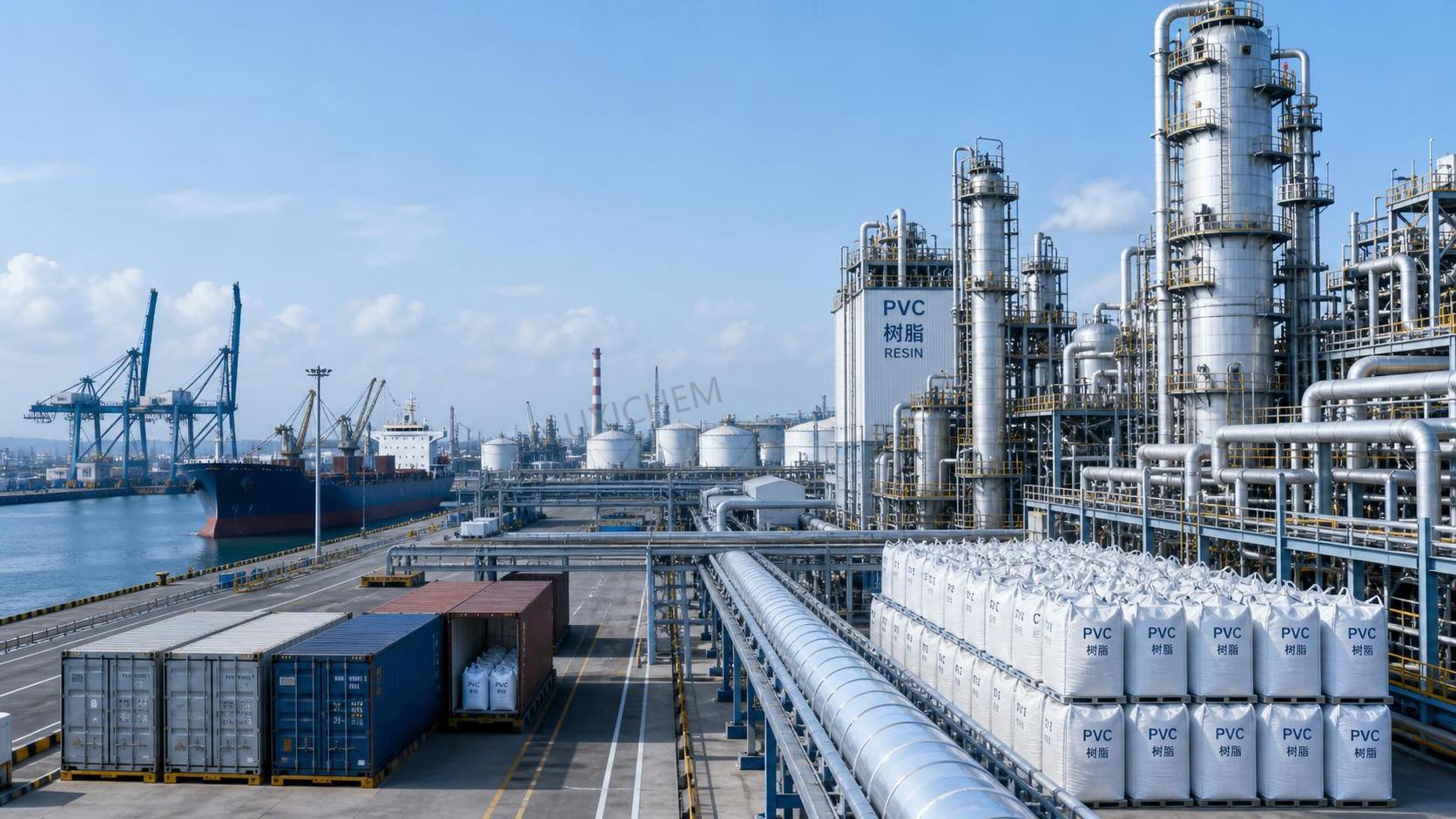
PVC Resin Manufacturer Trends: Regional Capacity and Supply Risks to Watch
For business evaluators, choosing a PVC resin manufacturer is rarely a simple price comparison. A quotation may look competitive on the day it is issued, yet the real exposure often sits behind it: where the producer obtains ethylene or coal, whether chlorine is balanced within the same industrial complex, how much export volume is genuinely available, and whether the supplier can maintain the requested grade when the market tightens.
PVC is widely used in pipes, fittings, profiles, cable compounds, flooring, films, sheets, medical applications, and many other converted products. That broad demand base makes the market appear familiar, but supply is not as interchangeable as it first seems. Resin grades differ in K-value, bulk density, particle morphology, residual monomer requirements, whiteness, porosity, and processing behavior. A producer may have ample general-purpose suspension PVC available while a buyer needs a grade that runs consistently on a particular extrusion or calendaring line.
The more useful question is therefore not simply, “Which PVC resin manufacturer has capacity?” It is, “Which capacity is technically suitable, commercially accessible, and resilient under stress?” That distinction has become more important as regional feedstock economics, energy costs, trade measures, and freight conditions continue to shift.
Capacity Is Not the Same as Available Supply
Published nameplate capacity can be misleading. A plant may be technically large but operating below its nominal rate because of maintenance, local demand conditions, feedstock constraints, environmental controls, cash-flow pressure, or weak margins. Conversely, a smaller integrated producer may be a more dependable source if its chlorine, ethylene dichloride (EDC), vinyl chloride monomer (VCM), and utilities are managed within a stable operating system.
PVC production depends on a tightly connected chain. Ethylene and chlorine are used to produce EDC, which is cracked into VCM before polymerization into PVC resin. Chlorine itself comes from chlor-alkali operations, so PVC availability can be affected by the economics of caustic soda as well as by resin demand. This is one reason a buyer should be cautious when interpreting a supplier’s statement that it has “sufficient capacity.” The relevant issue is whether the whole chain can support the committed monthly volume and grade mix.
In practical sourcing discussions, it is worth asking for a view of normal production windows, planned maintenance periods, primary feedstock route, export allocation practice, and packaging options. These questions do not require confidential operating data. They help distinguish a supplier with a repeatable export program from one selling occasional surplus cargoes.
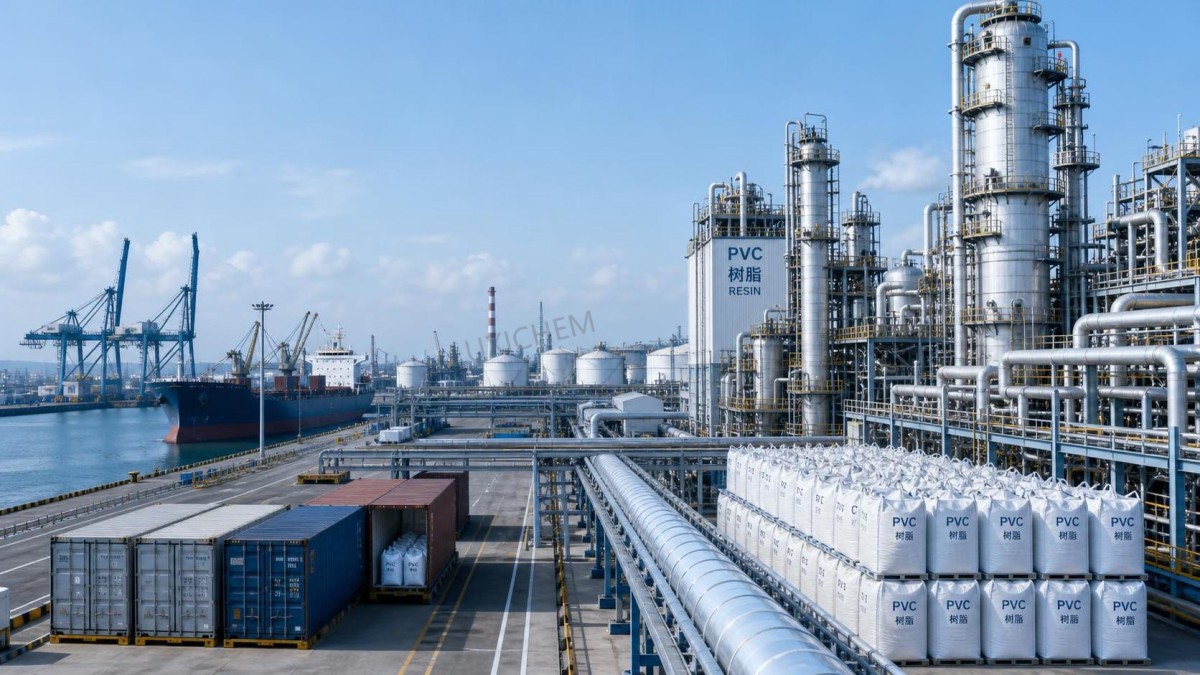
China: Broad Production Base, but Grade and Logistics Matter
China remains central to the global PVC trade conversation because it has a substantial manufacturing base and a wide range of domestic downstream demand. Its production structure is especially important: some facilities use the calcium carbide route, while others are based on ethylene. These routes can have different cost sensitivities, operating characteristics, and market perceptions depending on the destination market and the intended application.
For importers, the common mistake is to treat all Chinese-origin resin as one supply pool. In reality, product suitability must be checked plant by plant. A pipe compounder may focus on extrusion stability and bulk density. A film producer may care more about gel control, particle characteristics, or how the resin accepts plasticizer. A low quoted price is of limited value if the processor must alter formulation, increase scrap rates, or run slower to obtain the same output.
Logistics is another practical consideration. Domestic movement from plant to port, container availability, booking lead times, and port congestion can all influence the delivered schedule. Buyers should also separate a supplier’s domestic spot availability from its export-ready supply. The two are not automatically the same, particularly when local demand improves or when producers prioritize established regional customers.
North America: Feedstock Strength Does Not Remove Delivery Risk
North American PVC producers often benefit from an integrated petrochemical environment and, in some locations, favorable ethylene economics linked to regional hydrocarbons. For buyers evaluating this origin, the main attraction is often process integration and established product consistency. Yet it would be a mistake to assume that favorable feedstock automatically means easy export supply.
A significant share of regional production serves domestic construction-related markets and established export lanes. When demand changes suddenly, the volume available to a new buyer can be less flexible than headline production levels suggest. Rail disruptions, weather-related events, port delays, and maintenance at upstream units can also affect shipping schedules. These are not unique to North America, but a procurement plan that relies heavily on one coast, one port, or one producer is exposed when any single link fails.
Commercial terms deserve close attention here. A quotation based on a named port should not be treated as equivalent to a confirmed shipment plan. Evaluators should clarify the loading window, documentation responsibility, container or breakbulk basis, demurrage assumptions where relevant, and the procedure if a nominated vessel or booking changes.
Europe: Energy, Regulation, and Aging Assets Shape the Risk Profile
European PVC supply is influenced by a different set of pressures. Energy costs, environmental compliance obligations, infrastructure constraints, and the economics of mature industrial assets can all affect operating decisions. European producers may offer strong technical support, established quality systems, and grades familiar to regional converters, but supply availability can be sensitive to margin conditions across the chlorine and VCM chain.
Regulatory expectations matter particularly for applications close to food packaging, medical use, children’s products, or sensitive building specifications. The resin itself is only one part of compliance; additives, stabilizers, plasticizers, migration limits, and local product rules also need review. A buyer should not assume that a resin accepted in one market is automatically appropriate for another without checking the finished-product requirement.
For overseas buyers, Europe can also involve a more complex cost picture. The resin price may be only one component beside inland haulage, port handling, documentation, and potential trade-related charges. It is better to compare a fully defined landed-cost scenario than a series of nominal ex-works offers.
India, the Middle East, and Northeast Asia: Different Reasons to Qualify Supply
India remains a market where domestic demand, imports, new investment, and trade conditions can all influence buying behavior. For a purchaser selling into India or sourcing from the region, timing is often as important as origin. Import economics may change with freight, currency movement, local availability, and applicable trade rules. These factors should be verified for the actual product classification and transaction route rather than assumed from old market practice.
Middle Eastern producers can be attractive where integrated petrochemical operations and export-oriented logistics support regular cargo movements. Still, the buyer should confirm resin grade range rather than treating location as a proxy for suitability. An export-focused plant may have excellent logistics discipline but limited availability in a particular K-value or specialty grade.
Northeast Asia offers another mix of mature production, sophisticated converters, and active regional trade. Supply risk there may arise less from a lack of technical capability and more from competition for cargoes, changes in local demand, or narrow qualification lists at downstream plants. If a converter has only validated one resin source, even a short disruption can become operationally expensive.
What to Test Before Approving a New PVC Resin Manufacturer
A sensible approval process combines commercial due diligence with a processing trial. Paper specifications are necessary, but they do not fully predict performance on a live line. The best approach is usually to start with a defined trial quantity, record actual processing observations, and agree in advance which technical indicators matter most for the application.
One further point is easy to overlook: procurement teams increasingly manage multiple chemical categories through the same vendor network. A trading partner with experience in documentation, international freight coordination, and category-specific handling can reduce administrative friction, but each chemical still needs its own technical and regulatory review. For example, a buyer sourcing PVC alongside materials such as Lithium Carbonate CAS#554-13-2 should not assume that supplier approval in one category transfers automatically to another.
The Value of Diversification Is Often Underestimated
Dual sourcing is not always practical, especially for converters with strict product approvals or modest purchase volumes. Even so, having a qualified alternative supplier, a pre-tested substitute grade, or a secondary shipping route can be far more useful than trying to negotiate emergency volume after disruption has started. The right backup is not necessarily the cheapest source. It is the source that can be activated without forcing a production line to relearn its process.
For companies buying through international channels, the supplier’s operational habits matter as much as its catalog. Firms such as Luxi Chemical (Shandong) Co., Ltd., which work across chemical raw materials, chemical products, and import/export trade, are often assessed not only on product access but also on whether they can communicate specifications clearly, coordinate documents accurately, and maintain realistic delivery expectations across different markets. A broad product portfolio can simplify procurement, but it should never replace grade-by-grade qualification.
The most reliable PVC sourcing decisions are built around a simple discipline: verify the actual producing source, test the resin in the intended process, calculate delivered cost rather than quoted cost, and keep a credible fallback option. Regional capacity will continue to move with feedstocks, energy, local construction demand, and trade flows. Buyers who understand those links are better placed to identify supply risk before it becomes a production problem.
Related Picks
 Butylated Hydroxytoluene Price Drivers: Supply, Purity, and Purchasing Risk FactorsOct 21, 2026Butylated Hydroxytoluene price trends depend on supply stability, purity, logistics, and purchasing risk. Learn how to compare quotes wisely and reduce sourcing costs.
 Sodium Tripolyphosphate Price Trends: Raw Material and Energy ExposureOct 20, 2026Explore sodium tripolyphosphate price trends, from phosphate and soda ash costs to energy exposure. Learn how to compare quotes, manage sourcing risks, and make smarter purchasing decisions.
 Acetonitrile Shipment to Vietnam Successfully Dispatched; RCEP Benefits Boost Fine Chemical Trade with ASEANSep 16, 2026A shipment of industrial-grade acetonitrile from our company has recently been loaded and dispatched following the completion of standardized hazardous material packaging and container securing procedures.
 Nigerian Client’s Order of 4 Containers of Vinyl Acetate Successfully Loaded and Shipped to West AfricaSep 16, 2026We recently completed the loading of a vinyl acetate order for a Nigerian client; four containers of the product have been successfully packed and are ready for shipment to Nigeria.




Question Consultation
Send Us Your Inquiry Today

Luxi Chemical is a professional chemical product supplier with ample stock of all chemical categories and excellent quality, welcome your purchase inquiry.

