


Water Treatment Chemicals: Comparing Cost per Cubic Meter Treated
Water Treatment Chemicals: Comparing Cost per Cubic Meter Treated
A lower price per tonne does not always mean a lower water treatment bill. For procurement teams comparing Water Treatment Chemicals, the more useful benchmark is cost per cubic meter treated—measured at the dosage needed to achieve the same water quality targets. Product concentration, raw water conditions, sludge generation, and handling requirements can all change the calculation. This article explains how to compare chemical costs on a consistent basis, assess supplier quotations beyond unit price, and identify purchasing options that support reliable treatment without unnecessary spending.
Define what “treated” means before comparing prices
A cost comparison is only meaningful when both options deliver an equivalent result. A coagulant that produces acceptable settling but leaves excessive residual metal is not necessarily cheaper than an alternative meeting both requirements. Likewise, lower disinfectant consumption means little if the required residual or microbial performance is not maintained.
Set the treatment boundary before requesting quotations. Are you comparing clarification alone, the complete wastewater plant, or production of reusable water? Record the relevant acceptance criteria: turbidity, suspended solids, pH, chemical oxygen demand, residual disinfectant, or membrane-feed quality, depending on the process.
The denominator also matters. Cost per cubic meter of incoming wastewater differs from cost per cubic meter of compliant discharge or recovered water. If treatment options have different recovery rates, reporting only inlet volume can hide the cost of rejected water. Use the same boundary and reporting period for every candidate.
Calculate chemical cost on a consistent dosage basis
For a product quoted by metric tonne and dosed by mass of commercial product, the calculation is straightforward:
Chemical cost per m³ = delivered price per tonne × product dosage in mg/L ÷ 1,000,000.
One mg/L equals one gram per cubic meter. The formula therefore converts the quoted tonne price into the cost of the quantity actually consumed. “Delivered price” should reflect a consistent destination and commercial basis, rather than mixing an ex-works quotation with a delivered quotation.
The following arithmetic example uses illustrative figures only. It is not a market-price reference or a documented treatment result. Assume both products achieve the same agreed water quality under the same test conditions.
Here, the higher-priced product has the lower direct chemical cost. That does not establish the final purchasing decision: sludge, auxiliary chemicals, and operating requirements still need assessment.
If dosage is reported as active ingredient, convert it to commercial-product dosage before using the formula. Divide the required active dose by the active mass fraction. For liquid products purchased by volume, use the specified density at the relevant temperature to reconcile liters with kilograms.
Concentration alone is not a performance guarantee. Polymer chemistry, coagulant formulation, impurities, and compatibility can change the effective dose. Even “active content” needs a defined analytical basis; percentages expressed using different chemical equivalents are not automatically comparable.
Look for costs that move elsewhere in the plant
The most common weakness in a chemical comparison is stopping at the dosing pump. A cheaper primary reagent may increase consumption at another stage.
For example, some coagulant programs consume alkalinity and require additional pH correction. A change in coagulation conditions can also affect polymer demand, sludge settling, and dewatering. These effects depend on the wastewater and process configuration; they should be measured, not assumed from the product category.
- Auxiliary chemicals: Include alkali, acid, flocculant, antifoam, or neutralizing agents whose consumption changes with the proposed program.
- Sludge management: Compare dry solids production and cake solids content. Disposal charges based on wet mass can make dewatering performance financially important.
- Preparation and handling: Account for dilution water, mixing, powder make-down equipment, unloading arrangements, and packaging disposal where applicable.
- Downstream effects: Check whether the change affects filter runs, membrane cleaning, corrosion control, or biological treatment stability.
Keep direct chemical cost and broader operating cost as separate figures. Combining them is useful, but only when assumptions are visible. Avoid assigning a precise monetary saving to longer equipment life unless maintenance records or a defensible engineering assessment support it.
For an established plant, a practical measure is the attributable operating cost divided by compliant treated volume over the same period. Record off-spec production separately so that an apparently low unit cost does not conceal poor treatment reliability.
Use trials that reflect actual feed variation
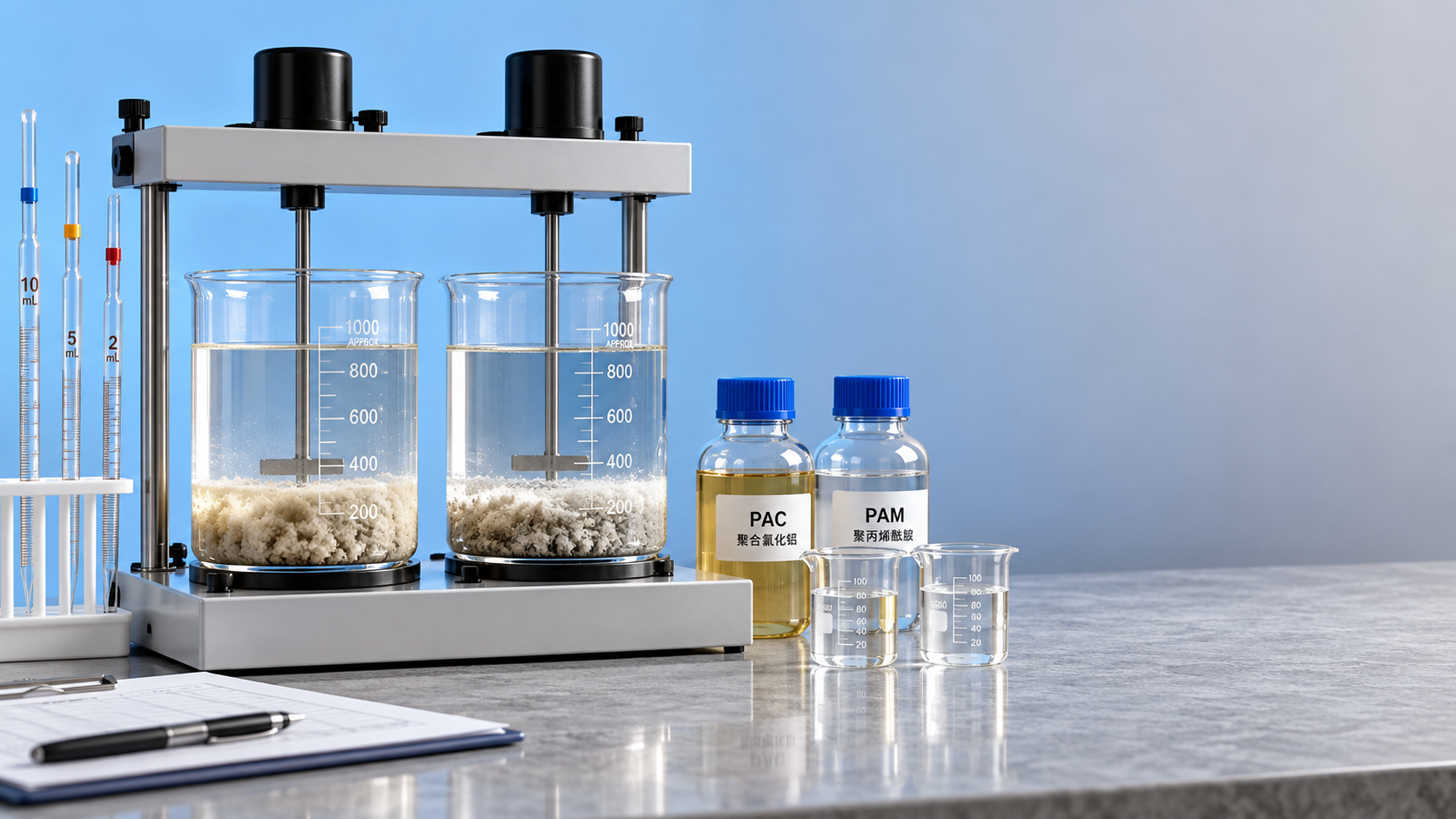
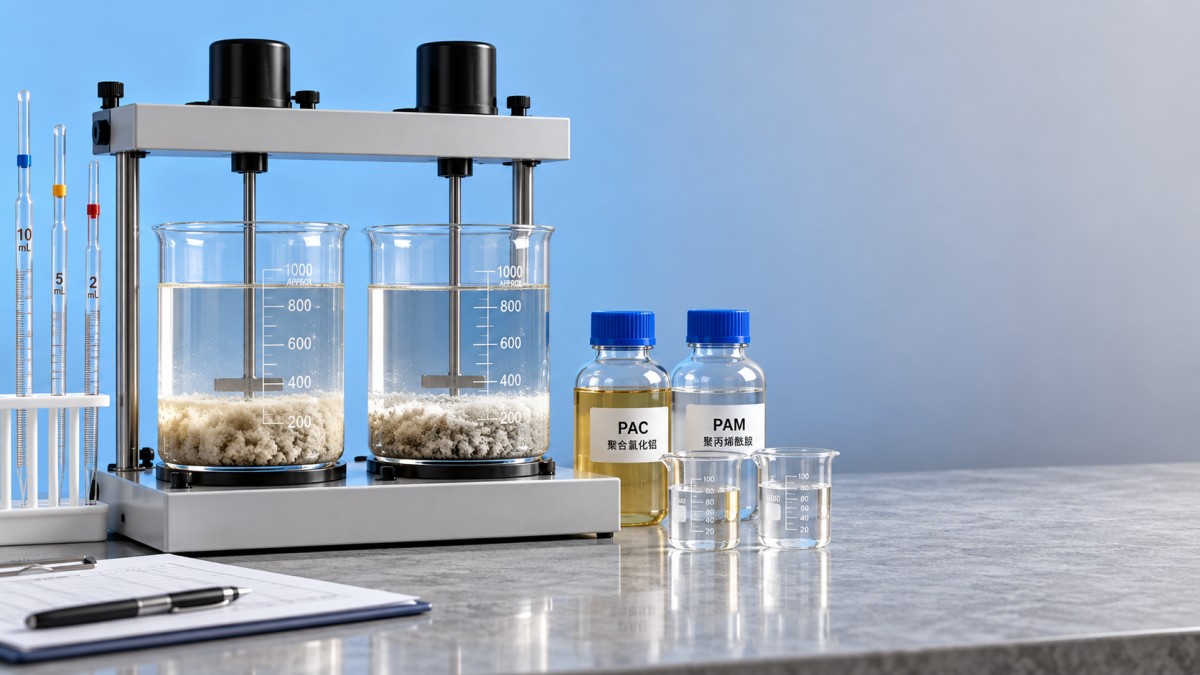
A single jar test can help screen coagulants, but it cannot establish annual economics. Feedwater changes with rainfall, production schedules, cleaning cycles, temperature, and product mix. The lowest-dose option on one sample may not remain the lowest-cost option across the operating range.
Start with representative samples and document pH, alkalinity, temperature, suspended solids, and relevant contaminants. Keep mixing, settling, sampling, and analytical methods consistent. Record every supporting chemical addition, not just the candidate being evaluated.
Then confirm shortlisted products in a controlled plant trial where appropriate. Metered chemical use is more reliable than pump-speed settings alone: actual delivery can vary with calibration, viscosity, backpressure, and equipment condition. Allow for process residence time before interpreting outlet measurements.
For seasonal budgeting, calculate costs for distinct operating conditions and weight them by expected treated volume. Keep a separate high-demand scenario for purchasing and storage planning. An average consumption figure is useful for budgeting, but it may be inadequate for sizing inventory.
Upstream solvents can change the treatment budget
In chemical manufacturing, treatment costs can change because of materials entering the wastewater—not because the treatment chemical has become less effective. Production chemicals and treatment reagents should therefore remain separate categories in the purchasing analysis.
For instance, N,N-Dimethylformamide CAS#68-12-2 is a water-soluble industrial solvent used in applications including acrylic fibers, pharmaceuticals, and dyes. It is not a conventional water treatment reagent. Where DMF enters an effluent stream, its concentration and variability need assessment before assuming that a standard coagulation program will address the resulting dissolved organic load.
Depending on the stream, source segregation, solvent recovery, or a validated treatment route may deserve evaluation. The purchasing implication is straightforward: compare upstream material losses alongside treatment expenditure. Increasing coagulant dosage is not a substitute for identifying what the plant actually needs to remove.
Make supplier quotations comparable—and enforceable
A quotation should identify the supplied grade, concentration basis, specification limits, packaging, net quantity, and delivery terms. Ask for a representative certificate of analysis and current safety data sheet. For regulated uses, confirm the applicable product approvals and impurity requirements for the destination and application; a general quality statement is not enough.
Shelf life and storage conditions also affect usable cost. A bulk discount may disappear if the site cannot consume the order within its validated storage period. Check tank compatibility, minimum delivery size, unloading access, and whether concentration or performance can deteriorate during the intended storage interval.
For imported supplies, separate freight, insurance, duties, handling, and nonrecoverable taxes as applicable. Confirm who is responsible for each charge under the agreed delivery terms. Compare landed usable quantities, not simply invoice totals.
Luxi Chemical (Shandong) Co., Ltd. supplies chemical raw materials and products and conducts import/export trade, serving customers in more than 60 countries and regions. Its portfolio includes food additives, organic intermediates, and fertilizers. Consolidated procurement can simplify coordination, but buyers should still verify the availability, specification, and application suitability of each requested water-treatment grade. A broad portfolio does not replace product-specific qualification.
Award on verified consumption, then monitor the result
The strongest purchasing decision links an agreed product specification to a validated operating dose, delivered cost, and treatment outcome. Keep the technical trial record alongside the commercial comparison so that future price negotiations do not lose the original performance basis.
After a supply change, track chemical consumption per cubic meter, outlet quality, auxiliary reagent use, and relevant sludge costs. Investigate shifts against feed conditions before attributing them to supplier quality. Use periodic batch checks and dosing-equipment calibration to distinguish product variation from operating variation.
Before issuing the next request for quotation, assemble a concise comparison pack: representative water analysis, treatment targets, current consumption, annual volume, storage constraints, and delivery requirements. That gives suppliers a basis for a useful proposal—and gives procurement a defensible way to choose between a cheaper tonne and a genuinely lower treatment bill.
Related Picks
 Butylated Hydroxytoluene Price Drivers: Supply, Purity, and Purchasing Risk FactorsOct 21, 2026Butylated Hydroxytoluene price trends depend on supply stability, purity, logistics, and purchasing risk. Learn how to compare quotes wisely and reduce sourcing costs.
 Sodium Tripolyphosphate Price Trends: Raw Material and Energy ExposureOct 20, 2026Explore sodium tripolyphosphate price trends, from phosphate and soda ash costs to energy exposure. Learn how to compare quotes, manage sourcing risks, and make smarter purchasing decisions.
 Acetonitrile Shipment to Vietnam Successfully Dispatched; RCEP Benefits Boost Fine Chemical Trade with ASEANSep 16, 2026A shipment of industrial-grade acetonitrile from our company has recently been loaded and dispatched following the completion of standardized hazardous material packaging and container securing procedures.
 Nigerian Client’s Order of 4 Containers of Vinyl Acetate Successfully Loaded and Shipped to West AfricaSep 16, 2026We recently completed the loading of a vinyl acetate order for a Nigerian client; four containers of the product have been successfully packed and are ready for shipment to Nigeria.




Question Consultation
Send Us Your Inquiry Today

Luxi Chemical is a professional chemical product supplier with ample stock of all chemical categories and excellent quality, welcome your purchase inquiry.

