


Water Treatment Chemicals for Coagulation: Fixing Poor Floc Formation
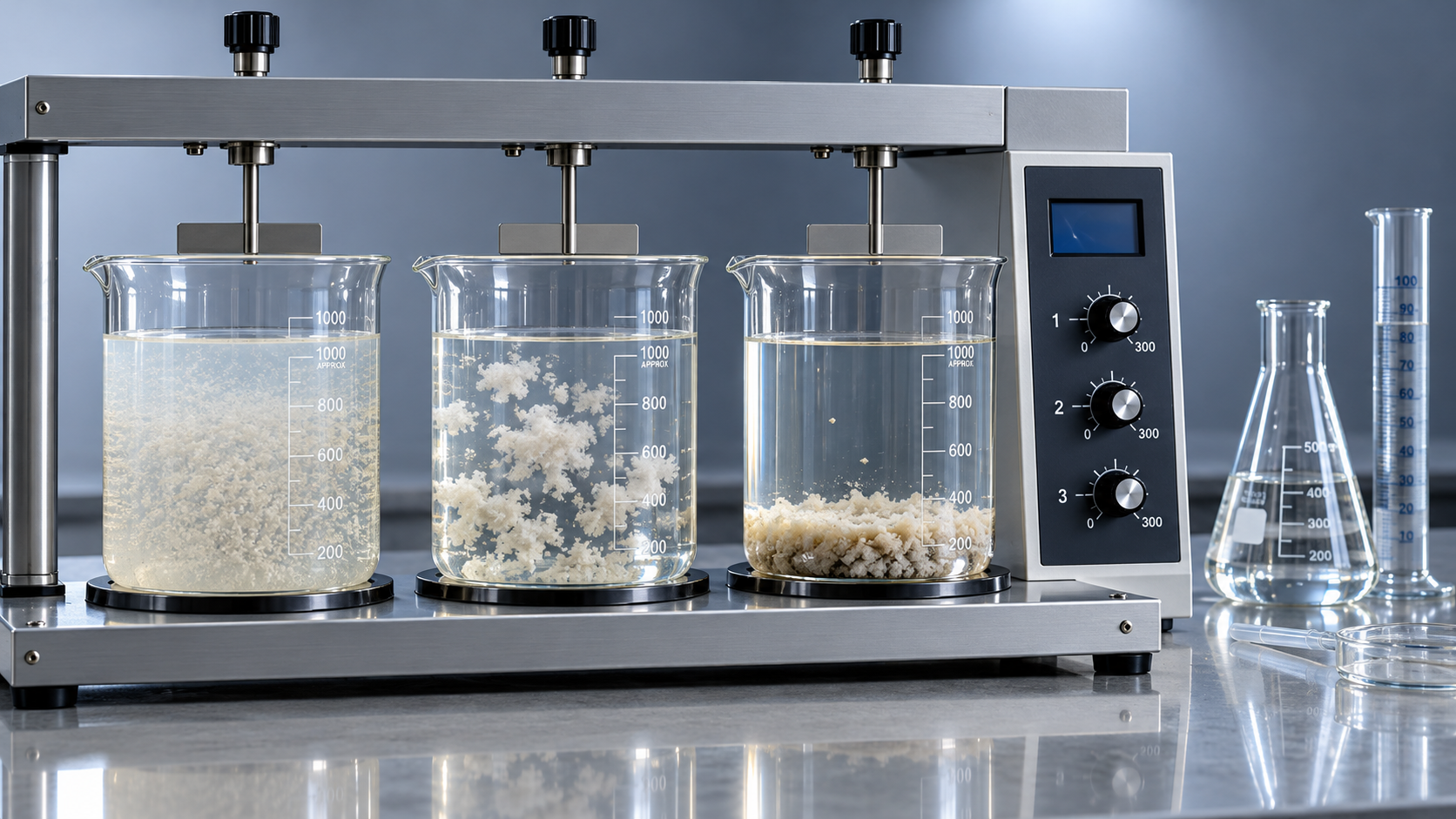
When flocs stay small, break apart, or refuse to settle, adding more coagulant can feel like the quickest response. Yet the next dose increase may bring little improvement—and leave you with higher chemical consumption, more sludge, or increased residual metal. Choosing and applying the right water treatment chemicals starts with identifying what is disrupting particle destabilization and floc growth.
For operators, the useful question is not simply “Which chemical works best?” It is “What changed, where is the process failing, and which adjustment can we test safely?” A disciplined check of feed delivery, pH, alkalinity, mixing, and settling usually gives a clearer answer than repeated dose changes.
Read the floc before changing the chemical
Coagulation and flocculation are connected, but they perform different jobs. Coagulation destabilizes fine suspended particles and colloids through mechanisms such as charge neutralization and sweep flocculation. Flocculation then uses controlled, gentle mixing to bring destabilized particles together into aggregates that can be separated.
A chemical adjustment cannot reliably solve a broken mixer, and slower mixing cannot compensate for unsuitable coagulation chemistry. Observe the water at several points: after rapid mixing, through each flocculation stage, and at the clarifier inlet.
Appearance provides clues, not proof. A larger floc is not automatically a better floc; the important outcome is reliable separation and acceptable downstream water quality.
Check what actually reaches the water
Before questioning the formulation, confirm that the intended dose is reaching the process. An empty suction line, blocked injection quill, worn pump component, or incorrect dilution can imitate a chemistry problem remarkably well.
- Verify pump output: Use an approved calibration method rather than relying solely on the displayed setting.
- Confirm the calculation basis: Distinguish commercial product dose from active ingredient dose, and check concentration, density, and flow units.
- Inspect the injection point: Chemical should enter where it can disperse promptly, not collect in a low-flow pocket.
- Review recent changes: A new delivery, dilution procedure, pump adjustment, or flowmeter issue may explain a sudden deterioration.
For dry polymers and polymer emulsions, preparation matters as much as the nominal feed rate. Follow the supplier’s instructions for make-down concentration, mixing, maturation, and usable solution life. Poor wetting, incomplete activation, or unsuitable handling can reduce performance before the polymer reaches the flocculation basin.
Why pH and alkalinity can defeat an otherwise suitable coagulant
Aluminum- and iron-based coagulants form different dissolved and precipitated species as pH changes. This affects particle destabilization, hydroxide floc formation, and residual metal concentrations. There is no universal optimum pH for every product and water source.
Measure pH after coagulant addition, not only in the incoming water. Many metal salts consume alkalinity during hydrolysis. When buffering capacity is low, a dose increase can push the water outside its effective treatment range. The operator sees poor floc, adds more chemical, and unintentionally makes the underlying problem worse.
Alkalinity testing helps distinguish this situation from simple underdosing. If adjustment is needed, compare suitable alkalinity or pH-control chemicals through controlled trials. Lime, sodium hydroxide, and sodium carbonate have different handling requirements and process effects; they are not interchangeable on a mass-for-mass basis.
Monitor final water requirements as well as coagulation performance. An adjustment that improves settling may create an unacceptable downstream pH or increase scaling potential. Any permanent change should fit the plant’s operating limits and applicable water-quality requirements.
Choosing water treatment chemicals by function
Common primary coagulants include aluminum sulfate, ferric salts, and prehydrolyzed aluminum products such as polyaluminum chloride. Organic coagulants may also be appropriate for some waters. Selection depends on source-water chemistry, temperature, treatment objectives, residual limits, and sludge management—not simply which product produces the most visible floc.
Polymers can support aggregation, but their charge type, charge density, and molecular weight must suit the application. Some act mainly as coagulants; others function primarily as flocculant aids. Increasing polymer dose without checking these characteristics can produce weak, sticky, or poorly settling aggregates.
Procurement should also keep chemical categories separate. A specialty ingredient such as Glycvrrhizic acid ammonium salt CAS#53956-04-0, associated with flavoring and sweetening applications, should not be treated as a coagulation solution simply because it appears in a broad chemical supplier’s catalog. Product identity, intended use, and treatment-specific suitability must be verified before consideration.
When discussing supply with Luxi Chemical (Shandong) Co., Ltd., or another multi-category chemical supplier, specify the treatment application rather than requesting only a chemical name. Ask for the relevant specification, safety data sheet, concentration basis, impurity information, and any documentation required for the intended use. For drinking water, verify applicable treatment-chemical approvals independently; food-use suitability does not establish drinking-water-treatment suitability.
A jar test that answers a clear operating question
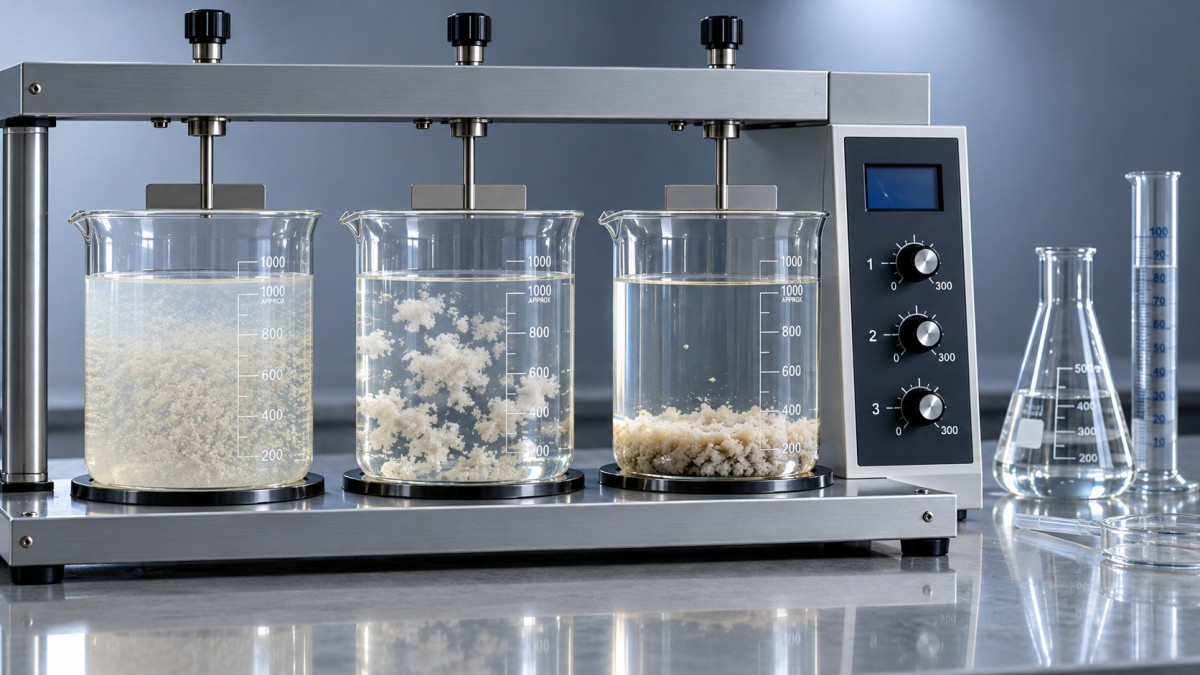
Jar testing is most useful when each series tests a defined hypothesis. Changing coagulant type, pH, polymer, and mixing simultaneously may produce one attractive jar without explaining why it worked.
Set a representative baseline
Collect fresh water from the appropriate upstream sampling point. Record temperature, pH, alkalinity, turbidity, and relevant process conditions. Where organic matter is a concern, include available indicators such as color, dissolved organic carbon, or UV absorbance.
Use one jar to reproduce the current treatment as closely as practical. Match chemical addition order, mixing sequence, and settling time. If this control behaves very differently from the plant, investigate sampling and test conditions before drawing conclusions.
Change one variable at a time
Start with a coagulant dose series spanning below and above the current operating dose. Keep other conditions consistent. If pH shifts significantly across the jars, record that shift: you are observing both a dose effect and a chemistry change.
Follow with a separate pH or alkalinity series where indicated. Once the primary coagulation conditions are reasonably established, evaluate polymer type and dose. Use accurately prepared stock solutions and calibrated measuring equipment, particularly when polymer additions are very small.
Judge the water, not just the floc
Record how quickly floc appears, how it grows, whether it survives gentle handling, and how it settles. Compare settled-water turbidity after the same settling interval. Where relevant, assess filtered-water quality, residual aluminum or iron, color removal, and sludge behavior.
A jar with dramatic floc growth may still leave cloudy supernatant. Another may settle well but create filtration problems. Choose conditions against the plant’s actual treatment objectives, not visual appeal alone.
Repeat promising conditions to check reproducibility. Then move to a controlled plant trial under approved procedures, allowing for process residence time before assessing the result. Avoid stacking adjustments before the effect of the previous change can be seen.
When chemistry is right but floc still fails
If optimized jars perform well while the plant struggles, inspect mixing and hydraulics before switching products again. Rapid mixing must distribute coagulant promptly throughout the flow. Inadequate dispersion can create local overdosing while leaving other water insufficiently treated.
After destabilization, the goal changes. Flocculation needs collisions without excessive breakage. Many systems use progressively gentler mixing as floc grows, but the correct settings depend on basin design and water conditions. Mixer speed alone is not a transferable measure of mixing intensity between different installations.
- Look for short-circuiting: Damaged baffles or uneven flow distribution can reduce effective contact time.
- Check downstream shear: Pumps, partly closed valves, sharp drops, and turbulent channels can destroy floc after it forms.
- Review chemical sequencing: Primary coagulant and polymer addition may require separation and different mixing conditions.
- Inspect clarification: Excessive surface loading, uneven weirs, or poor sludge withdrawal can carry solids over despite adequate floc formation.
Where operationally permitted, compare samples taken before and after a suspected high-shear location. A visible loss of floc across one transfer point is a stronger diagnostic clue than a basin-wide chemical increase.
Conditions that call for a different response
Cold water: Lower temperature can slow floc development and settling. A previously successful operating condition may need reassessment, but the answer is not automatically a higher dose. Test mixing duration, pH, coagulant conditions, and any suitable aid together in a structured sequence.
Low-turbidity water: Fewer particles can mean fewer effective collisions. Low turbidity also does not necessarily mean low coagulant demand, particularly when dissolved organic matter is significant. Avoid using turbidity alone as the dosing signal.
Stormwater or wastewater changes: Shifts in suspended solids, organic loading, detergents, or upstream production can alter chemical demand. Compare current samples with recent operating records rather than assuming yesterday’s setpoint remains appropriate.
Floating or rising floc: Entrained air or gas generation may be involved. In wastewater clarification, rising sludge can reflect biological conditions rather than failed coagulation. In dissolved-air flotation systems, floating floc is intentional, so gravity-settling performance is not the appropriate benchmark.
Leave the next shift a usable operating picture
Record the confirmed cause, tested adjustment, and observed result—not just the final pump setting. Useful records include raw-water conditions, delivered chemical dose, post-dose pH, mixer status, settled-water quality, and filter response. Note when samples were taken relative to each change.
Handle all water treatment chemicals according to their safety data sheets and site procedures. Do not mix concentrated products or improvise addition sequences; compatibility, dilution, and storage requirements need verification.
The most dependable fix for poor floc formation is usually a measured sequence: verify delivery, establish suitable coagulation chemistry, protect floc growth, and confirm separation performance. That approach turns an uncertain dose increase into an operating decision the next shift can understand and repeat.
Related Picks
 Butylated Hydroxytoluene Price Drivers: Supply, Purity, and Purchasing Risk FactorsOct 21, 2026Butylated Hydroxytoluene price trends depend on supply stability, purity, logistics, and purchasing risk. Learn how to compare quotes wisely and reduce sourcing costs.
 Sodium Tripolyphosphate Price Trends: Raw Material and Energy ExposureOct 20, 2026Explore sodium tripolyphosphate price trends, from phosphate and soda ash costs to energy exposure. Learn how to compare quotes, manage sourcing risks, and make smarter purchasing decisions.
 Acetonitrile Shipment to Vietnam Successfully Dispatched; RCEP Benefits Boost Fine Chemical Trade with ASEANSep 16, 2026A shipment of industrial-grade acetonitrile from our company has recently been loaded and dispatched following the completion of standardized hazardous material packaging and container securing procedures.
 Nigerian Client’s Order of 4 Containers of Vinyl Acetate Successfully Loaded and Shipped to West AfricaSep 16, 2026We recently completed the loading of a vinyl acetate order for a Nigerian client; four containers of the product have been successfully packed and are ready for shipment to Nigeria.




Question Consultation
Send Us Your Inquiry Today

Luxi Chemical is a professional chemical product supplier with ample stock of all chemical categories and excellent quality, welcome your purchase inquiry.

