


What Is Sodium Tripolyphosphate (STPP), and Where Is Each Grade Used?
What Is Sodium Tripolyphosphate (STPP), and Where Is Each Grade Used?
Why is the same chemical used in food processing, detergents, and ceramic production—and what makes its grades different? Sodium tripolyphosphate (STPP) is a phosphate salt valued for binding metal ions, supporting moisture retention, and dispersing particles. Those functions are useful in very different processes, but they do not make every bag of STPP interchangeable.
Food-grade and technical-grade products have different compliance requirements and may have different impurity limits, physical properties, and documentation. Even two technical-grade materials with similar assay results can behave differently in a detergent mixer or ceramic slurry. Understanding those distinctions is more useful than simply looking for the highest purity number.
One phosphate salt, several useful behaviors
Sodium tripolyphosphate, also called pentasodium triphosphate, has the formula Na5P3O10. It is generally supplied as a white powder or granular material. When people search for “sodium tripolyphosphate STPP,” they are usually referring to this condensed inorganic phosphate, rather than trisodium phosphate or sodium hexametaphosphate. Those are related materials, not direct substitutes.
Its usefulness starts with its interaction with calcium and magnesium ions. These hardness ions can interfere with cleaning, contribute to deposits, or change how suspended particles behave. STPP can bind them, reducing their interference within the limits of the formulation and operating conditions.
It also contributes alkalinity and buffering. In protein-containing foods, phosphate addition can influence protein interactions and water-holding capacity. In mineral suspensions, it can help particles remain dispersed rather than forming a thick, poorly flowing mass. These are distinct mechanisms: a food processor and a ceramic producer may use the same chemical identity, but they are not buying it for the same performance test.
What “grade” actually tells you
Grade describes the specification and intended application—not a different molecular formula. Food grade is associated with food-additive specifications and controls suitable for food use. Technical grade is intended for industrial applications, where the specification is shaped around process requirements.
Terms such as “detergent grade” and “ceramic grade” often identify application-focused technical products. They should not be assumed to represent universally standardized categories. One supplier may emphasize particle size and hydration behavior; another may emphasize insoluble matter or slurry performance. The actual specification sheet matters more than the category name.
A high technical-grade assay does not establish suitability for food use. Food compliance also involves impurity controls, production and handling conditions, traceability, and the requirements of the destination market. Conversely, a compliant food-grade product is not automatically the best-performing or most economical choice for an industrial process.
Where food-grade STPP is used—and where caution matters
Food-grade STPP is used in certain meat, poultry, and seafood applications, where permitted, to support water retention and texture. It may be incorporated into a brine or phosphate blend rather than added alone. Its effect depends on the raw material, salt concentration, temperature, mixing or tumbling conditions, and the complete formulation.
Consider a chilled brine preparation step. If the phosphate does not dissolve adequately before injection or mixing, the processor may get uneven distribution even when the weighed addition is correct. Dissolution behavior therefore belongs on the evaluation checklist alongside chemical compliance. A laboratory assay cannot tell the whole production story.
More is not necessarily better. Excessive phosphate addition can affect flavor and texture, while inappropriate treatment can create labeling or compositional problems. Moisture retention should not be confused with permission to add unrestricted water. Processors need to check the rules for the exact food category, including any combined-phosphate limits and how those limits are expressed.
In European food-additive nomenclature, pentasodium triphosphate is identified as E451(i). That designation alone does not establish that a particular use or dosage is permitted. References to specifications such as the Food Chemicals Codex also need careful reading: meeting a compositional specification and being legally permitted in a finished food are separate questions.
Why detergent producers use technical-grade STPP
In detergents, STPP functions primarily as a builder. By controlling hardness ions, it helps surfactants work under conditions where calcium and magnesium would otherwise reduce cleaning performance. It can also support soil dispersion and help limit redeposition during washing.
However, detergent manufacturing introduces a practical issue that a simple purity comparison misses: hydration. STPP is available with different proportions of crystalline Phase I and Phase II. Phase I generally hydrates more rapidly. Depending on the manufacturing route, hydration behavior can influence heat release, slurry handling, agglomeration, and the condition of the finished powder.
Faster hydration is not automatically an advantage. A formulator needs behavior that fits the mixing sequence and equipment. A material that performs well in one spray-drying or dry-blending process may require adjustments in another. Particle size and bulk density also affect dosing, dust generation, segregation, and mixing uniformity.
Market access matters here too. Phosphorus restrictions apply to certain detergent categories in some jurisdictions because phosphate releases can contribute to nutrient enrichment in receiving waters. Industrial and institutional products may be treated differently from household products. Check the applicable category and destination rules rather than assuming all detergents follow one policy.
Ceramics: the target is slurry behavior, not food purity
In ceramic processing, STPP is used as a dispersant or deflocculant in suitable clay and mineral suspensions. The practical aim is often to obtain workable flow at a given solids content, or to reduce the water needed for a target viscosity. That can affect pumping, milling, casting, and subsequent drying.
This is an application where the raw material blend can outweigh a small difference in STPP assay. Clay mineralogy, soluble salts, process-water hardness, and other additives all influence the response. A dosage that works with one clay blend may not work after a raw material change. Adding extra dispersant without testing can move the slurry outside its useful operating window.
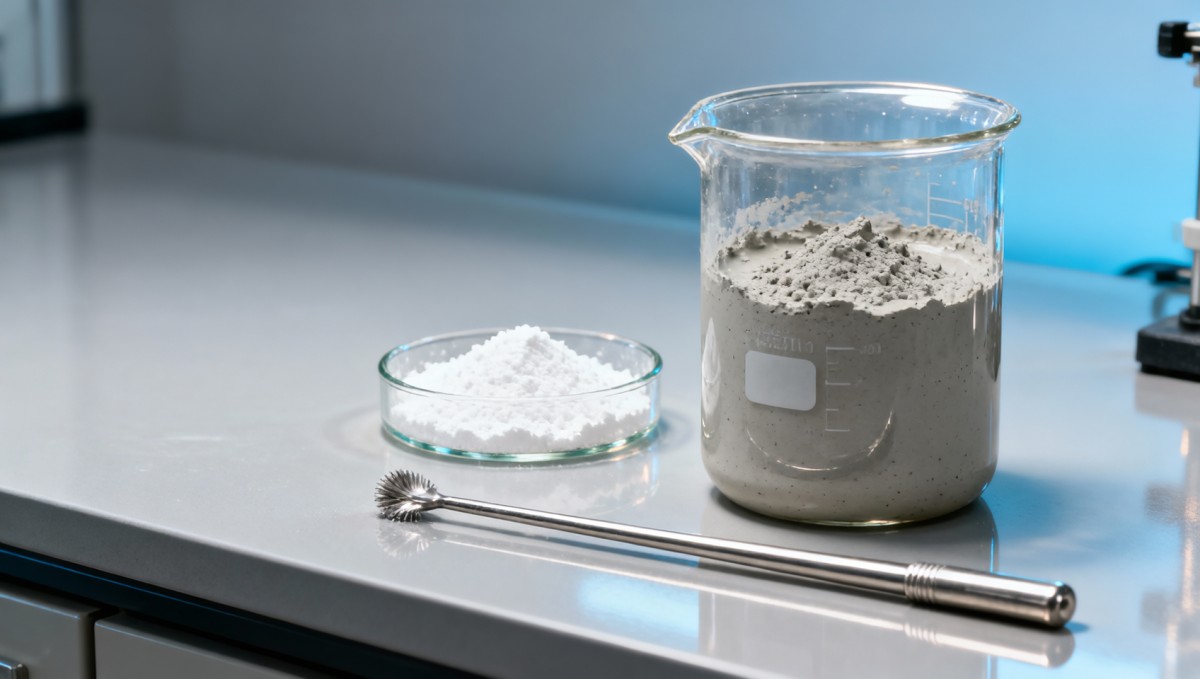
A useful evaluation compares viscosity across several addition levels using actual plant water and representative solids. It should also consider how the slurry behaves after standing, not only immediately after mixing. An initially fluid sample that changes markedly during storage may still be unsuitable for production.
Chemical roles should not be blurred just because materials serve the same industry. For example, Magnesium fluoride CAS#7783-40-6 has applications as a ceramic flux, while highly purified material is also used in optical components and antireflection coatings. Those functions are different from STPP’s role in aqueous slurry dispersion; the two are not substitutes.
Which specifications deserve a closer look?
Start with the intended use, then decide which measurements are meaningful. Comparing quotations by assay alone is unreliable, especially if suppliers use different reporting bases or test methods. A phosphorus result expressed as P2O5 is not the same measurement as STPP content.
- Identity and composition: Confirm the chemical identity, assay method, and reporting basis. Related phosphate species can influence behavior.
- Impurities and insoluble matter: Food uses require the relevant contaminant controls; industrial processes may be particularly sensitive to residue or specific impurities.
- Physical properties: Review particle-size distribution, bulk density, moisture, and any specified phase composition where these affect handling or hydration.
- Solution testing: Compare pH and dissolution results only when concentration, temperature, and test conditions are comparable.
- Documentation: Distinguish a typical technical data sheet from the batch-specific certificate of analysis, and obtain an appropriate safety data sheet.
For a food application, add a destination-specific compliance review. For detergents or ceramics, add a representative process trial. Neither paperwork nor testing replaces the other: documentation establishes what is supplied, while trials establish whether it works under the conditions that matter.
Keep grade selection connected to delivery and storage
STPP should be protected from moisture and contamination during transport and storage. Poorly sealed packaging or humid storage can contribute to caking and less predictable handling. Follow the supplier’s storage guidance, keep packaging closed when practical, and use dust-control measures appropriate to the safety data sheet and workplace assessment.
For a broad-range supplier such as Luxi Chemical (Shandong) Co., Ltd., whose business spans food additives, organic intermediates, fertilizers, and international chemical trade, the relevant distinction is application-specific control. Consolidated sourcing can simplify ordering, but food and technical materials still need clear identification, appropriate documentation, and handling arrangements that prevent contamination or substitution.
The useful question is therefore not “Which STPP grade is best?” It is “Which specification is appropriate for this use, in this market, on this process?” Establish those conditions before comparing prices. A compliant food ingredient, a predictable detergent builder, and an effective ceramic dispersant may share a formula, but they are judged by different evidence.
Related Picks
 Butylated Hydroxytoluene Price Drivers: Supply, Purity, and Purchasing Risk FactorsOct 21, 2026Butylated Hydroxytoluene price trends depend on supply stability, purity, logistics, and purchasing risk. Learn how to compare quotes wisely and reduce sourcing costs.
 Sodium Tripolyphosphate Price Trends: Raw Material and Energy ExposureOct 20, 2026Explore sodium tripolyphosphate price trends, from phosphate and soda ash costs to energy exposure. Learn how to compare quotes, manage sourcing risks, and make smarter purchasing decisions.
 Acetonitrile Shipment to Vietnam Successfully Dispatched; RCEP Benefits Boost Fine Chemical Trade with ASEANSep 16, 2026A shipment of industrial-grade acetonitrile from our company has recently been loaded and dispatched following the completion of standardized hazardous material packaging and container securing procedures.
 Nigerian Client’s Order of 4 Containers of Vinyl Acetate Successfully Loaded and Shipped to West AfricaSep 16, 2026We recently completed the loading of a vinyl acetate order for a Nigerian client; four containers of the product have been successfully packed and are ready for shipment to Nigeria.




Question Consultation
Send Us Your Inquiry Today

Luxi Chemical is a professional chemical product supplier with ample stock of all chemical categories and excellent quality, welcome your purchase inquiry.

