


What defines a thermoplastic resin in industrial compounding
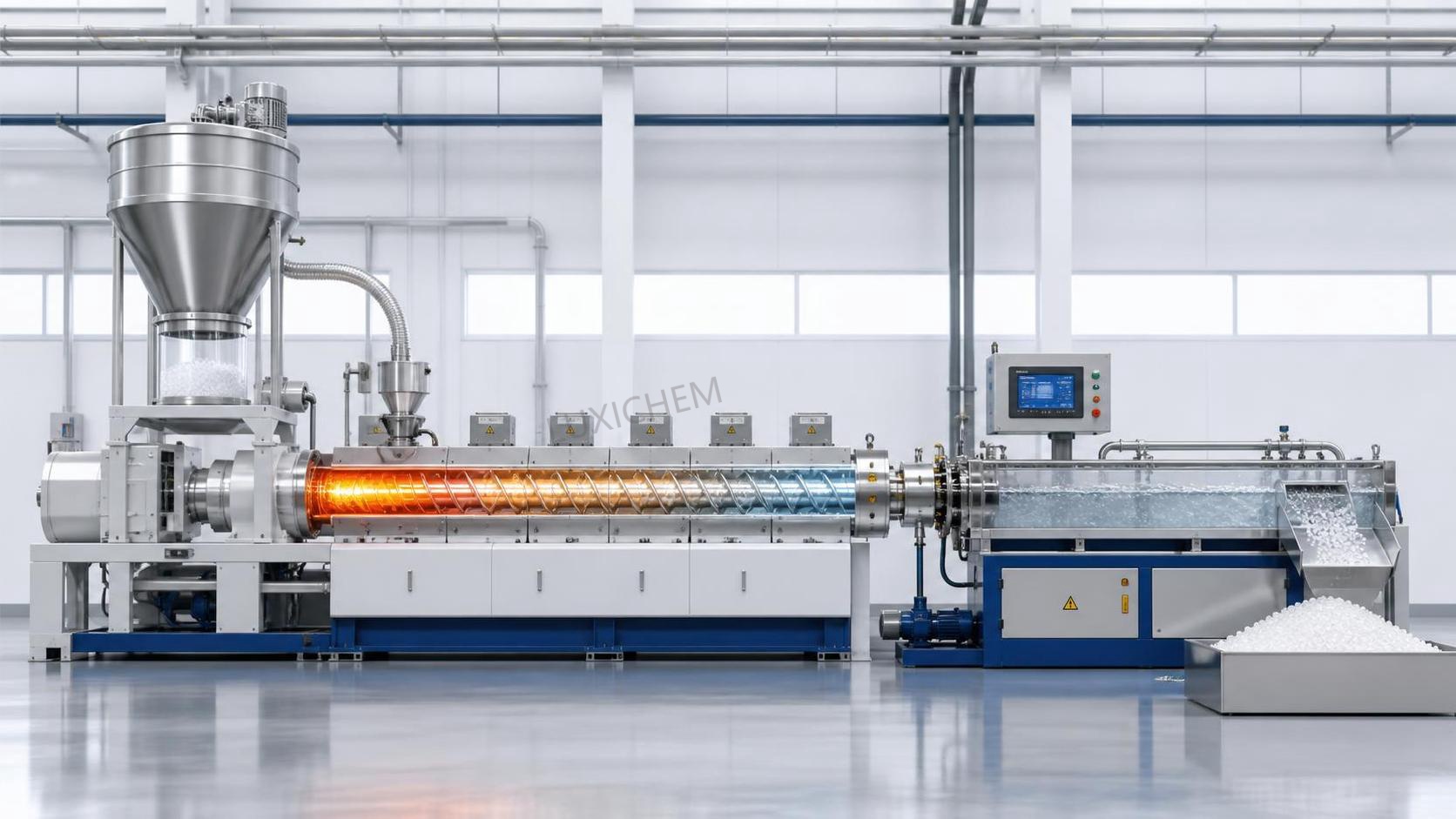
A thermoplastic resin in industrial compounding is defined by one practical behavior above all others: it softens when heated, flows under processing conditions, and solidifies again on cooling without undergoing a permanent chemical cure. That repeatable melt-and-freeze cycle is what separates it from thermosetting materials, which form irreversible crosslinked structures during cure. In a compounding line, this difference affects everything from feeder setup and barrel temperature to pellet quality, recycling of edge trim, and the tolerance for residence time during production.
The term also implies a specific balance of molecular structure and processing response. A thermo plastic resin must have polymer chains that can move past one another when enough heat is applied, yet remain stable enough to keep useful properties after repeated thermal exposure within a controlled range. If the chains break down too easily, the resin may show discoloration, odor generation, viscosity loss, or brittle finished parts. If the melt is too stiff, dispersion of fillers and additives becomes difficult. If it is too fluid, dimensional control and mechanical performance may suffer. In compounding, the resin is rarely judged by chemistry alone; it is judged by how consistently it accepts formulation changes and still runs well through extrusion, pelletizing, molding, or film conversion.
What gives a resin its thermoplastic identity
At the polymer level, a thermoplastic resin is usually built from linear or branched chains with limited or no permanent crosslinking. That structure allows thermal reversibility. Common families include polyethylene, polypropylene, polystyrene, polyvinyl chloride, polyamide, polycarbonate, PET, PBT, and engineering blends. Some are semi-crystalline, meaning ordered regions form during cooling; others are amorphous, with less ordered molecular arrangement. This matters because the softening profile, shrinkage, clarity, impact response, and chemical resistance often depend on whether the base resin crystallizes.
In industrial compounding, the base resin is not simply a neutral carrier. It sets the processing window. A semi-crystalline resin may need tighter control of cooling and moisture, while an amorphous grade may offer broader optical or dimensional advantages. The defining feature is still thermal reprocessability, but in practice a resin qualifies as useful only when that behavior remains predictable under shear, heat, and additive loading.
Melt flow is one of the first properties examined. It gives a rough indication of how easily the resin will process under specified test conditions. A higher melt flow grade may fill thin sections well or disperse pigments more easily, but it may also reflect lower molecular weight and reduced toughness in some systems. A lower melt flow grade can improve strength or environmental stress crack resistance, yet it may require more torque, higher pressure, or modified screw design. In compounding, selecting a resin on melt flow alone often leads to errors because additives can shift apparent flow behavior significantly.
How compounders actually define suitability
In a plant setting, a thermoplastic resin is defined less by textbook wording and more by whether it can carry a formulation through a stable process. Suitability often comes down to six interacting factors: thermal stability, rheology, compatibility with additives, moisture sensitivity, downstream performance, and storage behavior before use.
Thermal stability determines whether the resin can survive the barrel profile and shear history without degrading. PVC, for example, requires careful heat stabilization because it can decompose if mishandled. Polyamide and PET may demand drying because moisture can hydrolyze the polymer at processing temperature. Polyolefins are generally easier to process from a moisture standpoint, but oxidation during long residence times can still reduce performance.
Rheology matters because compounding is not a static heating event. The material is exposed to shear in screws, kneading blocks, mixers, and dies. A resin that seems acceptable in a data sheet may behave poorly when loaded with mineral filler, flame retardant, glass fiber, or high pigment concentrate. The compounded formulation may surge, trap volatiles, or show poor strand integrity at pelletizing.
Compatibility with additives is another practical definition point. Some resins accept colorants, lubricants, antioxidants, impact modifiers, and fillers with relatively straightforward dispersion. Others need coupling agents, compatibilizers, or modified process conditions to avoid phase separation or weak interfacial bonding. When dissimilar polymers are blended, the resulting material is still thermoplastic if it remains melt-processable, but its usefulness depends on whether the morphology remains stable enough for the intended application.
Moisture sensitivity is frequently underestimated. A resin can be thermoplastic in the strict sense and still perform badly if drying is neglected. PET, PBT, TPU, and many polyamides can lose molecular weight during melt processing when residual moisture is too high. The consequence may not be obvious at the hopper. It can emerge later as brittleness, inconsistent viscosity, haze, weak weld lines, or poor odor profile.
Processing behavior is part of the definition
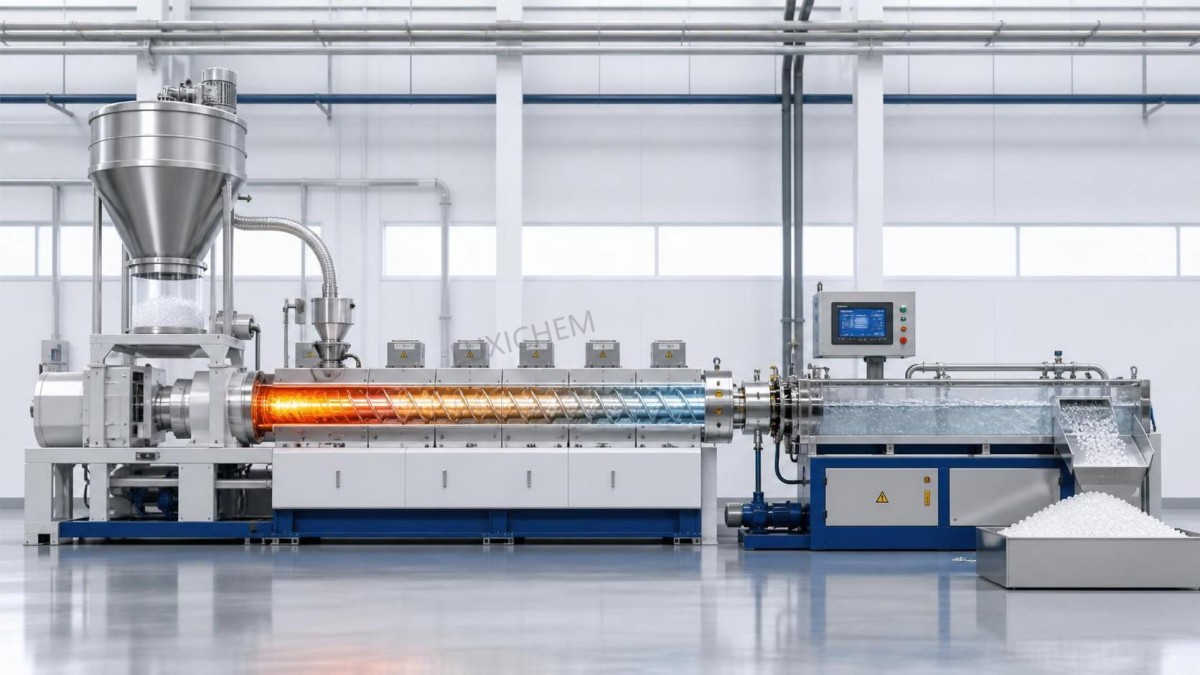
Industrial compounding turns definition into measurable behavior. A thermo plastic resin should tolerate a practical temperature window wide enough to melt, mix, and discharge without frequent decomposition. It should show consistent feeding characteristics in pellet, powder, or regrind form. Bulk density, pellet geometry, dust generation, and tendency to bridge in the hopper can all change line stability. For example, fine powders may feed unevenly and require agitation or side feeding strategy, while slippery pellets may flood a feeder unless dosing is controlled carefully.
Shear sensitivity is another dividing line. Some resins process well under aggressive mixing and disperse high additive loads cleanly. Others lose molecular weight or gel if subjected to the same screw configuration. This is why screw design, venting position, and additive addition points are selected in relation to the resin rather than treated as universal settings. A material that needs liquid additives, peroxide modifiers, or reactive intermediates may require staged feeding to avoid localized overheating or unwanted side reactions. In certain formulations, an intermediate such as 1,4-Benzoquinone CAS#106-51-4 may appear within a broader chemical processing context, and its handling considerations must remain separate from the assumptions used for standard pellet-fed thermoplastic compounding.
Residence time often reveals whether a resin is robust enough for industrial use. A stable thermoplastic resin can usually tolerate normal variations in throughput and startup without immediate visible damage. A less stable one may char, gel, smoke, or produce black specks during short interruptions. That is why shutdown procedures, purge selection, and barrel hold temperatures are operational parts of resin definition, not just housekeeping details.
Performance after compounding
A base resin earns its place in a compound when its final properties remain coherent after fillers and additives are introduced. Mechanical strength, impact resistance, stiffness, hardness, heat deflection, surface quality, and chemical resistance are all shaped by the resin matrix. Fillers can raise stiffness but may reduce impact strength. Plasticizers may improve flexibility but can affect extraction resistance and long-term dimensional behavior. Glass fiber may increase strength while making flow direction more important in part design.
Chemical resistance should be read in context. A thermoplastic resin may resist dilute acids yet fail in oxidizing environments, or tolerate water and salts while swelling in hydrocarbons. In food-related, agricultural, and daily chemical applications, the exposure profile often includes oils, surfactants, cleaning agents, fertilizers, or repeated wash cycles. Resin selection therefore depends on the actual contact conditions, temperature, stress state, and duration rather than on a broad claim that one polymer is “chemical resistant.”
Electrical properties, odor, color stability, and extractables can also matter depending on the end use. A resin that compounds easily may still be unsuitable if it yellows under processing heat, retains residual volatiles, or interacts with fragrance or active ingredients in packaging and dispensing systems. These are not edge issues. They often determine whether a formulation moves from pilot runs to routine production.
Common misunderstandings
One common mistake is assuming every resin that can melt is equally recyclable in practice. Thermoplastic behavior allows reprocessing, but repeated heat history may still reduce molecular weight, change color, or alter impact properties. Regrind management therefore needs limits, segregation rules, and traceability by resin family and formulation.
Another misunderstanding is to treat resin and compound as interchangeable terms. The resin is the polymer base. The compound is the formulated material after additives, fillers, reinforcements, pigments, stabilizers, and processing aids are incorporated. A poor outcome is often blamed on the resin when the real issue lies in additive interaction, drying failure, feeder accuracy, or cooling conditions.
There is also a tendency to think that higher processing temperature always improves mixing. In reality, excess temperature may lower viscosity at first while accelerating oxidation, hydrolysis, dehydrochlorination, or other degradation pathways. Better dispersion sometimes comes from screw element changes, feed sequencing, or venting improvements rather than simply adding heat.
A further error appears during specification review: selecting a thermo plastic resin by a single headline property such as tensile strength or melt flow index. Industrial compounding requires a linked view of properties. A resin with the right flow but poor thermal stability can fail on the line. One with good stiffness but poor additive compatibility can produce phase separation, blooming, plate-out, or inconsistent pellet appearance.
Storage, transport, and handling influence results
Definition does not stop at polymer chemistry because physical condition before processing changes the outcome. Pellets or powders may absorb moisture, pick up dust, compact during storage, or segregate by particle size during transport. Bags, liners, supersacks, and silos should be matched to the resin’s sensitivity to moisture, contamination, and caking. Temperature swings during shipping can create condensation, especially when cold material is moved into warm humid air. If that moisture reaches a hygroscopic resin and drying is skipped, the compounded result may look acceptable at first but break down in later testing or conversion.
Contamination control is equally important. Cross-mixing between clear and colored grades, food-contact and non-food-contact streams, flame-retardant and standard compounds, or filled and unfilled systems can create persistent cleaning issues. Some thermoplastic resins purge out easily. Others cling to screws and dead spots, making material transition slower and increasing off-spec startup material.
How to tell whether a resin fits a compounding job
The most reliable definition is operational: a suitable thermoplastic resin is one that can be melted, mixed, cooled, pelletized, and converted while still meeting the required property profile. That means reviewing not just the resin family, but also drying needs, melt temperature range, shear tolerance, additive compatibility, venting demand, expected filler loading, and the conditions the final article will face in service.
When two candidate resins look similar on paper, small differences in molecular weight distribution, stabilizer package, pellet form, or residual volatiles can create very different plant behavior. Trial work is often used to observe torque, pressure stability, color drift, die buildup, strand breakage, pellet dust, and part appearance. These observations are often more useful than a broad category label.
So, what defines a thermoplastic resin in industrial compounding is not a single sentence from polymer science, though that science is the starting point. It is the combination of reversible melt processing, molecular stability under manufacturing conditions, compatibility with formulation components, and repeatable end-use performance after the material has been compounded into something practical.
Related Picks
 Butylated Hydroxytoluene Price Drivers: Supply, Purity, and Purchasing Risk FactorsOct 21, 2026Butylated Hydroxytoluene price trends depend on supply stability, purity, logistics, and purchasing risk. Learn how to compare quotes wisely and reduce sourcing costs.
 Sodium Tripolyphosphate Price Trends: Raw Material and Energy ExposureOct 20, 2026Explore sodium tripolyphosphate price trends, from phosphate and soda ash costs to energy exposure. Learn how to compare quotes, manage sourcing risks, and make smarter purchasing decisions.
 Acetonitrile Shipment to Vietnam Successfully Dispatched; RCEP Benefits Boost Fine Chemical Trade with ASEANSep 16, 2026A shipment of industrial-grade acetonitrile from our company has recently been loaded and dispatched following the completion of standardized hazardous material packaging and container securing procedures.
 Nigerian Client’s Order of 4 Containers of Vinyl Acetate Successfully Loaded and Shipped to West AfricaSep 16, 2026We recently completed the loading of a vinyl acetate order for a Nigerian client; four containers of the product have been successfully packed and are ready for shipment to Nigeria.




Question Consultation
Send Us Your Inquiry Today

Luxi Chemical is a professional chemical product supplier with ample stock of all chemical categories and excellent quality, welcome your purchase inquiry.

