


What labeling information is needed for agricultural chemicals?
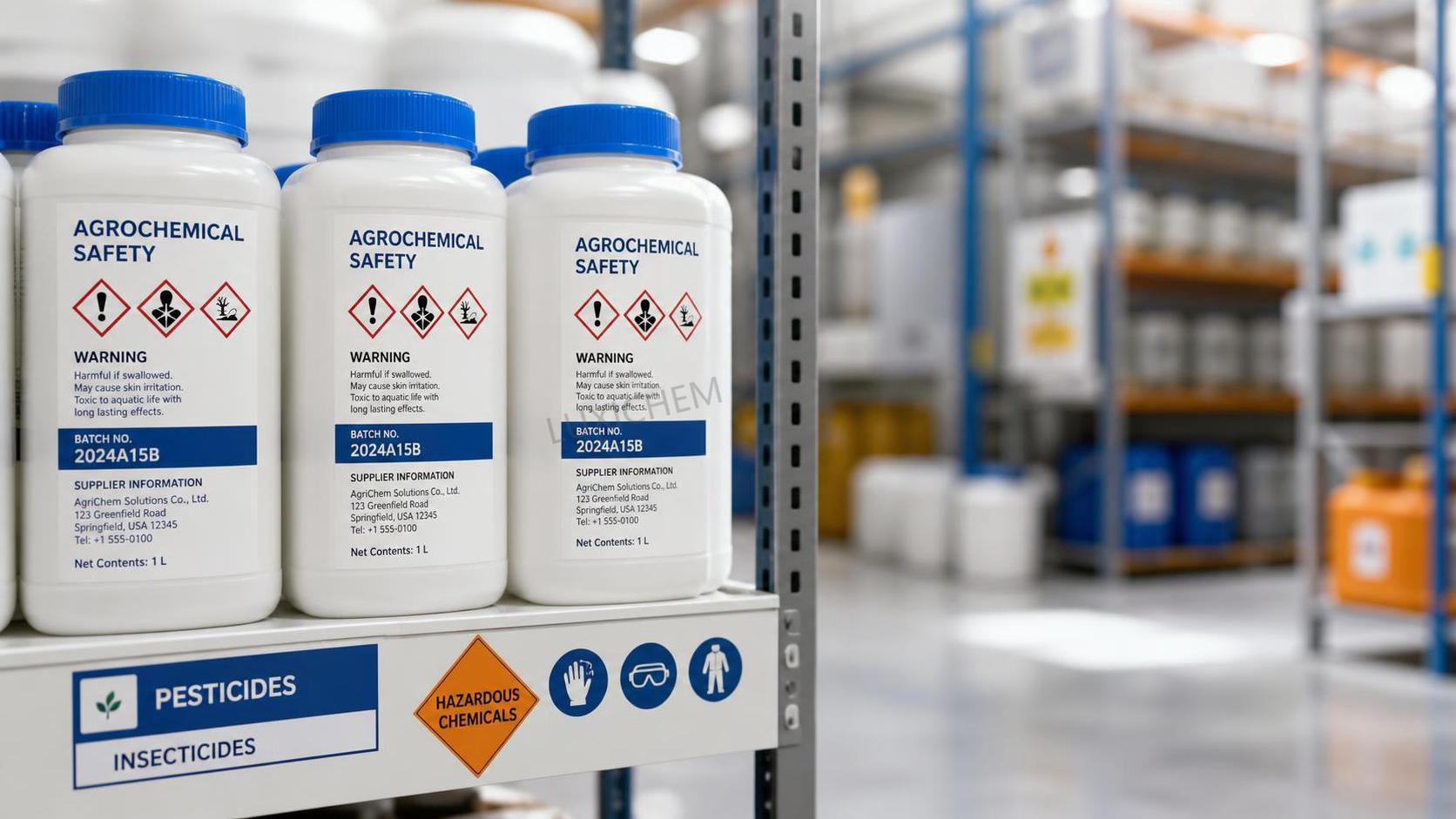
A shipment of Agricultural Chemicals can be correctly filled, sealed, and documented yet still create a serious compliance problem when the label is incomplete, unreadable, or inconsistent with the safety data sheet. This often becomes visible during receiving inspection, warehouse segregation, transport preparation, or a field-use review: the container identifies a trade name but not the responsible supplier, the hazard pictogram is missing, the batch code cannot be traced, or the use directions do not match the product category.
The practical answer is that an agricultural chemical label must identify the product, identify the responsible party, communicate applicable hazards and precautions, provide traceability information, and include all use, registration, and disposal directions required in the destination market. The exact legal wording differs by jurisdiction and product type, especially where a product is regulated as a pesticide, biocide, fertilizer, adjuvant, or chemical raw material. A label should therefore be reviewed as a controlled compliance document, not as packaging artwork.
Start by determining what the product is regulated as
The first question is not “Does the package have a label?” but “Which regulatory route applies to this product?” A single agricultural supply chain may handle fertilizers, micronutrients, crop protection products, seed treatments, surfactants, solvents, plant-growth products, and intermediates used in formulation. Their labels may share core safety elements, but they are not governed in exactly the same way.
For example, a pesticide or plant protection product commonly requires approved use instructions, target crop or pest information, dose or dilution directions, restrictions on use, re-entry or protective-equipment requirements where applicable, and a registration or authorization reference. A fertilizer label may instead focus on nutrient declaration, guaranteed analysis, net quantity, recommended application, storage guidance, and product-specific cautions. A hazardous formulation supplied for industrial blending may require a workplace chemical label and transport marks even when it is not sold for direct agricultural application.
Misclassification causes recurring labeling failures. A product may be commercially described as “for agriculture,” while its legal requirements depend on its composition, claims, intended use, and local registration status. Quality and safety teams should obtain this classification decision before approving label text, translations, packaging sizes, or export documentation.
Information that should appear on the primary container label
Although local rules control the final format, the following information is normally central to a compliant label for agricultural chemical products.
1. Clear product identification
The label should show the product name used in commercial and regulatory records. Where relevant, this includes the trade name, chemical name, formulation type, grade, or product code. The description should allow warehouse personnel, users, emergency responders, and inspectors to distinguish the material from similar products without relying on color, container shape, or a vague internal abbreviation.
Where ingredients must be declared, list them according to the applicable rules. For regulated crop protection products, this may mean identifying active ingredients and their concentration. For mixtures, the identity of hazardous components may need to be stated when required by the hazard communication framework. Do not copy an ingredient declaration from a technical data sheet without checking whether the label rules require a different nomenclature, concentration basis, or disclosure threshold.
2. Supplier and emergency contact details
A label needs enough information to identify the party responsible for placing the product on the market. This commonly includes the manufacturer, importer, distributor, or local registration holder, together with a physical address or other contact details required by the market. A telephone number for routine product information should not be confused with an emergency contact number. Where emergency contact information is mandated, it must be current, reachable for the stated territory, and suitable for the product’s hazard profile.
3. Net content and batch traceability
Net quantity should be displayed in the prescribed units and be appropriate to the product form, such as mass for solids or volume for liquids. Equally important for internal control is the batch or lot number. It connects the container to manufacturing records, release testing, retained samples, complaint investigations, and recall procedures.
Manufacture date, filling date, expiry date, retest date, or recommended shelf-life statement may also be required or operationally necessary. The correct choice depends on the regulatory status and stability data. Printing a date merely because there is space on the label can create avoidable obligations; omitting a required date can block distribution. The coding method should remain legible after expected storage, handling, and cleaning conditions.
4. Hazard communication elements
Where a product is classified as hazardous, the container label generally needs elements aligned with the applicable hazard communication system. These may include:
- the signal word, such as “Danger” or “Warning,” when required;
- hazard statements describing the nature and severity of the hazard;
- precautionary statements covering prevention, response, storage, and disposal;
- hazard pictograms in the correct shape, color, and minimum size;
- supplemental hazard information where required by local rules; and
- the product identifier that matches the safety data sheet and shipment documents.
Hazard content must be based on the actual classification of the supplied product, not on a generic assumption about the product family. A fertilizer solution, a pesticide concentrate, and an agricultural solvent can have very different hazards. The label should also be reconciled with the current safety data sheet. Differences in product name, hazard category, signal word, pictograms, or precautionary language are warning signs that one document has been updated without the other.
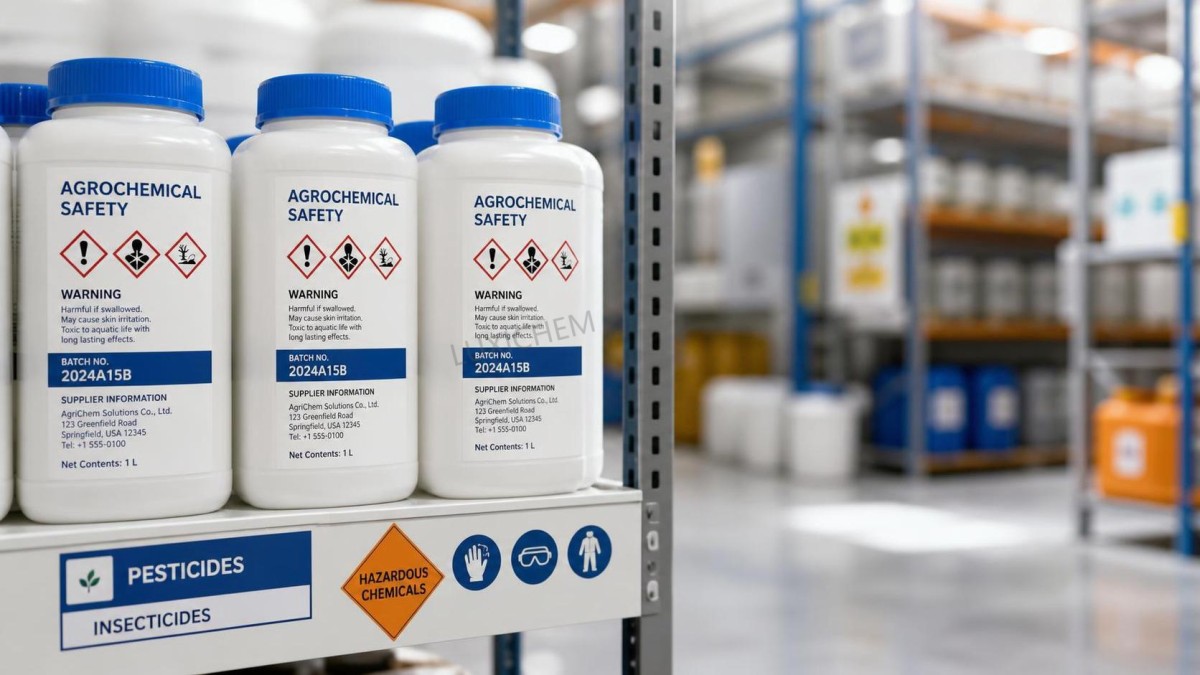
Use directions are not the same as general safety instructions
For products intended for application to crops, soil, seed, or agricultural facilities, the use section is often the part that receives the closest regulatory scrutiny. It should tell the user what the product is authorized or intended to do and how it may be applied safely. A complete instruction set may need to cover crops, pests, application rate, dilution, timing, frequency, equipment limitations, weather-related restrictions, buffer requirements, compatibility limitations, and mixing order.
Instructions should be specific enough to prevent foreseeable misuse. “Use as directed” is not a direction. “Apply according to local practice” is generally inadequate where the product requires controlled application conditions. At the same time, label claims must not exceed approved uses or available product support. Adding broad performance wording to make a label sound stronger can accidentally change the regulated claim of the product.
Some product categories also require user-protection information, such as protective clothing, gloves, respiratory protection, restricted-entry directions, first-aid statements, or environmental precautions. These statements should remain consistent with the hazards identified in the safety data sheet and with the approved product registration. Safety managers should check whether local rules prescribe exact language; paraphrasing mandatory text can be a compliance issue even when the intended meaning seems similar.
Environmental, storage, and disposal information needs operational detail
Agricultural products are often stored near drainage routes, water sources, seed, feed, packaging materials, or other chemicals. A label should state practical storage controls rather than rely on a broad instruction such as “store properly.” Relevant information can include temperature limits, protection from sunlight or moisture, segregation from incompatible substances, container closure requirements, and a warning against storage with food, feed, or drinking water where applicable.
Disposal wording should address both unused product and empty packaging. These are not interchangeable. A container that has held a hazardous concentrate may need defined handling before recycling, reuse, or disposal. Reuse restrictions are particularly important where packaging could later be mistaken for a food or water container. Labels should not make disposal promises that conflict with local waste rules; instructions need to direct users to the applicable approved route.
Environmental statements deserve the same review as worker-safety statements. Depending on classification and authorization, the label may need warnings concerning aquatic environments, pollinators, non-target plants, soil contamination, runoff, or drift. These warnings should be linked to real product risks and approved use conditions rather than added as generic environmental language.
Transport marks and product labels must be checked separately
A frequent mistake is treating a transport label as a substitute for a product-use or workplace label. Transport packages may require shipping names, identification numbers, hazard labels, orientation arrows, marine pollutant marks, or other marks determined by the mode of transport and dangerous-goods classification. These marks communicate transport risk; they usually do not replace the information needed for safe storage, use, or regulatory sale.
Conversely, a fully developed product label may not satisfy transport requirements. Before dispatch, compare the package against the current transport classification, the safety data sheet transport section, the packing group where applicable, package size, and the selected road, sea, air, or rail route. Outer packaging, intermediate packaging, and the immediate container may each need different markings.
A practical label review before release
Label approval works best when it is built into product release and change control. The review should begin with the current formula, classification, intended market, package type, and product status. It should not begin with a prior label file copied from a similar item.
- Confirm the product identity. Match the commercial name, formulation, chemical identity, and internal specification against the batch documentation and safety data sheet.
- Confirm market status. Determine whether the product is a registered agricultural input, a fertilizer, a hazardous chemical mixture, or another regulated category in the destination country.
- Verify label language. Required language, font size, and local contact details can vary by market. Translation should preserve the legal and hazard meaning, not simply the literal wording.
- Review hazards against the latest classification. Check pictograms, signal word, statements, and supplemental information. Remove obsolete symbols or wording when classifications change.
- Check directions and restrictions. For application products, confirm that all claims, rates, crops, limitations, and protective measures are authorized and internally supported.
- Validate print quality on the actual package. Inspect contrast, adhesion, barcode readability, variable-data placement, and resistance to moisture, abrasion, and normal storage conditions.
- Retain the approved master. Keep controlled artwork, approval records, revision history, and a sample or image of the finished label linked to the batch and market.
This review should also cover over-labeling. Applying a local-market sticker to an existing container may be acceptable only when it remains durable, does not conceal mandatory information, and does not create contradictory instructions. A sticker that covers the batch code, hazard pictogram, or original product identifier may break traceability or leave the package non-compliant.
Special care for raw materials and formulation components
Some materials move through agricultural supply chains without being sold as finished crop-input products. Their labels still need accurate chemical identification, hazard communication, traceability, storage conditions, and supplier information. However, they should not be given pesticide-use claims merely because a downstream customer may formulate an agricultural product.
For instance, 1,3-Butanediol CAS#107-88-0 is described as a liquid organic compound used as a solvent, humectant, and chemical intermediate in several industrial applications. When supplied as a raw material, its label should reflect the actual material, its applicable classification, and handling conditions rather than imply an agricultural use that has not been established. Product information indicates hygroscopic behavior, storage below +30°C, and incompatibility with strong oxidizing agents; where relevant to the supplied material and local label requirements, these conditions should be communicated consistently with the current safety documentation.
This distinction matters during procurement and warehouse receiving. A raw material label supports safe handling of that substance. A finished agricultural formulation label supports legal sale and correct end use of the formulation. Combining the two functions without a regulatory review can create misleading directions, unsupported claims, or incorrect hazard communication.
When a label should be stopped before shipment
Release should be paused when the batch number is absent or unreadable, the safety data sheet and label do not agree, required local language is missing, the label carries an expired registration reference, or a product claim has changed without a corresponding authorization review. Other stop signs include missing emergency information, a mismatch between net content and package size, obscured hazard symbols, and instructions that do not identify the intended use or limitations.
For multi-country supply, do not assume one English-language label can serve every destination. Build a market-specific label matrix that records the product category, required language, registration details, local responsible party, hazard label elements, transport marks, date coding, and artwork revision. It gives quality, regulatory, warehouse, and export teams one controlled reference and makes discrepancies easier to detect before the products reach storage or field use.
Related Picks
 Butylated Hydroxytoluene Price Drivers: Supply, Purity, and Purchasing Risk FactorsOct 21, 2026Butylated Hydroxytoluene price trends depend on supply stability, purity, logistics, and purchasing risk. Learn how to compare quotes wisely and reduce sourcing costs.
 Sodium Tripolyphosphate Price Trends: Raw Material and Energy ExposureOct 20, 2026Explore sodium tripolyphosphate price trends, from phosphate and soda ash costs to energy exposure. Learn how to compare quotes, manage sourcing risks, and make smarter purchasing decisions.
 Acetonitrile Shipment to Vietnam Successfully Dispatched; RCEP Benefits Boost Fine Chemical Trade with ASEANSep 16, 2026A shipment of industrial-grade acetonitrile from our company has recently been loaded and dispatched following the completion of standardized hazardous material packaging and container securing procedures.
 Nigerian Client’s Order of 4 Containers of Vinyl Acetate Successfully Loaded and Shipped to West AfricaSep 16, 2026We recently completed the loading of a vinyl acetate order for a Nigerian client; four containers of the product have been successfully packed and are ready for shipment to Nigeria.




Question Consultation
Send Us Your Inquiry Today

Luxi Chemical is a professional chemical product supplier with ample stock of all chemical categories and excellent quality, welcome your purchase inquiry.

