


How plasticizer choice changes flexibility in polyvinyl chloride
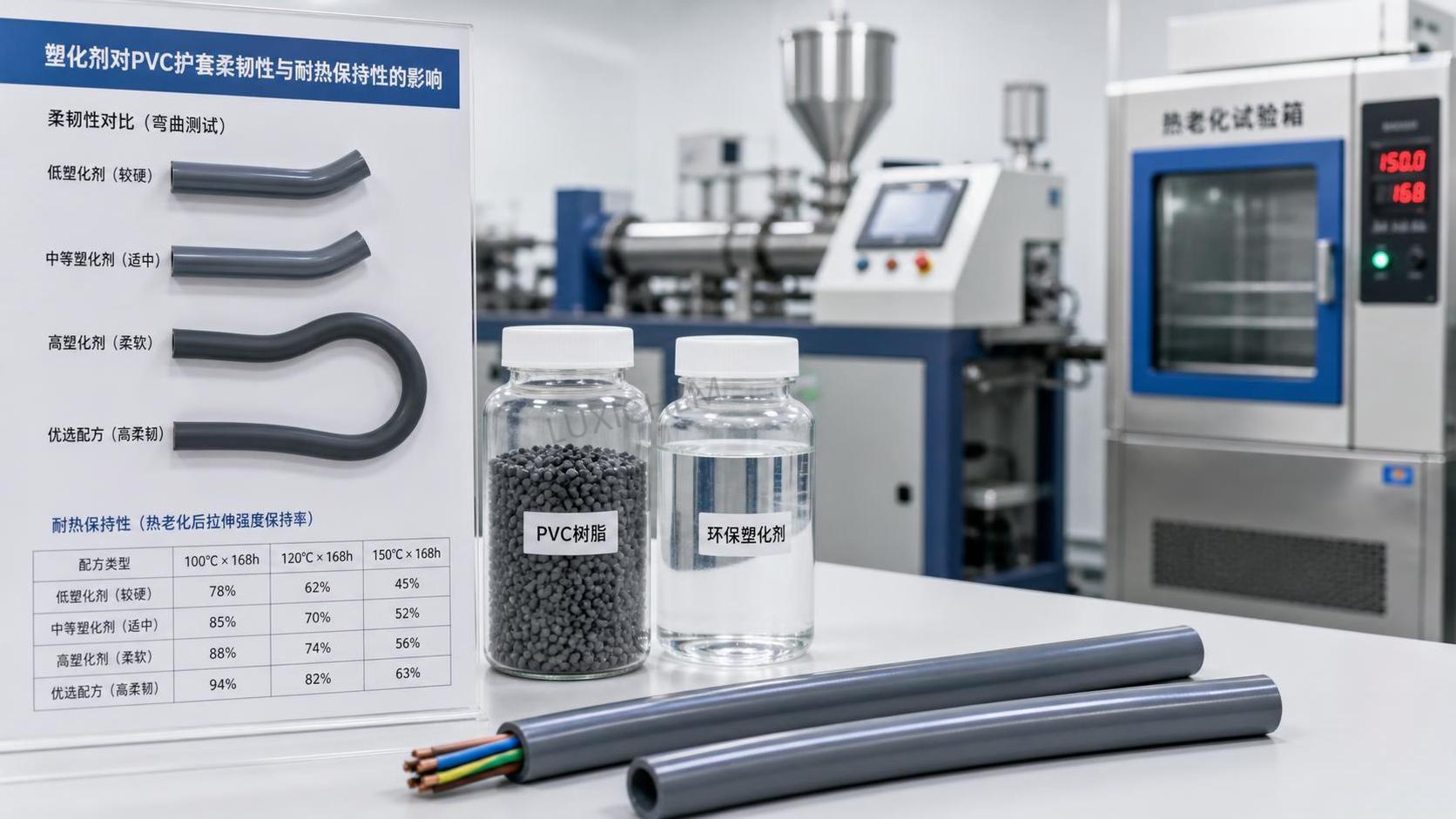
A PVC compound can meet its initial hardness target and still fail in the field because the plasticizer was selected for cost or processing convenience rather than for the actual service environment. The familiar symptoms are a cable jacket that cracks during cold handling, a flooring layer that becomes sticky after contact with another material, or a flexible profile that loses softness after heat aging. These are not separate problems: they often begin with the way the plasticizer interacts with polyvinyl chloride.
The core principle is straightforward. A plasticizer changes PVC flexibility by reducing the strength of PVC-to-PVC molecular interactions and increasing chain mobility. However, the same plasticizer chemistry that produces lower hardness can also change low-temperature behavior, volatility, migration, extraction resistance, electrical properties, fusion behavior, and long-term retention. Selection should therefore start with the required balance of flexibility and permanence, not with a single plasticizer performance value.
Why PVC becomes flexible after plasticization
Unplasticized PVC is comparatively rigid because its polymer chains are strongly attracted to one another. The chlorine-bearing structure of the polymer creates significant intermolecular forces, restricting movement of the chains at normal use temperatures. A suitable plasticizer enters the polymer matrix, separates chains to a controlled degree, and lowers the glass-transition temperature. As chain mobility rises, the compound becomes softer, more extensible, and easier to bend.
This effect is not simply dilution. A material can lower hardness yet perform poorly if it is not sufficiently compatible with PVC. Good compatibility allows the plasticizer to remain distributed within the polymer phase. Poor compatibility can produce haze, surface exudation, inconsistent mechanical properties, or gradual loss of flexibility as the plasticizer migrates toward adjacent materials or the surface.
In formulation review, it is useful to distinguish between initial plasticization efficiency and retained flexibility. A highly efficient plasticizer may achieve the same hardness at a lower loading than another option. That does not automatically make it the better choice for a hot environment, a solvent-contact application, or a product expected to remain flexible for years.
The first decision: what kind of flexibility is actually needed?
“Flexible PVC” covers very different operating conditions. A soft medical tube, a wire insulation compound, a coated fabric, and a resilient flooring layer may all use plasticized PVC, but their failure modes are different. Before comparing materials, define what flexibility means in the intended application.
- Room-temperature softness: usually assessed through hardness, modulus, or tactile feel.
- Low-temperature bendability: the ability to resist embrittlement, cracking, or stiffness in cold storage or outdoor exposure.
- Repeated flex resistance: important where bending occurs continuously, such as cable jackets, hoses, and coated textiles.
- Long-term softness: the capacity to retain plasticizer and avoid stiffening after heat exposure, aging, or contact with other materials.
- Surface stability: resistance to oiliness, blooming, staining, or transfer to adjacent substrates.
A compound intended only for indoor, low-stress use may prioritize efficient softening and acceptable processing. A product exposed to oils, detergents, elevated temperature, or low-temperature cycling needs a more demanding assessment. The plasticizer should be evaluated against the most severe credible condition, not only against the average use condition.
Plasticizer chemistry changes more than hardness
Most technical comparisons begin with broad chemical families because molecular structure strongly affects performance. Molecular weight, polarity, branching, aromatic content, and functional groups influence how readily the plasticizer enters the PVC matrix and how easily it leaves.
Monomeric plasticizers are often valued for efficient softening and workable viscosity. Depending on chemistry, they may be suitable where rapid incorporation, good flow, and economical flexibility are needed. Their limitation can be higher migration, volatilization, or extraction under severe conditions. Polymeric plasticizers generally offer stronger permanence because their larger molecules diffuse more slowly. They can be useful when long-term retention matters, although they may provide less softness per unit loading and can alter processing behavior.
Specialty low-temperature plasticizers may be selected when cold flexibility is the primary concern. They help maintain chain mobility at lower temperatures, but they should not be assumed to solve every durability issue. A compound that remains flexible in the cold can still lose plasticizer through oil contact or thermal aging if permanence was not addressed.
Reading the practical signs of an incorrect choice
When a finished PVC material does not behave as expected, the observed symptom can narrow the investigation. Hardness alone rarely identifies the cause. A technically sound review considers timing, exposure, and where the property change occurs.
Stiffness appears after heat exposure
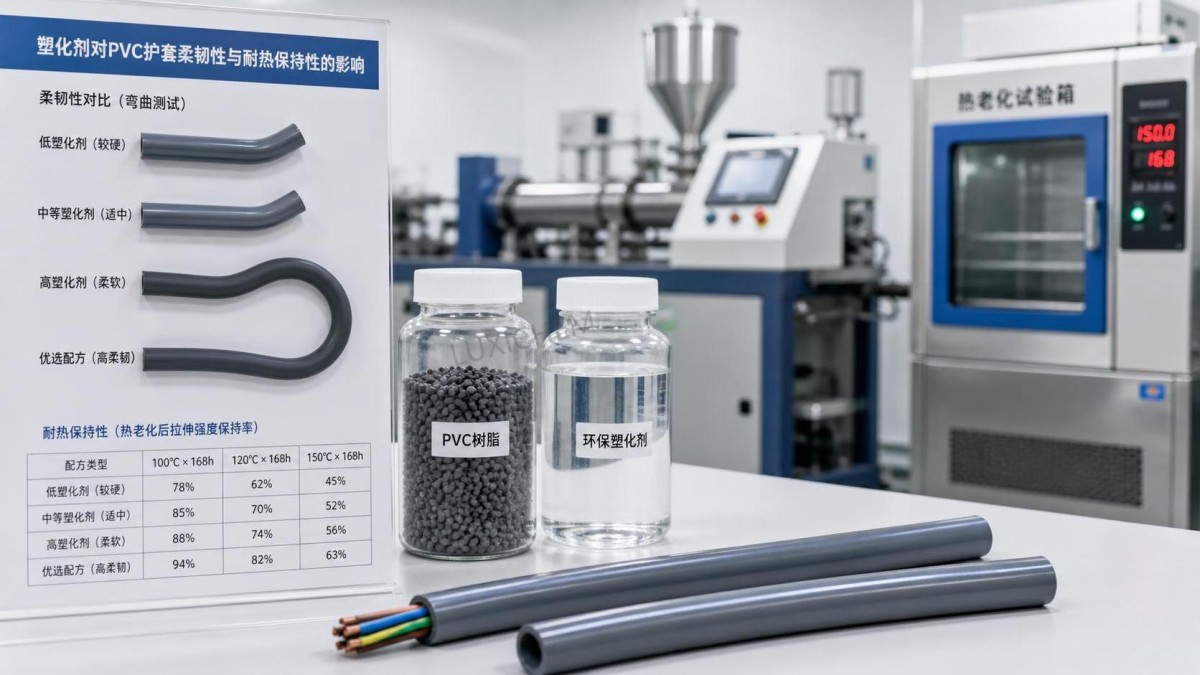
Loss of flexibility after elevated-temperature aging often points to plasticizer volatility, migration, or incomplete compatibility. The compound may initially feel correct because the plasticizer was present at the intended level, then become harder as some portion leaves the matrix. Evaluate mass loss, hardness change, tensile retention, and visual surface condition together. A low-volatility or higher-molecular-weight alternative may be appropriate, but the compound must also be checked for adequate fusion and dispersion.
Surface becomes oily, sticky, or visibly blooms
Surface exudation can indicate that the plasticizer loading exceeds the compatibility limit for that particular formulation. It may also result from interactions among the plasticizer, filler, stabilizer, lubricant, pigment, or other additives. Increasing the plasticizer level to solve high hardness can therefore create a different failure. Before changing the plasticizer, verify actual dosage, mixing sequence, fusion conditions, filler surface treatment, and storage temperature.
Material cracks only in cold handling
This pattern suggests that the formulation’s low-temperature performance is insufficient. A material can have acceptable room-temperature elongation and still become brittle near its lower service temperature. The relevant question is not whether the plasticizer produces a soft sample in the laboratory at ambient conditions, but whether the compound retains enough mobility under cold stress. Test conditions should reflect the intended handling, installation, or outdoor environment.
Staining or property change occurs against another material
Migration is often driven by contact. Plasticizer can move from PVC into adhesives, coatings, foams, rubbers, packaging films, inks, or absorbent surfaces when there is chemical affinity and sufficient time or heat. Contact migration tests should use the actual adjacent material where possible. A plasticizer that is stable in isolated PVC may behave differently in a laminated structure or assembled product.
Do not confuse plasticizer selection with general chemical additive selection
A formulation review can become unreliable when raw materials are grouped only by their appearance or general chemical handling category. Plasticizers must be assessed primarily for PVC compatibility, permanence, and service performance. Reactive inorganic compounds, process intermediates, and fluorine-containing materials serve entirely different functions and should not be treated as flexibility modifiers without formulation evidence.
For example, Sodium Fluorosilicate CAS#16893-85-9 is a crystalline fluoride chemical used in applications such as fluoride chemical manufacturing, glass processing, ore refining, wet etching, and other chemical processing operations. It is not a conventional PVC plasticizer. Its handling profile, including moisture sensitivity and incompatibility considerations, reinforces the need to segregate reactive chemical raw materials from plasticizer evaluation and from any PVC compounding decision unless a specific, validated formulation role has been established.
This distinction matters during procurement and plant material control. Similar packaging formats, white crystalline appearance, or overlapping storage areas do not indicate functional interchangeability. Material identity, specification control, and batching discipline are part of protecting the finished compound from contamination and unexpected processing variation.
A better way to compare candidate plasticizers
Rather than asking which plasticizer is “best,” compare candidates against a defined formulation target. Start with the resin grade, desired hardness range, filler loading, stabilizer system, processing route, and the most important end-use exposure. A plasticizer cannot be judged independently of the rest of the compound.
- Set the flexibility target. Define the acceptable hardness or modulus range, required elongation, and any bend or flex requirement. Include the lowest and highest use temperatures.
- Identify the dominant durability risk. Heat aging, cold cracking, extraction, migration, electrical performance, fogging, and weathering do not carry equal weight in every application.
- Screen compatibility at expected loading. Examine clarity where relevant, surface condition, exudation, and changes after storage. Check not only the initial specimen but also aged specimens.
- Review process behavior. Plasticizer choice can influence dry blend absorption, gelation rate, torque, fusion window, melt flow, and calendering or extrusion stability.
- Test the actual exposure pathway. Use realistic contact media, temperature, mechanical stress, and adjacent substrates. General laboratory results may not predict a specific assembled product.
- Assess substitutions at equal performance, not equal phr. Two plasticizers used at the same phr may not produce equal hardness or equal low-temperature properties. Compare at matched flexibility where practical.
The phrase “equal performance” is important. Replacing one plasticizer at the same dosage can change hardness, fusion, and migration simultaneously. A fair comparison may require adjusting the loading of each candidate to reach the same hardness level, then comparing aging, extraction, and processability from that baseline.
Processing can hide or amplify a plasticizer problem
Even an appropriate plasticizer can appear to fail when incorporation is incomplete or when the fusion profile is poorly controlled. In dry blending, insufficient absorption can create uneven distribution and feeding variation. During extrusion or calendering, excessive temperature can accelerate volatilization or destabilize the compound, while insufficient fusion may leave a weak, nonuniform morphology. The finished sheet, cable, or profile may then show property variation that is incorrectly attributed only to plasticizer type.
Monitor the process alongside material properties. Changes in mixer temperature profile, residence time, torque, fusion behavior, die pressure, surface appearance, and roll release can reveal whether the issue is formulation-driven or process-driven. A plasticizer change should be evaluated under controlled, comparable processing conditions; otherwise, the comparison may reflect machine settings more than chemistry.
Where a blended plasticizer system makes sense
One plasticizer does not always provide the desired combination of cold flexibility, permanence, processability, and economics. Blends are often considered when one material provides efficient softening while another improves retention or low-temperature performance. The benefit is not automatic: each component must remain compatible with PVC and with the other additives over the full composition range.
A blended approach is most defensible when it addresses a clearly identified gap. For example, a base plasticizer may provide satisfactory room-temperature softness but insufficient heat-aging retention, while a more permanent co-plasticizer helps reduce loss under elevated temperature. In another situation, a durable system may require a low-temperature component to avoid brittleness during cold service. The blend should be verified for migration, extraction, and processing behavior rather than assumed to average the strengths of both materials.
The final approval decision should be based on the failure mode that matters most. A soft PVC compound that cannot survive its expected temperature, contact environment, or mechanical duty is not adequately plasticized, regardless of how favorable its initial hardness appears.
Related Picks
 Butylated Hydroxytoluene Price Drivers: Supply, Purity, and Purchasing Risk FactorsOct 21, 2026Butylated Hydroxytoluene price trends depend on supply stability, purity, logistics, and purchasing risk. Learn how to compare quotes wisely and reduce sourcing costs.
 Sodium Tripolyphosphate Price Trends: Raw Material and Energy ExposureOct 20, 2026Explore sodium tripolyphosphate price trends, from phosphate and soda ash costs to energy exposure. Learn how to compare quotes, manage sourcing risks, and make smarter purchasing decisions.
 Acetonitrile Shipment to Vietnam Successfully Dispatched; RCEP Benefits Boost Fine Chemical Trade with ASEANSep 16, 2026A shipment of industrial-grade acetonitrile from our company has recently been loaded and dispatched following the completion of standardized hazardous material packaging and container securing procedures.
 Nigerian Client’s Order of 4 Containers of Vinyl Acetate Successfully Loaded and Shipped to West AfricaSep 16, 2026We recently completed the loading of a vinyl acetate order for a Nigerian client; four containers of the product have been successfully packed and are ready for shipment to Nigeria.




Question Consultation
Send Us Your Inquiry Today

Luxi Chemical is a professional chemical product supplier with ample stock of all chemical categories and excellent quality, welcome your purchase inquiry.

