


What melt flow index tells you when comparing pp granules
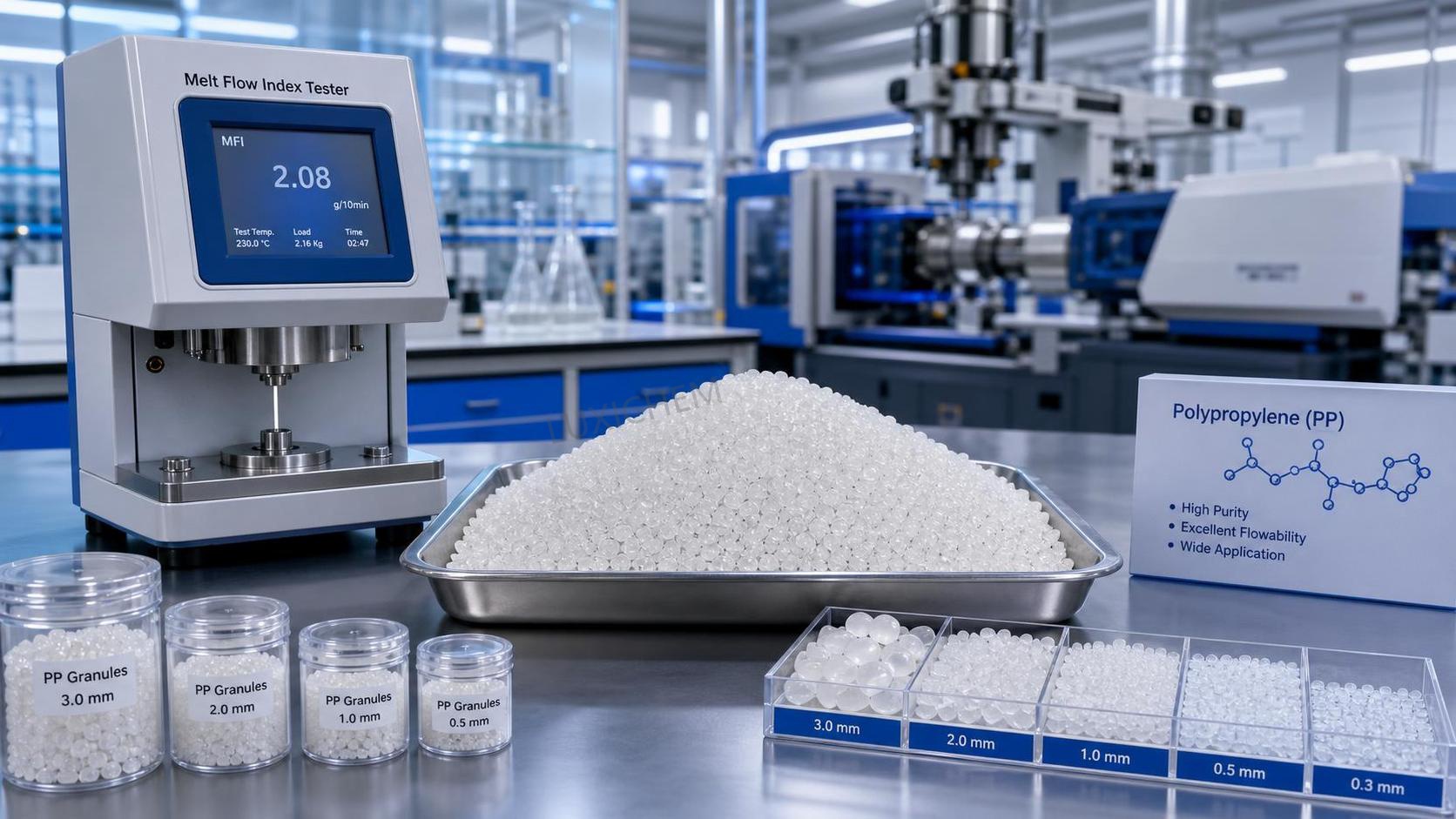
It usually starts in a meeting that looks simple on paper: two or three grades of polypropylene are on the table, the product team wants a recommendation, and the available documents show only a handful of numbers. Among them, melt flow index often stands out because it is easy to find and easy to compare. The problem is that it is also easy to misuse. Many people have seen one grade with a higher value and assumed it will be easier to process, therefore better. Then the first trial brings unstable filling, warpage, weak impact, or a part that looks fine but behaves differently from the approved sample.
If you are comparing pp granules for selection, this is where melt flow index becomes useful and dangerous at the same time. Useful, because it gives a quick signal about flow behavior and likely processing range. Dangerous, because it does not describe the whole material. The teams that avoid repeated trials are usually not the ones with the most data, but the ones that know exactly what this number can and cannot tell them before they narrow the options.
Where the confusion usually begins
A common situation is this: one material data sheet shows an MFI that is much lower than another, and someone interprets that as “harder to run” or “less suitable.” In another case, a high MFI grade is chosen because the mold has thin sections, only to find later that the final part loses too much stiffness or impact resistance for the intended use. Melt flow index is not a quality score. It is a simplified processing indicator measured under specific load and temperature conditions, and its meaning changes depending on the application, the molding method, and the rest of the property package.
For technical evaluation, the first correction is to stop asking whether a higher or lower MFI is better. The more useful question is: better for which process, at which geometry, and with what end-use requirement?
What the number is really telling you
Melt flow index is essentially a quick indication of how readily molten polymer flows under a defined test condition. In practical terms, a higher value usually points to lower melt viscosity during processing, while a lower value usually suggests a more viscous melt. That has direct relevance when you are screening pp granules for injection molding, extrusion, fiber production, sheet, or compounding.
In day-to-day selection work, MFI often acts as a first filter for three things:
- Expected filling behavior in the chosen process
- Sensitivity to processing window changes
- General balance between ease of flow and mechanical robustness
That said, MFI is not a direct measurement of all rheological behavior. It does not fully describe shear sensitivity, molecular weight distribution, long-chain branching effects, or how the material behaves across the actual shear rates seen in production. It is a shortcut, not a complete map.
Why two grades with similar MFI can still behave differently
This is one of the most expensive misunderstandings during screening. Two polypropylene grades can show close melt flow index values and still perform differently in actual tooling. The reason is that the same MFI can come from different molecular structures and additive packages. One grade may hold shape better after filling. Another may flow similarly at first but respond differently to pressure, cooling, or orientation. If one of the grades contains modifiers, fillers, or processing aids, the MFI number alone becomes even less descriptive.
That is why experienced reviewers rarely treat MFI as a standalone approval criterion. It is more reliable as a comparison point inside a controlled shortlist: same polymer family, similar intended use, comparable test basis, then supported by other essential properties such as tensile behavior, impact performance, shrinkage tendency, thermal resistance, and dimensional stability.
In some development environments, teams also compare complementary materials used elsewhere in processing systems or wear-related parts. For example, when evaluating contact surfaces, abrasive environments, or high-temperature auxiliary components around polymer production or handling lines, materials such as Silicon carbide CAS#409-21-2 may appear in technical sourcing discussions. It does not replace polypropylene selection criteria, but it is a reminder that material decisions are often linked across the wider process, not just within the resin data sheet.
Reading MFI in context of the process, not in isolation
The most practical way to use melt flow index is to connect it immediately to the manufacturing route. For injection molding, a higher MFI may help with thin walls, long flow paths, fine details, or lower injection pressure demands. But if the part also needs toughness or resistance to stress during use, a very high-flow grade may not be the first place to stop. For extrusion, too high a flow can reduce melt strength and affect shape stability, especially in profiles, sheets, or thermoforming feedstock. For fibers, the acceptable window can be narrower because consistency matters as much as nominal flow.
That means the same MFI value can look attractive in one process and risky in another. The number is only meaningful when tied to the actual forming behavior you need.
What to compare before you reject or approve a grade
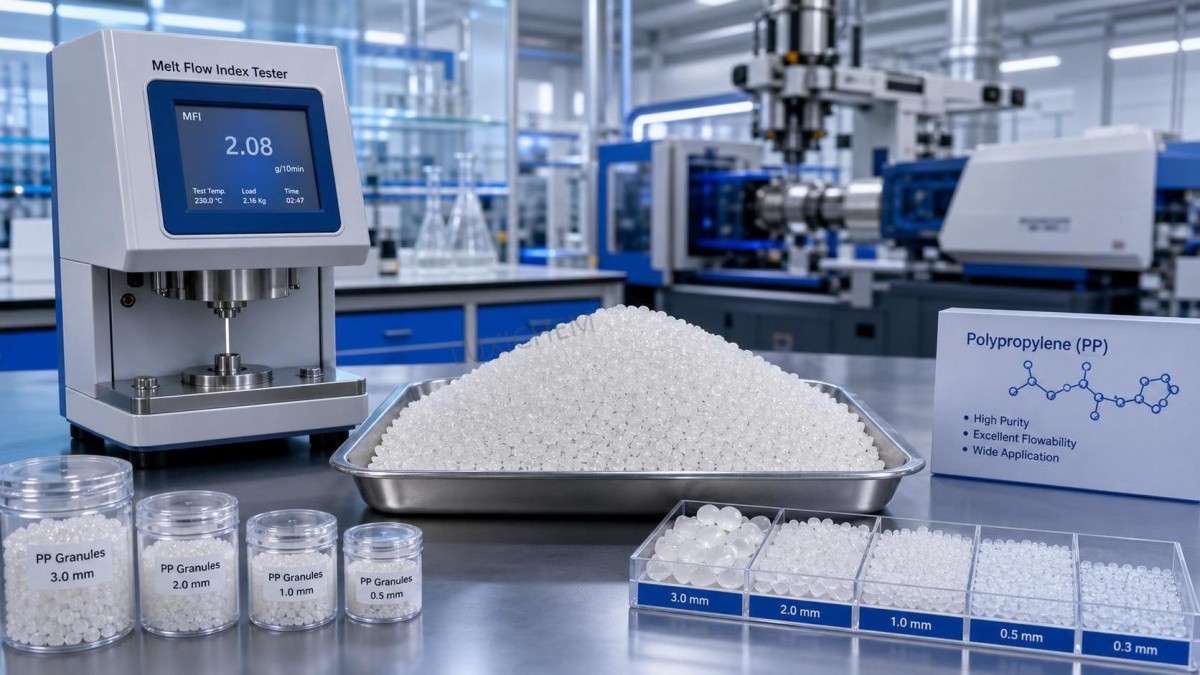
When a team is under time pressure, MFI often becomes a quick yes-or-no gate. A better approach is to use it as a trigger for a smaller set of questions.
First, verify that the test conditions are comparable. MFI values measured under different loads or temperatures are not directly interchangeable. This sounds basic, but mismatched test conditions still create false conclusions in many material reviews.
Next, look at the intended conversion method. If the grade was developed mainly for injection molding and you plan to use it in extrusion, the MFI may look acceptable while the broader processing behavior is not. Product positioning matters.
Then compare mechanical priorities. If your application has snap features, hinges, load-bearing zones, or impact exposure, flow should not outrank structural behavior. If the part is cosmetic and thin-walled, the decision may lean differently.
After that, examine consistency risk. A material with a suitable target MFI but weak lot-to-lot control can still create process variation. For assessment purposes, the reliability of supply and specification discipline matters almost as much as the nominal number.
Finally, review whether fillers, modifiers, or color masterbatch will shift the effective processing behavior. The base resin may look ideal until the full formulation changes the window.
Common mistakes when comparing polypropylene grades
One frequent mistake is assuming that lower MFI automatically means higher quality because it may be associated with higher molecular weight. In reality, that can also mean more difficult filling, higher pressure demand, and a narrower molding margin for intricate parts.
Another mistake is choosing the highest-flow option to avoid short shots without checking downstream effects. Easy filling can hide other tradeoffs, including lower toughness, different shrinkage behavior, or reduced performance in features that see mechanical stress.
A third mistake is comparing supplier literature without matching grade intent. General-purpose, copolymer, homopolymer, and specialty modified grades may overlap in MFI range but are not interchangeable on that basis alone.
There is also a practical misunderstanding around trial outcomes. If a grade with a favorable MFI still runs poorly, the issue is not always the resin. Gate design, melt temperature, screw condition, residence time, moisture contamination in companion materials, and cooling profile can all distort the conclusion. MFI helps you start the conversation; it does not end it.
A more reliable way to narrow the options
When comparing pp granules, it helps to move in stages rather than trying to find the final answer from one table of values.
Start with the process requirement. Decide whether your main risk is poor filling, weak melt strength, dimensional variation, impact failure, or cycle instability. That tells you how heavily MFI should weigh in the decision.
Then create a realistic acceptable range instead of chasing one exact number. A narrow target often looks scientific but may exclude materials that process well once the full condition set is considered. A range is more useful because it reflects actual manufacturing tolerance.
Next, pair MFI with two or three non-negotiable properties. For one project, that may be impact strength and warpage behavior. For another, it may be stiffness and surface quality. This simple pairing prevents MFI from dominating the decision.
After that, review the grade family. Homopolymer and copolymer differences matter. Even before detailed testing, family-level fit can eliminate poor candidates more effectively than comparing flow values alone.
Only then does a short trial become efficient. At that stage, you are not using machine time to discover basic incompatibility. You are confirming whether the selected range behaves as expected.
When MFI is especially helpful
There are situations where melt flow index is genuinely one of the best early indicators available. If you are screening many candidate grades and need to remove obviously unsuitable options, it can quickly separate likely injection-molding grades from grades better suited to extrusion or heavier-section parts. It is also useful when replacing a current material and trying to maintain similar filling behavior while other properties stay close.
MFI is also helpful for spotting potential process adjustments. If a replacement grade has a noticeably different value, you can anticipate that barrel settings, pressure profile, or mold filling response may need attention. That expectation alone can save time during transfer work because it prevents the team from treating the new material as a drop-in substitute when it probably is not.
When it should not lead the decision
In applications where long-term mechanical performance, environmental stress, repeated flexing, sealing behavior, or dimensional precision are critical, MFI should stay in the background. It still matters, but it should not be the first screening metric. In those cases, the wrong choice usually comes from overvaluing process convenience and undervaluing end-use behavior.
The same caution applies when the part design is not yet stable. If gates, wall thickness, or geometry are still changing, a perfect MFI match today may be less meaningful than a broader understanding of the material family and its processing tolerance.
A practical judgment rule for selection meetings
If you need a simple working rule, use melt flow index to answer one question first: will this grade likely enter the right processing window for the part and method we have? If the answer is no, set it aside. If the answer is yes, stop asking MFI to do the work of the rest of the data sheet.
That is usually the point where comparisons become clearer. Instead of debating whether one number is “better,” the discussion shifts to whether the grade fits the actual processing route, whether it leaves enough margin for stable production, and whether the final properties still support the application.
For technical selection, that is the real value of melt flow index. It helps reduce guesswork early, but only when it is read as a directional indicator rather than a full material verdict. Used that way, it becomes one of the fastest tools for comparing polypropylene grades without letting a convenient number make the decision for you.
Related Picks
 Butylated Hydroxytoluene Price Drivers: Supply, Purity, and Purchasing Risk FactorsOct 21, 2026Butylated Hydroxytoluene price trends depend on supply stability, purity, logistics, and purchasing risk. Learn how to compare quotes wisely and reduce sourcing costs.
 Sodium Tripolyphosphate Price Trends: Raw Material and Energy ExposureOct 20, 2026Explore sodium tripolyphosphate price trends, from phosphate and soda ash costs to energy exposure. Learn how to compare quotes, manage sourcing risks, and make smarter purchasing decisions.
 Acetonitrile Shipment to Vietnam Successfully Dispatched; RCEP Benefits Boost Fine Chemical Trade with ASEANSep 16, 2026A shipment of industrial-grade acetonitrile from our company has recently been loaded and dispatched following the completion of standardized hazardous material packaging and container securing procedures.
 Nigerian Client’s Order of 4 Containers of Vinyl Acetate Successfully Loaded and Shipped to West AfricaSep 16, 2026We recently completed the loading of a vinyl acetate order for a Nigerian client; four containers of the product have been successfully packed and are ready for shipment to Nigeria.




Question Consultation
Send Us Your Inquiry Today

Luxi Chemical is a professional chemical product supplier with ample stock of all chemical categories and excellent quality, welcome your purchase inquiry.

