


How to verify food safety documents for sodium bicarbonate food grade
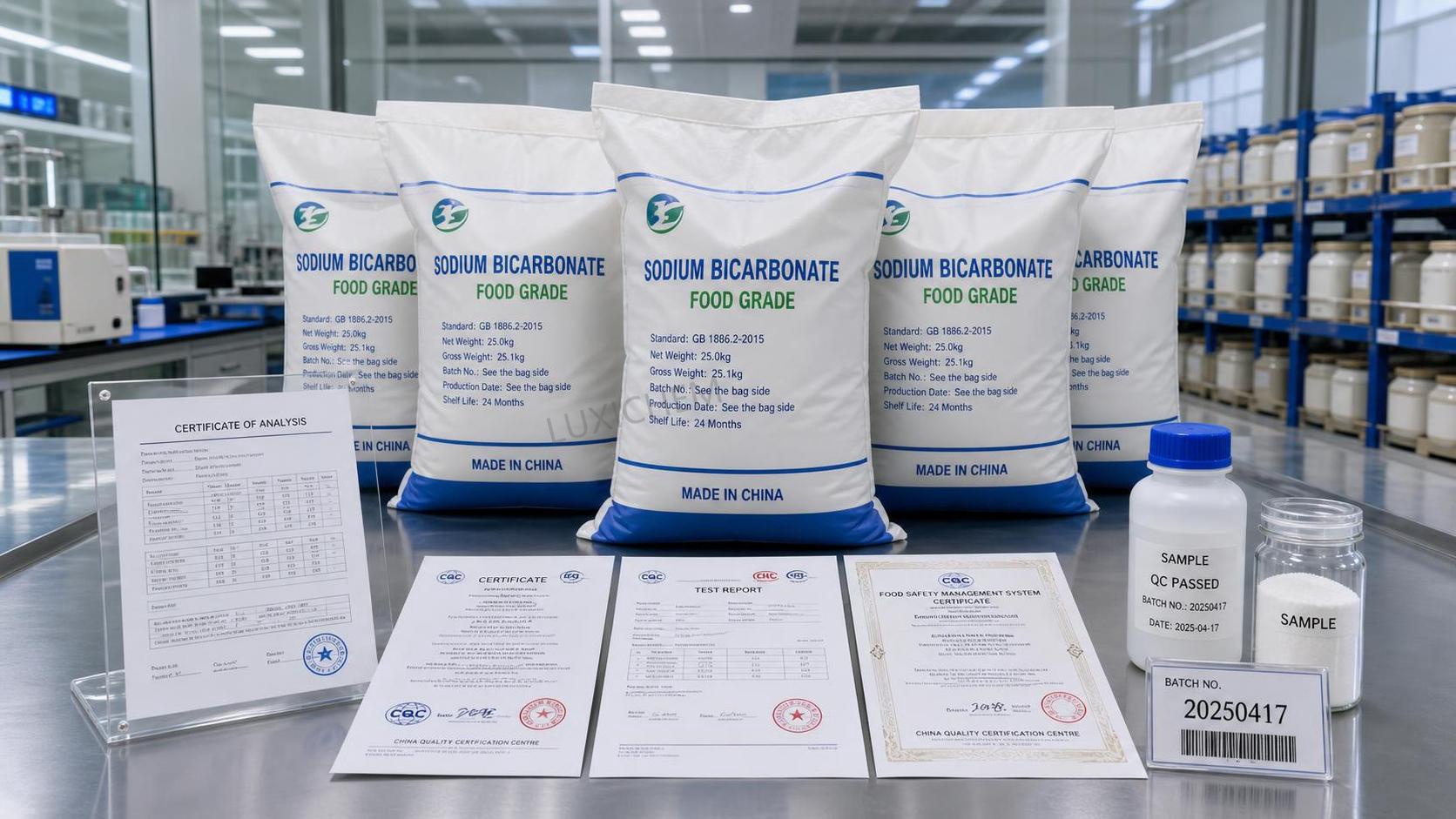
Verification starts with the document set, not with appearance, odor, or packaging claims. For sodium bicarbonate food grade, the first question is whether the paperwork identifies one specific lot clearly enough to connect the material in the warehouse, the label on the bag, the transport record, and the analytical release. If the batch number, production date, net weight, manufacturer name, and product grade are inconsistent across documents, the review should pause before any deeper technical judgment is made.
A basic file usually includes a certificate of analysis, product specification, food-grade declaration or statement of intended compliance, safety data sheet, packaging description, country of origin information, and traceability details such as lot coding. In some supply chains, there may also be a non-animal origin statement, allergen statement, GMO-related declaration, or confirmation that the material is suitable for food processing contact conditions. None of these papers should be read in isolation. The point is to see whether they align with each other without hidden gaps.
Start with lot identity before reading test values
The most common document error is not a failed analytical value but a broken connection between documents. A certificate of analysis may look complete while referring to a lot code that does not match the bag marking or invoice. A specification sheet may describe food use, but the released lot might be listed under a general industrial code. Even small formatting differences matter if they create ambiguity, especially when a supplier handles multiple bicarbonate grades for different downstream uses.
Review the lot number format carefully. Some producers encode plant, line, date, and shift in one string. Others issue shortened export lot numbers that differ from internal manufacturing codes. That is acceptable only if a written cross-reference exists. If a repacked shipment is involved, there should also be a repacking record that preserves the original lot identity and links it to the new package labels. Without that chain, document compliance may exist on paper while traceability is already weakened.
Read the certificate of analysis as a release document, not a brochure
For sodium bicarbonate food grade, the certificate of analysis should identify the exact lot and report the tested characteristics against defined limits. Typical items may include assay, loss on drying or moisture-related parameter, pH of a specified solution, insoluble matter, and impurity controls such as heavy metals where applicable under the referenced standard. The useful question is not whether the values look good in absolute terms, but whether the test methods and specification references are stated clearly enough to support release.
A reliable certificate usually shows unit expressions, numerical limits, actual results, testing date, and some form of approval or issuance control. Statements like “pass” without numerical values can be acceptable for some non-critical attributes, but they are weak for core quality points if the governing standard expects quantified results. Be careful with certificates that mix internal abbreviations without explanation. If “alkalinity,” “purity,” or “chloride” appears without method context, the document may be less useful during an audit or deviation review.
It also matters whether the certificate is lot-specific or generic. A generic template stamped for every shipment has limited evidentiary value. A true release record should reflect testing tied to the actual production lot. If a supplier uses reduced testing frequency, skip-lot testing, or release by history for certain attributes, that practice should be documented elsewhere instead of being hidden behind a standard-looking certificate.
Specification sheets need a reference basis
A specification without a governing basis leaves room for interpretation. For sodium bicarbonate food grade, the document should indicate the standard, monograph, regulatory framework, or internal food specification on which the limits are set, if such a reference is claimed. This does not mean every buyer must demand the same standard in every market, but the declared basis should be visible. Otherwise, one supplier’s “food grade” may simply mean it is packed separately from technical material, while another supplier is working to a tighter impurity profile.
Look for silent mismatches between the specification and the certificate of analysis. For example, the specification may list arsenic, lead, or insoluble matter limits, while the certificate omits them entirely. That omission is not automatically noncompliant, but it raises the question of whether those items are tested per lot, periodically, or only on request. If the answer depends on a control plan, that control plan should exist and be reviewable.
Midway through supplier file review, many organizations compare documentation logic across unrelated chemicals because it exposes weak habits in document control. A supplier able to maintain clear traceability for materials as different as sodium bicarbonate and Ketoconazole CAS#65277-42-1 is usually showing a system-level discipline: consistent lot coding, controlled revision status, and precise product declarations. The chemical function is different, but the document integrity principles are the same.
Food-grade declarations should say more than “food use”
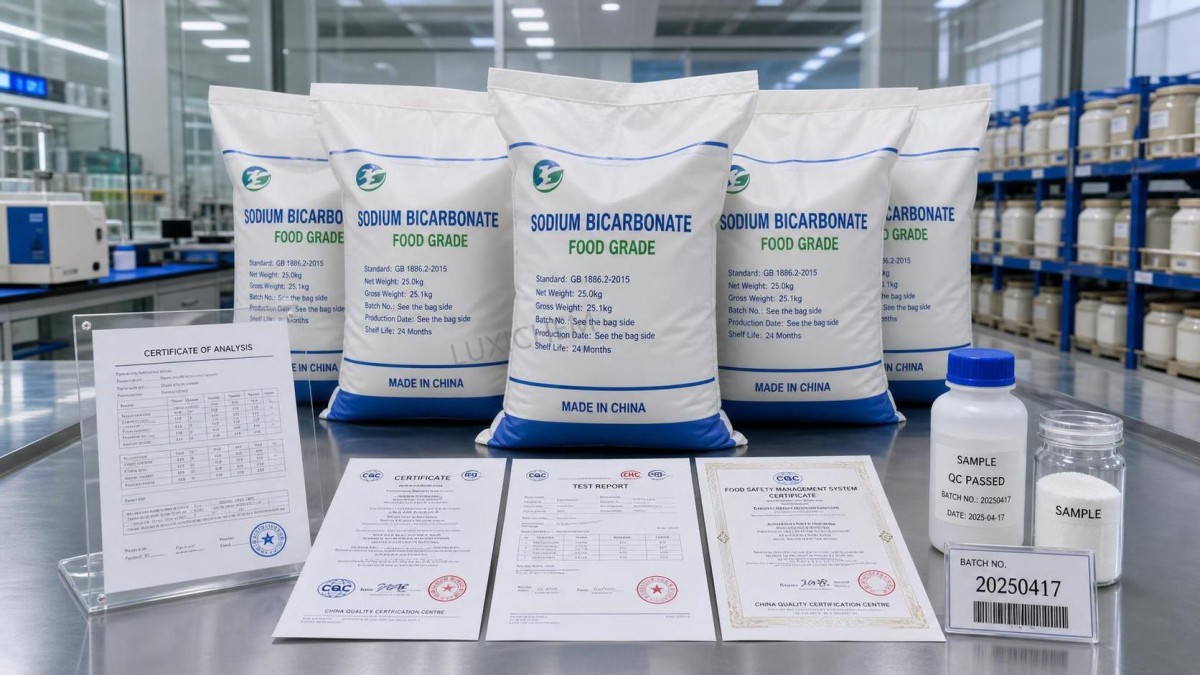
A declaration of food grade is only useful when it states what that claim is based on. Vague wording such as “suitable for food industry” is weaker than a declaration that identifies applicable composition requirements, manufacturing controls, or intended use limitations. If the product is produced on shared equipment or in a site that also handles non-food chemicals, the declaration should not hide that fact. The important issue is whether segregation, cleaning validation, scheduling controls, or line dedication are managed in a documented way.
Another point often overlooked is packaging suitability. A material may meet chemical purity requirements but still introduce risk if the packaging is not appropriate for food-related handling conditions. The document package should support the status of the primary package, including material type, cleanliness control, and whether recycled content or previous-use packaging is excluded where necessary. If liners, sewing threads, inks, or pallet treatments are part of the logistics chain, those may also need clarification when risk assessments are strict.
Traceability depends on production and movement records together
Good traceability is not created by the certificate alone. For sodium bicarbonate food grade, the lot should be traceable backward to raw material and production date, and forward to shipment, consignee, and package count. If the lot is blended, split, screened, or repacked after initial manufacture, each step should preserve linkage. A traceability statement is more credible when it reflects the actual process flow rather than a generic claim copied into every file.
Transport records matter when the material is hygroscopic enough to be affected by storage or transit conditions, or when cross-contamination risk exists from previous cargoes or poor loading hygiene. If sodium bicarbonate is shipped in bulk or transferred through intermediate handling points, ask whether cleaning status of containers, loading sequence, and moisture protection are documented. Damage to outer bags is visible; exposure to humid air or contaminated transfer surfaces often is not.
Country of origin documents also need practical reading. Origin is not just a customs label. It may influence which regulatory declarations apply, which plant actually manufactured the lot, and whether the document set is being issued by a trader rather than the production site. If a trading company issues all papers while the manufacturing plant remains unnamed, the traceability path is less transparent and follow-up questions may take longer to resolve.
Watch for inconsistency in revision control and dates
Document dates often reveal whether the file reflects current control status. A current shipment accompanied by a specification revised many years earlier is not automatically wrong, but it deserves comparison against the latest approved format. The same is true when the safety data sheet, food declaration, and specification use different product descriptions or different address details. Sometimes this is only an administrative lag. Sometimes it shows that documents were assembled from multiple sources without a controlled master record.
Revision control becomes especially important when impurity limits have changed, analytical methods have been updated, or packaging descriptions have been modified. If one document refers to woven bags with PE liner and another refers only to paper bags, the mismatch should be resolved because packaging details can affect moisture exposure, cleanliness controls, and warehouse handling instructions.
Analytical plausibility matters as much as document presence
Even when every paper is present, the analytical profile should make technical sense. If assay is exceptionally close to the upper limit while moisture, insoluble matter, and other minor components show unusual patterns, the lot may still be compliant, but the reviewer should ask whether the test methods are consistent with the specification basis. Repeatedly identical values across many lots can also deserve attention. Real process variation is usually small for a mature bicarbonate line, yet perfectly repeated numbers may indicate copied results or rounded reporting rather than lot-by-lot measurement.
Units and decimal places also need scrutiny. A heavy metal result stated in one unit on the specification and another on the certificate can create false acceptance if no conversion is performed. Likewise, “ND” or “not detected” is incomplete unless the detection limit is known where that limit affects compliance judgment. A document can sound strict while still being unusable for release decisions if its reporting language is too vague.
Common misreadings during approval
One frequent mistake is treating a food-grade statement as proof that every shipment has been tested to food-grade limits. Another is assuming that a third-party inspection certificate automatically replaces the producer’s own release record. External inspection may confirm container condition, quantity, or sampled results, but it does not necessarily show the manufacturer’s internal batch history.
There is also a tendency to focus on purity and ignore handling statements. Sodium bicarbonate may be chemically simple, yet caking, moisture pickup, torn inner liners, mislabeled secondary packaging, or undocumented pallet fumigation can all create downstream concerns. A document review that stops at assay misses practical food safety exposure points that often arise after production, during storage and shipment.
When the file is incomplete, ask narrow questions
Broad requests like “please send all compliance documents” often generate another stack of generic PDFs. It is more effective to ask for the missing link specifically: the lot-to-batch cross-reference for repacked bags, the test frequency for impurity items absent from the certificate, the packaging specification for direct-contact materials, or the version history of the food declaration. Narrow questions reduce the chance of receiving polished but non-responsive paperwork.
If answers come back only in email text, consider whether that explanation should exist as a controlled document instead. Informal clarification is useful for immediate review, but recurring points such as allergen status, line segregation, or test frequency are stronger when issued through revision-controlled statements. That makes future shipment reviews faster and reduces interpretation drift between different reviewers.
In practice, a sound verification process for sodium bicarbonate food grade is built on alignment: one lot, one identity, one coherent documentary story from manufacture to delivery. When that alignment is present, the document file supports technical release. When it is fragmented, even a compliant-looking certificate may not be enough.
Related Picks
 Butylated Hydroxytoluene Price Drivers: Supply, Purity, and Purchasing Risk FactorsOct 21, 2026Butylated Hydroxytoluene price trends depend on supply stability, purity, logistics, and purchasing risk. Learn how to compare quotes wisely and reduce sourcing costs.
 Sodium Tripolyphosphate Price Trends: Raw Material and Energy ExposureOct 20, 2026Explore sodium tripolyphosphate price trends, from phosphate and soda ash costs to energy exposure. Learn how to compare quotes, manage sourcing risks, and make smarter purchasing decisions.
 Acetonitrile Shipment to Vietnam Successfully Dispatched; RCEP Benefits Boost Fine Chemical Trade with ASEANSep 16, 2026A shipment of industrial-grade acetonitrile from our company has recently been loaded and dispatched following the completion of standardized hazardous material packaging and container securing procedures.
 Nigerian Client’s Order of 4 Containers of Vinyl Acetate Successfully Loaded and Shipped to West AfricaSep 16, 2026We recently completed the loading of a vinyl acetate order for a Nigerian client; four containers of the product have been successfully packed and are ready for shipment to Nigeria.




Question Consultation
Send Us Your Inquiry Today

Luxi Chemical is a professional chemical product supplier with ample stock of all chemical categories and excellent quality, welcome your purchase inquiry.

