


What quality documents should a citric acid manufacturer provide?
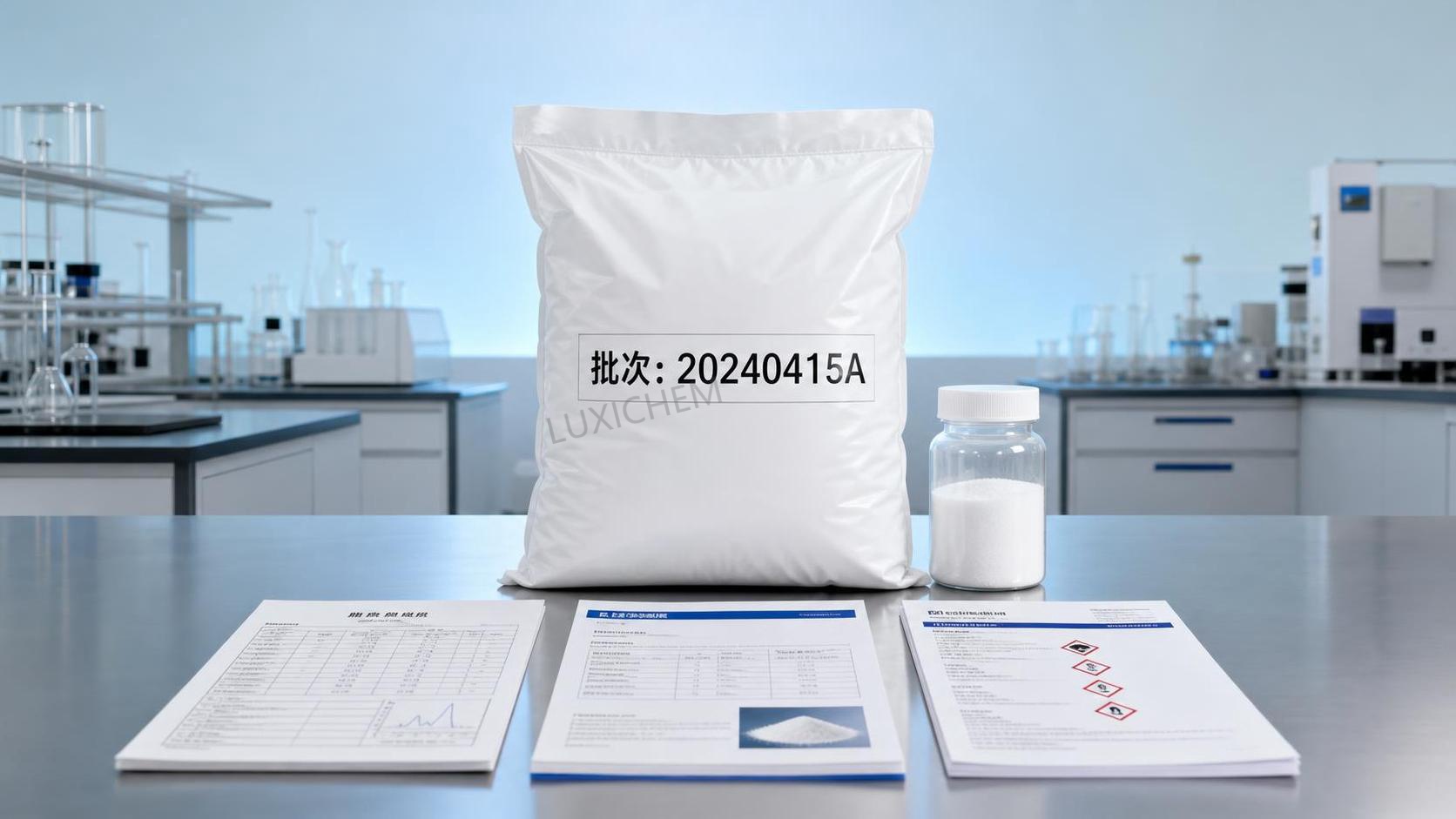
A production schedule can be disrupted by something as ordinary as a missing attachment. A shipment of citric acid may arrive with an invoice, packing list, and a brief certificate of analysis, yet the receiving team still cannot release it for use. The specification does not show the intended compendial grade, the test method is unclear, or the certificate cannot be tied confidently to the lot number printed on the bags.
This is a common sourcing problem in food processing, pharmaceutical-related supply chains, household chemical production, and export trade. Price and availability matter, but they do not answer the practical questions that arise during incoming inspection, customer audits, customs clearance, or a deviation review. The useful question is not merely whether a supplier can send “certificates.” It is whether the documents form a consistent evidence trail for the particular citric acid grade, destination market, and intended use.
Start with the use case, not a generic document request
Citric acid is used for acidification, flavor adjustment, chelation, pH control, cleaning formulations, and as an intermediate in numerous processes. A document package suitable for one application may be incomplete for another. A food-grade buyer may need evidence against a food standard and microbiological limits. A manufacturer using citric acid in a regulated formulation may need a different pharmacopoeial statement, impurity profile, or change-control arrangement.
Before contacting a citric acid manufacturer, define the purchase requirement in writing. It does not need to be long, but it should identify the grade, intended application, destination country or region, packaging format, and any customer-specific limits. This step prevents a familiar misunderstanding: a supplier provides a valid COA, but it is valid only against the supplier’s internal specification rather than the standard the buyer needs to meet.
A practical request might state that every delivery must be accompanied by a batch-specific COA, that the product must comply with a named specification or compendial monograph where applicable, and that supporting declarations must be current. If the material is for food use, clarify whether the relevant requirement is a food additive standard, a customer specification, or both. If it is not intended for food, do not assume food documentation alone is sufficient.
The batch COA is the first document to examine
A certificate of analysis should be issued for the actual lot being shipped, not copied from a typical specification sheet. It should clearly show the product name, grade, batch or lot number, manufacturing date or retest date where relevant, packaging identification, test results, test methods or referenced standards, and an authorized release indication.
For citric acid, the exact test items depend on the grade and applicable standard, but a meaningful COA often addresses identity, assay or content, appearance, moisture or water content, insoluble matter, sulfate, oxalate, readily carbonizable substances, and relevant metal or impurity limits. Food applications may also require microbiological results or a separate microbiological statement. The critical point is not that every possible test must appear on every COA. It is that the selected tests must demonstrate compliance with the agreed specification.
When reviewing a COA, look for internal consistency. The lot number on the COA should match the bag label, pallet label, shipping documents, and, when available, the sample label. Units should be understandable and comparable with the purchasing specification. A result stated only as “pass” can be acceptable for some qualitative tests, but it is less useful when a numerical limit has been agreed. If a result falls unusually close to a limit, ask whether it was retested, what method was used, and whether the reported value is based on the final packaged lot.
One recurring error is accepting a COA that lists a standard name without showing whether the tested material actually meets the relevant version of that standard. A well-controlled document should make the basis of release clear enough for the receiving team to compare it with the approved specification.
Separate the specification sheet from the certificate of analysis
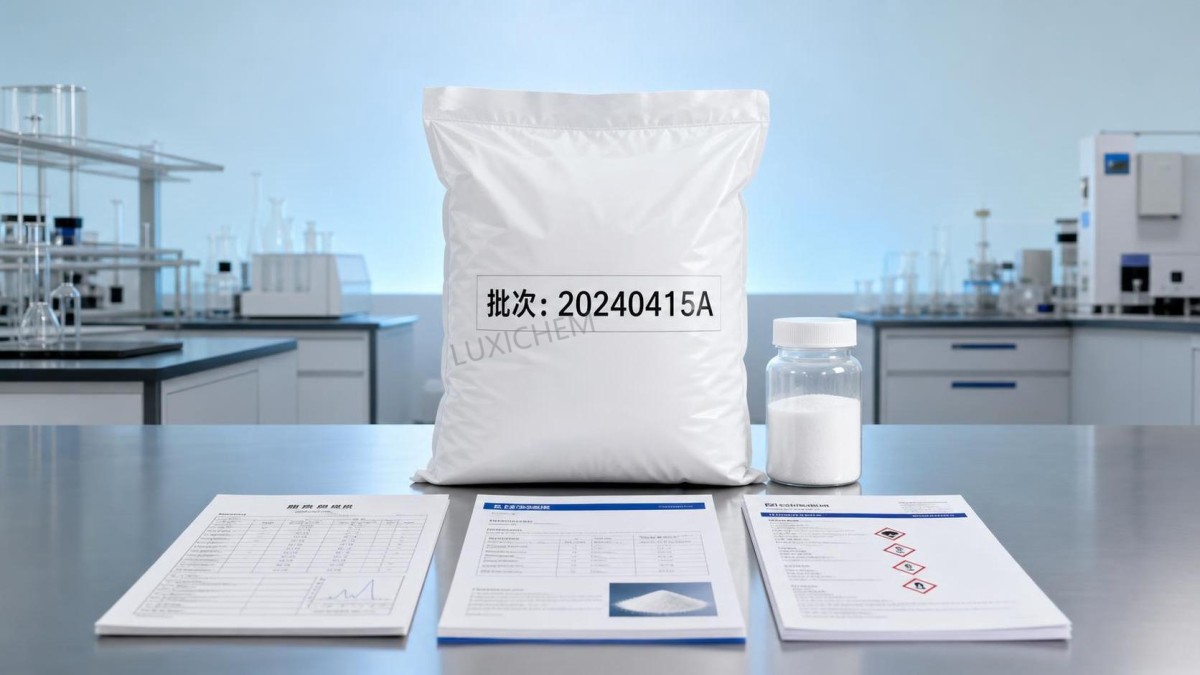
A technical data sheet or product specification describes the normal quality range the supplier intends to provide. It is useful during qualification because it tells the buyer what to expect before a lot exists. It may include physical form, solubility, odor, particle size where applicable, chemical limits, storage conditions, shelf life, and recommended handling.
However, a specification sheet is not proof of the quality of a delivered batch. It should be reviewed alongside the COA, not in place of it. The two documents should not conflict. If the specification says a product conforms to a particular food or pharmaceutical reference, but the COA uses unrelated limits or omits essential tests, that gap deserves clarification before the material is approved.
Ask for the document revision number and issue date. Older files often remain in shared folders after a formula, test method, packaging material, or regulatory statement has changed. Document control is especially important when the same supplier offers multiple grades of citric acid, such as anhydrous and monohydrate forms or grades intended for different end uses.
Standards and certificates need to match the grade being purchased
Terms such as “food grade,” “pharma grade,” and “industrial grade” are useful shorthand, but they are not interchangeable quality guarantees. The buyer should ask which standard, monograph, or internal specification supports the grade offered. Depending on the market and intended application, this may involve recognized food chemical specifications or pharmacopoeial references such as USP/NF, Ph. Eur., or BP. Whether a particular reference is appropriate must be confirmed against the product’s use and the customer’s own requirements.
A citric acid manufacturer should be able to provide a conformity statement when the product is sold against an identified standard. That statement should name the product and grade, rather than making a broad claim that every material in the supplier’s portfolio meets every standard.
Site-level certificates are different from product-level conformity evidence. A quality management certificate, food safety management certificate, GMP-related certification, or other system certificate may help assess how the facility controls production. It does not replace batch testing. Check the certificate holder, site address, scope, issuing body, validity period, and whether citric acid manufacturing or the relevant handling activity falls within the scope. A certificate covering trading activities should not be interpreted as proof of manufacturing controls at a separate factory.
Regulatory and safety documents often decide whether the material can move forward
For international purchasing, regulatory documentation should be requested early, particularly when the material will cross borders or enter a tightly controlled application. The needed documents vary by jurisdiction, so it is better to ask a direct question than to rely on a generic statement.
The safety data sheet is a basic requirement for chemical handling. It should identify the correct product, supplier, emergency information, hazards, handling precautions, storage conditions, transport information, and disposal considerations. An SDS does not certify food suitability or assay; it serves a different purpose. Check that the language, regional format, and revision date are appropriate for the destination.
Depending on the market, the buyer may also need a declaration concerning chemical inventory status, registration status, food additive compliance, or other market-entry conditions. Do not request a broad “global compliance certificate” and treat it as decisive. Regulations differ by country and may depend on the importer’s role, annual volume, use category, or downstream formulation. A credible supplier can state the scope and limitations of its declaration; legal or regulatory review may still be necessary for unusual uses.
Origin documentation may matter for customs, trade preference claims, or customer restrictions. Where required, request it separately from the COA. The country of origin, manufacturer name, exporter name, and shipping route should not create unexplained contradictions across the documentation set.
Additional declarations should be risk-based
Many buyers use a standard questionnaire that asks for allergen, GMO, irradiation, animal-derived material, BSE/TSE, residual solvent, pesticide, heavy metal, and microbiological statements. These documents can be appropriate, but their value depends on the application and the way the question is framed.
For example, an allergen or GMO declaration should identify the product and explain whether the statement concerns formulation, production environment, or both. A heavy-metal statement should not be accepted as a substitute for a required batch result if the purchase specification calls for lot-by-lot testing. Likewise, a “non-animal origin” declaration may support a customer review but does not establish suitability for every regulated application.
Ask the supplier whether the declaration is based on testing, formulation knowledge, raw-material controls, or an assessment of the manufacturing process. A document with a clear basis is more useful than a sweeping statement with no product reference, no date, and no responsible issuer.
Traceability is where document packages are most often tested
When an inspection, complaint, or audit occurs, the important question becomes: can the supplier trace this specific material backward and forward? A qualified supplier should have a defined lot identification system and should be able to explain how raw materials, manufacturing records, finished-product testing, packaging, and shipment records are linked.
For a new supplier, request a sample COA and blank packaging-label format before the first shipment. Compare the fields with the information your warehouse and quality systems need. If the product is repacked, clarify whether the lot number remains unchanged, whether a new internal lot number is assigned, and how the relationship is maintained. Repacking without clear traceability can make later investigation difficult even if the material itself meets specification.
This discipline is useful across a wider chemical purchasing portfolio. When reviewing documentation practices for materials such as Acid Red 18 CAS#2611-82-7, the same basic principle applies: the product identity, lot identity, applicable specification, and supporting safety information should lead to the same material rather than to several loosely related files.
A workable review sequence before approving a supplier
Rather than collecting documents all at once and reviewing them later, use the order in which decisions are actually made. First, compare the technical specification with your internal requirement. Next, assess the supplier’s quality-system evidence and confirm that it applies to the relevant manufacturing or supply site. Then review sample batch COAs for completeness, realistic test presentation, and lot traceability.
After that, review the SDS and market-specific regulatory declarations for the destination and intended use. Finally, agree on shipment documentation: which files must accompany every lot, which need annual renewal, who sends them, and what happens when a document is revised. This approach reduces the risk of approving a supplier based on polished certificates that are not operationally useful when material arrives.
If a document is missing, avoid filling the gap with assumptions. Ask a focused question: Is the stated standard applicable to this grade? Is this COA batch-specific? Which method supports this result? Does this declaration cover the manufacturing site and not only the trading entity? Clear questions usually reveal whether the supplier’s document control is mature enough for the intended supply relationship.
Keep approval conditions visible after the first shipment
Document review should not end when the vendor is added to an approved list. Retain the approved specification, representative COAs, certificates, declarations, and correspondence that explains any exceptions. At receiving, verify the shipment against the agreed conditions rather than simply confirming that paperwork exists.
When a certificate expires, a standard is revised, a packaging format changes, or a COA begins showing a different test layout, review the change before routine acceptance continues. This is not unnecessary administration. For citric acid, as for other chemical raw materials, consistent documentation is the practical link between an agreed purchase requirement and a material that can be safely released into production.
Related Picks
 Butylated Hydroxytoluene Price Drivers: Supply, Purity, and Purchasing Risk FactorsOct 21, 2026Butylated Hydroxytoluene price trends depend on supply stability, purity, logistics, and purchasing risk. Learn how to compare quotes wisely and reduce sourcing costs.
 Sodium Tripolyphosphate Price Trends: Raw Material and Energy ExposureOct 20, 2026Explore sodium tripolyphosphate price trends, from phosphate and soda ash costs to energy exposure. Learn how to compare quotes, manage sourcing risks, and make smarter purchasing decisions.
 Acetonitrile Shipment to Vietnam Successfully Dispatched; RCEP Benefits Boost Fine Chemical Trade with ASEANSep 16, 2026A shipment of industrial-grade acetonitrile from our company has recently been loaded and dispatched following the completion of standardized hazardous material packaging and container securing procedures.
 Nigerian Client’s Order of 4 Containers of Vinyl Acetate Successfully Loaded and Shipped to West AfricaSep 16, 2026We recently completed the loading of a vinyl acetate order for a Nigerian client; four containers of the product have been successfully packed and are ready for shipment to Nigeria.




Question Consultation
Send Us Your Inquiry Today

Luxi Chemical is a professional chemical product supplier with ample stock of all chemical categories and excellent quality, welcome your purchase inquiry.

