


When is dodecyl dimethyl benzyl ammonium chloride suitable as an algaecide?
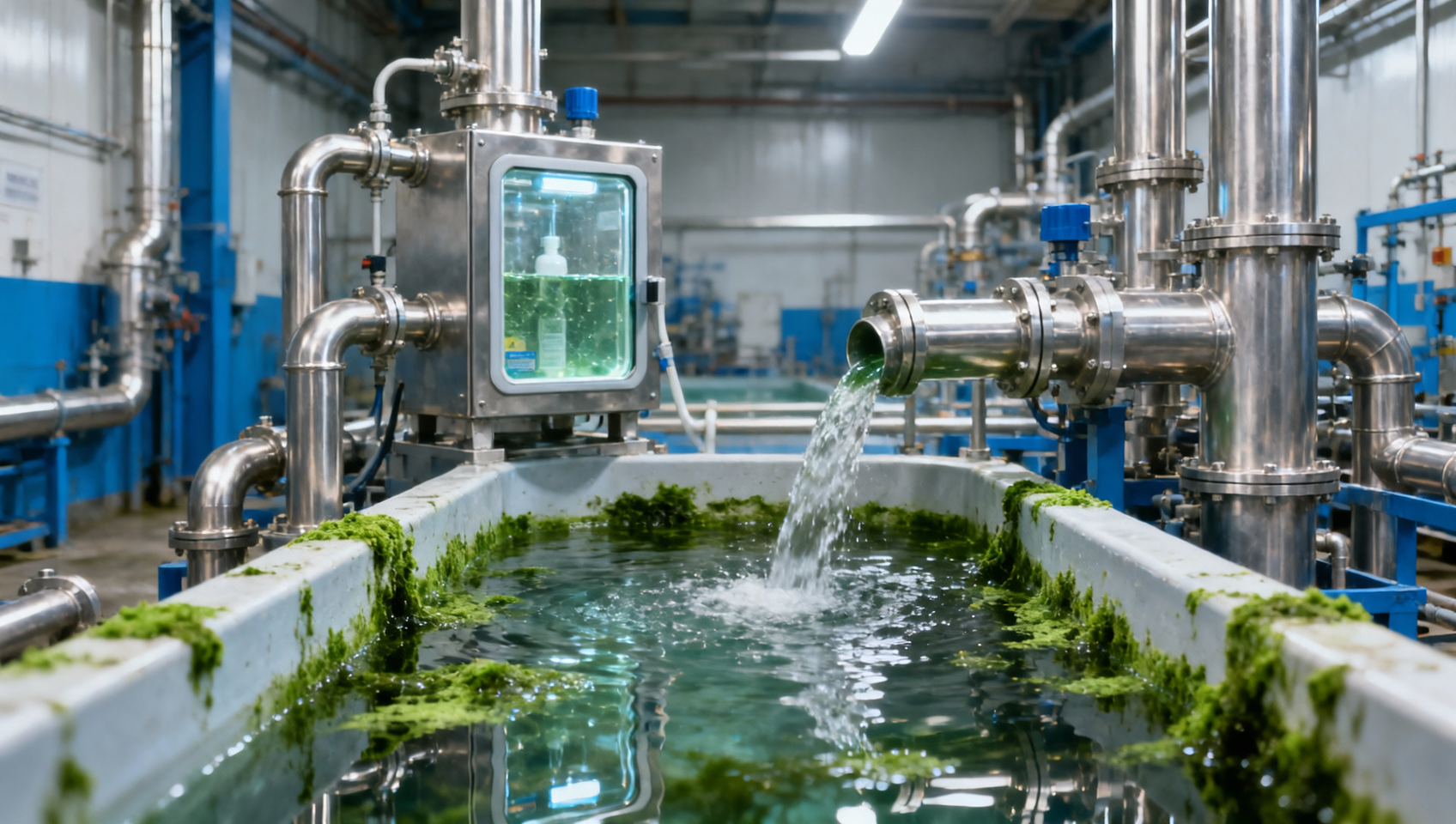
Dodecyl dimethyl benzyl ammonium chloride is suitable as an algaecide when the intended water system permits an authorized quaternary ammonium treatment, algae are accessible to circulating water, and the formulation controls growth without unacceptable foaming, process interference, or discharge effects. Its strongest fit is a controlled industrial water circuit where contact time, treatment concentration, and biomass removal can be managed. Suitability becomes doubtful when heavy deposits shield growth, incompatible chemicals consume the active ingredient, or treated water reaches sensitive biological processes.
A defensible selection therefore requires evidence from the actual water and equipment. Antimicrobial activity alone does not establish an effective operating dose, compatibility with a treatment program, or permission for a particular application.
Establish exactly which active ingredient is being evaluated
Dodecyl dimethyl benzyl ammonium chloride is a cationic quaternary ammonium compound with a twelve-carbon alkyl group. Its interaction with cell membranes supports its biocidal activity. Commercial naming, however, can blur the distinction between this specific compound and benzalkonium chloride products containing a distribution of alkyl chain lengths.
That distinction affects comparisons. Two products described as “benzalkonium chloride” need not have the same composition, active concentration, solvent package, or performance in a particular water matrix. Evidence obtained with a mixed-chain formulation should not automatically be transferred to a nominally single-chain material.
The specification should identify the active substance, alkyl distribution where applicable, active content, and formulation components. A certificate of analysis establishes batch characteristics; efficacy data establish performance under stated conditions. Neither document substitutes for the other. Likewise, antibacterial results do not demonstrate control of the algae responsible for fouling a basin or cooling circuit.
Where the system favors this treatment
Recirculating industrial water systems with illuminated basins, accessible wetted surfaces, and controlled chemical feed offer a plausible application, subject to product authorization. Circulation distributes the treatment, while filtration, blowdown, and cleaning remove suspended material and dead biomass. The treatment has a better chance of controlling regrowth when those physical measures are already functioning.
A continuously wet surface with adequate treated-water contact differs from a splash zone that dries between cycles. The circulating water may receive the intended exposure while algae remain established above the normal waterline. Similarly, stagnant branches and poorly mixed corners can sustain growth despite acceptable readings at the dosing point.
A sealed, dark circuit with recurring slime also deserves a diagnosis before algaecide selection. The deposit could be predominantly bacterial biofilm, mineral scale, or mixed fouling. Color and slippery texture alone do not establish the cause.
Water chemistry can change the available concentration
The nominal dose describes how much product enters the system. It does not establish how much active ingredient remains available to contact algae. Cationic quaternary ammonium compounds interact with negatively charged particles and surfaces, so suspended solids, organic debris, and established deposits can remove material from the water phase.
This creates a common misleading result: treatment succeeds in clean laboratory water but performs poorly in a dirty operating circuit. Raising the feed rate without identifying the demand can increase cost, foaming, and downstream exposure while leaving protected deposits in place.
Anionic surfactants are a particular compatibility concern because interaction with the cationic active can reduce efficacy or produce insoluble complexes. Detergent carryover, process leaks, and cleaning residues therefore belong in the water assessment. Other additives, including dispersants and corrosion inhibitors, require evaluation as complete formulations rather than assumptions based on their product category.
Hardness, pH, temperature, and salinity should be represented in performance testing. They influence the water matrix, algae physiology, and formulation behavior. Hardness alone is not a universal rejection criterion, and a pH reading alone cannot predict efficacy. Testing must reflect the operating range, including seasonal changes and concentrated water near the end of a blowdown cycle.
Chemical identity also prevents inappropriate substitution. Trifluoromethanesulfonic acid CAS#1493-13-6 is a strong acid used in synthesis and catalysis; its acidity does not make it an equivalent algae-control ingredient or a justified additive to this treatment. A synthesis reagent’s specification provides no evidence of suitability for circulating-water biocide service.
Separate algae control from deposit removal
Visible algae present at least two different treatment problems: exposed cells suspended in water and attached communities within deposits. A water sample can demonstrate susceptibility of the first while overlooking the second. Mature biofilms contain extracellular material and entrained solids that restrict chemical access.
Where deposits are substantial, physical removal should precede the performance trial whenever feasible. Cleaning reduces chemical demand and exposes the surfaces on which regrowth must be controlled. A trial against an uncharacterized mass of old deposits is difficult to interpret because inadequate penetration can resemble inadequate intrinsic activity.
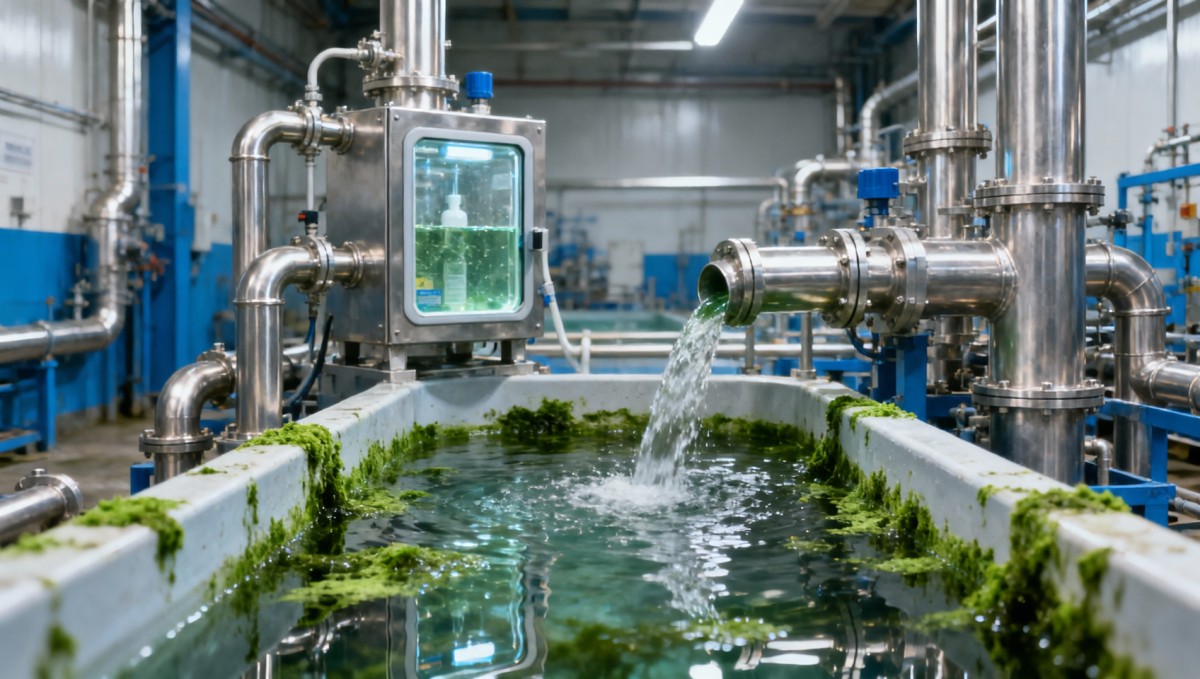
Killed biomass still requires removal. Loosened material can collect in strainers, increase filter loading, or obstruct narrow passages. A change in water color or an initial rise in suspended solids may reflect detachment rather than treatment failure. Conversely, clearer water can result from settling while viable attached growth remains.
Useful observations therefore include surface coverage, deposit texture, filter differential pressure, and regrowth between treatment cycles. Chlorophyll measurements or microscopy can support assessment, but each has limits: pigment can remain after loss of viability, and a single water sample can miss a reservoir of growth on equipment surfaces.
Foaming and process compatibility can decide the outcome
The surfactant character that contributes to membrane interaction also affects water behavior. Aeration, cascading flow, and agitation can produce foam, especially when other surface-active substances are present. Persistent foam can disrupt level control, cause carryover, or interfere with operation even when algae control is satisfactory.
A quiet beaker test will not resolve this issue. Compatibility testing should reproduce relevant aeration and recirculation, using the complete formulation at the intended working exposure. Any proposed defoamer also needs assessment because it changes the chemical program and can influence downstream separation or filtration.
Materials compatibility has two distinct exposure conditions: diluted treated water and concentrated product around storage, pumps, seals, and injection fittings. Solvents and other formulation components can determine compatibility at the feed equipment. Selection should follow product-specific data and equipment specifications rather than a general claim that quaternary ammonium compounds are mild.
Membranes, ion-exchange media, and adsorptive filters deserve separate attention because interactions with the active can change performance or remove it from circulation. Compatibility with an oxidizing biocide program also requires an established feed sequence and operating procedure. Concentrates should not be mixed on the assumption that separate suitability in water establishes compatibility with each other.
Build the trial around the actual treatment window
No single concentration is defensible for every formulation and water system. The permitted product instructions establish the application boundaries; representative testing establishes whether effective control is achievable within them. Results should distinguish product concentration from active-ingredient concentration and identify whether exposure is expressed on a mass or volume basis.
An initial bench trial should use operating water, including its existing treatment chemicals, and representative algae or affected surface material. An untreated comparison helps separate chemical effects from settling, light deprivation, temperature changes, and handling. Testing only freshly diluted product against freely suspended cells gives an incomplete picture of established fouling.
The subsequent system trial must account for hydraulic residence time, blowdown, makeup water, and uneven mixing. A nominal concentration calculated from basin volume can be misleading when the circuit contains additional hold-up or loses treated water rapidly. Sampling near the injection point should be paired with observations at distant or poorly circulated locations.
Residual analysis is useful only when the method is appropriate to the active and the water matrix. A method that reports total quaternary ammonium material, including bound fractions, may not reflect biologically available exposure. Analytical recovery and potential interference should be understood before a residual result becomes an operating target.
Acceptance criteria should be established before dosing. Relevant outcomes include reduced attached growth, slower regrowth over the intended interval, manageable foam, and stable equipment performance. An immediate reduction in visible algae is insufficient if the surface rapidly recolonizes or downstream filters repeatedly block.
Authorization and downstream exposure are part of suitability
A raw-material specification does not establish that a product is authorized as an algaecide. The supplied formulation and intended application must match the relevant product authorization and use instructions in the destination jurisdiction. Authorization for disinfection, for example, does not automatically cover algae control in every industrial or environmental setting.
Discharge deserves particular attention because a membrane-active biocide can affect organisms beyond the target algae. Adsorption onto sludge or suspended matter changes where the substance travels; it does not demonstrate harmlessness. Blowdown routing, residual levels, receiving-water requirements, and effects on biological wastewater treatment should be assessed together.
The technical file should connect identity, batch assay, safety information, permitted uses, and efficacy evidence to the proposed operating conditions. Missing information should lead to a defined trial question or a selection hold. A higher assay value or broader antimicrobial claim cannot compensate for an unresolved use restriction.
Dodecyl dimethyl benzyl ammonium chloride becomes a supportable choice when a representative trial shows sustained algae control within the authorized application conditions and acceptable system limits. If effective exposure requires persistent foaming, repeated filter blockage, or unacceptable downstream residuals, the treatment program needs revision before routine adoption.
Related Picks
 Butylated Hydroxytoluene Price Drivers: Supply, Purity, and Purchasing Risk FactorsOct 21, 2026Butylated Hydroxytoluene price trends depend on supply stability, purity, logistics, and purchasing risk. Learn how to compare quotes wisely and reduce sourcing costs.
 Sodium Tripolyphosphate Price Trends: Raw Material and Energy ExposureOct 20, 2026Explore sodium tripolyphosphate price trends, from phosphate and soda ash costs to energy exposure. Learn how to compare quotes, manage sourcing risks, and make smarter purchasing decisions.
 Acetonitrile Shipment to Vietnam Successfully Dispatched; RCEP Benefits Boost Fine Chemical Trade with ASEANSep 16, 2026A shipment of industrial-grade acetonitrile from our company has recently been loaded and dispatched following the completion of standardized hazardous material packaging and container securing procedures.
 Nigerian Client’s Order of 4 Containers of Vinyl Acetate Successfully Loaded and Shipped to West AfricaSep 16, 2026We recently completed the loading of a vinyl acetate order for a Nigerian client; four containers of the product have been successfully packed and are ready for shipment to Nigeria.




Question Consultation
Send Us Your Inquiry Today

Luxi Chemical is a professional chemical product supplier with ample stock of all chemical categories and excellent quality, welcome your purchase inquiry.

