


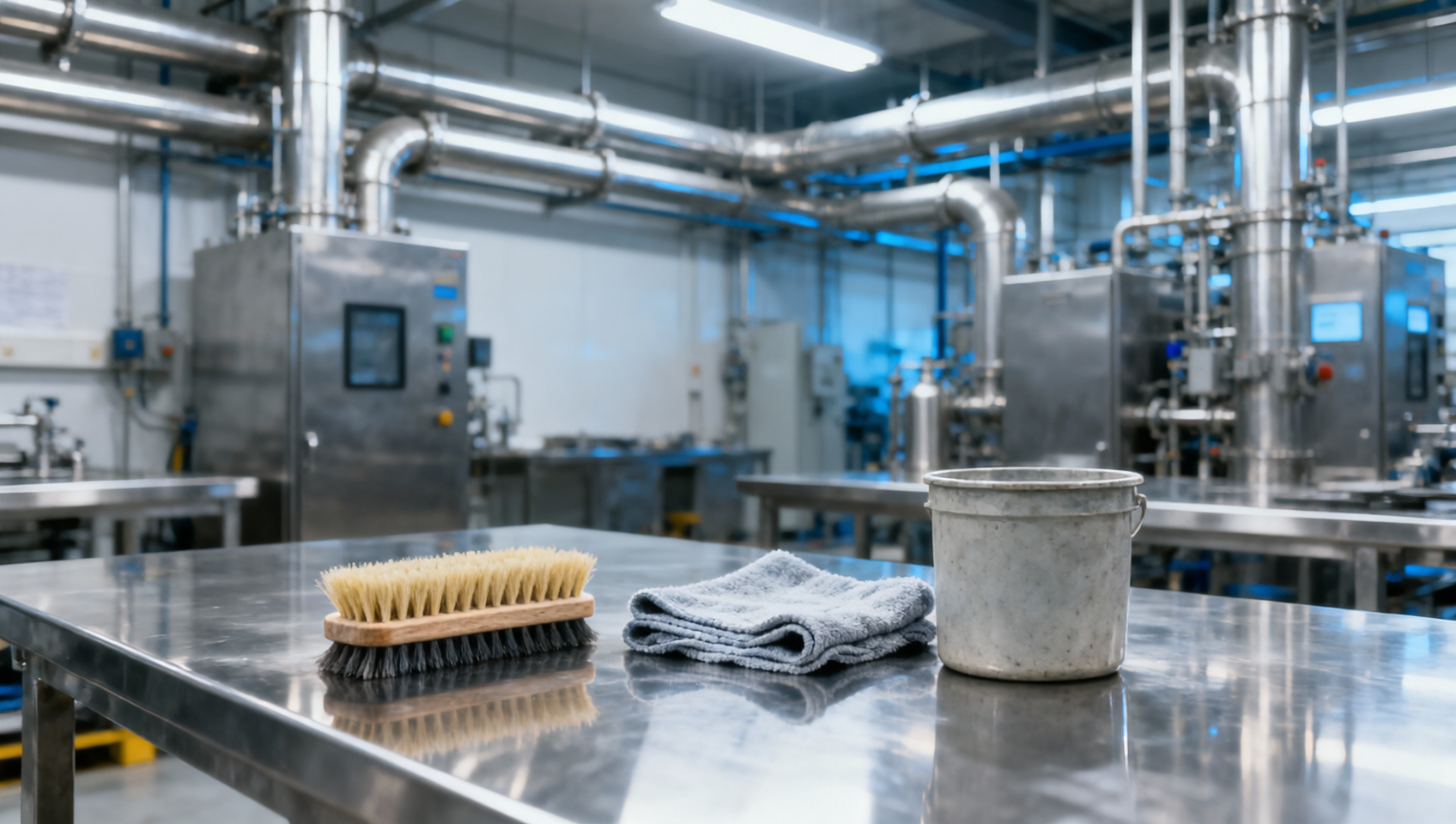
Preclean surfaces because grease, dust, and organic residues can shield microorganisms and interfere with disinfectant performance. A surface that looks acceptable may still need cleaning.
When using dodecyl dimethyl benzyl ammonium chloride for surface disinfection, removing these barriers helps the disinfectant reach microorganisms under the conditions specified on its label.
For operators in food processing, daily chemical production, and other industrial settings, consistent cleaning supports more dependable disinfection and makes hygiene procedures easier to verify.
This article explains what residues interfere with treatment, how to prepare surfaces, and which checks matter before applying the labeled concentration for the required contact time.
What actually prevents the disinfectant from working?
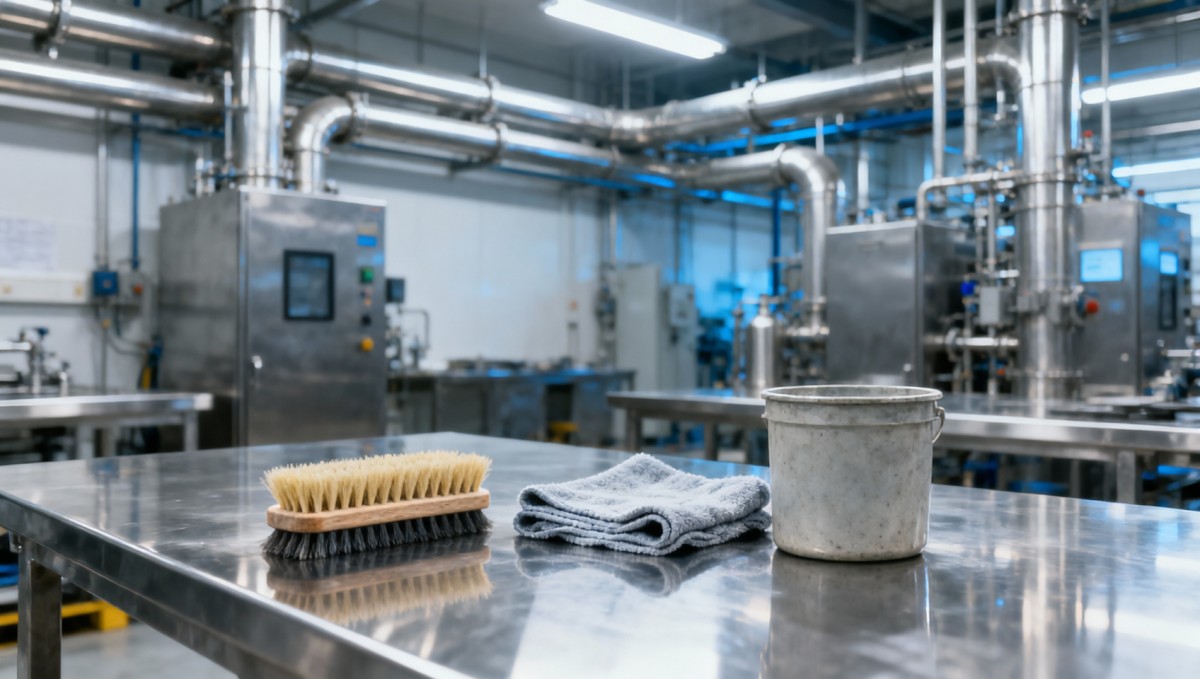
Dodecyl dimethyl benzyl ammonium chloride is a quaternary ammonium compound, commonly called a quat. In suitable disinfectant formulations, it acts primarily by disrupting microbial membranes.
That action depends on the formulation reaching susceptible microorganisms. Food deposits, oily films, and accumulated grime can separate organisms from the liquid applied over them.
Organic material may also bind or otherwise interfere with disinfectant ingredients. The effect varies with the soil, formulation, concentration, and conditions of use during treatment.
Consider a preparation table carrying dried protein and grease. Spraying it may wet the visible residue while leaving microorganisms beneath that residue insufficiently exposed to disinfectant.
Adding more disinfectant does not reliably resolve this problem. Physical removal of contamination addresses the barrier directly and prepares the surface for the next treatment.
Precleaning also removes some microorganisms along with soil. It reduces the contamination that remains, although cleaning alone should not be treated as equivalent to disinfection.
Does every surface need a separate cleaning step?
Visibly dirty surfaces generally require cleaning before disinfection. Whether separate cleaning is necessary on lightly soiled surfaces depends on the finished product label and site procedure.
Some registered products carry combined cleaner-disinfectant directions for defined conditions. Those directions may allow one application on specified surfaces when contamination remains within stated limits.
A combined product claim does not mean every deposit can remain. Heavy soil, dried food, grease buildup, and established films may still require preliminary removal.
Follow the exact directions for the product being used. Instructions from another quat disinfectant cannot automatically be transferred, even when the active ingredient sounds similar.
For example, a lightly soiled door handle and a mixer housing covered with oily residue present different cleaning demands, despite sharing the same production area.
If operators cannot determine whether contamination falls within a permitted one-step use, the approved site procedure should define when separate cleaning becomes necessary before disinfection.
Which residues should operators remove first?
Start with contamination associated with the process: proteins and fats in food production, oils in manufacturing, and formulation residues around daily chemical filling equipment and benches.
Dust and loose particles also matter. They can carry microorganisms, collect in joints, and interfere with even wetting when deposits accumulate on the surface being treated.
Dried residues often need mechanical action as well as detergent. Use the cleaning method approved for the equipment instead of repeatedly spraying disinfectant over stubborn deposits.
Mineral scale requires separate attention because ordinary detergents may not remove it. Select a compatible descaling procedure through the equipment instructions and the site's cleaning program.
Persistent slime or recurring contamination may indicate biofilm or inaccessible buildup. Routine wiping may be insufficient; investigate the source and use an appropriate corrective procedure.
A useful inspection follows the places contamination collects: gasket edges, undersides, handles, seams, drain-adjacent surfaces, and sheltered areas around fittings that ordinary wiping can miss.
A practical cleaning sequence before disinfection
First, prepare the area according to the operating procedure. Protect exposed products and packaging, and place equipment in the required safe state before cleaning begins.
Remove loose debris using a method suitable for the environment. Avoid techniques that spread contamination onto nearby clean surfaces or into exposed materials during debris removal.
Apply the approved detergent at its specified dilution and temperature. Allow any required cleaning time, then scrub or wipe to loosen and remove attached deposits.
Choose tools that reach the relevant surfaces without damaging them. Separate tools for different hygiene zones where the site procedure requires this control during cleaning.
Remove loosened soil instead of redistributing it. Replace dirty wipes or cleaning solution as needed, and follow the approved method for collecting contaminated wash water.
Rinse when required by the detergent instructions and cleaning procedure. Pay attention to joints and recessed areas where detergent or loosened debris can remain trapped.
Inspect the prepared surface before proceeding. If deposits remain, repeat the appropriate cleaning step rather than treating disinfection as a substitute for incomplete soil removal.
Manage standing rinse water according to the disinfectant instructions. Excess water can dilute the working solution, while some labeled procedures may permit application to damp surfaces.
Can detergent residue interfere with quat disinfectants?
Yes. Many quaternary ammonium compounds are incompatible with anionic surfactants found in certain detergents. Residues can reduce activity even after the obvious dirt has disappeared.
This does not mean all detergents are unsuitable. Compatibility depends on the complete cleaner and disinfectant formulations, along with the intended rinse and application procedures.
Check supplier guidance when selecting a cleaning product for use before a quat disinfectant. Do not assume compatibility from color, fragrance, or a general-purpose description alone.
Never mix detergent and disinfectant unless the finished product instructions explicitly permit it. Unapproved mixing can alter performance and introduce avoidable exposure or equipment problems.
Persistent foam, slippery films, or visible streaks can suggest incomplete rinsing, but their absence does not prove that every interfering residue has been removed successfully.
Where residue control matters, use the verification method established by the site. This may include defined rinse conditions or a validated measurement appropriate to the process.
What must be checked when applying the disinfectant?
Use dodecyl dimethyl benzyl ammonium chloride for surface disinfection only through a finished product suitable and authorized for the intended application in your operating jurisdiction.
A raw material name does not establish an effective use dilution. The finished formulation determines applicable surfaces, organism claims, preparation instructions, and the required contact time.
Measure the working solution according to the label. Use a suitable concentration test when required, ensuring its range and chemistry match the disinfectant formulation being checked.
Check water quality where the instructions specify limits. Hardness, contamination, or unsuitable dilution water may affect performance, depending on how the particular product is formulated.
Apply enough solution to cover the entire target area. Uneven coverage leaves untreated locations, particularly around edges, seams, and surfaces that are difficult to access.
Keep the surface wet for the full labeled contact time. If it dries early, follow the label or approved procedure for restoring the required treatment conditions.
Use required protective equipment and ventilation. Avoid creating unnecessary mist, and follow the safety data sheet when handling concentrates, preparing solutions, or addressing accidental exposure.
What changes on food-contact surfaces?
Food-contact applications require particular attention to the product's authorized use. A disinfectant suitable for general industrial surfaces may not be appropriate for direct food-contact equipment.
Cleaning, sanitizing, and disinfecting are distinct operations with different claims and requirements. Select the treatment specified by your food safety program and applicable product directions.
Check whether a potable-water rinse is required after treatment. Do not infer that a product is suitable for no-rinse use simply because it contains a quat.
Before returning equipment to service, complete every required rinse, drainage, or drying step. Protect treated surfaces from dirty tools, hands, splash, and nearby processing activity afterward.
Keep production and cleaning activities coordinated so exposed ingredients or packaging cannot receive spray. Define who releases equipment for use after the hygiene procedure is completed.
How can operators tell whether precleaning was effective?
Begin with a structured visual check under adequate lighting. Look for deposits, grease, discoloration associated with residue, and contamination in locations that routinely escape cleaning.
Visual inspection is necessary but limited. A surface can look clean while carrying residues or microorganisms that are too small or transparent to see readily.
ATP testing can support checks of cleaning performance when used within a defined program. It does not directly prove that a disinfectant achieved its microbial claims.
Targeted residue tests may help where proteins, allergens, or specific process materials matter. Select the test according to the hazard being controlled and its limitations.
Microbiological sampling can support verification and investigation when appropriately designed. Sampling locations, timing, recovery methods, and acceptance criteria all influence what the results actually demonstrate.
Record failed checks and corrective actions. Repeated failures at the same location should trigger investigation of equipment access, tool selection, cleaning technique, or contamination sources.
Why more disinfectant is rarely the right correction
When hygiene results are poor, first examine whether cleaning was complete. Increasing concentration cannot reliably overcome physical shielding, incompatible residues, missed surfaces, or shortened contact time.
Using stronger solutions than the label allows can increase exposure, residue, material compatibility concerns, and operating cost. It may also breach the authorized use conditions.
Check the process in sequence: soil removal, rinsing, solution preparation, coverage, wet contact time, and protection after treatment. Each stage presents a different potential failure point.
If problems continue after these checks, review the disinfectant's organism claims and surface limitations. Some microorganisms or conditions require a different authorized product or treatment.
For example, many quat formulations do not provide sporicidal activity. Precleaning improves preparation, but it cannot extend the finished product's validated spectrum of antimicrobial performance.
Keep routine hygiene separate from chemical spill cleanup
Industrial sites may handle chemical raw materials alongside areas requiring routine hygiene. Process contamination must be assessed before an ordinary detergent or aqueous disinfectant is applied.
For example, Toluene Diisocyanate CAS#26471-62-5 is a polyurethane raw material, including 80/20 grades used in flexible foam production. Its residues require a chemical-specific response.
It is not a surface disinfectant. Isocyanate contamination requires trained handling and the approved spill procedure because contact with water can produce hazardous reactions and gas.
Operators should consult the relevant safety data sheet and site response instructions before cleaning suspected process leaks. Routine sanitation instructions do not replace those controls.
When sourcing materials from Luxi Chemical (Shandong) Co., Ltd., request documentation relevant to the actual product and intended application, including current safety and handling information.
Make cleaning the foundation of dependable disinfection
Precleaning matters because disinfectants need access to the surface and microorganisms. Removing soil and incompatible residues establishes the conditions under which the labeled treatment can work.
For operators, the practical decision is straightforward: inspect the contamination, follow the approved cleaning procedure, and verify preparation before beginning the specified disinfection step each time.
Then control dilution, complete coverage, wet contact time, and any required final rinse. Treat these requirements as connected steps rather than independent boxes on a checklist.
Consistent results come from a suitable product used on a properly prepared surface. When treatment fails, investigate the complete procedure before changing concentration or application frequency.






