


Evaluating dodecyl dimethyl benzyl ammonium chloride for cooling water biofilm control
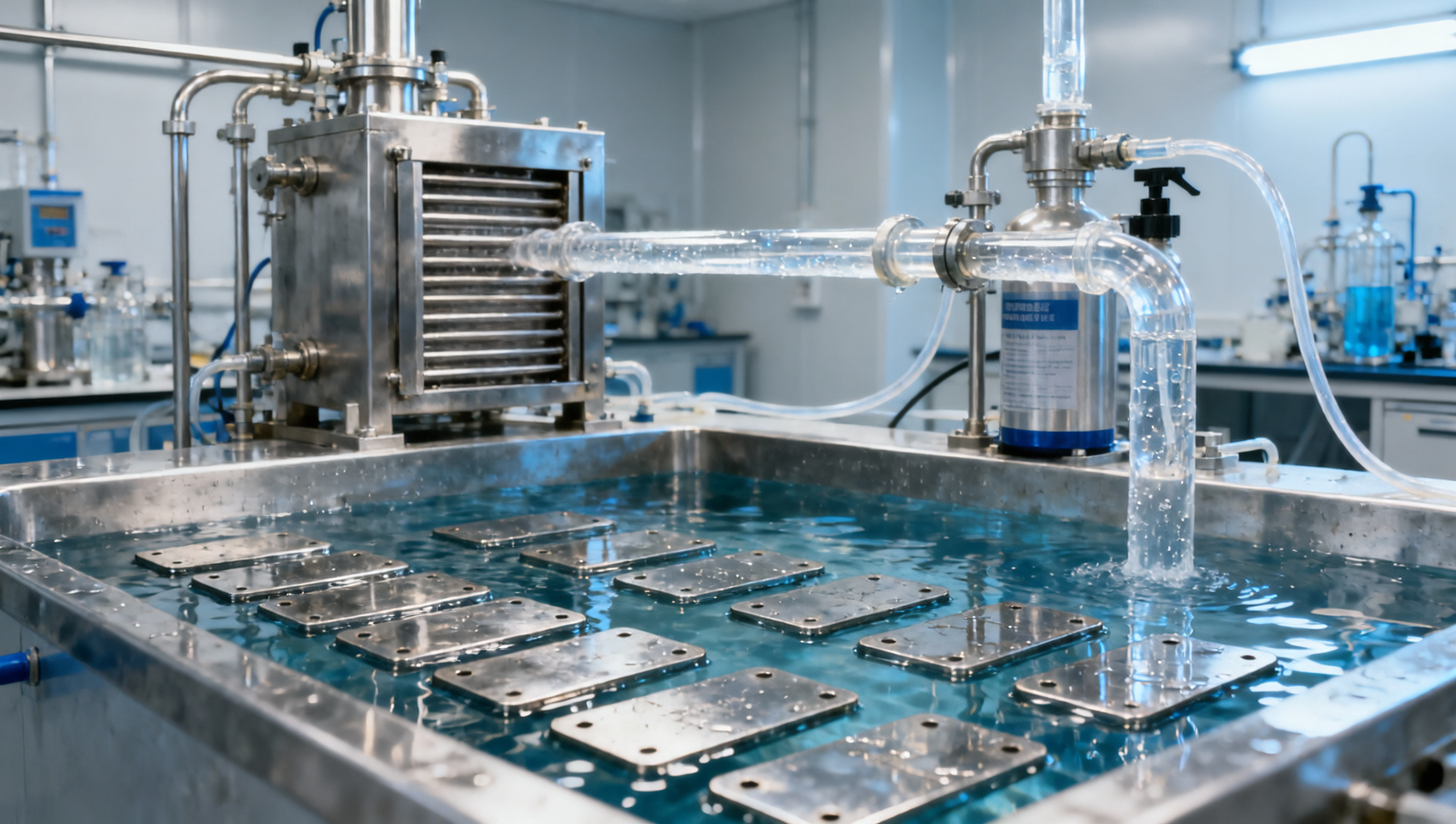
Dodecyl dimethyl benzyl ammonium chloride can be a candidate non-oxidizing biocide for cooling water biofilm control, but it should not be selected on nominal dose alone. Its suitability depends on whether an effective concentration reaches fouled surfaces, remains available for sufficient contact time, and works without unacceptable foaming, treatment incompatibility, or discharge constraints. Established deposits may require cleaning before chemical treatment can provide reliable control.
A cooling circuit can show acceptable bulk-water microbial results while heat exchanger surfaces remain slimy and heat transfer deteriorates. Biofilms shelter microorganisms within a protective matrix, so reducing organisms suspended in the water does not necessarily resolve surface fouling or microbiologically influenced corrosion risk. Evaluating dodecyl dimethyl benzyl ammonium chloride for water treatment therefore requires surface-based evidence alongside water sampling and operating data.
Establish what the chemical can—and cannot—do
Dodecyl dimethyl benzyl ammonium chloride is a quaternary ammonium compound, often described as a QAC. Its cationic, surface-active character supports interaction with microbial cell envelopes, disrupting membrane function. That mechanism makes it relevant to antimicrobial treatment, but activity against freely suspended cells does not establish equivalent performance against mature cooling water biofilms.
The extracellular matrix, accumulated solids, and corrosion products can restrict access to embedded organisms. Some active ingredient may also bind to deposits rather than remain available in the water. Killing exposed cells is not the same as removing the matrix or restoring heat transfer. A program that leaves dead biomass attached can still retain fouling material and support subsequent recolonization.
Confirm chemical identity before comparing supplier proposals. A specified C12 compound is not automatically interchangeable with a benzalkonium chloride product containing a distribution of alkyl-chain lengths. Request the active composition, assay, formulation ingredients, and analytical method. Compare products on verified active content, not delivered liquid volume or an abbreviated commercial name.
Read the cooling system before selecting a treatment
Begin with the location and character of the fouling. Slime on tower fill, deposits inside exchanger tubes, and growth in low-flow branches present different exposure conditions. A basin sample may represent circulating water reasonably well but reveal little about a poorly swept surface or intermittently operated exchanger.
Record operating temperature, pH, conductivity, cycles of concentration, suspended solids, organic loading, and relevant treatment residuals. Add the system volume, recirculation pattern, makeup rate, blowdown behavior, and stagnant sections. These observations help distinguish chemical demand from delivery failure: increasing the dose cannot reliably compensate for a branch that receives little treated water.
Where heat transfer is already impaired, assess the need for physical cleaning before running a maintenance-treatment trial. Otherwise, a potentially useful preventive biocide may be judged against an unrealistic requirement to remove a mature, mixed biological and mineral deposit by itself.
Compatibility determines the usable exposure
The concentration introduced at the dosing point is not necessarily the concentration available at the biofilm. Organic contamination, suspended solids, and adsorption onto surfaces can reduce availability. Hardness, dissolved salts, pH, and temperature may influence performance or formulation behavior; establish their effects using representative cooling water rather than assuming results from clean laboratory water will transfer.
Anionic treatment ingredients deserve particular attention. A cationic QAC may interact with some anionic dispersants, polymers, or surfactants, potentially causing precipitation, loss of activity, or altered deposit control. Review the complete inhibitor and dispersant package with the suppliers. A visual compatibility check is useful, but a clear mixture alone does not prove preserved antimicrobial performance.
Assess any oxidizing biocide schedule separately. Do not combine concentrates or assume simultaneous dosing is acceptable. Confirm formulation compatibility, safe injection arrangements, and the intended sequence through product documentation and testing. A coordinated program may use different treatment functions, but the sequence must have a technical basis.
Material compatibility also belongs in this review, especially where equipment incorporates polymer coatings, liners, or seals. For a separate materials-development task, Polyvinyl Chloride Paste Resin CAS#9002-86-2 is a PVC powder described as forming stable pastes with plasticizers and supporting applications such as coatings and molding. It is not a cooling water biocide or biofilm-removal additive. Compatibility must be assessed for the finished formulation, including plasticizers and other ingredients, rather than inferred from the base resin name.
A trial that distinguishes microbial control from deposit removal
A useful evaluation progresses from representative-water screening to surface testing and then a controlled operational trial. Each stage should answer a defined question. Avoid moving directly from a laboratory kill result to system-wide application, particularly when the existing problem is attached growth rather than elevated suspended counts.
- Establish a baseline. Record water chemistry, current treatments, microbial indicators, visible deposits, heat-transfer performance, and corrosion observations. Sample consistent locations under comparable operating conditions.
- Screen chemical demand and compatibility. Test the actual formulation in site water with the existing treatment chemicals. Examine precipitation, foam, and active availability using a method suitable for the matrix.
- Evaluate attached growth. Use representative biofilm-bearing coupons or an appropriate recirculating test arrangement. Include untreated controls and, where practical, the current treatment as a comparator.
- Separate treatment outcomes. Measure changes in viable attached organisms, remaining biomass, and regrowth after exposure. Reduced viability without reduced deposit burden should not be reported as equivalent to cleaning.
- Run a bounded field trial. Define authorized dosing conditions, sampling locations, stop criteria, and operating limits before introducing the product.
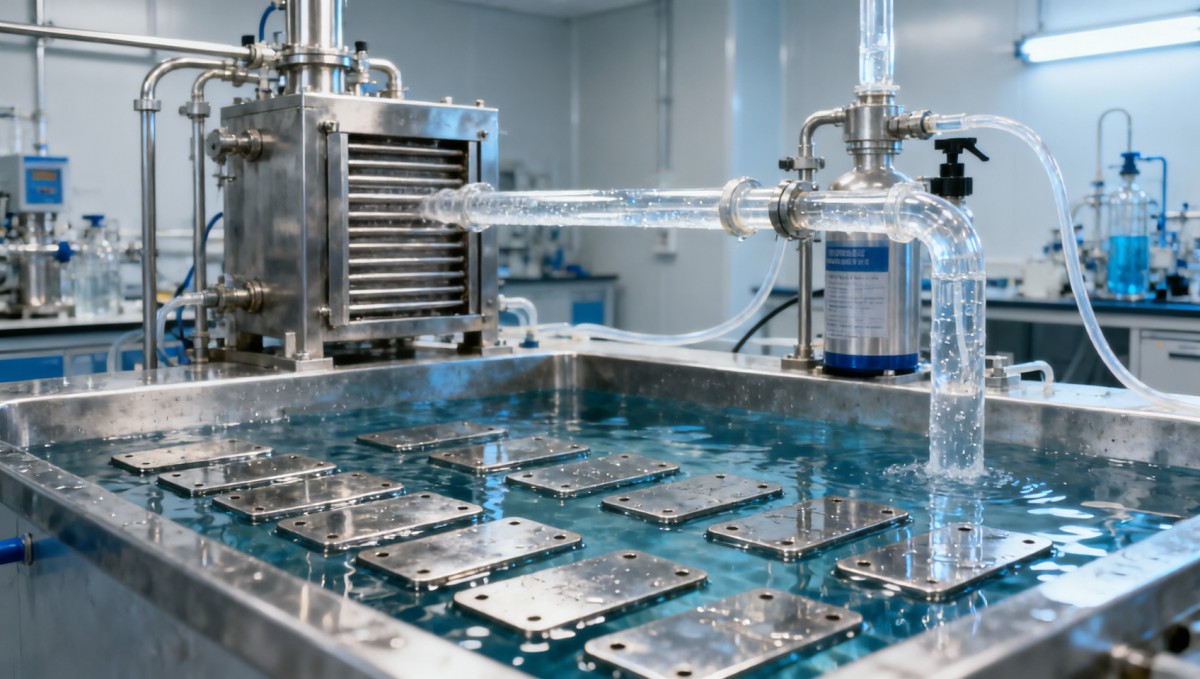
Contact time should reflect achievable system conditions. A laboratory sample held at a constant concentration can overstate exposure in a cooling circuit subject to blowdown, dilution, adsorption, and uneven mixing. Where possible, characterize concentration over time rather than recording only the initial addition.
Sampling procedures can materially change the apparent result. Residual biocide carried into a sample may continue killing organisms during transport or analysis, producing misleadingly low counts. Use validated neutralization and recovery procedures appropriate to the formulation and test method. Confirm that the neutralizer stops antimicrobial activity without suppressing organism recovery itself.
No single measurement establishes success. Culture results describe organisms recovered under the selected conditions; ATP provides an indicator of biological activity but does not identify organisms or prove biofilm removal. Surface inspection, coupon measurements, and operating performance provide complementary evidence. Interpret heat-transfer changes against comparable load and flow conditions.
Translate trial results into an operating decision
The case for selection is strongest when the candidate reduces attached viable biomass, limits rebound between treatments, and remains manageable within the existing chemical program. A short-lived reduction in basin counts, followed by rapid surface regrowth, indicates that exposure, deposit removal, or the wider control strategy still needs attention.
Set acceptance criteria before reviewing results. Otherwise, an impressive-looking result from one convenient metric can overshadow the original operating problem. Criteria should reflect site priorities and measurement capability rather than an arbitrary universal target.
- Biological performance: repeatable improvement in attached-growth indicators at representative locations, with an acceptable regrowth pattern.
- Operational performance: no unacceptable foam, precipitation, filter loading, or deterioration in heat-transfer and corrosion indicators.
- Delivery reliability: practical injection, mixing, and contact time under normal makeup and blowdown conditions.
- Environmental feasibility: a permitted use pattern and a workable approach to residuals in blowdown.
Calculate any proposed addition from verified active fraction and the relevant treated volume, then account for system losses and demand. A dosing rate from another tower is not a transferable specification. Use the authorized product instructions and site validation to define concentration, frequency, and exposure; do not extrapolate an antimicrobial threshold from a clean-water test.
Compare alternatives against the same operating problem. An oxidizing program may be suitable where demand and materials permit. Another approved non-oxidizing biocide may offer a better fit for site chemistry or microbial response. Cleaning, flow correction, and a compatible biodispersant may be necessary alongside antimicrobial treatment. A dispersant can assist deposit management but should not be treated as a substitute for microbial control.
Safety, blowdown, and aerosol exposure are selection gates
Review the safety data sheet for the supplied formulation, not just the active ingredient. Concentrated QAC products can present significant skin and eye hazards, and handling requirements depend on concentration and formulation. Evaluate transfer arrangements, splash protection, storage segregation, spill response, and operator training before a trial begins.
QACs can pose aquatic toxicity concerns. Blowdown evaluation must address applicable discharge conditions and any effect on downstream wastewater treatment. Adsorption to solids does not demonstrate harmlessness, and dilution alone does not establish compliance. Confirm the product's authorization for the intended industrial use in the relevant jurisdiction.
Cooling towers also create aerosol exposure pathways. General heterotrophic counts or ATP results do not establish control of Legionella. Where that hazard is relevant, retain a dedicated water-management program with appropriate monitoring and corrective actions. Evidence supporting routine biofilm control should not be presented as a validated public-health control claim.
What the purchase specification should require
A technically useful specification should identify the intended active composition, acceptable assay range, formulation type, and lot-verification documentation. Request current safety information, handling requirements, storage guidance, analytical support, and evidence relevant to the proposed cooling water use. Unsupported claims such as “broad-spectrum” or “excellent biofilm penetration” should not replace test conditions and measurable endpoints.
Commercial comparisons should account for active content, delivery requirements, treatment frequency, and any additional cleaning or foam-management burden demonstrated during evaluation. A lower price per unit of delivered product may not mean lower cost per acceptable operating outcome.
Approve the candidate only within the operating envelope the evidence supports. Record the water chemistry, treatment combinations, hydraulic conditions, and fouling state covered by the trial. Changes in makeup water, organic contamination, dispersant chemistry, or equipment duty can invalidate that basis. When those conditions change, reassess compatibility and surface performance before increasing the treatment rate.
Related Picks
 Butylated Hydroxytoluene Price Drivers: Supply, Purity, and Purchasing Risk FactorsOct 21, 2026Butylated Hydroxytoluene price trends depend on supply stability, purity, logistics, and purchasing risk. Learn how to compare quotes wisely and reduce sourcing costs.
 Sodium Tripolyphosphate Price Trends: Raw Material and Energy ExposureOct 20, 2026Explore sodium tripolyphosphate price trends, from phosphate and soda ash costs to energy exposure. Learn how to compare quotes, manage sourcing risks, and make smarter purchasing decisions.
 Acetonitrile Shipment to Vietnam Successfully Dispatched; RCEP Benefits Boost Fine Chemical Trade with ASEANSep 16, 2026A shipment of industrial-grade acetonitrile from our company has recently been loaded and dispatched following the completion of standardized hazardous material packaging and container securing procedures.
 Nigerian Client’s Order of 4 Containers of Vinyl Acetate Successfully Loaded and Shipped to West AfricaSep 16, 2026We recently completed the loading of a vinyl acetate order for a Nigerian client; four containers of the product have been successfully packed and are ready for shipment to Nigeria.




Question Consultation
Send Us Your Inquiry Today

Luxi Chemical is a professional chemical product supplier with ample stock of all chemical categories and excellent quality, welcome your purchase inquiry.

