


When rigid PVC performs better than flexible compounds in outdoor use
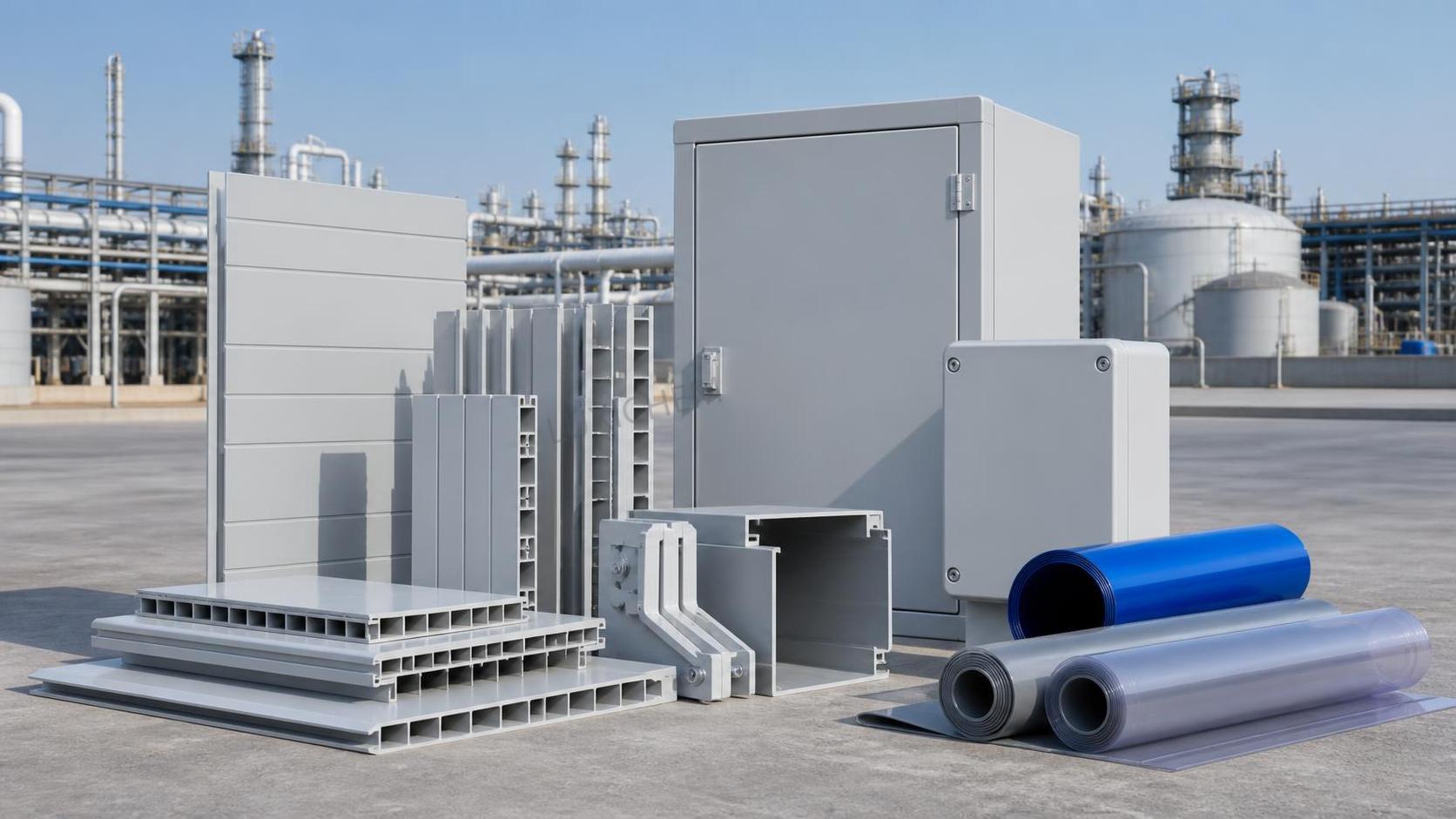
Outdoor material selection rarely fails because a team ignored the obvious. More often, it fails because a compound that looked acceptable on a datasheet behaved differently after months of sunlight, rain, heat cycling, dust, cleaning chemicals, or mechanical fastening. For technical evaluators comparing polymers for housings, profiles, liners, signs, agricultural components, and industrial fittings, pvc rigid often delivers a more dependable balance of shape retention, weatherability, and life-cycle cost than flexible alternatives. That does not mean rigid PVC is always the right answer. It means that in outdoor use, the decision usually comes down to which failure mode you can least afford: warping, softening, migration, cracking, discoloration, or premature replacement.
In many procurement discussions, “PVC” is treated as a single family with minor variations. In practice, the difference between rigid and flexible compounds is fundamental. Flexible PVC depends on plasticizers to achieve softness and bendability. Rigid PVC, by contrast, is formulated without those softening additions or with minimal modification, giving it a harder, more dimensionally stable structure. Once the application moves outside, that difference starts to matter more than many buyers expect.
The key question is not whether flexibility is useful. Of course it is. The real question is whether the outdoor part must keep its geometry, fastening integrity, appearance, and mechanical function over time. If the answer is yes, rigid PVC often moves ahead quickly in the evaluation process.
Why outdoor exposure changes the selection logic
Indoor material comparisons can emphasize feel, ease of installation, or short-term cost. Outdoor use is less forgiving. Temperature swings create expansion and contraction. UV exposure accelerates aging. Wind loads and fastening points create localized stress. Surface contamination may require periodic washing. In agricultural and chemical-adjacent environments, fertilizer dust, splashes, and atmospheric pollutants can also influence long-term performance.
Under those conditions, flexible compounds may face a familiar set of issues: gradual plasticizer migration, reduced hardness consistency over time, surface tackiness in some formulations, and changes in mechanical behavior after prolonged heat exposure. Not every flexible PVC compound fails this way, but the evaluator has to ask a tougher question: how stable is the formulation after years outdoors, not just after initial installation?
Rigid PVC is often favored because it reduces that uncertainty. Its formulation architecture is naturally aligned with applications where maintaining profile shape, panel flatness, and connection stability matters more than bend radius or soft-touch handling.
Where rigid PVC usually performs better than flexible compounds
1. Dimensional stability
For outdoor panels, conduit-like parts, edge trims, siding profiles, and fabricated covers, dimensional stability is not a minor characteristic. It affects fit-up, sealing, appearance, and installation labor. pvc rigid generally holds form better than flexible compounds under heat and load, making it a stronger option where sagging, curling, or deformation would cause downstream problems.
2. Fastening and structural retention
Many outdoor parts are screwed, riveted, slotted, or mechanically supported. A soft compound may absorb fastening force differently, especially after heat aging. Rigid PVC is usually better suited where holes, edges, and joining surfaces must remain stable and resist pull-through or distortion in service.
3. Surface durability in exposed environments
Flexible materials can be attractive when impact absorption or bendability is needed, but they may also show more visible change over time depending on formulation quality and exposure severity. Rigid PVC often provides a cleaner, more stable surface for exterior components that need to preserve appearance and remain easy to clean.
4. Better fit for fabricated outdoor parts
Technical teams evaluating machining, cutting, routing, welding, or profile extrusion often find rigid PVC easier to align with precision outdoor applications. If the end product requires a stable cross-section or consistent sheet behavior, rigid grades typically make process control more predictable.
5. Long-term cost efficiency
Initial price per kilogram does not tell the full story. If flexible compounds require more frequent replacement, tighter maintenance attention, or generate fit issues after weather exposure, the lower upfront number can become misleading. Rigid PVC often wins not because it is always cheaper to buy, but because it can be cheaper to keep in service.
The trade-offs evaluators should not ignore
There is no value in pretending rigid PVC solves everything. It does not. If your application requires repeated bending, soft sealing behavior, impact absorption at low thickness, or ergonomic handling, flexible PVC may still be the better choice. Technical evaluation becomes more credible when the team identifies the exact job the material must do rather than defaulting to “outdoor equals rigid.”
Rigid PVC can also be sensitive to impact performance depending on grade, thickness, and temperature conditions. That means outdoor selection should include not only weather exposure analysis but also expected abuse, handling during installation, and the shape of the component itself. A rigid profile mounted high on a frame faces a different risk pattern than a low-mounted guard exposed to repeated knocks.
In other words, rigid PVC performs better outdoors when the primary requirement is to stay stable. It performs less convincingly when the primary requirement is to flex, cushion, or stretch.
How technical evaluators can compare the two more realistically
A useful evaluation starts by replacing generic questions with practical ones. Instead of asking, “Which PVC is better outdoors?” ask:
- Will the part carry its own weight over time, or is sagging acceptable?
- Does the part need to preserve a precise shape for sealing, mating, or alignment?
- Will it be exposed to direct sunlight, reflected heat, or dark-surface temperature buildup?
- Are there chemicals, fertilizers, cleaners, or industrial residues in the environment?
- Is appearance retention important, or is function the only concern?
- Will the part be replaced easily, or is service interruption costly?
This framework matters across chemical and industrial supply chains, where one material may serve multiple downstream sectors. A distributor or sourcing team supporting agriculture, food-processing support equipment, or general industrial fabrication must think not only about resin category but also about real-use conditions. Companies with broad chemical sourcing experience often see this pattern early: the best material choice is usually the one that reduces uncertainty across different environments, not just the one that passes a narrow initial test.
That same logic applies when evaluating related raw materials used in industrial production. For example, technical buyers reviewing process materials alongside polymer selections may also compare specialized products such as Cryolite CAS#15096-52-3 for specific industrial uses. While unrelated in function to PVC compounding decisions, it reflects a broader procurement reality: evaluation is rarely isolated to one item. Teams often prefer suppliers that can support multiple chemical categories with stable documentation and consistent delivery coordination.
Common mistakes in outdoor PVC selection
Assuming all flexible PVC grades behave similarly.
Two flexible compounds can look comparable at the start and diverge significantly after outdoor exposure. Plasticizer system, stabilizer package, pigmentation, and processing quality all matter.
Overvaluing short-term handling comfort.
A softer material may be easier to install or more forgiving during assembly, but if that softness contributes to long-term distortion, the convenience is temporary.
Ignoring color and heat buildup.
Dark outdoor surfaces can run hotter, which increases the importance of heat resistance and dimensional stability. Rigid PVC often benefits from better geometry retention under these conditions, though formulation still matters.
Evaluating material in isolation from part design.
Wall thickness, rib design, fastening method, unsupported span, and orientation to sun exposure all influence results. A well-designed rigid PVC component may outperform a poorly designed flexible one by a wide margin, but the opposite can also happen if geometry is neglected.
Treating UV resistance as automatic.
Rigid PVC often has a strong outdoor case, but it still requires an appropriate formulation for UV and weather exposure. “Rigid” is not a complete specification.
Applications where rigid PVC often earns the preference
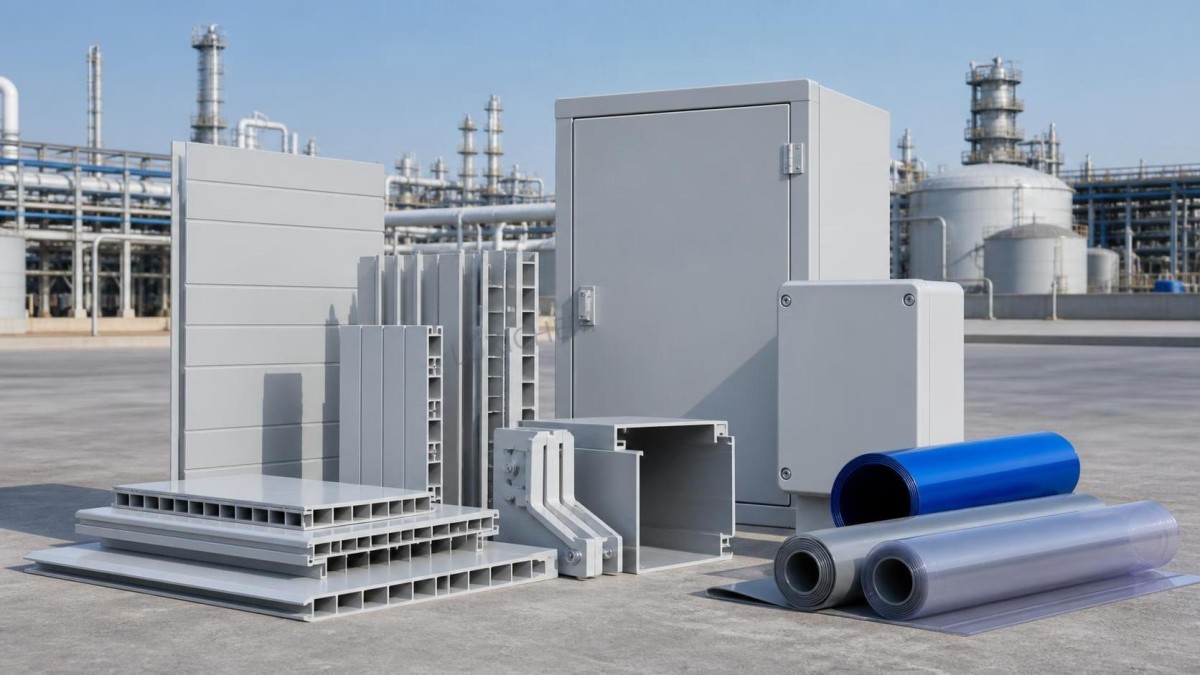
Technical evaluators commonly lean toward rigid PVC for outdoor sheets and profiles, protective covers, signage substrates, utility-related housings, agricultural channel components, ventilation elements, and fabricated parts where shape retention is central to function. In these cases, the material is not expected to flex repeatedly. It is expected to hold.
In agriculture and chemical-handling surroundings, that distinction becomes especially important. Exposure may not always be dramatic, but it is persistent: sunlight, dust, moisture, cleaning cycles, and occasional chemical contact create a cumulative burden. A part that slowly changes shape can cause drainage issues, poor fit, loosened attachments, or reduced service life. Rigid PVC is often selected because it resists that slow drift better than flexible compounds designed for a different job.
What to ask a supplier before making the decision
For serious selection work, ask for more than a basic brochure. Technical evaluators should request clarity on formulation intent, weathering suitability, processing consistency, and expected application limits. Useful questions include:
- Is the grade intended for sustained outdoor exposure?
- How does the material perform in dimensional stability under heat?
- What stabilizer approach supports weather resistance?
- Are there known restrictions related to impact, thickness, or fabrication method?
- Can the supplier support consistent sourcing over time?
For global buyers, supply reliability can weigh almost as heavily as polymer properties. A technically correct grade that arrives inconsistently or varies across lots creates its own operational risk. This is where comprehensive chemical suppliers can offer practical value. Businesses such as Luxi Chemical (Shandong) Co., Ltd., with experience in chemical raw materials, compliant product supply, and international trade coordination across many markets, are often better positioned to support evaluation teams that need stable procurement rather than a one-off purchase.
A balanced decision, not a default preference
When rigid PVC performs better than flexible compounds in outdoor use, it is usually because the application rewards stability more than softness. That may sound simple, but it captures the core decision logic: if the part must preserve shape, maintain fastening integrity, resist gradual formulation-related change, and stay serviceable through weather exposure, pvc rigid is frequently the more reliable choice.
Flexible compounds still have an important place outdoors, especially where movement, sealing, or impact absorption are essential. But for technical evaluators making selection decisions under real operating constraints, rigid PVC often reduces long-term doubt. And in outdoor applications, reducing doubt is not a small advantage. It is often the difference between a material that merely works at installation and one that continues to work when the environment starts testing every assumption behind the specification.
Related Picks
 Butylated Hydroxytoluene Price Drivers: Supply, Purity, and Purchasing Risk FactorsOct 21, 2026Butylated Hydroxytoluene price trends depend on supply stability, purity, logistics, and purchasing risk. Learn how to compare quotes wisely and reduce sourcing costs.
 Sodium Tripolyphosphate Price Trends: Raw Material and Energy ExposureOct 20, 2026Explore sodium tripolyphosphate price trends, from phosphate and soda ash costs to energy exposure. Learn how to compare quotes, manage sourcing risks, and make smarter purchasing decisions.
 Acetonitrile Shipment to Vietnam Successfully Dispatched; RCEP Benefits Boost Fine Chemical Trade with ASEANSep 16, 2026A shipment of industrial-grade acetonitrile from our company has recently been loaded and dispatched following the completion of standardized hazardous material packaging and container securing procedures.
 Nigerian Client’s Order of 4 Containers of Vinyl Acetate Successfully Loaded and Shipped to West AfricaSep 16, 2026We recently completed the loading of a vinyl acetate order for a Nigerian client; four containers of the product have been successfully packed and are ready for shipment to Nigeria.




Question Consultation
Send Us Your Inquiry Today

Luxi Chemical is a professional chemical product supplier with ample stock of all chemical categories and excellent quality, welcome your purchase inquiry.

