


Why PVC powder moisture can cause feeding and fusion problems
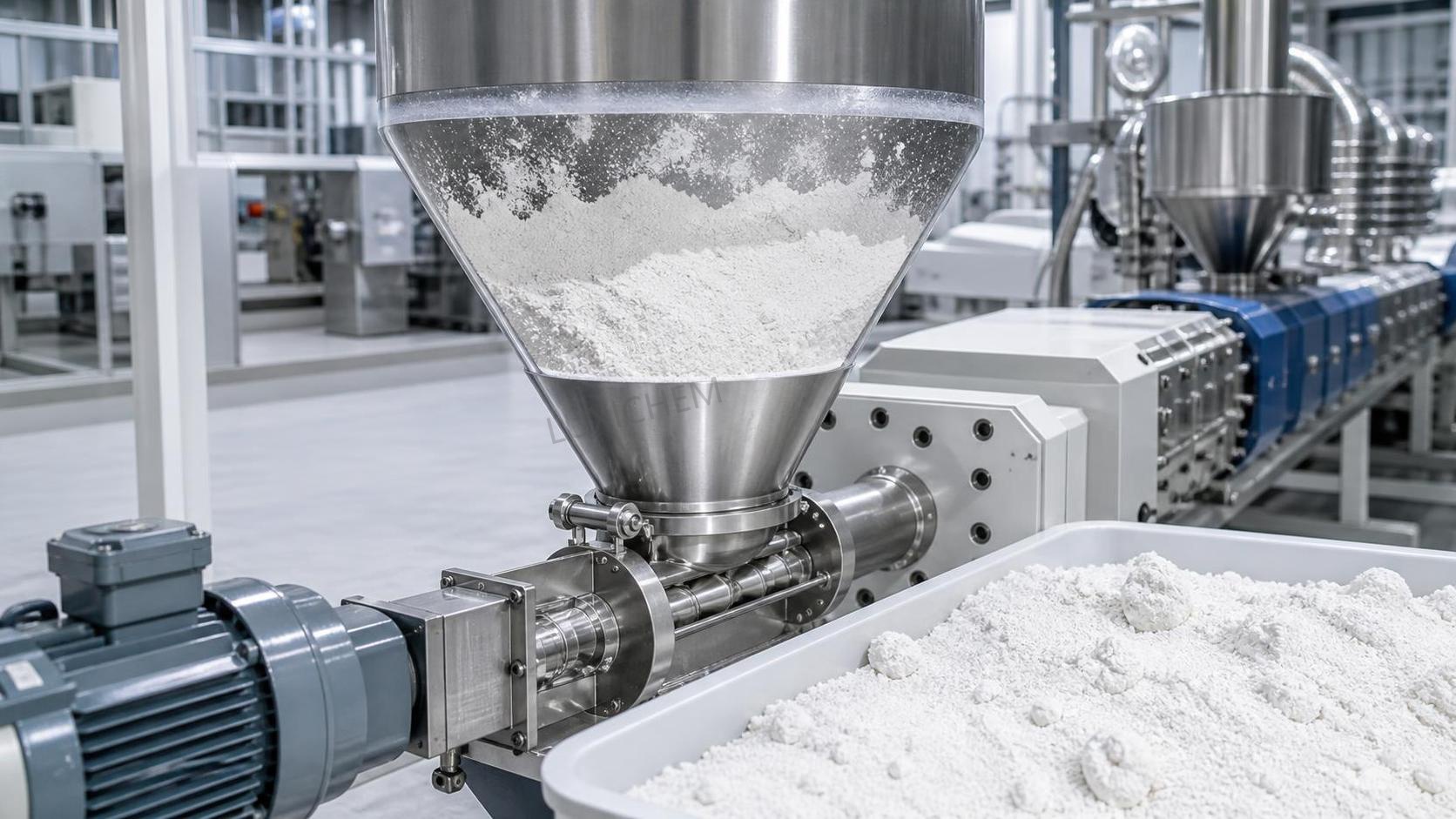
Anyone who has worked around a PVC line knows how frustrating a “small” raw material issue can become. The mixer seems fine, the feeder starts normally, and then the line begins to drift: output fluctuates, fusion comes late, amperage becomes unstable, and finished quality stops looking consistent. In many cases, the hidden cause is moisture in pvc powder. It is easy to underestimate because the material may still look free-flowing to the eye. Yet even a modest rise in moisture can change how the powder feeds, heats, compacts, and finally melts during processing.
For operators, technicians, and production users, understanding this link is not just a laboratory concern. It directly affects machine stability, scrap rate, cleaning frequency, and confidence on the floor. When moisture control is ignored, the problem often shows up as a process issue first, long before anyone confirms it as a raw material condition. That is why learning the warning signs and correction methods can save a great deal of time.
Moisture in pvc powder is often overlooked, yet it can quickly lead to unstable feeding, poor fusion, and inconsistent processing results. For operators and users in chemical production, understanding how even small amounts of moisture affect material flow and product quality is essential. This article explains the root causes, common warning signs, and practical ways to control moisture for smoother, more reliable PVC processing.
Why moisture changes the behavior of PVC powder so quickly
PVC powder is a fine particulate material, and fine powders are extremely sensitive to water. Moisture creates thin liquid bridges between particles. Once that happens, the powder no longer behaves like a clean, dry, free-flowing resin. Instead, it may begin to clump, compact unevenly, or stick to hopper walls, transfer lines, dosing screws, and feeding throats.
In a dry state, powder particles move in a more predictable way. Bulk density stays relatively stable, metering is easier, and the machine receives a more uniform feed. Add moisture, and the behavior changes in several directions at once. The powder can bridge in the hopper, flood irregularly after a blockage breaks, or build up on metal surfaces. That means the line does not receive a steady amount of material, even if the feeder settings remain unchanged.
This matters because PVC processing depends heavily on consistency. Fusion is not simply a heating event; it is the result of mechanical energy, temperature, formulation balance, and residence time all working together. If the feed becomes inconsistent, fusion becomes inconsistent too.
How moisture causes feeding problems on the production floor
Operators usually notice feeding issues before they think about moisture. The line may show one or more of these symptoms:
- Erratic feeder output or unstable screw fill
- Powder sticking in the hopper or around the feed throat
- Intermittent bridging and sudden slugs of material
- More dust deposits in unexpected places due to uneven flow
- Frequent need for manual tapping or intervention
Why does this happen? Moist powder does not settle uniformly. In some zones it compacts more tightly; in others it forms soft agglomerates. A gravimetric or volumetric feeder can only do its job well when the material flows in a repeatable manner. Once moisture interferes with that flow pattern, output starts chasing the powder instead of controlling it.
On high-throughput lines, this can create a chain reaction. The machine receives less material for a short period, then too much, then less again. Barrel loading changes, motor load shifts, and the thermal profile starts moving away from the ideal window. What looked like a feeder problem may actually be a raw material conditioning problem.
Why poor fusion often follows unstable feeding
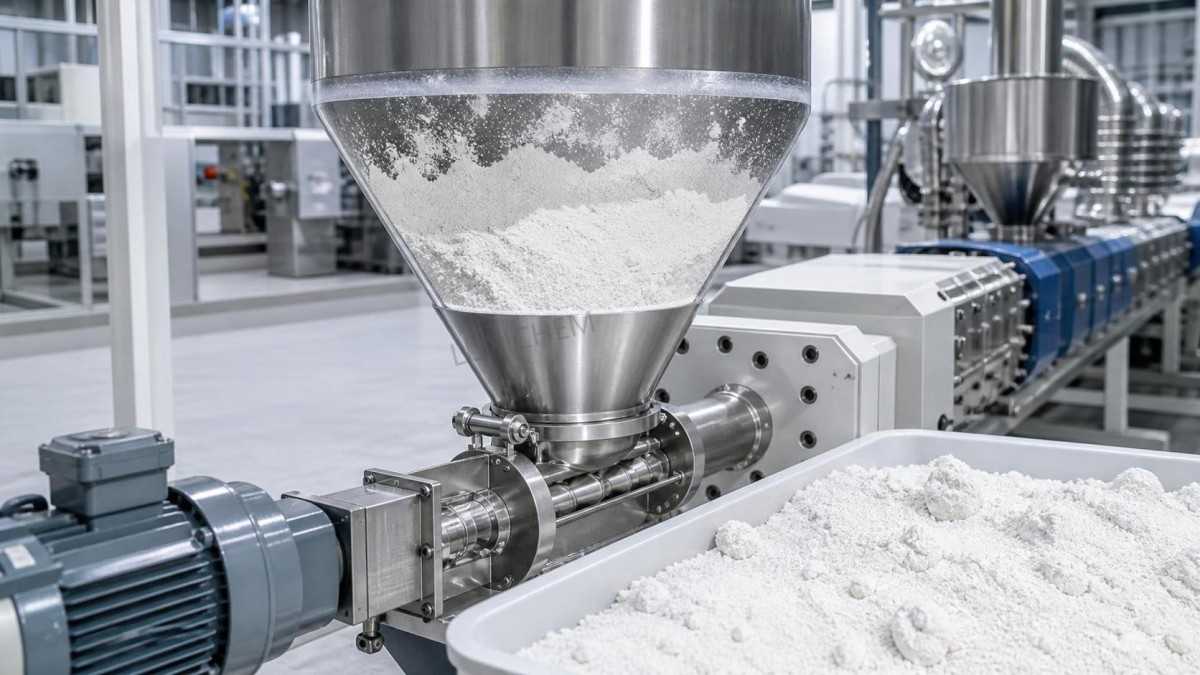
Fusion in PVC processing requires the resin and additives to absorb energy in a controlled way. When moisture is present, two things commonly interfere with this process.
First, water disrupts the even distribution of dry blend components. Additives may not stay as uniformly dispersed as expected, especially if the powder begins to cake or segregate. That affects lubrication balance and heat uptake. Second, part of the incoming energy is effectively wasted dealing with the moisture condition rather than going fully into consistent particle interaction and fusion development.
The result may appear as delayed fusion, a wider processing window than normal, or unstable fusion peaks from batch to batch. In practical terms, operators may notice that the material needs more time or more energy to reach the expected state. Sometimes the line still runs, but the process becomes “touchy.” Small changes in temperature or screw speed suddenly cause larger-than-usual effects. That is often a sign that the material is no longer behaving as a dry, predictable powder system.
In extrusion or compounding, poor fusion may show up in the product as weak surface appearance, roughness, dull finish, poor mechanical consistency, or variation between production runs. In severe situations, under-fused material can compromise downstream performance and increase rejection rates.
The early warning signs many users miss
Not every moisture problem announces itself clearly. Sometimes operators wait for visible clumps, but by then the process has already been affected. Earlier signs are usually more subtle:
- The hopper empties unevenly despite normal settings
- Amperage or torque begins to fluctuate more than usual
- Fusion timing drifts compared with a known-good batch
- Powder residue adheres more strongly during cleaning
- Product appearance varies without an obvious machine change
A useful habit is to compare current behavior with the line’s “normal rhythm.” Experienced operators often sense a moisture issue before instruments confirm it. The machine sounds different, the feed pattern looks less stable, and cleaning takes more effort. Those observations should not be dismissed as vague impressions; on many lines, they are the first practical indicators.
Where the moisture usually comes from
Moisture in pvc powder does not always originate from one dramatic event. More often, it builds through ordinary handling and storage conditions:
- Improper warehouse humidity control
- Temperature cycling that causes condensation in bags or containers
- Opened packaging left exposed too long before use
- Poor sealing during transport or internal transfer
- Material sitting near damp walls, wet floors, or unconditioned air
Seasonal changes can make this worse. During humid months, powder that performed well in one week may behave differently the next, even with the same formulation and equipment settings. This is one reason stable raw material management matters as much as machine setup. Companies that manage a broad range of chemical products for global supply, such as Luxi Chemical (Shandong) Co., Ltd., generally understand how packaging integrity, storage conditions, and logistics discipline influence downstream usability. In powder-handling industries, those details are not secondary; they are part of process reliability.
Even in businesses focused on multiple product categories, from industrial chemicals to specialized materials like Rifampicin CAS#13292-46-1, the same operational lesson applies: material condition on arrival affects what happens in the plant. A product can meet specifications on paper and still create trouble if storage and handling allow environmental exposure.
What to check before changing machine settings
When feeding and fusion problems appear, many teams first adjust temperature, screw speed, or feeder rate. Sometimes that helps temporarily, but it may also hide the root cause. Before changing the process too aggressively, check the material itself.
Start with the basics. Look inside the hopper, transfer bin, and packaging. Is there visible caking? Does the powder feel cooler or damper than usual? Are there signs of condensation inside liners or containers? Has the material been exposed after opening? Has the weather changed significantly since the previous batch?
Next, compare the suspect batch with a known dry batch if available. If the line stabilizes quickly after the material change, moisture becomes a strong suspect. Also review cleaning patterns. If feed components are accumulating sticky deposits faster than normal, that often supports the same conclusion.
These checks are simple, but they are valuable because they stop operators from tuning the machine around a preventable raw material issue.
Practical ways to control moisture and restore stable processing
Good moisture control is usually a combination of storage discipline, material handling, and line-side habits rather than one single correction.
Keep storage conditions steady
Store PVC powder in a dry, covered environment with controlled humidity whenever possible. Avoid temperature swings that encourage condensation. Do not place material where it can absorb moisture from floors, walls, or open air currents.
Protect opened material
Once packaging is opened, reseal it properly if the material will not be used immediately. Long exposure in humid conditions can quickly undo the value of proper upstream packaging.
Use first-in, first-out practices
Older stock is not always bad, but longer storage increases the chance of moisture pickup, especially if handling conditions are inconsistent. Good stock rotation reduces surprises.
Inspect conveying and feeding equipment
A moisture-sensitive powder will reveal weaknesses in hopper design, sealing, and transfer handling. Dead zones, rough surfaces, or poor covers can make the problem worse.
Condition material when needed
If your operation allows it, preconditioning or controlled drying may help recover usability. However, the method should match the material and process requirements. Overcorrection can create new issues, including static buildup or handling changes.
Common mistakes that make the problem worse
One common mistake is assuming that because the powder still moves, it must be dry enough. Another is increasing temperature too far in an attempt to force fusion. That may treat the symptom while increasing thermal stress elsewhere in the process.
Operators also sometimes overlook housekeeping conditions. Open containers near washdown areas, poorly sealed transfer points, and humid compressed air environments can all contribute to recurring trouble. If the same line keeps developing feeding instability, the answer may be in the surroundings rather than the formulation.
And finally, do not ignore communication between purchasing, warehousing, and production. Moisture issues are easier to prevent when incoming material handling is aligned from the moment the shipment arrives.
A more reliable way to think about PVC powder performance
When pvc powder feeds poorly or fuses inconsistently, the temptation is to focus on the machine because that is where the problem becomes visible. But the process starts earlier, with storage, packaging, transport, and line-side exposure. Moisture is often the quiet factor connecting all of them.
For users and operators, the most effective approach is practical rather than theoretical: notice the early signs, verify material condition before chasing machine settings, and tighten control over how the powder is stored and handled. Those steps do not just reduce downtime. They make the whole process more predictable, which is exactly what PVC production needs.
In day-to-day operations, consistency is what keeps output smooth and quality dependable. Dry, well-managed PVC powder gives the process a fair chance to perform as intended. Once moisture enters the system, feeding and fusion problems are rarely far behind.
Related Picks
 Butylated Hydroxytoluene Price Drivers: Supply, Purity, and Purchasing Risk FactorsOct 21, 2026Butylated Hydroxytoluene price trends depend on supply stability, purity, logistics, and purchasing risk. Learn how to compare quotes wisely and reduce sourcing costs.
 Sodium Tripolyphosphate Price Trends: Raw Material and Energy ExposureOct 20, 2026Explore sodium tripolyphosphate price trends, from phosphate and soda ash costs to energy exposure. Learn how to compare quotes, manage sourcing risks, and make smarter purchasing decisions.
 Acetonitrile Shipment to Vietnam Successfully Dispatched; RCEP Benefits Boost Fine Chemical Trade with ASEANSep 16, 2026A shipment of industrial-grade acetonitrile from our company has recently been loaded and dispatched following the completion of standardized hazardous material packaging and container securing procedures.
 Nigerian Client’s Order of 4 Containers of Vinyl Acetate Successfully Loaded and Shipped to West AfricaSep 16, 2026We recently completed the loading of a vinyl acetate order for a Nigerian client; four containers of the product have been successfully packed and are ready for shipment to Nigeria.




Question Consultation
Send Us Your Inquiry Today

Luxi Chemical is a professional chemical product supplier with ample stock of all chemical categories and excellent quality, welcome your purchase inquiry.

