


When to choose an aliphatic polyester polyol for flexible coatings
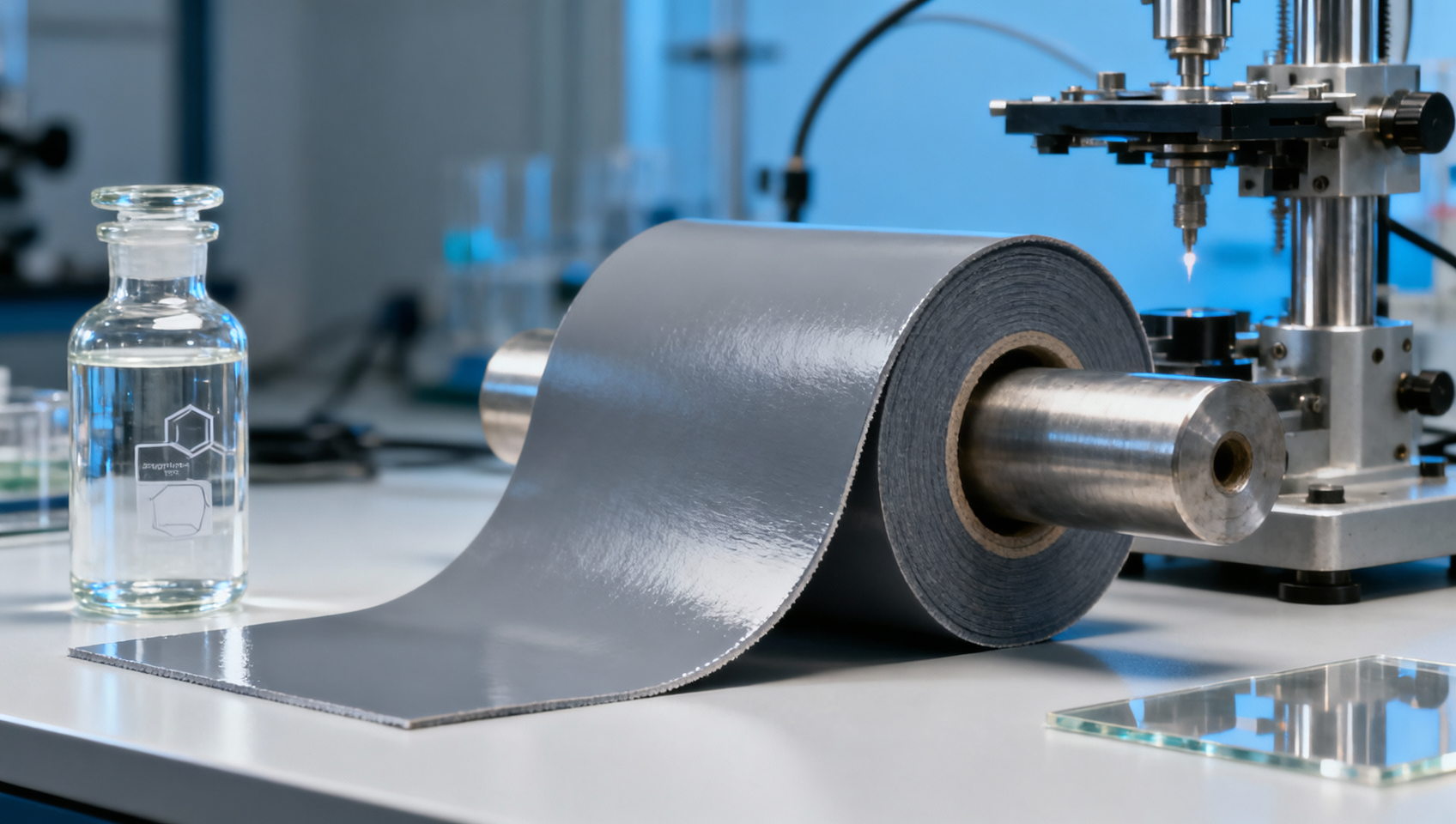
A flexible coating can look excellent on a flat test panel and still fail when the substrate bends, cools, or spends weeks in humid service. Choosing an aliphatic polyester polyol therefore starts with more than a target elongation value. The real question is whether its backbone, hydroxyl functionality, and compatibility with the selected isocyanate can deliver flexibility without sacrificing strength, processing consistency, or durability.
For technical evaluators, this polyol family is worth investigating when a polyurethane coating needs a balance of film integrity, abrasion resistance, adhesion, and controlled flexibility. It is less straightforward when continuous wet exposure or severe low-temperature movement dominates the specification. The right choice depends on the complete formulation—not simply the word “aliphatic” on a technical data sheet.
Start with the coating’s hardest day in service
Before comparing grades, define the conditions under which failure would matter most. A coating on a flexible polymer substrate may need to survive repeated bending. A protective film on metal may mainly accommodate thermal expansion. A soft-touch finish may require pleasant surface feel while resisting scratches, cleaners, and skin contact. These applications can all be described as flexible coatings, but they do not need the same polymer network.
Build the selection brief around four questions:
- How does the substrate move? Record bending radius, strain, movement frequency, and whether deformation is temporary or sustained.
- At what temperature must flexibility remain acceptable? Room-temperature elongation alone does not establish cold-flex performance.
- What contacts the film? Distinguish occasional splashes from prolonged humidity, immersion, alkaline cleaning, and solvent exposure.
- How will the coating be applied and cured? Include solids content, application viscosity, pot life, film thickness, and available curing conditions.
This brief prevents a common selection mistake: optimizing a convenient laboratory result while overlooking the condition that will actually determine service life.
What an aliphatic polyester polyol contributes—and what it does not
Polyester polyols contain ester linkages and hydroxyl groups that react with isocyanates to form polyurethane networks. In an aliphatic polyester, the polyester backbone is based on aliphatic building blocks rather than aromatic acid-derived segments. The choice of acids, glycols, branching components, and molecular weight controls properties such as polarity, chain mobility, crystallization tendency, and hydroxyl functionality.
These materials can support a useful combination of flexibility and cohesive strength. Their ester groups contribute polarity, which can help adhesion and intermolecular interactions. In suitable polyurethane formulations, polyester-based soft segments can also provide strong mechanical and abrasion performance.
However, an aliphatic polyester polyol does not automatically produce a non-yellowing or weatherproof coating. The isocyanate component remains important. An aromatic isocyanate can introduce significant light-induced discoloration even when the polyol is aliphatic. Exterior appearance retention generally requires consideration of aliphatic isocyanates, pigments, stabilizers, and the entire binder system.
Likewise, “aliphatic” does not mean “always soft.” A relatively regular backbone may crystallize, increasing stiffness or changing viscosity during storage. A branched structure may reduce crystallization, while higher hydroxyl functionality can increase network density after cure. Grade-level chemistry matters more than the family label.
When this polyol family deserves a place on the shortlist
An aliphatic polyester polyol is a credible candidate when the coating must deform without becoming mechanically weak. This may include flexible protective finishes, coated fabrics, synthetic-leather topcoats, and certain industrial polyurethane coatings, depending on the resin grade and formulation route.
It is particularly relevant when a softer binder alone cannot deliver the required abrasion resistance, tensile strength, or surface durability. Rather than choosing between a brittle hard coating and a weak soft coating, the evaluator can adjust polyester structure, molecular weight, and network formation to seek a workable middle ground.
A useful decision rule is to shortlist this family when mechanical balance drives the specification, then challenge that choice with the most demanding environmental test. Do not let an attractive initial film postpone the durability question.
Read the specification as a network-design document
Hydroxyl value, molecular weight, and functionality
Hydroxyl value indicates hydroxyl-group concentration and is essential for calculating isocyanate demand. On the stated material basis, hydroxyl equivalent weight is approximately 56,100 divided by hydroxyl value when hydroxyl value is expressed in mg KOH/g. For solvent-containing products, confirm whether the reported value applies to solids or the supplied solution.
Higher molecular weight between reactive groups often favors soft-segment mobility, but molecular weight should not be interpreted separately from functionality. A predominantly difunctional polyol and a more highly functional polyol can form very different networks. Higher functionality generally increases crosslinking potential, which may improve resistance properties while reducing extensibility.
The NCO-to-OH ratio also affects performance. Calculate it from verified equivalent values and account for other reactive ingredients. Changing the ratio to improve hardness can alter flexibility, residual reactivity, and moisture sensitivity; it is not a substitute for choosing the right backbone.
Glass transition and crystallization behavior
For low-temperature flexibility, request available thermal data and assess the cured film—not just the neat polyol. Polyurethane hard segments, crosslinks, fillers, and phase behavior all influence the final response. A low polyol glass-transition temperature is encouraging, but it does not guarantee that a formulated coating will survive repeated cold bending.
Crystallization deserves attention during both storage and service. Ask whether the grade remains liquid at expected handling temperatures, requires warming before use, or develops structure over time. A material that processes easily when freshly heated may behave differently after warehouse storage.
Water, acid value, viscosity, and compatibility
Water reacts with isocyanates and can cause carbon dioxide generation, bubbles, and changes in network formation. Moisture control therefore belongs in both the raw-material specification and the production procedure. Acid value helps characterize residual acidity; its effect on stability and reactivity depends on the formulation.
Viscosity should be checked at the intended application temperature and solids content. Also confirm compatibility with the isocyanate, solvents, pigments, and additives. Haze, separation, viscosity drift, or inconsistent cure may reveal problems that a clear polyol sample cannot predict.
The trade-off that can reverse the decision: hydrolysis
Ester bonds can undergo hydrolysis. The practical rate depends on polymer structure, water uptake, temperature, pH, and the cured network. Some polyester formulations perform adequately in humid environments; others lose strength or adhesion under prolonged hot-wet conditions. Neither a blanket rejection nor a blanket durability claim is justified.
If the coating will encounter persistent moisture, test beyond appearance. A film may remain visually intact while its mechanical properties deteriorate. Compare tensile behavior, adhesion, flexibility, and abrasion resistance before and after conditioning, using consistent recovery and drying procedures.
Polyether polyols are often considered where hydrolytic stability and low-temperature mobility are priorities, although their oxidative durability and other properties also require evaluation. Polycarbonate diols may offer a useful balance for demanding durability applications, with different cost and processing implications. Blends can be practical, provided compatibility and cured-film behavior are demonstrated.
The deciding question is not “Which family is best?” It is “Which formulation retains the required properties under this exposure?”
A trial sequence that separates resin performance from formulation noise
Use a staged comparison rather than changing the polyol, catalyst, isocyanate ratio, and filler package simultaneously. Otherwise, a promising result becomes difficult to reproduce or explain.
- Establish a controlled baseline. Match substrate preparation, dry-film thickness, cure schedule, and conditioning time. Calculate reactive equivalents for each candidate rather than using identical mass additions.
- Screen processing behavior. Measure mixing compatibility, viscosity, pot life, application quality, and visible defects. Confirm that the cure schedule suits the intended production line.
- Measure initial film performance. Assess adhesion, hardness, tensile properties where applicable, bend resistance, and abrasion. Look for a balanced profile rather than a single standout result.
- Apply the critical exposure. Use relevant humidity, immersion, cleaner, thermal-cycle, or weathering conditions. Define acceptance criteria before testing.
- Repeat mechanical testing after aging. Include cyclic deformation if repeated movement is part of service. Examine crack initiation, whitening, delamination, and permanent set.
- Optimize only the survivors. Adjust network density, additives, and application conditions after the resin family has passed the principal durability gate.
For flexible substrates, test the coating-substrate assembly as well as free films where practical. Substrate plasticizers, surface treatments, and differential movement can change adhesion and cracking behavior substantially.
Filled coatings need a separate flexibility check
When flame retardancy or filler performance is part of the brief, the binder cannot be evaluated in isolation. Mineral loading can increase viscosity and modulus, reduce elongation, and create stress concentrations if dispersion or interfacial adhesion is poor.
For example, Aluminum hydroxide CAS#21645-51-2 is used as a filler and flame retardant. Its thermal decomposition releases water and leaves an alumina residue, but useful fire performance depends on loading, particle characteristics, and the complete coating system. It is not a replacement for the polyol and does not inherently improve flexibility.
For isocyanate-reactive coatings, confirm the supplied physical form, moisture content, particle-size distribution, and surface treatment. An aqueous suspension should not be treated as interchangeable with a dry filler in a moisture-sensitive system. Recheck viscosity, sedimentation, cure, bending, and adhesion after adding the mineral package; binder-only results are no longer sufficient.
Make the purchasing decision traceable
A final recommendation should identify the selected grade, the evidence supporting it, and the conditions under which that recommendation remains valid. Request current technical and safety data, batch quality documentation, storage guidance, and agreed limits for hydroxyl value, water, acid value, and viscosity.
For a multi-category chemical procurement business such as Luxi Chemical (Shandong) Co., Ltd., coordinated sourcing can help organize resin-related raw materials and fillers. Technical suitability still needs to be established for each supplied grade; a general chemical identity or broad regulatory listing does not demonstrate coating performance.
Choose an aliphatic polyester polyol when it delivers the required combination of flexibility and strength after realistic conditioning—not merely before it. If hot-wet aging, cold flexing, or filler loading pushes the film outside specification, reconsider the backbone or blend strategy. The strongest selection is one that remains convincing when the test panel stops being flat, dry, and comfortably warm.
Related Picks
 Butylated Hydroxytoluene Price Drivers: Supply, Purity, and Purchasing Risk FactorsOct 21, 2026Butylated Hydroxytoluene price trends depend on supply stability, purity, logistics, and purchasing risk. Learn how to compare quotes wisely and reduce sourcing costs.
 Sodium Tripolyphosphate Price Trends: Raw Material and Energy ExposureOct 20, 2026Explore sodium tripolyphosphate price trends, from phosphate and soda ash costs to energy exposure. Learn how to compare quotes, manage sourcing risks, and make smarter purchasing decisions.
 Acetonitrile Shipment to Vietnam Successfully Dispatched; RCEP Benefits Boost Fine Chemical Trade with ASEANSep 16, 2026A shipment of industrial-grade acetonitrile from our company has recently been loaded and dispatched following the completion of standardized hazardous material packaging and container securing procedures.
 Nigerian Client’s Order of 4 Containers of Vinyl Acetate Successfully Loaded and Shipped to West AfricaSep 16, 2026We recently completed the loading of a vinyl acetate order for a Nigerian client; four containers of the product have been successfully packed and are ready for shipment to Nigeria.




Question Consultation
Send Us Your Inquiry Today

Luxi Chemical is a professional chemical product supplier with ample stock of all chemical categories and excellent quality, welcome your purchase inquiry.

