


Where industrial citric acid is used in metal surface treatment
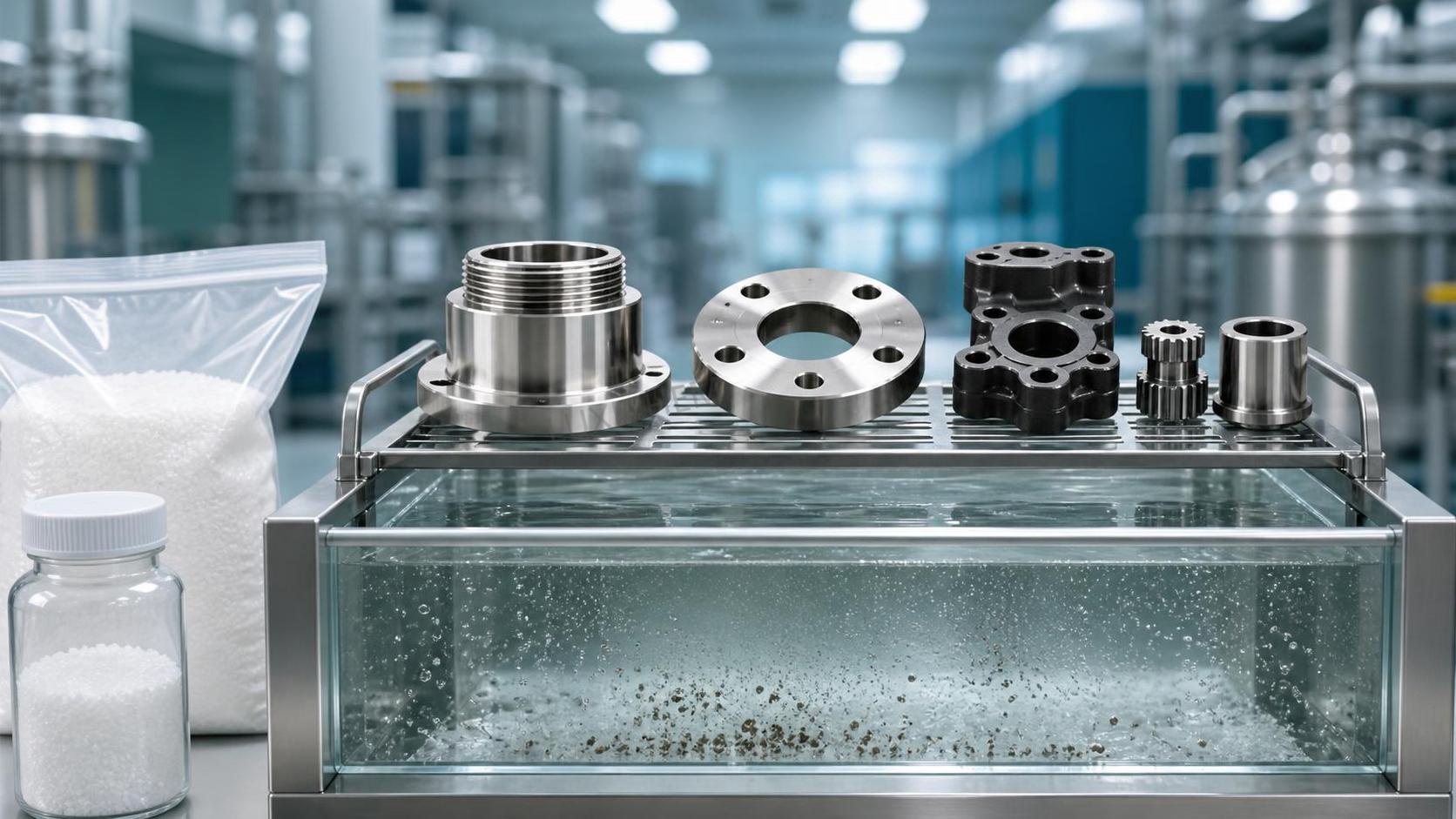
Metal surface treatment is often described as a sequence of familiar steps: degreasing, pickling, rinsing, activation, conversion coating, and finishing. In practice, however, the choice of chemistry at each stage determines whether a plant achieves a uniform, coating-ready surface or creates downstream problems such as flash rust, poor paint adhesion, staining, residue, or unstable wastewater performance.
Industrial citric acid has become relevant in this context because it can do more than simply acidify a cleaning bath. As an organic acid with useful chelating behavior, it can help solubilize oxide layers and bind dissolved metal ions. That makes it applicable in selected rust-removal, oxide-cleaning, passivation, and surface-preparation operations, particularly where processors are looking for alternatives to highly aggressive mineral-acid systems.
The important qualification is that citric acid is not a universal replacement for hydrochloric, sulfuric, phosphoric, or nitric acid. Its performance depends heavily on the substrate, oxide type, contamination load, bath formulation, temperature, contact time, mechanical action, rinse quality, and the treatment required afterward. Buyers and process engineers should therefore evaluate it as part of a process window, not as a drop-in commodity.
Why citric acid behaves differently in a treatment bath
The practical value of citric acid comes from the combination of acidity and metal-ion complexation. When a metal surface carries iron oxides, light corrosion products, mineral deposits, or certain process residues, the acid component supports dissolution while citrate ions can complex with released iron, calcium, copper, and other metal ions. This can help keep some dissolved material in solution and reduce the tendency for redeposition during cleaning.
For surface-treatment operators, that behavior matters because the visible removal of rust is only one part of the job. A bath must also avoid creating excessive smut, uneven etching, persistent residues, or conditions that make the next process step less reliable. Citric-acid-based systems are often considered when a controlled cleaning action is more valuable than the fastest possible removal rate.
Its biodegradable profile is also commercially relevant, but it should not be oversold. A citric-acid bath that has accumulated dissolved metals, oils, surfactants, and suspended solids still requires responsible wastewater handling. “Biodegradable acid” does not mean that spent process liquid can be discharged without treatment or local compliance review.
Rust removal on ferrous components
One of the clearest uses for industrial citric acid is the removal of light to moderate rust from carbon steel, cast iron, steel tooling, fabricated parts, fasteners, and maintenance components. It is particularly useful where the objective is to loosen and remove oxidation without the more aggressive base-metal attack that can occur in poorly controlled strong-acid pickling.
Typical candidates include parts that have been stored in humid conditions, steel components awaiting coating, reusable fixtures, repair parts, and equipment surfaces affected by localized atmospheric corrosion. In these applications, citric acid may be used in immersion tanks, recirculating cleaning systems, gel or wipe-on formulations, or multicomponent descaling products. The format should follow the geometry of the part and the production volume, rather than being selected solely on chemical cost.
Results are influenced by oxide thickness. A thin orange-brown rust layer may respond well under controlled conditions, while heavy scale, mill scale, deep pitting, or tightly adherent high-temperature oxides may require a different chemistry or a preceding mechanical operation. Expecting a mild organic-acid formulation to solve severe scale problems can lead to long cycle times, inconsistent appearance, and unnecessary bath loading.
For steel parts intended for painting or powder coating, the key question is not simply whether the surface looks clean after treatment. The processor should verify whether the cleaning stage leaves the right surface condition for the selected coating system. Residual salts, incomplete rinsing, rapid re-rusting after rinse, and variability across complex part geometries can all undermine coating performance later.
Oxide cleaning before welding, coating, or assembly
Citric acid is also used where the target is an oxide film or inorganic deposit rather than visible rust. In fabrication and maintenance settings, metal surfaces may carry heat discoloration, light oxidation, hard-water deposits, process residues, or contaminants that interfere with adhesion, electrical contact, heat transfer, or appearance.
On ferrous metals, cleaning before coating is a common decision point. A citric-acid-based step can be considered when the plant needs a less aggressive treatment than conventional pickling and when the surface condition is within the chemistry’s effective range. It may be especially relevant for mixed lots, parts with moderate corrosion, or applications where operators are concerned about excessive etch and dimensional change.
Aluminum, copper, brass, zinc-coated steel, and stainless steel require more careful assessment. These materials do not respond identically, and the formulation must account for the risk of staining, darkening, selective attack, loss of surface brightness, or damage to a protective layer. A bath suitable for steel may be inappropriate for galvanized components or decorative copper alloys. Substrate-specific trials are necessary before production use.
For stainless steel, citric acid is commonly discussed in relation to cleaning and passivation. It can be used in certain passivation processes to help remove free iron and support the restoration of a clean passive surface, depending on the alloy, prior manufacturing history, and process specification. But not every discoloration, weld oxide, or contaminant can be addressed by citric acid alone. Heat tint from welding, for example, may require dedicated pickling, electropolishing, mechanical treatment, or another approved procedure depending on the service environment and acceptance standard.
Passivation: useful, but not a label to apply casually
Passivation is one of the most misunderstood terms in metal treatment. It does not mean that any acid wash automatically produces a corrosion-resistant surface. In stainless-steel processing, passivation generally refers to a controlled cleaning treatment intended to remove surface contaminants, especially free iron, so the chromium-rich oxide layer can form or re-establish under suitable conditions.
Citric-acid-based passivation has attracted attention because it may offer a lower-fume alternative to some nitric-acid systems. For many operations, that can be a meaningful consideration in terms of worker exposure controls, ventilation design, handling practices, and waste-management complexity. Yet the process still requires defined parameters. Concentration, bath temperature, time, water quality, surface preparation, agitation, and post-treatment rinsing all affect the outcome.
Where stainless components serve in food processing, pharmaceutical equipment, water systems, architectural applications, or corrosive industrial environments, the acceptance criteria should be set before the bath is chosen. A processor may need to demonstrate freedom from iron contamination, water-break-free cleanliness, corrosion-test performance, or compliance with customer specifications. The appropriate test method and standard should be confirmed for the product and market rather than assumed from the use of a particular acid.
A common operational error is attempting passivation on a surface that is still oily, heat-tinted, mechanically embedded with foreign metal, or covered with polishing compound. Citric acid can be part of an effective passivation route, but it cannot compensate for poor upstream cleaning discipline.
Where it fits in a complete pretreatment line
In a production line, industrial citric acid is usually most effective when assigned a narrow, clear role. It may function as a rust-removal stage, a descaling aid, a chelating ingredient in a cleaner, an activation component, or a passivation chemistry. It should not be evaluated independently from upstream soil removal and downstream protection.
A robust line often starts with alkaline or solvent-compatible degreasing to remove oils and shop soils, followed by water rinsing and then the acid treatment appropriate for oxide removal. After citric acid treatment, rinse quality becomes critical. Dissolved metal salts and residual acidity can affect coating adhesion or promote corrosion if they are not effectively removed. Depending on the part and final use, a neutralization step, conversion coating, drying stage, corrosion inhibitor, or immediate finishing operation may follow.
Plants handling several chemicals often benefit from reviewing their procurement approach across related process aids. For example, fatty-acid materials may be used elsewhere in manufacturing for lubricity, mold release, polishing formulations, or specialty blends. A product such as Stearic acid CAS#57-11-4 belongs to a different application category from citric-acid metal treatment, but it illustrates why buyers should distinguish between cleaning chemistry, surface-conditioning chemistry, and ancillary formulation materials instead of grouping all “industrial acids” or additives under one technical requirement.
What procurement teams should ask before specifying a grade
For a chemical distributor or end user, “citric acid” is not enough information to purchase against. The required grade and commercial form should be linked to the process. Citric acid may be supplied in anhydrous or monohydrate form, and the difference affects active-acid calculations, storage behavior, formulation balance, and dosing. Particle size, caking tendency, dissolution rate, assay, color, insoluble matter, and contaminant limits can also affect plant operations.
For metal treatment, the following questions are more useful than a generic request for a low price:
- What metal or alloy is being treated, and is the surface bare, plated, coated, welded, or heat-affected?
- Is the main contaminant rust, mill scale, free iron, mineral scale, oil, polishing residue, or mixed soil?
- What process format is used: immersion, spray, ultrasonic cleaning, circulation, manual application, or on-site maintenance?
- What cycle time, temperature range, and throughput are acceptable?
- What happens after cleaning: painting, powder coating, welding, food-contact service, assembly, storage, or direct use?
- Which certificates, safety documents, lot traceability records, and packaging specifications are required by the buyer?
- How will spent bath liquid and metal-bearing rinse water be managed?
Stable supply is more than a logistics issue. Variation in assay, hydration state, foreign matter, or packaging integrity can lead to dosing drift and inconsistent bath behavior. For international procurement, users should also confirm shipment configuration, moisture protection, labeling, lead times, and the regulatory status of the product in the destination market. Product documentation should be reviewed against the actual intended application, especially where customer specifications or restricted-substance requirements apply.
The limits that should shape the decision
Industrial citric acid is often positioned as a more environmentally considerate option, and there is a valid basis for that interest. Still, environmental preference should be weighed alongside process performance. A slower treatment that needs more heating, longer immersion, repeated rework, or frequent bath replacement may not deliver the operational benefit expected from its chemical profile.
Its chelating ability can also create downstream considerations. Dissolved metals held in complexed form may influence wastewater-treatment performance. The treatment system should be evaluated for the expected metal load and the actual composition of the spent solution. This is particularly important where iron, copper, nickel, zinc, chromium, or mixed-metal contamination may enter the bath. Site-specific discharge requirements and waste classification rules must be reviewed with qualified environmental personnel.
Another limitation is compatibility. Citric acid should not be assumed safe for every alloy, coating, seal, elastomer, or adjacent material. Galvanized surfaces, die-cast alloys, aluminum grades, copper alloys, and mixed-metal assemblies can behave differently. Small-scale trials should include not only immediate visual inspection but also post-rinse appearance, coating adhesion where relevant, corrosion exposure, and dimensional checks for critical parts.
How to evaluate the chemistry without disrupting production
A practical evaluation begins with representative samples, not ideal laboratory coupons. Include parts with real contamination, production welds, corners, blind holes, mixed finishes, and typical handling residues. Compare the candidate process against the current method using agreed criteria: cleaning rate, surface appearance, flash-rust behavior, coating or passivation test results, bath life, rinse demand, labor, safety controls, and wastewater impact.
During trials, record the actual process conditions rather than relying on nominal formulation values. Water hardness, bath temperature variation, loading density, agitation, carryover from prior stages, and rinse conductivity can change results materially. The best chemistry can appear inconsistent if the line is not controlled around it.
The decision is usually strongest when industrial citric acid solves a specific treatment problem: controlled removal of light corrosion, cleaning before a defined finishing step, support for stainless passivation, or management of mineral deposits. It is less convincing when selected simply because it is described as “green” or because it seems interchangeable with a stronger acid. In metal surface treatment, the useful question is not whether citric acid can remove oxide. It is whether it can produce the required surface, repeatedly, within the plant’s technical, environmental, and commercial limits.
Related Picks
 Butylated Hydroxytoluene Price Drivers: Supply, Purity, and Purchasing Risk FactorsOct 21, 2026Butylated Hydroxytoluene price trends depend on supply stability, purity, logistics, and purchasing risk. Learn how to compare quotes wisely and reduce sourcing costs.
 Sodium Tripolyphosphate Price Trends: Raw Material and Energy ExposureOct 20, 2026Explore sodium tripolyphosphate price trends, from phosphate and soda ash costs to energy exposure. Learn how to compare quotes, manage sourcing risks, and make smarter purchasing decisions.
 Acetonitrile Shipment to Vietnam Successfully Dispatched; RCEP Benefits Boost Fine Chemical Trade with ASEANSep 16, 2026A shipment of industrial-grade acetonitrile from our company has recently been loaded and dispatched following the completion of standardized hazardous material packaging and container securing procedures.
 Nigerian Client’s Order of 4 Containers of Vinyl Acetate Successfully Loaded and Shipped to West AfricaSep 16, 2026We recently completed the loading of a vinyl acetate order for a Nigerian client; four containers of the product have been successfully packed and are ready for shipment to Nigeria.




Question Consultation
Send Us Your Inquiry Today

Luxi Chemical is a professional chemical product supplier with ample stock of all chemical categories and excellent quality, welcome your purchase inquiry.

