


How to compare citric acid anhydrous suppliers for batch consistency
How to Compare Citric Acid Anhydrous Suppliers for Batch Consistency
Choosing citric acid anhydrous suppliers is not simply a matter of comparing assay values and prices. For quality control and safety teams, the more consequential question is whether the material will behave the same way in the next delivery, and the one after that. A batch that appears compliant on a basic certificate of analysis can still create operational problems if its particle-size distribution, moisture pickup, impurity profile, packing condition, or documentation quality differs from the approved material.
This matters in food processing, detergent production, water-treatment formulations, pharmaceutical-related operations, and many industrial blending environments. Citric acid anhydrous is commonly used as an acidulant, chelating agent, pH adjuster, buffering component, cleaning ingredient, or processing aid. Its function may look straightforward, but minor variations can affect dissolution time, dosing accuracy, product appearance, equipment cleaning, and stability during storage.
A sound supplier comparison therefore needs to look beyond a single specification sheet. The aim is to identify a source that can repeatedly supply material matching the requirements that actually matter in the receiving plant.
Start with the application, not the generic grade name
“Citric acid anhydrous” does not automatically mean that two offerings are interchangeable. Buyers should first define the operational role of the material. A dry beverage premix may be particularly sensitive to powder flow and dissolution. A cleaning formulation may place more emphasis on acidity, insoluble matter, and compatibility with other ingredients. A food application may require a documented food-grade supply chain and controls appropriate to the destination market. In export projects, labeling, language requirements, and the format of regulatory documents can be as important as the physical material.
Before requesting quotations, prepare an internal acceptance profile. It should distinguish between critical parameters, preferred parameters, and information that is useful but not release-critical. This avoids an all-too-common situation: procurement selects the lowest technically compliant offer, while the plant later discovers that the product is difficult to handle or that the documentation cannot support an audit.
A practical profile may include the intended grade, required assay method, appearance, particle-size range or mesh requirement, moisture or water content limit, insoluble matter, storage conditions, shelf-life expectation, packaging format, palletization, sampling approach, and the documents needed per shipment. If a customer specification, internal standard, or local regulatory requirement applies, it should be provided to the supplier at the beginning rather than raised after qualification samples have been approved.
Read the certificate of analysis as a batch-control document
A certificate of analysis, or COA, is useful only when it gives a clear connection between the delivered lot and the tests performed. Compare several recent COAs where possible, not just one representative document. A single batch may look excellent while providing little evidence of routine consistency. Multiple records can reveal whether results tend to remain within a controlled operating range or merely stay inside a wide release limit.
For citric acid anhydrous, assay is naturally important, but it should not dominate the evaluation. A supplier may report an acceptable assay while material from different lots shows noticeable changes in granulation or water content. Those changes can affect conveying, mixing, dust generation, and dissolution. Quality teams should ask what test methods are used, whether the reported values relate to the specific production lot, and whether the supplier can provide retained-sample support if a later investigation is necessary.
Traceability is equally important. The COA should link logically to the lot number on the bags, outer packaging, shipping documents, and any sample labels. If the supplier uses repacking, consolidation, or third-party warehousing, clarify whether the lot identity remains intact throughout those steps. Loss of traceability can turn a manageable quality deviation into a wider release decision.
Physical behavior is often where supplier differences become visible
When comparing citric acid anhydrous suppliers, physical characteristics deserve the same attention as chemical conformance. Granular, fine, and powder-like products can all be described broadly as citric acid anhydrous, yet they may perform differently in automated systems. Fine fractions may increase airborne dust. Larger particles may dissolve more slowly in low-agitation tanks. An inconsistent distribution can lead to variable bulk density, bridging in hoppers, or non-uniform feeding through screw systems.
A qualification sample should therefore be tested under realistic plant conditions whenever possible. Lab verification is necessary, but a small bench test may not reveal behavior in pneumatic transport, bulk discharge, high-speed blending, or humid storage. Receiving teams should observe bag integrity, caking, free-flow characteristics, odor, visual uniformity, and dissolution. These observations do not replace analytical testing; they often identify operational risks that a COA does not show.
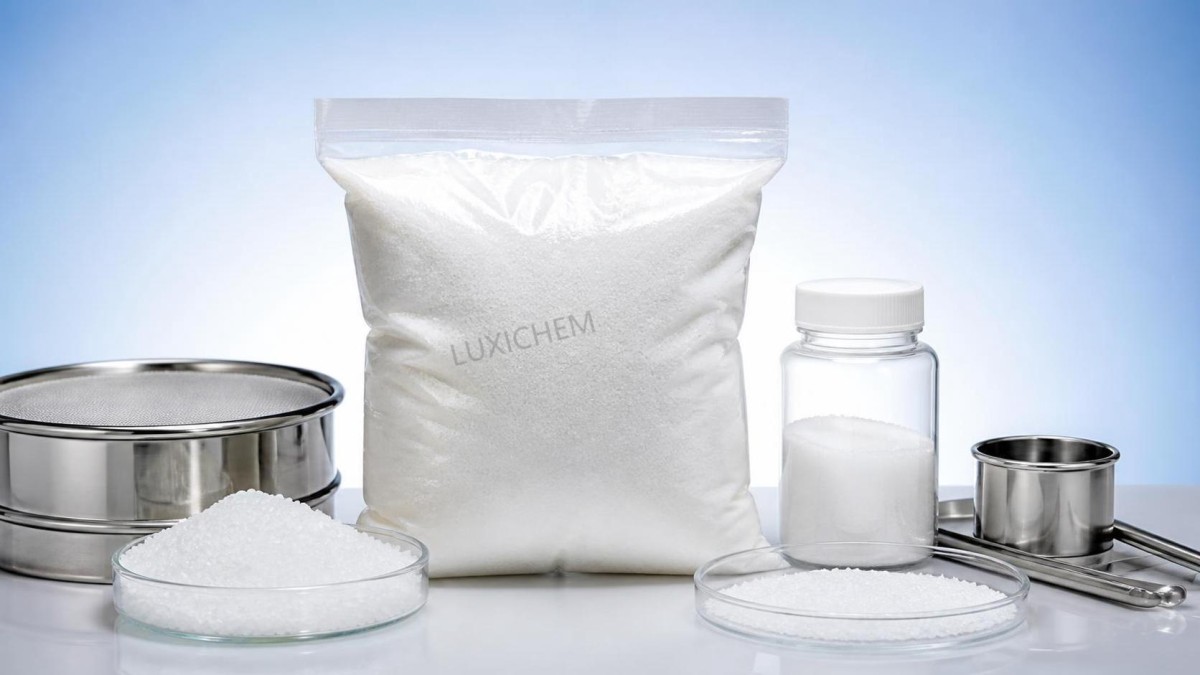
Moisture control deserves particular scrutiny because anhydrous material can be affected by exposure during storage and handling. The issue is not only the supplier’s original result. Consider how bags are sealed, whether liners are suitable for the route and climate, how long cargo may remain at ports or warehouses, and whether damaged packaging is reported before delivery. A technically good batch can become unsuitable if moisture protection breaks down in transit.
Ask how the supplier manages change
The strongest indicator of long-term reliability is often not the perfect batch. It is the supplier’s response when something changes. Quality and safety teams should ask whether the supplier has a formal process for notifying customers about changes to manufacturing location, raw-material source, process conditions, packaging components, test methods, labeling, or subcontracted logistics. The required notification period will depend on the buyer’s risk level and applicable market requirements, but the principle is simple: changes should not arrive unannounced with a shipment.
It is also reasonable to clarify the deviation process. If a batch does not meet an agreed parameter, can the supplier identify the issue before dispatch? Will the buyer receive a deviation notice? Who has authority to approve a concession? These questions are especially relevant where citric acid is incorporated into controlled food, hygiene, or chemical formulations. A supplier that treats documentation as an afterthought can make routine release work unnecessarily difficult.
For companies buying multiple chemical categories, supplier management becomes more effective when documentation practices are evaluated across the portfolio rather than product by product. For example, a distributor or trading partner offering food additives, organic intermediates, and fertilizers should be able to explain how it separates product documentation, verifies source information, and manages shipping records for each category. The same discipline is useful when sourcing unrelated materials such as Loratadine CAS#79794-75-5: the chemistry differs, but lot traceability, document control, and change communication remain fundamental purchasing controls.
Do not separate packaging from quality assurance
Packaging is part of the specification, particularly for hygroscopic or free-flowing powders. Request clear information on net weight tolerance practices, bag construction, inner liner arrangement, sealing method, marking, pallet configuration, and whether stretch wrap or other protection is used for export shipments. If the material will be stored for an extended period, ask what storage assumptions support the stated shelf life.
Safety managers should also review practical handling information. Relevant safety documentation should be current, understandable for the receiving location, and consistent with the intended use. The receiving site needs to know the recommended conditions for storage, spill handling, dust control, and disposal of damaged bags. A supplier does not need to dictate the buyer’s safety program, but incomplete or mismatched documents create avoidable uncertainty during inspections or incidents.
For international supply, logistics capability is not a minor commercial detail. Lead time, port congestion exposure, export-document accuracy, container loading practices, and the availability of replacement stock can all influence batch continuity. A lower unit price may offer little value if an inconsistent delivery schedule forces unplanned supplier changes. Dual sourcing can reduce that exposure, but only if each source has been genuinely qualified against the same acceptance criteria.
Use a staged qualification rather than a one-time approval
A sensible approval process normally begins with document review, then a representative sample, followed by a trial order and closer monitoring of early commercial deliveries. The trial should assess both laboratory conformance and real receiving conditions. Record the lot number, packaging observations, actual delivered quantity, COA match, test results, and any production feedback. This creates a baseline for later comparison.
It is wise to define escalation triggers before problems occur. Examples may include a result near an internal action limit, repeated bag damage, delayed COAs, a significant change in dissolution behavior, or mismatched lot information. Not every variation warrants rejection, but every recurring variation should lead to a documented discussion. A supplier relationship becomes more stable when both sides agree on what must be reported, what can be investigated jointly, and what requires a new qualification decision.
Luxi Chemical (Shandong) Co., Ltd. operates across chemical raw materials, chemical products, and import/export trade, serving customers in more than 60 countries and regions. For buyers managing several sourcing streams, the practical value of a broad product portfolio is not merely convenience. It can reduce coordination work when product documentation, shipment planning, and supplier communication are handled with consistent discipline. Still, each citric acid anhydrous project should be evaluated against the buyer’s own grade, application, destination-market, and quality-system requirements.
Make the final comparison on total control, not headline price
The best supplier is rarely identified by one number. Compare the quoted price alongside batch records, test-method transparency, physical-product suitability, packaging protection, change notification, document turnaround, shipment reliability, and responsiveness during deviations. If a supplier cannot answer detailed questions before the first order, the buyer should not expect better control after a quality issue occurs.
For a final decision, request recent batch documentation, confirm the exact grade and packing configuration in writing, test a representative lot under normal operating conditions, and agree on notification and traceability expectations before regular supply begins. That approach takes more effort than selecting the lowest compliant quotation, but it gives quality and safety teams a much firmer basis for preventing batch-related disruption.
Related Picks
 Butylated Hydroxytoluene Price Drivers: Supply, Purity, and Purchasing Risk FactorsOct 21, 2026Butylated Hydroxytoluene price trends depend on supply stability, purity, logistics, and purchasing risk. Learn how to compare quotes wisely and reduce sourcing costs.
 Sodium Tripolyphosphate Price Trends: Raw Material and Energy ExposureOct 20, 2026Explore sodium tripolyphosphate price trends, from phosphate and soda ash costs to energy exposure. Learn how to compare quotes, manage sourcing risks, and make smarter purchasing decisions.
 Acetonitrile Shipment to Vietnam Successfully Dispatched; RCEP Benefits Boost Fine Chemical Trade with ASEANSep 16, 2026A shipment of industrial-grade acetonitrile from our company has recently been loaded and dispatched following the completion of standardized hazardous material packaging and container securing procedures.
 Nigerian Client’s Order of 4 Containers of Vinyl Acetate Successfully Loaded and Shipped to West AfricaSep 16, 2026We recently completed the loading of a vinyl acetate order for a Nigerian client; four containers of the product have been successfully packed and are ready for shipment to Nigeria.




Question Consultation
Send Us Your Inquiry Today

Luxi Chemical is a professional chemical product supplier with ample stock of all chemical categories and excellent quality, welcome your purchase inquiry.

