


Why Meat Brines Containing Sodium Tripolyphosphate Leave Undissolved Solids
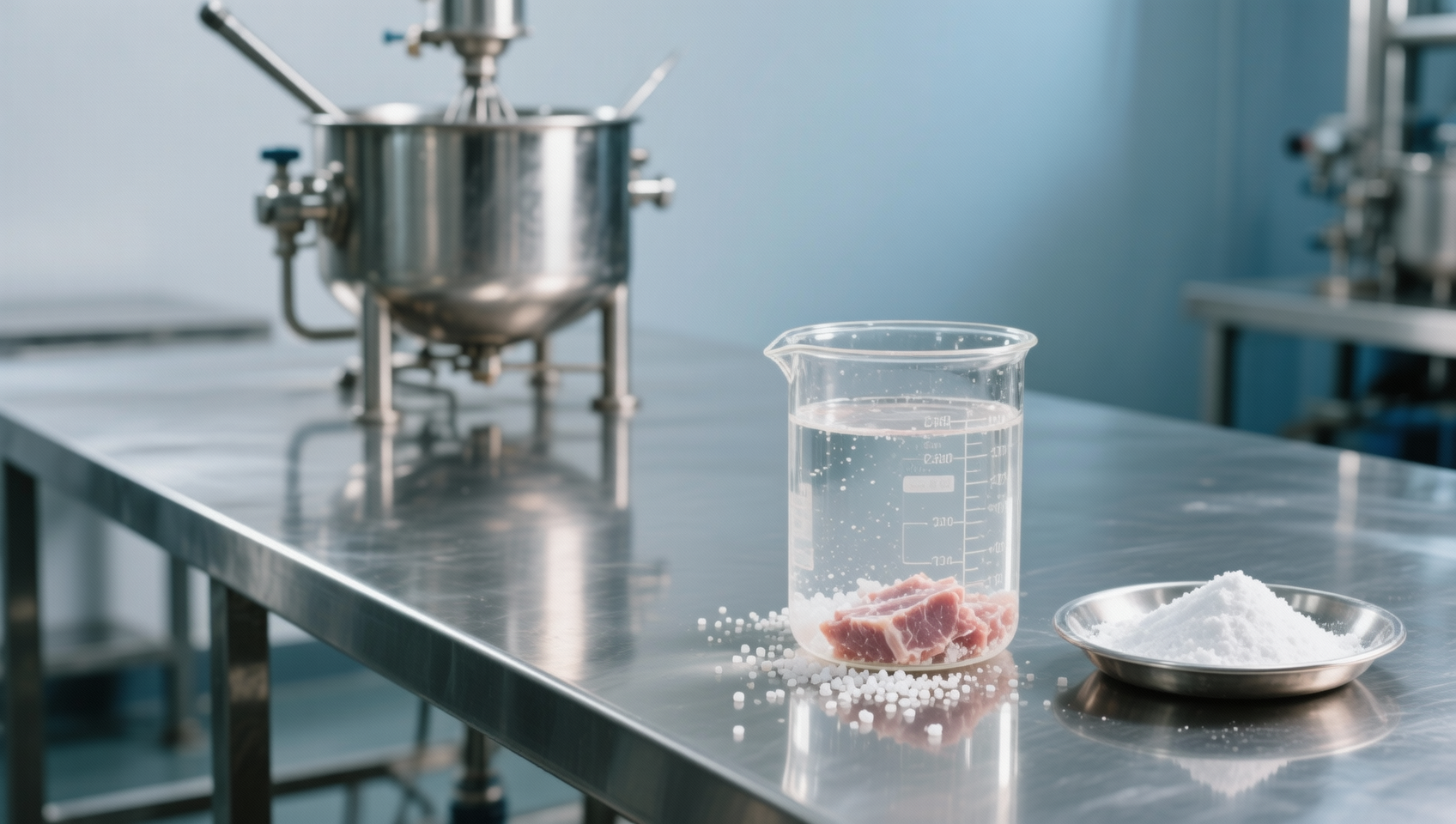
A brine tank can look ready from the platform while a layer of white grit is collecting near the outlet. The first obvious warning may be a blocked injector filter, uneven needle flow, or repeated interruptions during a production run. Adding more mixing time is tempting, but it does not always solve the problem.
When using sodium tripolyphosphate for meat processing, persistent solids can result from incomplete dissolution, mineral precipitation, poor powder dispersion, or interactions within the formulation. These causes can look similar in the tank but require different corrective actions. The useful question is not simply “Why is the phosphate not dissolving?” It is “What are these solids, and when do they appear?”
Start with the residue, not the mixer speed
Before adjusting the recipe, take representative samples using your plant’s sampling procedure. Compare fresh water, brine immediately after phosphate addition, and finished brine after its normal holding period. Appearance alone cannot identify the solids, but the timing provides a valuable starting point.
Do not assume every white particle is undissolved sodium tripolyphosphate. Salt crystals, seasoning particles, protein aggregates, and mineral precipitates can all contribute to filter residue. If the identity remains unclear, retain a sample for supplier or laboratory assessment rather than changing several process settings at once.
Water hardness can turn a dissolution problem into a precipitation problem
Sodium tripolyphosphate, often abbreviated as STPP, interacts with calcium and magnesium. This contributes to its functionality, but it also means that water chemistry matters. Depending on mineral levels, pH, phosphate concentration, and the other ingredients present, poorly soluble mineral-containing solids may form.
That distinction matters on the production floor. Undissolved STPP may dissolve when concentration, temperature, or mixing conditions improve. A mineral precipitate may remain even after prolonged agitation. Running the mixer longer then consumes time without addressing the cause.
Check a recent water-hardness result rather than relying on an old specification. Seasonal supply changes, blending between water sources, or a poorly performing softener can explain why an unchanged recipe suddenly behaves differently. Where softening is used, confirm performance at the actual point of use.
A practical screening trial is to prepare the same phosphate solution with plant water and with verified food-process-suitable low-hardness water. Keep temperature, concentration, addition rate, and mixing comparable. A substantial improvement with low-hardness water makes mineral interference more likely, although it does not identify the residue conclusively.
Cold water, high concentration, and fast powder feeding create a difficult combination
Meat processors have good reasons to keep brine cold. However, cold preparation can slow dissolution enough to expose weaknesses in the mixing procedure. A phosphate grade that disperses acceptably in a laboratory beaker may struggle when tipped quickly into a chilled production tank.
Measure the temperature where dissolution happens
Record the water temperature before addition and the brine temperature during mixing. Ice, chilled ingredients, or refrigerated tank surfaces may create conditions colder than the operator expects. A single temperature reading taken after preparation can miss those conditions.
Where the formulation and food-safety plan permit, a validated procedure may dissolve phosphate in a measured portion of water before final chilling. This is not a reason to warm brine casually: any temperature change must fit the plant’s hygiene controls, holding limits, and cooling capacity. There is no universal preparation temperature suitable for every meat brine.
Check the concentration at the point of addition
A final recipe can be within a workable concentration range while the powder-entry zone is temporarily overloaded. Dumping a full bag into a small, poorly circulating volume creates a much higher local concentration than the batch calculation suggests.
Confirm the water charge, weighing accuracy, and recipe basis. Confusing percentages based on finished brine with percentages based on water can produce a meaningful formulation error. For concentrated stocks, use supplier solubility information relevant to the actual temperature and formulation, not a room-temperature value for pure water alone.
Feed powder into moving liquid, not a pile
Add STPP progressively into a well-circulated zone. Avoid letting it accumulate on the tank floor, against a wall, or on top of ice. Increasing mixer speed may help in some equipment, but excessive agitation can introduce air without improving bottom-to-top turnover.
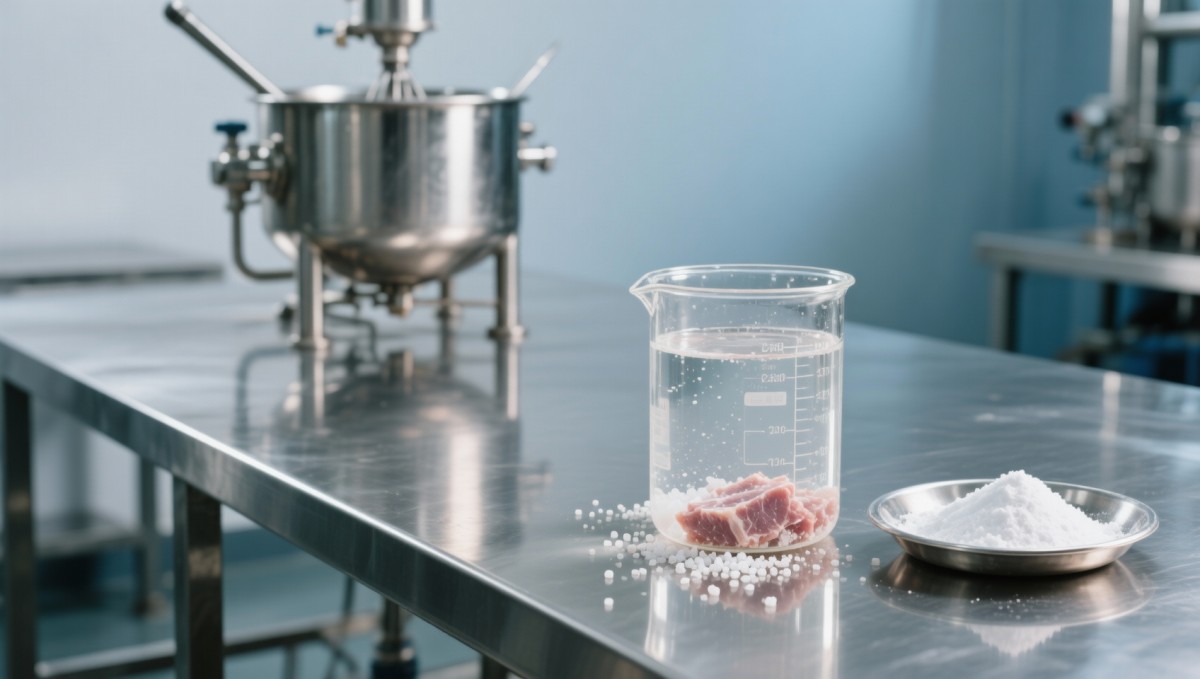
The useful visual check is whether fresh powder disperses through the working volume or repeatedly follows a short circulation path near the impeller. Tank geometry, fill level, and mixer placement can matter as much as motor power.
Ingredient order often explains why the same phosphate behaves differently
STPP may dissolve readily in water yet perform poorly when added to an already concentrated brine. Salt changes the solution environment, while sugars, proteins, starches, and hydrocolloids can reduce available water or make dispersion more difficult. Acidic ingredients can alter phosphate chemistry and encourage other formulation changes.
For many formulations, a sensible starting point is to dissolve phosphate in the initial water charge before adding most of the salt and other dry ingredients. However, the approved formulation and the phosphate supplier’s preparation instructions take priority, especially for proprietary blends.
If the recipe contains gums or proteins, watch for lumps that trap otherwise soluble material. Their surfaces may hydrate rapidly while leaving dry powder inside. Such lumps are a dispersion failure, not necessarily evidence of inadequate STPP solubility.
To locate the interaction, prepare small stepwise samples: water plus phosphate, then the next ingredient, followed by each remaining addition. Observe each stage immediately and after the normal hold time. If the mixture changes only after one addition, focus the investigation there rather than replacing the phosphate automatically.
Food grade is essential, but grade selection also affects preparation
Food-grade status establishes suitability against the applicable specification; it does not guarantee identical dissolution behavior across suppliers or product forms. Particle-size distribution, manufacturing conditions, crystalline phase composition, and storage history can affect how STPP wets, hydrates, and dissolves.
For operators selecting sodium tripolyphosphate for meat processing, the purchasing discussion should therefore go beyond assay. Ask whether the product is intended for chilled brine preparation, what dissolution procedure is recommended, and whether the supplier can provide relevant test conditions. Pure STPP and formulated phosphate blends are not interchangeable without recipe review.
Inspect opened bags for moisture exposure, hard caking, damaged liners, or unusual contamination. Breakable storage lumps may disperse differently from fresh powder; heavily caked material deserves assessment under the plant’s quality procedure. Keep packaging closed and follow the supplier’s storage instructions.
Product identity must also remain unambiguous when sourcing from a broad chemical portfolio. An industrial material such as Methylenediphenyl Diisocyanate CAS#101-68-8 is used in polyurethane chemistry and must never enter food-brine preparation. Separate approved food-additive purchasing, labeling, and storage controls from industrial chemical handling.
A short investigation that produces usable answers
When production is waiting, changing water, temperature, mixing speed, and phosphate supplier together may seem efficient. It usually makes the result harder to interpret. A controlled comparison is more useful than a successful batch with no clear explanation.
- Record the failed batch conditions. Include ingredient lots, actual weights, water source, temperature profile, addition sequence, mixing time, and holding time.
- Prepare a water-and-phosphate control. Use the intended concentration and plant preparation conditions. Confirm whether the issue exists before other ingredients enter.
- Change one variable. Compare water hardness, powder feed rate, or another suspected factor while holding the remaining conditions steady.
- Rebuild the complete formulation. Add ingredients in controlled stages and document when haze, lumps, or sediment first appear.
- Repeat the real holding conditions. A sample that looks clear immediately may behave differently after cooling, storage, or recirculation.
Use consistent observation times and clean, comparable containers. Photographs, temperature records, and retained samples make a supplier discussion far more productive than the description “it will not dissolve.” Where useful, laboratory checks can include hardness, pH, and residue identification. Conductivity alone cannot confirm that the intended phosphate dose is fully dissolved and available.
What not to do with an affected production batch
Filtering out visible solids may protect equipment temporarily, but it does not establish that the brine remains within specification. If the filter removes phosphate-containing material, the effective formulation may change. Fine precipitates may also pass through one filter and accumulate farther downstream.
Do not compensate by adding extra phosphate without an approved calculation and quality review. Applicable phosphate limits depend on the jurisdiction and product category, and finished-product requirements must be checked rather than inferred from the tank recipe.
Likewise, adding acid to “clear” the brine is not a general remedy. It can alter protein functionality, phosphate behavior, flavor, and product compliance. Unexplained residue should trigger the plant’s hold-and-assess procedure, particularly if foreign material or chemical misidentification is possible.
Turn the correction into a repeatable preparation standard
Once the cause is confirmed, document the conditions that actually control it: acceptable water quality, initial water charge, ingredient sequence, powder addition method, mixing conditions, preparation temperature, and maximum validated hold time. Define what acceptable brine looks like and how operators should respond when it deviates.
Luxi Chemical (Shandong) Co., Ltd. supplies chemical raw materials, including food additives. For procurement discussions, provide the actual meat-brine application and preparation conditions, and request the applicable food-grade documentation and dissolution guidance rather than selecting by chemical name alone.
The most reliable correction is rarely “mix harder.” It is identifying whether the tank contains slow-dissolving powder, trapped material, or newly formed precipitate—and then controlling the specific condition responsible. That approach gives operators a clearer release decision and reduces the chance of the same residue returning on the next shift.
Related Picks
 Butylated Hydroxytoluene Price Drivers: Supply, Purity, and Purchasing Risk FactorsOct 21, 2026Butylated Hydroxytoluene price trends depend on supply stability, purity, logistics, and purchasing risk. Learn how to compare quotes wisely and reduce sourcing costs.
 Sodium Tripolyphosphate Price Trends: Raw Material and Energy ExposureOct 20, 2026Explore sodium tripolyphosphate price trends, from phosphate and soda ash costs to energy exposure. Learn how to compare quotes, manage sourcing risks, and make smarter purchasing decisions.
 Acetonitrile Shipment to Vietnam Successfully Dispatched; RCEP Benefits Boost Fine Chemical Trade with ASEANSep 16, 2026A shipment of industrial-grade acetonitrile from our company has recently been loaded and dispatched following the completion of standardized hazardous material packaging and container securing procedures.
 Nigerian Client’s Order of 4 Containers of Vinyl Acetate Successfully Loaded and Shipped to West AfricaSep 16, 2026We recently completed the loading of a vinyl acetate order for a Nigerian client; four containers of the product have been successfully packed and are ready for shipment to Nigeria.




Question Consultation
Send Us Your Inquiry Today

Luxi Chemical is a professional chemical product supplier with ample stock of all chemical categories and excellent quality, welcome your purchase inquiry.

