


Why pp pellets can cause unstable molding results in production
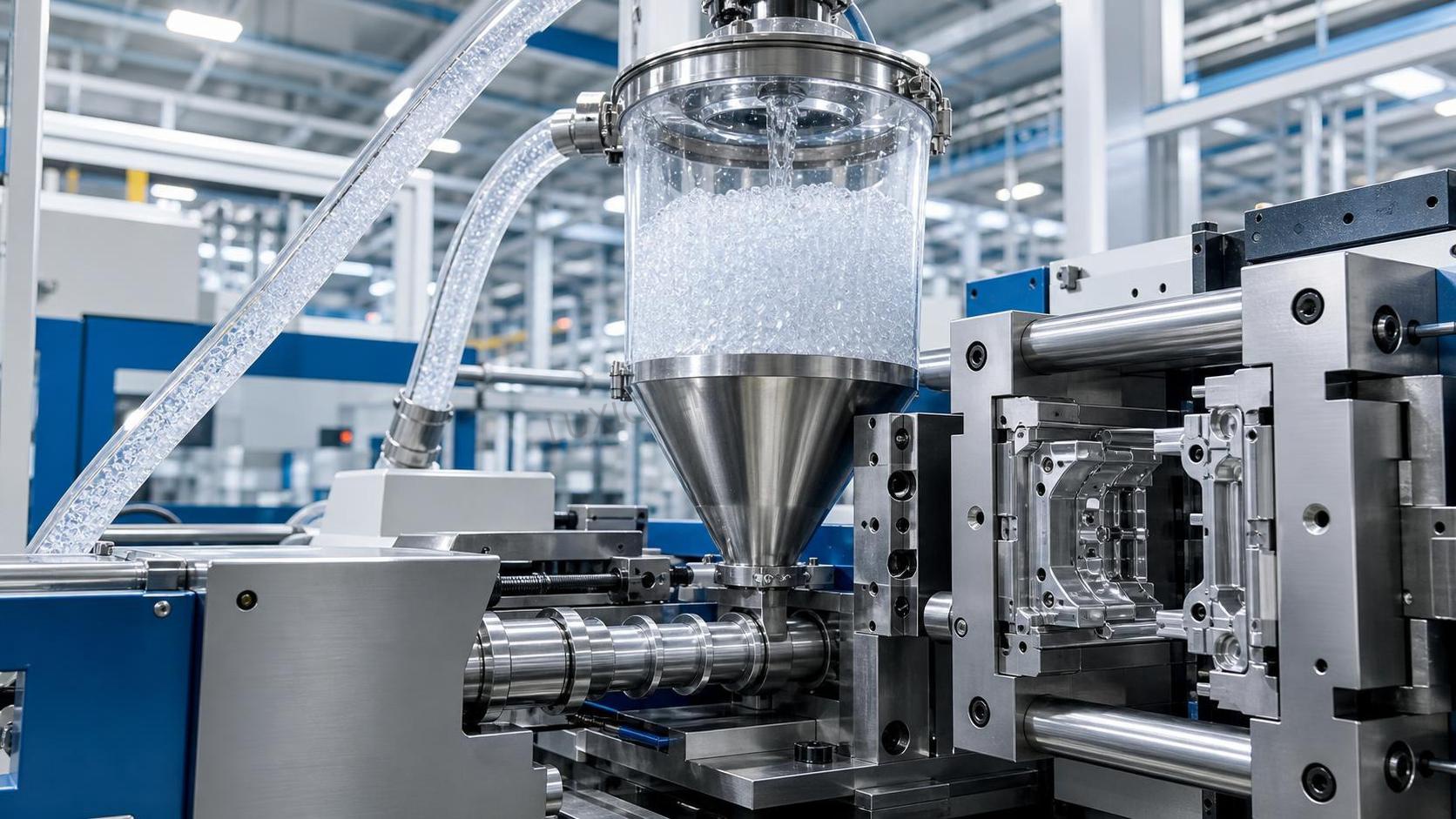
Unstable molding results often start before the hopper is filled. In many workshops, operators spend too much time adjusting barrel temperature, injection speed, holding pressure, or cooling time, while the real problem sits in the raw material bin. When pp pellets vary in condition, even a well-tuned molding machine can begin to produce inconsistent parts, short shots, flash, sink marks, unstable dimensions, or unexpected cycle changes.
For operators, this matters because unstable molding is rarely caused by one dramatic failure. More often, it comes from small and repeatable material differences that slowly disturb the process window. If the resin entering the machine is not consistent, the machine settings that worked in the previous shift may no longer work in the next one. That is why material control should be treated as part of process control, not as a separate warehouse issue.
PP is often considered a relatively easy material to mold compared with more moisture-sensitive engineering plastics. That reputation creates a common mistake: assuming polypropylene is always forgiving. In reality, molding stability depends not only on resin type but also on pellet quality, storage condition, lot consistency, contamination level, additive distribution, and how the material behaves during heating and flow.
Why pellet-related instability is often misdiagnosed
On the production floor, defects are usually judged by what appears on the part surface or by what changes on the machine screen. A part warps, so cooling is blamed. A cavity does not fill, so injection pressure is raised. Flash appears, so clamp force is checked. These actions are understandable, but they can hide the actual source of variation if the incoming pellets are inconsistent.
Material-related problems are often misdiagnosed for three reasons:
- the defect pattern looks similar to a machine setting problem;
- the change in pellet condition may be subtle rather than obvious;
- operators may not receive enough upstream information about resin lot changes, storage exposure, or regrind ratio.
When a process suddenly becomes “sensitive” and needs frequent correction, material consistency should be one of the first checks, not the last.
Moisture is not always the main issue, but it can still disturb PP molding
Polypropylene does not absorb moisture as aggressively as hygroscopic plastics such as nylon or PET, so many plants do not treat drying as a strict requirement. Even so, moisture can still create instability in practice. The issue is not always water absorbed into the polymer chain. Surface moisture, condensation, or poor storage conditions can interfere with feeding, melting uniformity, and appearance quality.
If bags are opened in a humid environment and left exposed, pellets may carry surface moisture or contamination into the hopper. In some cases, this causes splay-like marks, inconsistent plasticizing, or local surface defects. The operator may interpret the result as barrel temperature fluctuation, but the root cause is uneven pellet condition.
Moisture-related disturbances become more likely when:
- material is stored near open doors, cooling towers, or damp areas;
- cold pellets are moved into a warm shop and condensation forms;
- partially used bags are not properly resealed;
- regrind is stored in open containers for long periods.
This does not mean every PP grade must be aggressively dried. It means storage discipline matters more than many operators expect.
Melt flow variation changes the process window faster than operators expect
One of the most important reasons pp pellets lead to unstable molding results is variation in melt flow rate. If the actual flow behavior of the resin shifts from one batch to another, filling pressure, shear heating, gate freeze timing, and part shrinkage can all change even when the machine settings remain unchanged.
For operators, melt flow variation shows up as process instability rather than as a laboratory number. A slightly higher-flow batch may fill easier, pack differently, and increase flash risk in a mold that previously ran safely. A lower-flow batch may require more pressure, longer fill time, or a higher melt temperature, which can then alter gloss, weld line performance, or dimensional repeatability.
This is especially important in:
- thin-wall parts;
- multi-cavity tools with narrow balance margins;
- parts with long flow paths;
- applications already running close to machine capacity.
When operators report that “the process became narrow” after a new lot arrived, they are often describing a flow consistency problem.
Contamination does not need to be severe to create defects
Many people imagine contamination as visible foreign matter, but in molding, contamination can be much less obvious. Dust, fines, degraded resin, mixed polymer, paper fibers from packaging, metal particles from conveying systems, or color concentrate that is not properly dispersed can all interfere with stable production.
The impact depends on the product being molded. In cosmetic parts, even tiny contamination can create black specks, streaks, or haze. In structural parts, contamination may weaken impact performance or create stress points. In high-cavitation production, small contamination events can create intermittent defects that are difficult to reproduce, leading operators to chase machine settings unnecessarily.
Mixed material is another hidden risk. If PP pellets are accidentally blended with a different grade or with a material of different viscosity or additive package, the machine may still run, but the process may become erratic. Changes in shrinkage, demolding behavior, odor, appearance, or cycle consistency can follow.
In broader chemical handling operations, the same logic applies: stable downstream performance depends heavily on raw material purity and batch control. Whether a plant is processing polymers or handling ingredients such as Saccharin sodium dihydrate CAS#6155-57-3, the practical lesson is similar—small upstream variations often create disproportionately large processing issues later.
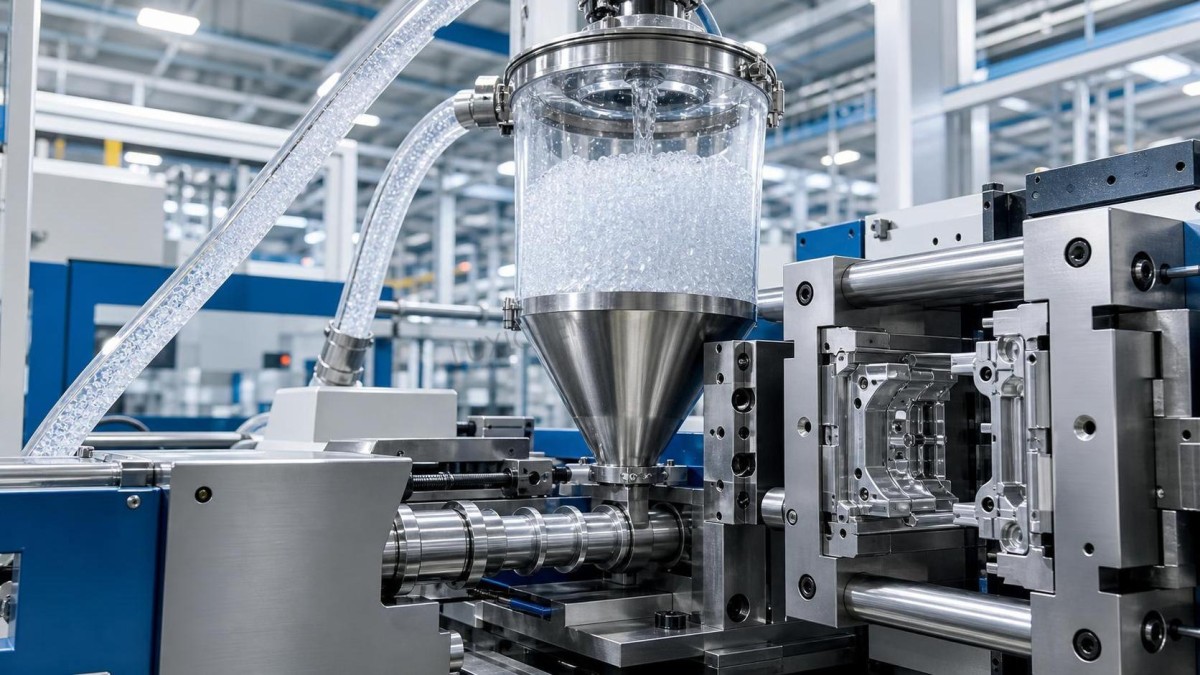
Batch inconsistency is a bigger production problem than a single bad lot
A single off-spec batch is usually easier to identify because the process changes sharply. The harder problem is moderate lot-to-lot inconsistency that remains technically acceptable on paper but behaves differently in the machine. Operators then inherit a process that runs, but not in the same way every day.
This creates several shop-floor consequences:
- frequent adjustment of holding pressure and cushion control;
- unstable part weight from shift to shift;
- higher startup scrap after material change;
- longer setup time when returning to a previous job;
- difficulty standardizing process sheets.
In many factories, this is wrongly accepted as “normal variation.” It should not be. If standard machine settings cannot be repeated with acceptable output, material consistency needs to be reviewed together with tooling and equipment factors.
Regrind ratio is often treated casually, but it affects repeatability
PP can often tolerate regrind in many applications, which leads some operators to assume that more regrind always means lower cost with little consequence. In reality, unstable regrind practice is one of the most common causes of molding fluctuation.
The issue is not only the presence of regrind, but the lack of control around it. When regrind particle size varies, when degraded sprues are repeatedly recycled, or when virgin-to-regrind ratio changes between shifts, the melt behavior changes as well. Feeding consistency can worsen, bulk density may differ, and the thermal history of the material becomes less predictable.
Operators should be cautious when they see defects that appear only after several hours of production. That pattern can indicate gradual changes in regrind composition or accumulation of degraded material rather than an immediate machine fault.
Additive distribution and pellet quality also influence molding stability
Not all PP grades are simple base resin. Many contain slip agents, antiblock agents, nucleating agents, impact modifiers, fillers, or color additives. If these are not uniformly distributed in the pellets, molding results may shift across a run.
Examples seen in practice include:
- uneven shrinkage due to filler distribution differences;
- surface variation caused by poor color or additive dispersion;
- demolding inconsistency linked to additive concentration;
- mechanical property variation in impact-modified grades.
Pellet geometry also matters more than it seems. Excessive fines, broken pellets, or irregular pellet shape can affect conveying and feed throat behavior. If the feed becomes inconsistent, screw recovery time may drift, which then affects the whole cycle.
Storage and handling errors can damage otherwise good resin
Some molding teams focus heavily on supplier quality and overlook what happens after delivery. Yet good resin can become unstable material through poor in-house handling.
Typical examples include:
- bags stacked in direct sunlight or near heat sources;
- incorrect first-in, first-out control causing long storage time;
- open bags mixed without lot identification;
- manual transfer using dirty containers;
- conveying lines not cleaned during grade changes.
When operators do not know whether the hopper contains one lot, mixed lots, or material with varying regrind content, process troubleshooting becomes guesswork. Stable molding requires traceability at the material-use level, not just at purchasing level.
How operators can tell when pellets are the real source of instability
Material-related instability usually leaves a pattern. It may not announce itself clearly, but it tends to behave differently from purely mechanical problems.
Suspect the pellets early when:
- the same settings produce different part weights after a material change;
- defects appear across multiple machines using the same lot;
- the process becomes highly sensitive to small setting adjustments;
- startup variation increases after a new delivery or new regrind blend;
- appearance defects are intermittent and do not match a clear mold location issue;
- screw recovery or cushion stability changes without obvious machine malfunction.
A useful floor-level test is comparison, not intuition. If possible, run a retained sample from the previous stable lot under the same conditions. If the process returns to normal, the material has earned closer attention.
What should be checked before changing machine settings repeatedly
Before widening the process window through constant parameter correction, operators should check a short list of material-control items:
- lot number and whether a lot change occurred;
- bag condition and storage history;
- presence of condensation or visible contamination;
- actual regrind percentage and consistency;
- whether conveying lines, hoppers, and mixers were cleaned;
- whether another grade was previously run on the same system;
- supplier certificate data if available, especially key consistency indicators.
This approach saves time because it prevents operators from compensating for a raw material issue with unstable machine settings. Once the machine is retuned around inconsistent material, the next good batch may create a different set of defects.
Improving molding stability starts with material discipline, not only machine discipline
Stable molding is often described as a function of machine capability, mold condition, and operator skill. That is true, but incomplete. Resin condition is equally part of the process. If material enters production with uncontrolled variability, even skilled operators end up firefighting.
The most effective plants usually do a few practical things well: they keep lot traceability visible on the floor, control regrind with clear limits, protect opened bags from humidity and dirt, separate suspect material early, and make sure troubleshooting includes raw material review from the start.
For operators, the key takeaway is simple: when molding results become unstable, do not assume the machine has suddenly become difficult. In many cases, the machine is reacting normally to inconsistent pellets. Recognizing that difference early is what reduces scrap, avoids unnecessary adjustments, and brings the process back under control faster.
Related Picks
 Butylated Hydroxytoluene Price Drivers: Supply, Purity, and Purchasing Risk FactorsOct 21, 2026Butylated Hydroxytoluene price trends depend on supply stability, purity, logistics, and purchasing risk. Learn how to compare quotes wisely and reduce sourcing costs.
 Sodium Tripolyphosphate Price Trends: Raw Material and Energy ExposureOct 20, 2026Explore sodium tripolyphosphate price trends, from phosphate and soda ash costs to energy exposure. Learn how to compare quotes, manage sourcing risks, and make smarter purchasing decisions.
 Acetonitrile Shipment to Vietnam Successfully Dispatched; RCEP Benefits Boost Fine Chemical Trade with ASEANSep 16, 2026A shipment of industrial-grade acetonitrile from our company has recently been loaded and dispatched following the completion of standardized hazardous material packaging and container securing procedures.
 Nigerian Client’s Order of 4 Containers of Vinyl Acetate Successfully Loaded and Shipped to West AfricaSep 16, 2026We recently completed the loading of a vinyl acetate order for a Nigerian client; four containers of the product have been successfully packed and are ready for shipment to Nigeria.




Question Consultation
Send Us Your Inquiry Today

Luxi Chemical is a professional chemical product supplier with ample stock of all chemical categories and excellent quality, welcome your purchase inquiry.

