


How Global Supply Chain Shifts Are Impacting Insecticides Supplier Lead Times — And What Buyers Can Do Now
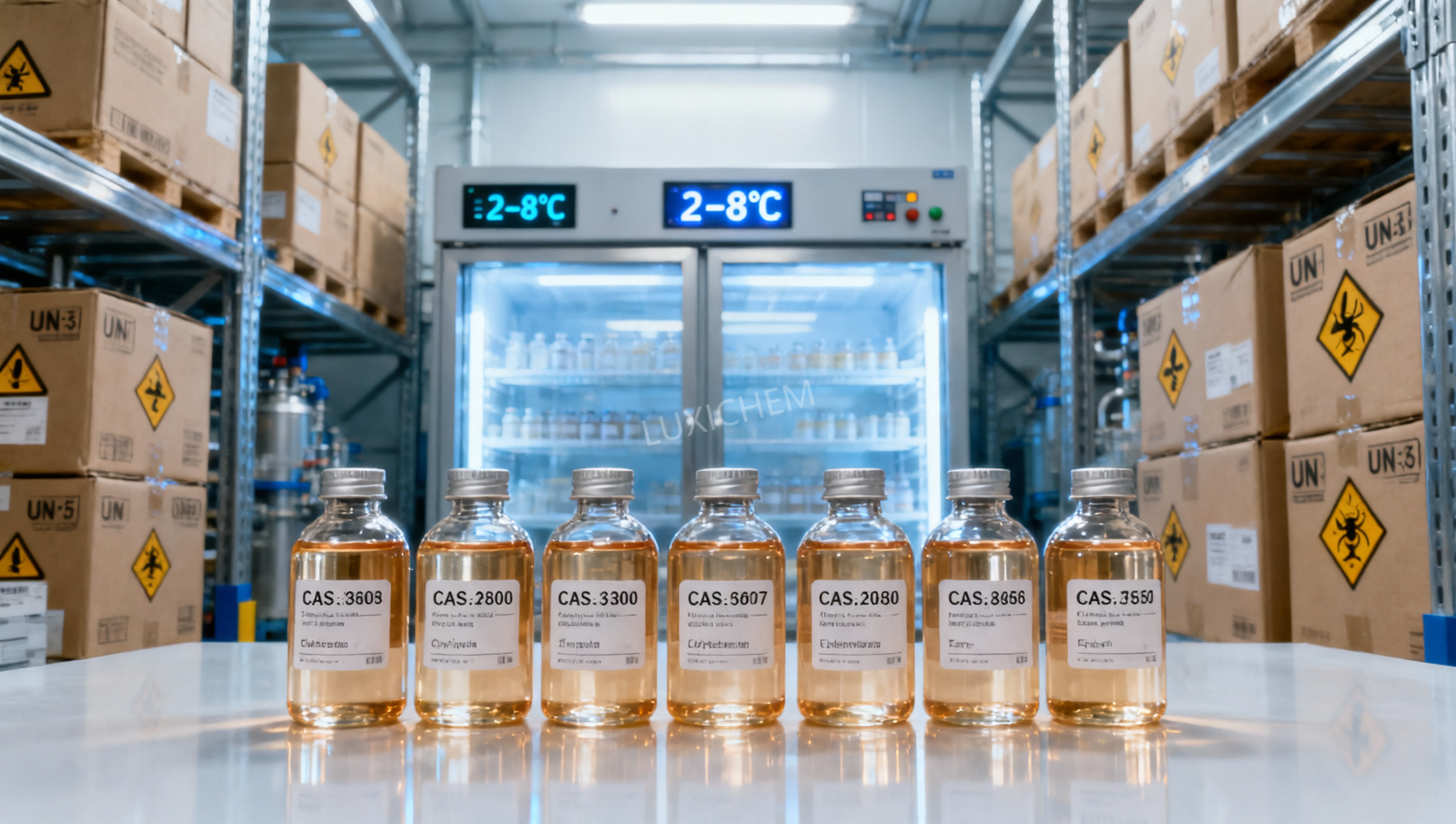
Facing unpredictable delays from every major insecticides supplier, procurement professionals are struggling to maintain production schedules amid global supply chain shifts. Geopolitical tensions, port congestion, and raw material volatility are extending lead times—sometimes by months. For buyers sourcing active ingredients used in agricultural formulations, this isn’t just a logistics hiccup; it’s a direct threat to formulation continuity, regulatory compliance timelines, and seasonal deployment windows.
The problem isn’t uniform across chemical categories. While broad-spectrum insecticides face pressure from tightening pyrethroid regulations and regional bans, high-purity intermediates—especially those with narrow synthesis windows or strict storage requirements—see disproportionate lead time inflation. Delays compound when suppliers lack real-time inventory visibility, rely on fragmented export partners, or operate without integrated quality documentation for destination markets. Buyers who once treated lead time as a static variable now find themselves re-evaluating every order against shifting transit routes, customs clearance bottlenecks, and batch-specific stability data.
Where Lead Time Pressure Is Most Acute
Three interlocking factors are driving the current strain:
- Raw material scarcity at origin: Key precursors for organophosphate and neonicotinoid derivatives are increasingly subject to domestic allocation policies in China and India. This doesn’t always trigger price spikes—but it does trigger extended wait times for confirmed allocations and tighter lot traceability requirements.
- Export infrastructure friction: Shandong Province remains a critical hub for agrochemical exports, but inland container movement has slowed due to stricter road transport compliance enforcement and seasonal weather-related rail delays. Even when stock is available, getting it to Qingdao or Yantai ports can add 7–14 days.
- Regulatory documentation lag: More importing countries now require full CoA + CoC + GMP summary packages per shipment—not per annual contract. Suppliers without embedded regulatory support teams often delay dispatch while compiling documents, especially for new destinations or newly registered formulations.
This isn’t theoretical. Procurement teams managing multi-country registrations report that even routine reorder cycles now require 30–45 days of buffer—up from 10–15 days pre-2022. That buffer erodes working capital, limits responsiveness to sudden demand shifts, and increases the risk of emergency air freight costs.
What Buyers Can Control—Right Now
You don’t need to wait for macro conditions to improve. Actionable levers exist today—if your sourcing strategy accounts for them:
1. Prioritize suppliers with end-to-end export ownership. Relying on third-party freight forwarders for customs clearance creates handoff points where documentation errors, tariff misclassifications, or certificate omissions stall shipments. Suppliers who manage their own export licenses, maintain in-house customs brokers, and issue origin certificates directly reduce processing variance—and often provide earlier visibility into potential holdups.
2. Shift from “batch-first” to “inventory-first” ordering for stable intermediates. For compounds with long shelf life, consistent purity profiles, and low sensitivity to ambient conditions (e.g., solid-phase actives stored at 2–8°C), holding strategic safety stock—even at supplier warehouses—can decouple production planning from shipping volatility. This only works if the supplier guarantees lot traceability, retains full CoA retention, and allows audit access.
3. Align specification rigor with actual application needs. Over-specifying—demanding 99.99% purity for a technical-grade intermediate that will be diluted 1:500 in final formulation—adds unnecessary analytical burden, extends release timelines, and narrows the pool of qualified vendors. Revisiting specs with formulation chemists often reveals acceptable ranges that preserve performance while accelerating availability.
How Stability and Storage Requirements Shape Lead Time Realities
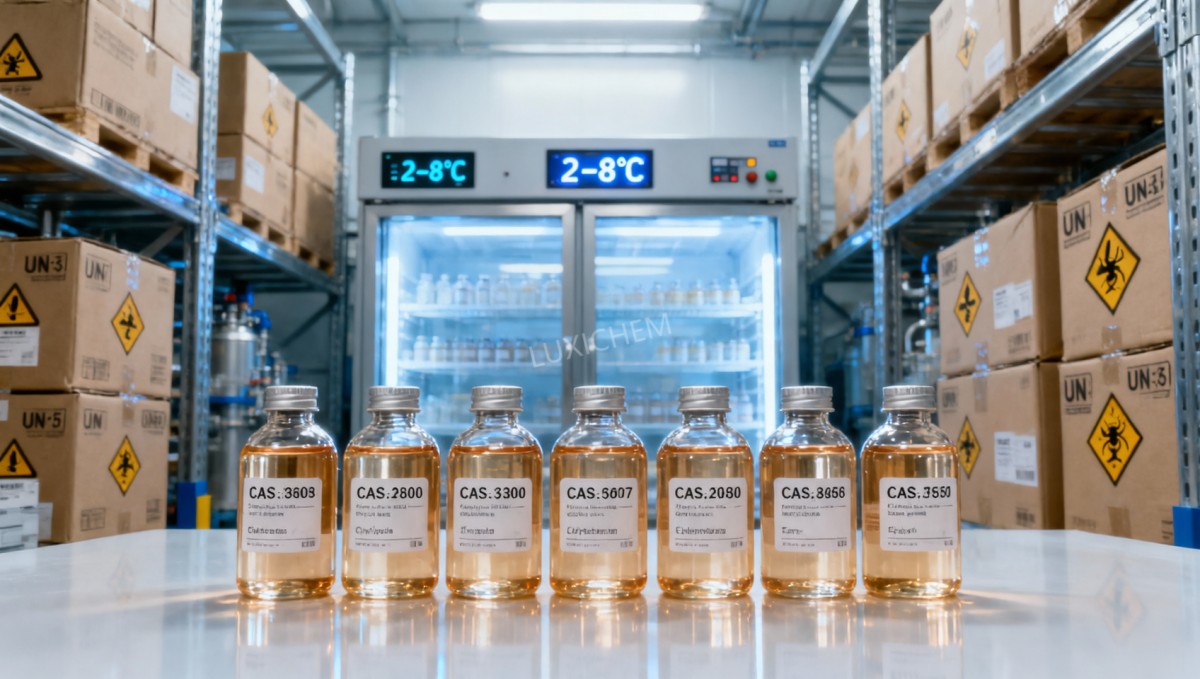
Not all active ingredients behave the same way under logistical stress. Temperature-sensitive solids, hygroscopic powders, or light-degradable liquids introduce additional constraints that most standard lead time estimates ignore. Take, for example, Alpha-Dihydroartemisinin CAS#81496-81-3: a white to off-white crystalline solid requiring storage at 2–8°C, with slight solubility in chloroform, DMSO, ethyl acetate, and methanol. Its stability profile means cold-chain integrity must be verified at every handoff—from warehouse loading to container stowage to destination customs inspection. Any deviation risks degradation, which triggers retesting or rejection—adding weeks to the timeline.
Procurement teams often overlook how physical form dictates logistics complexity. A solid with defined melting point (142–144°C) and predictable pKa (12.61±0.70) behaves differently than an oil or amorphous powder during temperature fluctuations. That difference translates directly into required packaging, monitoring, and transit documentation. Suppliers who document thermal behavior, moisture uptake rates, and photostability per batch—not just per catalog spec—provide actionable intelligence for route selection and contingency planning.
Why Regional Sourcing Depth Matters More Than Global Scale
Global reach alone doesn’t mitigate lead time risk. What matters is localized execution capability. A supplier with offices in over 60 countries means little if its Shandong-based manufacturing, QC, and export teams operate in silos. Conversely, a supplier deeply embedded in regional chemical ecosystems—like Luxi Chemical (Shandong) Co., Ltd.—can coordinate production scheduling, analytical release, and port dispatch within a single operational rhythm.
This integration shows up in practical ways: same-day CoA issuance after QC sign-off, pre-cleared container booking slots during peak season, and direct access to provincial customs liaison channels for urgent documentation queries. It also enables faster response to specification adjustments—such as modifying residual solvent thresholds based on new EU MRL updates—without waiting for cross-departmental alignment.
For procurement professionals managing tight formulation windows, that kind of operational coherence reduces uncertainty more effectively than any contractual penalty clause. It turns lead time from a negotiated number into a measurable, repeatable process metric.
Action Steps for Next Quarter
You don’t need to overhaul your entire supplier base. Start with these concrete actions:
- Map your top five active ingredients by lead time sensitivity and storage class. Flag those requiring refrigeration, inert atmosphere, or light protection—they’re your highest-leverage candidates for supplier reassessment.
- Request evidence—not just statements—of export process ownership: ask for sample CoA/CoC packages issued directly by the supplier (not forwarded by a broker), and verify license numbers against official provincial commerce bureau records.
- Test one product line with a staggered order approach: place 30% as a firm order with confirmed warehouse stock, 40% as a scheduled production run with documented release window, and 30% as a flexible call-off against rolling forecast. Track actual vs. promised dispatch dates across all three.
Lead time volatility won’t disappear overnight. But treating it as a controllable operational parameter—not just an external force—changes what’s possible. The goal isn’t zero delay. It’s predictability you can plan around.
Related Picks
 Butylated Hydroxytoluene Price Drivers: Supply, Purity, and Purchasing Risk FactorsOct 21, 2026Butylated Hydroxytoluene price trends depend on supply stability, purity, logistics, and purchasing risk. Learn how to compare quotes wisely and reduce sourcing costs.
 Sodium Tripolyphosphate Price Trends: Raw Material and Energy ExposureOct 20, 2026Explore sodium tripolyphosphate price trends, from phosphate and soda ash costs to energy exposure. Learn how to compare quotes, manage sourcing risks, and make smarter purchasing decisions.
 Acetonitrile Shipment to Vietnam Successfully Dispatched; RCEP Benefits Boost Fine Chemical Trade with ASEANSep 16, 2026A shipment of industrial-grade acetonitrile from our company has recently been loaded and dispatched following the completion of standardized hazardous material packaging and container securing procedures.
 Nigerian Client’s Order of 4 Containers of Vinyl Acetate Successfully Loaded and Shipped to West AfricaSep 16, 2026We recently completed the loading of a vinyl acetate order for a Nigerian client; four containers of the product have been successfully packed and are ready for shipment to Nigeria.




Question Consultation
Send Us Your Inquiry Today

Luxi Chemical is a professional chemical product supplier with ample stock of all chemical categories and excellent quality, welcome your purchase inquiry.

