


What Makes a Reliable Insecticides Supplier for Contract Manufacturing? Audit Checklist for Capacity, QA Infrastructure & Regulatory Support
2026.09.18
When procurement teams begin evaluating an insecticides supplier for contract manufacturing, they’re not just comparing quotes—they’re weighing risk, reputation, and operational resilience. A misstep in supplier selection doesn’t just delay launch timelines; it can trigger regulatory scrutiny, compromise formulation integrity, or erode brand trust across markets. That’s why seasoned evaluators treat this decision like a layered audit—not a transaction.
What separates a truly reliable insecticides supplier from the rest isn’t just scale or price. It’s how seamlessly they integrate into *your* quality system—how their capacity aligns with your batch variability, how their QA infrastructure anticipates gaps before they become deviations, and how their regulatory intelligence translates into real-world registration speed—not just paperwork compliance.
Here’s what matters—and how to verify it—before signing anything.
**Capacity Isn’t Just About Tonnes Per Month**
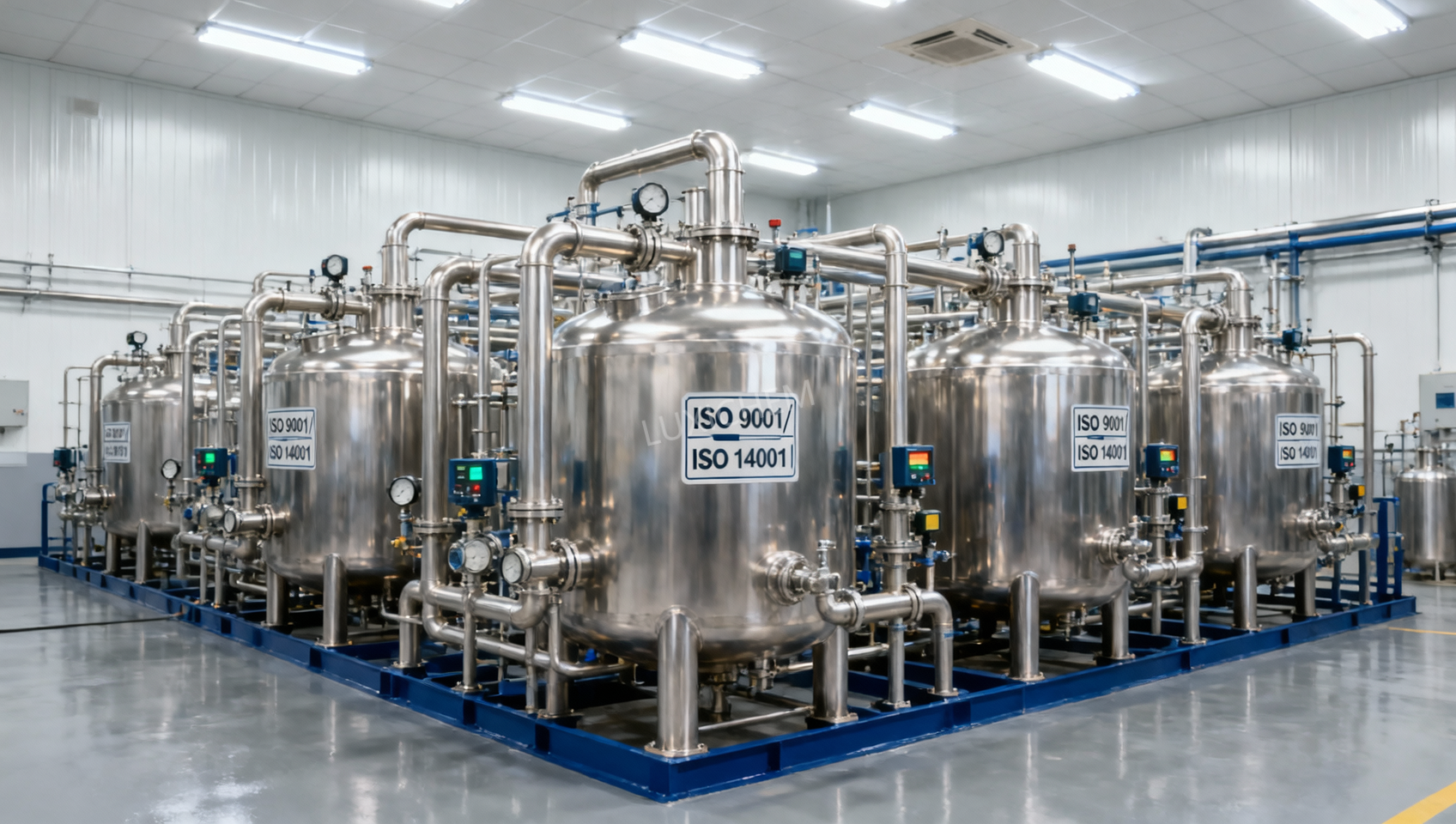
Many suppliers list annual output figures that sound impressive on paper. But for contract manufacturing, consistency matters more than peak volume. Ask: *Can they maintain 95%+ on-time delivery across seasonal demand spikes? Do they hold dedicated production lines—or share equipment across multiple product families?* Cross-contamination risk escalates when shared reactors handle both organophosphates and neonicotinoids without rigorous changeover validation. Luxi Chemical operates ISO 9001- and ISO 14001-certified facilities in Shandong, with dedicated synthesis lines segmented by chemical class and residue control protocols—verified through third-party audits, not internal declarations.
Also consider flexibility. If your formulation requires custom particle size distribution or solvent-free granulation, does the supplier own micronization or fluid-bed coating capabilities—or do they outsource critical steps? Outsourcing introduces traceability gaps, especially when raw materials like D-Mannitol CAS#69-65-8 are used as inert carriers or flow aids in solid insecticide formulations. Luxi handles such functional excipients in-house—not as add-ons, but as integrated process inputs—with full CoA traceability back to crystallization batches.
**QA Infrastructure Must Be Embedded, Not Bolted On**
A lab with HPLC and GC-MS is table stakes. What differentiates a partner is *how* those tools serve decision-making. Does their QA team co-develop stability protocols with your R&D? Do they retain samples for 24 months post-release—not because regulation demands it, but because they anticipate your need for root-cause analysis six months after field complaints?
Look beyond certificates. Request evidence of method transfer validation between their labs and yours. Ask for deviation logs over the past 12 months—not summaries, but anonymized examples showing how non-conformances were investigated, corrected, and prevented. At Luxi, every release batch undergoes dual-stage testing: first at the point of synthesis (for intermediate purity), then again post-formulation (for final assay, residual solvents, heavy metals). This mirrors pharmaceutical-grade discipline—but applied pragmatically to agrochemicals.
 **Regulatory Support Is Measured in Approvals, Not Brochures**
“Global registrations” sounds reassuring—until you discover the listed countries are limited to jurisdictions where dossier submission was outsourced to local agents with no technical ownership. True regulatory partnership means the supplier understands *why* Brazil’s ANVISA requires hydrolysis data at pH 4, 7, and 9—or why India’s CDSCO now mandates photostability testing under ICH Q1B for all new active ingredients.
Luxi maintains direct registration relationships with key authorities—not just in China and ASEAN, but across Latin America and Africa. Their regulatory team includes former agency reviewers who’ve contributed to FAO/WHO pesticide evaluation guidelines. They don’t just file dossiers; they co-author them with clients, embedding your proprietary formulation data into the toxicological and environmental fate sections—so when your brand goes live in Nigeria or Colombia, the approval belongs to *you*, not a generic “manufacturer of record.”
And crucially, they track changes *proactively*. When EU Regulation (EC) No 1107/2009 updated Annex II criteria for endocrine disruptors last year, Luxi alerted over 30 clients within 72 hours—including revised analytical methods and updated SDS templates—before any enforcement action occurred.
**The Human Factor Behind the Checklist**
Technical capability is necessary—but insufficient. During due diligence, speak with their QA managers *without* sales present. Ask how they escalate unresolved deviations. Observe how they document customer-specific requirements: Are your limits for arsenic (<0.5 ppm) embedded in their LIMS as hard stops—or noted in a Word doc attached to an email?
Also consider supply chain ethics. Luxi sources raw materials through vetted channels with documented responsible mineral sourcing policies—especially relevant when intermediates involve metal catalysts or mined phosphates. Their traceability extends to Tier 2 suppliers, verified annually via on-site assessments—not just self-declarations.
Finally, think about continuity. What happens if a key engineer leaves? Luxi cross-trains technical staff across synthesis, analytical, and regulatory functions—so no single person holds irreplaceable knowledge. That reduces your dependency risk far more than any SLA clause ever could.
For procurement professionals balancing cost, speed, and certainty, choosing an insecticides supplier isn’t about finding the lowest quote—it’s about identifying the partner whose systems absorb your uncertainty. Capacity that scales *with your rhythm*, QA that thinks *like your team*, and regulatory support that acts *ahead of your deadlines*. That’s reliability—not as a marketing claim, but as a repeatable outcome.
Because when your next formulation enters commercial scale-up, what you’ll remember isn’t the MOQ or the lead time. It’ll be whether the batch passed first-run validation—or whether you spent three weeks troubleshooting a solubility drift that should’ve been caught at pilot stage. The right supplier makes that distinction vanish.
Related Picks
 Butylated Hydroxytoluene Price Drivers: Supply, Purity, and Purchasing Risk FactorsOct 21, 2026Butylated Hydroxytoluene price trends depend on supply stability, purity, logistics, and purchasing risk. Learn how to compare quotes wisely and reduce sourcing costs.
 Sodium Tripolyphosphate Price Trends: Raw Material and Energy ExposureOct 20, 2026Explore sodium tripolyphosphate price trends, from phosphate and soda ash costs to energy exposure. Learn how to compare quotes, manage sourcing risks, and make smarter purchasing decisions.
 Acetonitrile Shipment to Vietnam Successfully Dispatched; RCEP Benefits Boost Fine Chemical Trade with ASEANSep 16, 2026A shipment of industrial-grade acetonitrile from our company has recently been loaded and dispatched following the completion of standardized hazardous material packaging and container securing procedures.
 Nigerian Client’s Order of 4 Containers of Vinyl Acetate Successfully Loaded and Shipped to West AfricaSep 16, 2026We recently completed the loading of a vinyl acetate order for a Nigerian client; four containers of the product have been successfully packed and are ready for shipment to Nigeria.




Question Consultation
Send Us Your Inquiry Today

Luxi Chemical is a professional chemical product supplier with ample stock of all chemical categories and excellent quality, welcome your purchase inquiry.

