


How Agricultural Insecticides Are Adapting to EU’s New Sustainable Pesticide Regulation — What Exporters Must Know
2026.09.18
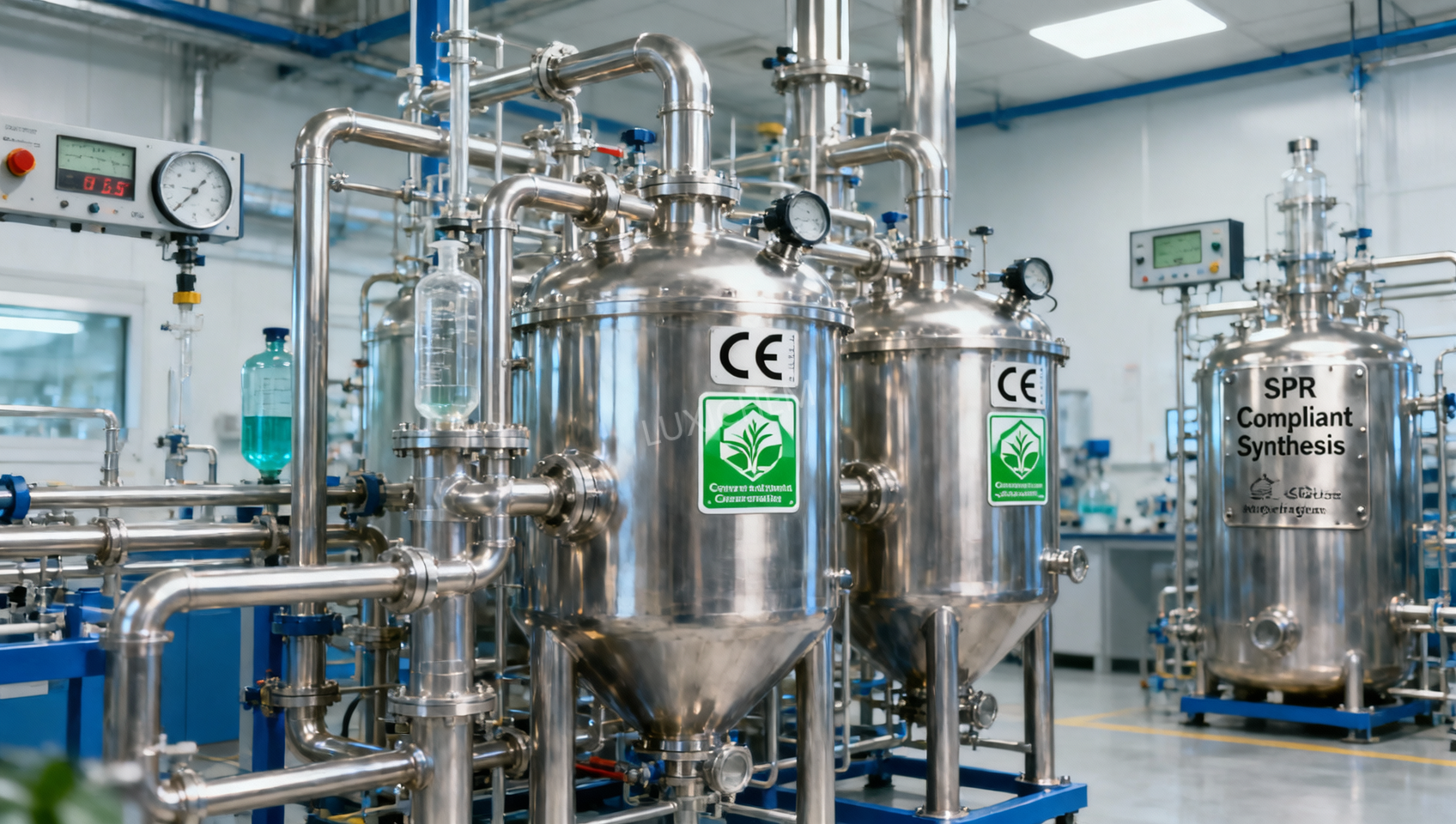
The EU’s Sustainable Pesticide Regulation (SPR), adopted in June 2024 as part of the broader Zero Pollution Action Plan, is not an incremental update—it is a structural reset for agricultural insecticides entering the European market. For exporters, the shift goes far beyond label revisions or minor formulation tweaks. It redefines what qualifies as “acceptable” at the molecular level, introduces binding ecological thresholds, and embeds green chemistry criteria directly into authorization decisions. There is no grandfathering clause for legacy active substances—even those with decades of regulatory acceptance—unless they demonstrably meet new sustainability benchmarks.
Three technical pillars drive this change: (1) mandatory biodiversity impact assessments covering soil invertebrates, non-target arthropods, and pollinators—not just acute toxicity but sublethal, chronic, and trophic-level effects; (2) stricter Maximum Residue Levels (MRLs) aligned with the EU’s new “safe-by-design” principle, where residue limits are now derived from exposure pathways that include cumulative dietary intake, environmental persistence, and metabolite toxicity; and (3) formal integration of the 12 Principles of Green Chemistry into evaluation protocols, requiring applicants to demonstrate reduced synthetic step count, improved atom economy, and avoidance of hazardous solvents or reagents in manufacturing.
This isn’t theoretical compliance. It has immediate commercial consequences. As of January 2025, all new applications for agricultural insecticide authorizations must include full Life Cycle Assessment (LCA) data covering raw material sourcing, synthesis energy use, waste generation, and end-of-life degradation profiles. Existing products face phased re-evaluation starting in Q3 2025—beginning with organophosphates and neonicotinoids, but extending to pyrethroids and newer chemistries like diamides if their environmental half-life exceeds 60 days in aerobic soil or shows bioaccumulation potential (log Kow > 4.5). Crucially, the regulation treats “low-risk” status not as a static classification but as a dynamic threshold: a substance may retain approval only if its updated risk assessment—using newly mandated higher-tier field studies—confirms negligible impact on ecosystem services such as natural pest suppression or soil microbial function.
For exporters, the most consequential change lies in how chemical intermediates are scrutinized. The SPR explicitly extends due diligence upstream: manufacturers must now provide full process chemistry documentation for all synthetic precursors used above 0.1% w/w in final formulations. This includes solvent recovery rates, catalyst recycling efficiency, and impurity profiles—including genotoxic or endocrine-disrupting trace contaminants generated during synthesis. It is here that supply chain transparency becomes a technical requirement, not a marketing differentiator. A single unverified intermediate—such as a chiral building block synthesized via asymmetric hydrogenation using palladium on carbon without documented metal leaching controls—can trigger rejection of the entire formulation dossier.
This upstream accountability also reshapes sourcing logic. Many conventional insecticide synthetics rely on multi-step routes involving chlorination, nitration, or high-temperature condensation—all flagged under Annex III of the SPR for mandatory substitution review. Exporters who previously sourced intermediates based on cost or availability alone now need verifiable evidence of route optimization: e.g., enzymatic hydrolysis replacing acid-catalyzed ester cleavage, or flow chemistry reducing thermal runaway risk and solvent volume by ≥40%. Regulatory reviewers are no longer assessing only the final active ingredient—they are auditing the chemical logic behind it.
 One frequently overlooked implication concerns analytical validation. The SPR mandates that MRL enforcement methods detect not only parent compounds but also transformation products formed under realistic environmental conditions—such as photolysis-derived oxons or hydrolytic amides. Standard HPLC-MS/MS methods validated against pure standards often fail here. Laboratories must now demonstrate method robustness across simulated soil moisture/pH gradients and UV exposure durations. This means exporters cannot rely solely on third-party lab reports issued pre-2024; they must commission new validation packages specifically designed for the SPR’s transformation product matrix.
Another operational reality: the regulation eliminates “data waivers” for certain ecotoxicity endpoints. Previously, if a compound showed low water solubility (<1 mg/L), regulators might waive aquatic invertebrate testing. Under the SPR, solubility is irrelevant—if the substance partitions into organic matter (Koc > 1,000 L/kg), it triggers mandatory sediment-dwelling organism studies, including chronic reproduction assays for *Chironomus riparius*. Similarly, any insecticide with log Kow > 3.0 now requires mandatory earthworm avoidance testing, even if acute toxicity data suggest low risk. These aren’t optional add-ons—they’re hard gates before dossier submission.
From a formulation perspective, inert ingredients are no longer exempt. The SPR defines “co-formulants” as substances contributing to efficacy, stability, or delivery—and subjects them to the same green chemistry screening as actives. That includes emulsifiers, solubilizers, and crystallization inhibitors. For example, alkylphenol ethoxylates—still widely used in generic emulsions—fail Principle #4 (designing safer chemicals) and are listed for phase-out by 2027. Alternatives must demonstrate non-bioaccumulative behavior (log Kow < 3.5), ready biodegradability (>60% OECD 301B), and absence of aquatic chronic toxicity (NOEC > 0.1 mg/L for *Daphnia magna*).
This tightening extends to biochemical reference materials. When validating residue methods or conducting comparative metabolism studies, laboratories increasingly require certified reference standards with traceable purity and characterized isomeric composition. Impurities—even at ≤0.5%—must be identified and assessed for endocrine activity if structurally analogous to known disruptors. In this context, high-purity steroidal intermediates like Cholesterol CAS#57-88-5, used in biosynthetic pathway studies or as internal standards for hormone-mimicking metabolites, gain renewed relevance—not as an active ingredient, but as a benchmark for analytical rigor and metabolic fidelity.
None of these requirements are applied uniformly across all product classes. The SPR introduces a tiered review schedule: substances with existing EU approval and no outstanding concerns receive a 5-year grace period for full dossier updates; those under ongoing peer review (e.g., clothianidin, thiamethoxam) face accelerated timelines—often less than 18 months. New chemical entities undergo parallel assessment: toxicology, ecotoxicology, and green chemistry criteria are evaluated concurrently, not sequentially. This compresses development cycles and increases upfront R&D investment—particularly for exporters lacking in-house regulatory science capacity.
What separates viable exporters from those at risk is not whether they comply—but how early and how deeply they integrate SPR logic into core technical operations. It starts with re-evaluating synthesis routes not just for yield and cost, but for step economy and hazard profile. It continues with upgrading analytical infrastructure to detect environmentally relevant transformation products—not just parent molecules. And it culminates in treating regulatory documentation not as a post-manufacturing formality, but as a live technical asset reflecting real-time process control and environmental accountability.
The SPR does not ban agricultural insecticides. It redefines the technical baseline for their legitimacy in Europe—and by extension, sets a de facto standard for global best practice. Exporters who treat it as a checklist will find themselves reacting to deadlines. Those who treat it as a design constraint will build portfolios where compliance is embedded in molecular architecture, not appended in a dossier appendix.
Related Picks
 Butylated Hydroxytoluene Price Drivers: Supply, Purity, and Purchasing Risk FactorsOct 21, 2026Butylated Hydroxytoluene price trends depend on supply stability, purity, logistics, and purchasing risk. Learn how to compare quotes wisely and reduce sourcing costs.
 Sodium Tripolyphosphate Price Trends: Raw Material and Energy ExposureOct 20, 2026Explore sodium tripolyphosphate price trends, from phosphate and soda ash costs to energy exposure. Learn how to compare quotes, manage sourcing risks, and make smarter purchasing decisions.
 Acetonitrile Shipment to Vietnam Successfully Dispatched; RCEP Benefits Boost Fine Chemical Trade with ASEANSep 16, 2026A shipment of industrial-grade acetonitrile from our company has recently been loaded and dispatched following the completion of standardized hazardous material packaging and container securing procedures.
 Nigerian Client’s Order of 4 Containers of Vinyl Acetate Successfully Loaded and Shipped to West AfricaSep 16, 2026We recently completed the loading of a vinyl acetate order for a Nigerian client; four containers of the product have been successfully packed and are ready for shipment to Nigeria.




Question Consultation
Send Us Your Inquiry Today

Luxi Chemical is a professional chemical product supplier with ample stock of all chemical categories and excellent quality, welcome your purchase inquiry.

