


Why Some Systemic Insecticides Fail in High-pH Irrigation Water — And How to Adjust Formulation or Application Timing
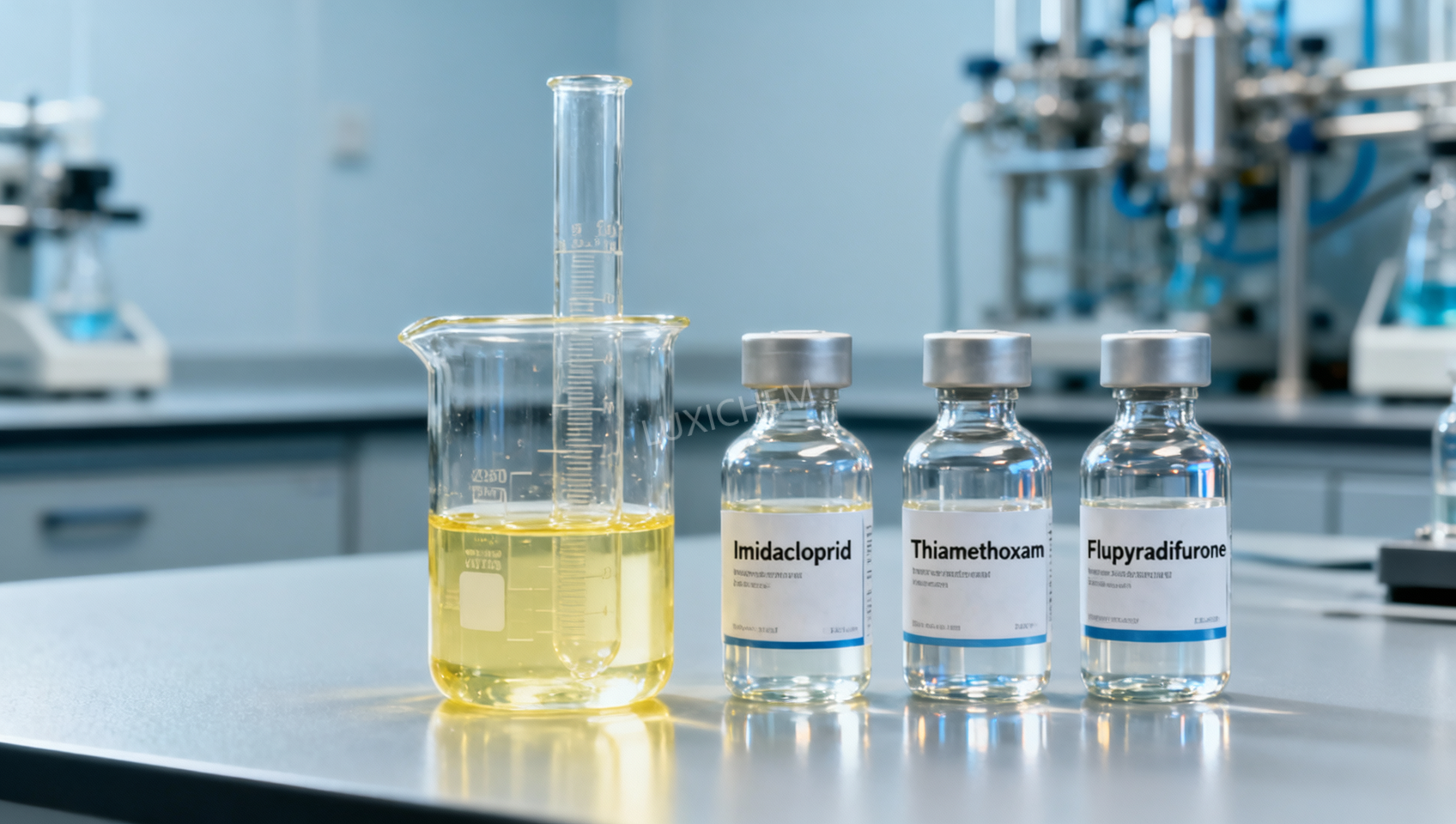
Many field operators report inconsistent control of pests despite correct application rates of systemic insecticides—often due to unnoticed pH-driven degradation in irrigation water. When high-pH water (pH > 7.5) interacts with certain systemic insecticides, hydrolysis accelerates, reducing active ingredient availability before uptake. This isn’t a dosing error or resistance issue—it’s a chemistry mismatch happening right in the tank or drip line.
Why pH Matters More Than You Think
Unlike contact insecticides that act on the surface, systemic insecticides must dissolve, remain chemically intact, and move into plant tissues via xylem or phloem. Their stability in aqueous solution is highly pH-dependent. Alkaline conditions (pH > 7.5) promote base-catalyzed hydrolysis—especially for compounds containing ester linkages, carbamates, or labile heterocycles. The result? Rapid breakdown before the compound even reaches the root zone.
For example, imidacloprid degrades ~3× faster at pH 8.2 than at pH 6.5 over 24 hours under typical irrigation temperatures. Thiamethoxam shows similar sensitivity, while acetamiprid holds up better—but only if water hardness and temperature are also controlled. It’s not about “good” or “bad” water; it’s about whether the water’s chemical environment matches the molecule’s stability window.
Which Systemic Insecticides Are Most at Risk?
Not all systemic insecticides behave the same way. Below is a practical field-based grouping—not a lab-only ranking—based on observed efficacy loss across hundreds of grower reports in arid and semi-arid regions (where high-pH groundwater is common):
This table reflects real-world behavior—not just theoretical hydrolysis rates. What matters most is how long the active ingredient stays intact *after mixing*, under actual field storage and delivery conditions (e.g., stagnant tank water overnight, warm ambient temps, UV exposure in open lines).
Two Practical Fixes—Not Just Theory
You don’t need new products or expensive equipment to solve this. Field-proven adjustments focus on two levers: formulation support and timing discipline.
1. Buffer the Mix—But Choose Wisely
Lowering tank water pH to 5.5–6.5 before adding systemic insecticides significantly extends stability. However, indiscriminate acid use risks phytotoxicity, corrosion, or precipitation of calcium/magnesium salts. Avoid strong mineral acids unless calibrated and monitored. Instead, use food-grade organic acids—citric or lactic acid—that buffer gently and degrade harmlessly.
Here’s where formulation compatibility becomes critical: some additives improve solubility *and* stabilize pH. For instance, CALCIUM GLYCEROPHOSPHATE CAS#27214-00-2 forms a mildly alkaline aqueous solution and exhibits moderate water solubility—enhanced in the presence of weak acids. While not used as a primary pH adjuster in agrochemicals, its buffering capacity and crystalline stability make it a useful co-formulant in multi-active blends where controlled dissolution and ion balance matter. Its hygroscopic nature and thermal stability also support consistent handling during premix preparation—especially in dry, high-temperature environments common in irrigation-intensive regions.
2. Time the Application Like a Reaction Step
Even with ideal pH, delay between mixing and application invites degradation. In high-pH systems, treat the spray tank like a reaction vessel: minimize residence time. Best practice? Mix no more than 2–4 hours’ worth of solution at a time—and apply immediately. If using drip irrigation, flush lines with plain water before and after to prevent residual alkaline water from contacting freshly mixed product.
Also consider diurnal timing. Early morning applications (just after sunrise) often coincide with cooler water temperatures and lower evaporation-induced concentration spikes—both factors that slow hydrolysis. Avoid midday mixing when tank water may exceed 30°C, especially in black poly tanks exposed to sun.
What Not to Do (Common Missteps)
• Assuming “low-drift” or “high-solubility” labels guarantee pH stability. Solubility ≠ hydrolytic stability. A compound can dissolve fully but still break down fast in alkaline water.
• Using untreated well water without testing. One grower in Arizona saw full control failure with thiamethoxam—only to discover his source water was pH 8.4 with 320 ppm CaCO₃. A simple $15 pH meter would have flagged it.
• Adding adjuvants first, then insecticide. Some spreaders or stickers raise pH. Always measure final tank mix pH *after* all components—including surfactants—are added.
When to Suspect pH-Driven Failure
Ask yourself these three questions before reapplying:
- Is pest pressure increasing *despite* full label rate and proper coverage—especially on new growth?
- Did you test your irrigation water’s pH and alkalinity (not just soil pH)?
- Was the tank mix left standing >4 hours before application—or did it sit in warm, unshaded lines overnight?
If two or more are “yes,” pH-driven degradation is likely the culprit—not resistance or poor coverage.
Final Thought: Stability Is a System Property
The performance of any systemic insecticide depends less on the molecule alone and more on how it behaves within your entire delivery system: water quality, mixing order, temperature, dwell time, and even pipe material. Luxi Chemical’s field support team routinely sees cases where switching from “standard” to “low-pH stabilized” formulations—combined with strict timing protocols—restores full efficacy without changing active ingredients. That’s not chemistry magic. It’s applied understanding.
Start small: test your water, adjust one variable at a time, and track results over two crop cycles. Consistent control starts not at the leaf—but at the tap.
Related Picks
 Butylated Hydroxytoluene Price Drivers: Supply, Purity, and Purchasing Risk FactorsOct 21, 2026Butylated Hydroxytoluene price trends depend on supply stability, purity, logistics, and purchasing risk. Learn how to compare quotes wisely and reduce sourcing costs.
 Sodium Tripolyphosphate Price Trends: Raw Material and Energy ExposureOct 20, 2026Explore sodium tripolyphosphate price trends, from phosphate and soda ash costs to energy exposure. Learn how to compare quotes, manage sourcing risks, and make smarter purchasing decisions.
 Acetonitrile Shipment to Vietnam Successfully Dispatched; RCEP Benefits Boost Fine Chemical Trade with ASEANSep 16, 2026A shipment of industrial-grade acetonitrile from our company has recently been loaded and dispatched following the completion of standardized hazardous material packaging and container securing procedures.
 Nigerian Client’s Order of 4 Containers of Vinyl Acetate Successfully Loaded and Shipped to West AfricaSep 16, 2026We recently completed the loading of a vinyl acetate order for a Nigerian client; four containers of the product have been successfully packed and are ready for shipment to Nigeria.




Question Consultation
Send Us Your Inquiry Today

Luxi Chemical is a professional chemical product supplier with ample stock of all chemical categories and excellent quality, welcome your purchase inquiry.

