


How to Verify Bulk Insecticides Quality Before Shipment: Key Tests for Assay, Impurities, Emulsion Stability & pH
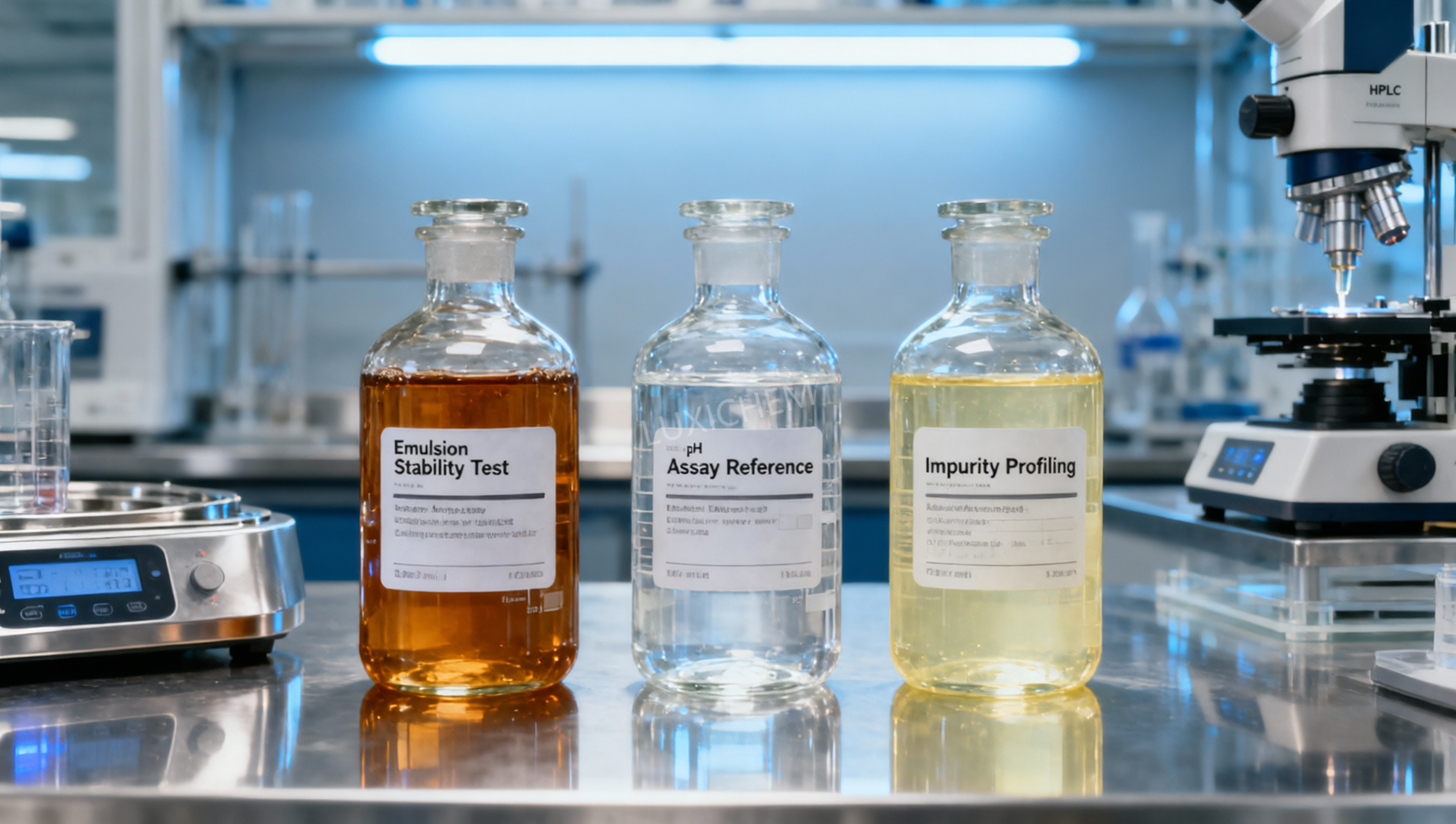
Verifying the quality of bulk insecticides before shipment is not a procedural formality—it’s a critical control point that directly impacts regulatory acceptance, field performance, and end-user safety. For quality control and safety managers overseeing agricultural chemical supply chains, a single batch failing assay or emulsion stability testing can trigger customs rejection, formulation breakdown in the field, or unintended phytotoxicity. At Luxi Chemical (Shandong) Co., Ltd., pre-shipment verification follows a targeted, standards-aligned protocol—not generic screening. The core tests are non-negotiable: active ingredient assay, impurity profiling (including residual solvents and genotoxic by-products), emulsion stability across temperature gradients, and pH consistency. These four parameters collectively determine whether a batch meets FAO/WHO specifications, EPA registration requirements, and ISO 9001 traceability expectations.
Assay Validation: Confirming Active Ingredient Content Within Tolerance
Assay quantifies the actual concentration of the declared active ingredient—e.g., chlorpyrifos, lambda-cyhalothrin, or imidacloprid—in the bulk product. A deviation beyond ±2% of the labeled specification often violates FAO/WHO Joint Meeting on Pesticide Specifications (JMPS) guidelines. We use validated HPLC-UV methods with internal standard calibration, running triplicate injections per sample. Acceptance requires both accuracy (recovery 98–102%) and precision (RSD ≤ 1.5%). If results fall outside this window, reprocessing is rarely viable; instead, root cause analysis focuses on raw material variability, reaction completion during synthesis, or solvent evaporation inconsistencies in final concentration steps.
Impurity Profiling: Beyond Total Impurities to Hazardous By-Products
Total impurities alone are insufficient. Regulatory bodies—especially the EU under Regulation (EC) No 1107/2009—require identification and quantification of specific impurities with toxicological relevance. Key targets include residual solvents (e.g., dichloromethane, toluene), process-related genotoxic impurities (e.g., alkyl chlorides, hydrazines), and degradation products formed during storage. GC-MS or UPLC-MS/MS is used for detection, with limits set per ICH Q3A(R2) and Q3B(R2). For example, chlorpyrifos batches must show < 10 ppm of 3,5,6-trichloro-2-pyridinol (TCP) as a hydrolysis marker—and < 0.1 ppm of any confirmed mutagenic compound. Failure here doesn’t just mean rejection; it may require full toxicological re-evaluation by the importing country’s authority.
Emulsion Stability: Simulating Real-World Handling Conditions
Bulk insecticides formulated as EC (emulsifiable concentrate) or EW (emulsion in water) must remain physically stable across transport and storage conditions. Standardized testing includes cold stability (0°C for 7 days), heat stability (54°C for 14 days), and freeze-thaw cycling (–10°C/20°C × 3 cycles). Post-test evaluation isn’t visual-only: we centrifuge samples at 3,000 rpm for 15 minutes and measure phase separation volume, sediment formation, and droplet size distribution via laser diffraction. An acceptable result shows no creaming, cracking, or >5% change in Dv90 (90th percentile droplet diameter). Instability here correlates directly with poor field dilution behavior and inconsistent spray coverage—leading to under-dosing or crop damage.
pH Consistency: Ensuring Compatibility and Shelf Life
pH influences hydrolytic degradation rates, tank-mix compatibility, and corrosion potential in storage tanks or application equipment. For most organophosphate and pyrethroid ECs, the target range is pH 5.0–7.5. We measure using a calibrated pH meter with temperature compensation, sampling from three points in the homogenized bulk tank. A deviation > ±0.3 units from the historical mean triggers investigation into neutralization agent dosage, water quality (e.g., carbonate hardness), or aging-related acid formation. Notably, pH shifts often precede detectable assay loss—making it an early-warning indicator, not just a compliance checkbox.
How Product-Specific Knowledge Informs Testing Strategy
Testing protocols aren’t one-size-fits-all. Take Daidzein CAS#486-66-8, a natural soy isoflavone increasingly used as a botanical synergist in reduced-risk insecticide formulations. Its low water solubility (insoluble) and pH-dependent stability (pKa 7.01±0.20) mean that when co-formulated with acidic actives, its crystallization risk increases if pH drifts below 6.0. In such cases, our pre-shipment check adds a solubility stress test—holding the mixture at 40°C for 48 hours and monitoring for precipitate formation under polarized light microscopy. This adjustment reflects how molecular properties directly shape analytical priorities—even within the same bulk shipment.
When to Escalate Beyond Routine Checks
Four scenarios warrant immediate technical review, not routine retesting: (1) assay and impurity results are within spec, but emulsion stability fails—suggesting surfactant batch incompatibility; (2) pH shifts correlate with elevated TCP in chlorpyrifos, indicating hydrolysis during storage; (3) cold stability passes, but freeze-thaw causes irreversible coalescence—pointing to inadequate emulsifier HLB balance; (4) impurity profiling detects an unknown peak > 0.05%—requiring structural elucidation via NMR or high-res MS. In these cases, Luxi Chemical’s QC team halts release and initiates cross-functional review involving synthesis, formulation, and regulatory affairs—ensuring corrective action addresses root cause, not just symptoms.
Pre-shipment verification of bulk insecticides is fundamentally about anticipating failure modes—not just confirming pass/fail against static numbers. It demands understanding how assay tolerance interacts with impurity toxicity, how emulsion physics responds to thermal history, and how pH governs both chemical stability and downstream compatibility. That depth of insight separates compliant documentation from reliable performance in the field.
Related Picks
 Butylated Hydroxytoluene Price Drivers: Supply, Purity, and Purchasing Risk FactorsOct 21, 2026Butylated Hydroxytoluene price trends depend on supply stability, purity, logistics, and purchasing risk. Learn how to compare quotes wisely and reduce sourcing costs.
 Sodium Tripolyphosphate Price Trends: Raw Material and Energy ExposureOct 20, 2026Explore sodium tripolyphosphate price trends, from phosphate and soda ash costs to energy exposure. Learn how to compare quotes, manage sourcing risks, and make smarter purchasing decisions.
 Acetonitrile Shipment to Vietnam Successfully Dispatched; RCEP Benefits Boost Fine Chemical Trade with ASEANSep 16, 2026A shipment of industrial-grade acetonitrile from our company has recently been loaded and dispatched following the completion of standardized hazardous material packaging and container securing procedures.
 Nigerian Client’s Order of 4 Containers of Vinyl Acetate Successfully Loaded and Shipped to West AfricaSep 16, 2026We recently completed the loading of a vinyl acetate order for a Nigerian client; four containers of the product have been successfully packed and are ready for shipment to Nigeria.




Question Consultation
Send Us Your Inquiry Today

Luxi Chemical is a professional chemical product supplier with ample stock of all chemical categories and excellent quality, welcome your purchase inquiry.

