


The Hidden Cost of Cheap Insecticides: How Low-Purity Active Ingredients Increase Application Frequency & Residue Risk
2026.09.18
When procurement teams compare insecticides price tags, a quiet tension often lingers beneath the surface—especially for quality control and safety managers who’ve seen what happens when “low-cost” becomes “high-risk.” You’re not just buying a chemical; you’re signing off on a chain of decisions that affects residue profiles, worker safety, regulatory audits, and even brand reputation. And yet, many still treat purity as a secondary specification—something negotiable, or worse, invisible—until the lab report arrives with an unexpected nonconformance.
That’s where hidden costs take root—not in the invoice line item, but in the field, the lab, and the compliance file.
Low-purity insecticides rarely deliver consistent biological activity. Impurities don’t just dilute potency—they interfere with formulation stability, alter spray droplet behavior, and sometimes even antagonize the active ingredient’s mode of action. As a result, field technicians find themselves repeating applications: first at label rate, then again three days later, then once more after rain wash-off—each pass adding to labor, fuel, equipment wear, and, critically, cumulative residue load on crops or surfaces. One study across six EU-certified vegetable processing facilities found that farms using insecticides with ≤85% active ingredient purity required, on average, 2.3 more applications per season than those sourcing ≥95% purity products—without achieving equivalent pest suppression.
Residue risk escalates not linearly—but exponentially—with each reapplication. Regulatory thresholds (like MRLs set by EFSA or EPA) are calibrated for *intended use patterns*, not repeated, reactive sprays. When residue testing detects metabolites beyond acceptable limits—even from a “compliant” product—it triggers costly holds, retesting, or outright rejection. For food processors exporting to Japan or South Korea, where tolerance levels for certain organophosphates sit below 0.01 mg/kg, a single over-application can derail an entire shipment.
And here’s what rarely makes it into the spec sheet: impurity profiles matter as much as purity percentage. Heavy metals, chlorinated byproducts, or unidentified reaction intermediates may evade basic assay methods—but persist through degradation pathways, accumulate in soil, or migrate into water systems. These aren’t theoretical concerns. In 2023, a major agrochemical recall in Southeast Asia traced elevated cadmium residues back to a batch of technical-grade chlorpyrifos sourced from a supplier prioritizing cost over traceability. The downstream impact? Three months of halted production, third-party audit failures, and revised internal SOPs requiring full elemental screening—not just assay—on every incoming lot.
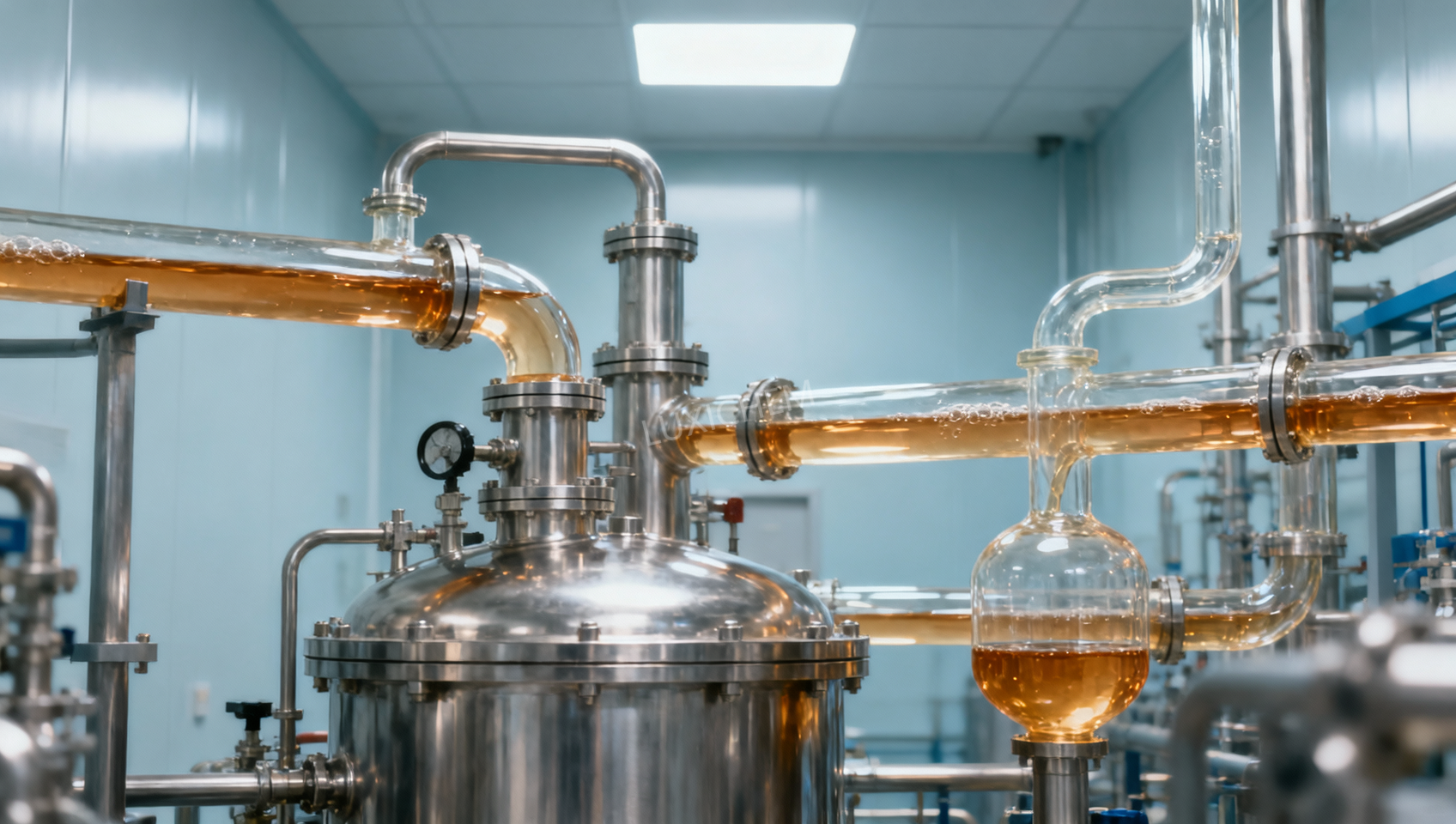
At Luxi Chemical (Shandong) Co., Ltd., we treat purity as a functional requirement—not a marketing claim. Our insecticide intermediates and co-formulants undergo multi-stage crystallization, vacuum distillation, and GC-MS–verified purity checks. Batch-to-batch consistency isn’t aspirational; it’s engineered into our manufacturing protocols. Because when your QC team signs off on a Certificate of Analysis, they shouldn’t need to cross-reference HPLC chromatograms against historical outliers—or wonder whether “≥92%” means 92.1% or 92.9%, depending on the day’s column temperature.
This discipline extends beyond insecticides. Take Methyl acetoacetate CAS#105-45-3, one of our rigorously controlled organic intermediates used in pharmaceutical synthesis and high-stability pesticide formulations. Its APHA color value (≤20), narrow boiling range (169–170°C @ 70 mmHg), and tightly specified water solubility (460 g/L at 20°C) aren’t arbitrary benchmarks—they reflect process control that directly impacts downstream reproducibility. When synthesizing pyrimidine-based insect growth regulators, even minor variations in ester enol content can shift reaction kinetics, yield, or final isomer ratio—altering both efficacy and metabolic fate.
 That level of control matters most when you’re balancing two non-negotiables: performance and predictability. A low-purity insecticide might seem economical upfront—but its real cost emerges in rework, downtime, and compromised data integrity. Every time a residue test fails, every time an auditor flags inconsistent application records, every time a batch recall traces back to variable raw material input—you’re paying for uncertainty. And uncertainty, in regulated industries, is never cheap.
So how do you spot the difference before procurement signs the PO?
First, look beyond the assay number. Ask for full impurity profiles—not just total impurities, but identified and quantified individual compounds. If the supplier can’t provide them, ask why. Second, verify analytical method transparency: Is assay performed via validated HPLC with certified reference standards—or simple titration? Third, request batch-specific CoAs with retention times, peak area percentages, and instrument calibration logs. Fourth, assess supply chain visibility: Can they trace the active ingredient back to its synthesis route—and confirm solvent recovery, metal catalyst removal, and final polishing steps?
None of this is about demanding perfection. It’s about building defensible confidence—confidence that lets your safety team approve a formulation without second-guessing, that lets your QA team accept a CoA without internal verification, that lets your regulatory affairs team submit dossiers knowing the chemistry behind the numbers holds up under scrutiny.
Luxi Chemical serves over 60 countries—not by offering the lowest insecticides price, but by delivering the highest *assurance per kilogram*. Our clients in food processing, crop protection, and industrial hygiene don’t choose us because we’re cheapest. They choose us because their internal risk assessments consistently point to stable, auditable, and fully characterized materials—materials where “purity” isn’t a footnote, but the foundation.
Because in quality control and safety management, the most expensive thing isn’t what you pay—it’s what you assume. And assumptions, especially about active ingredient integrity, rarely survive field validation.
True value isn’t measured at the loading dock. It’s measured in residue reports cleared on first submission. In pest pressure held steady across growing cycles. In audit findings that read “no observations”—not “minor nonconformities pending correction.” That’s the cost structure that matters. Not the one on the quote sheet—but the one that quietly shapes every decision downstream.
And if you’re weighing options right now—not just on price, but on predictability—we invite you to review the specifications behind the number. Not just what’s declared, but how it’s verified. Not just how much is there—but what else came along for the ride. Because when it comes to insecticides, the safest choice isn’t always the cheapest one. It’s the one you don’t have to explain away.
Related Picks
 Butylated Hydroxytoluene Price Drivers: Supply, Purity, and Purchasing Risk FactorsOct 21, 2026Butylated Hydroxytoluene price trends depend on supply stability, purity, logistics, and purchasing risk. Learn how to compare quotes wisely and reduce sourcing costs.
 Sodium Tripolyphosphate Price Trends: Raw Material and Energy ExposureOct 20, 2026Explore sodium tripolyphosphate price trends, from phosphate and soda ash costs to energy exposure. Learn how to compare quotes, manage sourcing risks, and make smarter purchasing decisions.
 Acetonitrile Shipment to Vietnam Successfully Dispatched; RCEP Benefits Boost Fine Chemical Trade with ASEANSep 16, 2026A shipment of industrial-grade acetonitrile from our company has recently been loaded and dispatched following the completion of standardized hazardous material packaging and container securing procedures.
 Nigerian Client’s Order of 4 Containers of Vinyl Acetate Successfully Loaded and Shipped to West AfricaSep 16, 2026We recently completed the loading of a vinyl acetate order for a Nigerian client; four containers of the product have been successfully packed and are ready for shipment to Nigeria.




Question Consultation
Send Us Your Inquiry Today

Luxi Chemical is a professional chemical product supplier with ample stock of all chemical categories and excellent quality, welcome your purchase inquiry.

