


Botanical Antioxidants vs Synthetic Options in Oxidation-Sensitive Formulas
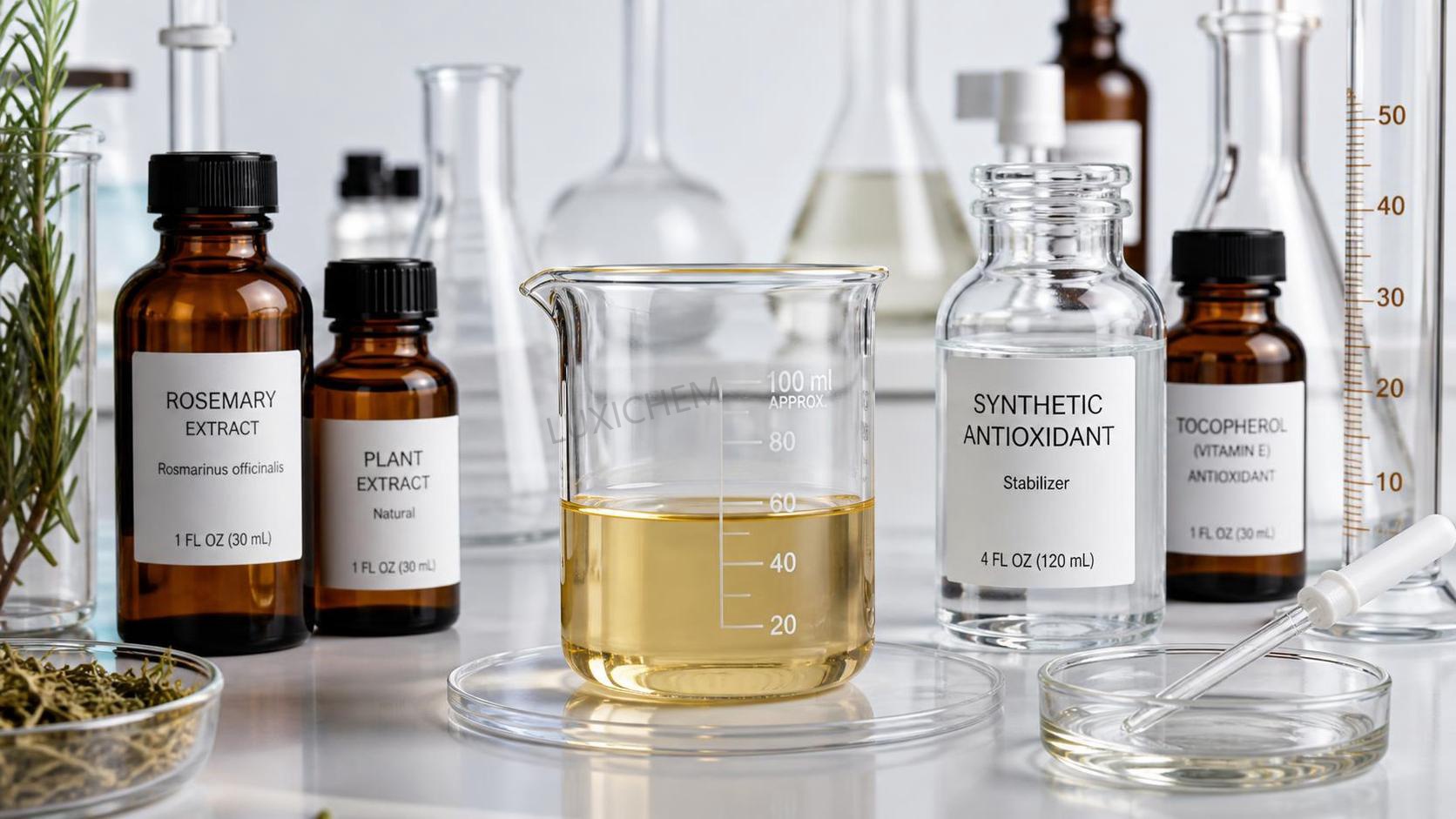
Botanical Antioxidants vs Synthetic Options in Oxidation-Sensitive Formulas
For technical evaluators developing oxidation-sensitive formulas, the choice between Botanical Antioxidants and synthetic options is rarely a simple “natural versus conventional” decision. Oxidation can alter odor, color, viscosity, active-content retention, mechanical properties, and shelf life. In food systems it may lead to rancidity; in personal-care formulas it can destabilize oils, fragrances, and colorants; in polymers it may contribute to yellowing, embrittlement, or loss of processing performance.
The most suitable antioxidant system depends on the oxidation pathway, the formulation matrix, thermal history, packaging, expected storage conditions, target market, and acceptable sensory or appearance changes. A material that performs well in a cool-filled oil blend may be ineffective in an extrusion process. Conversely, a highly efficient synthetic stabilizer may be unsuitable where a botanical positioning, specific ingredient policy, or regulatory requirement governs the finished product.
The practical question is not which category is inherently better. It is which system gives repeatable protection without creating incompatibility, compliance, processing, or supply-chain problems.
Why oxidation performance cannot be judged by label alone
Oxidation is a chain reaction involving initiation, propagation, and termination. Heat, light, oxygen exposure, metal ions, residual peroxides, shear, and repeated opening of packaging can all accelerate it. Antioxidants interrupt different parts of that process. Some donate hydrogen to stabilize free radicals; others decompose hydroperoxides, bind pro-oxidant metals, or work synergistically with companion ingredients.
That mechanism matters. A radical scavenger may delay the early stage of oxidation but offer limited protection once hydroperoxides have accumulated. A chelating component may be particularly useful where trace metals enter through water, pigments, botanical extracts, equipment contact, or raw materials. In polymer processing, a primary antioxidant is often paired with a secondary stabilizer because high processing temperatures and mechanical stress create a different challenge from ambient storage.
Technical reviews should therefore begin with failure analysis: what is oxidizing, when does the failure appear, and what evidence supports that conclusion? A change in color after accelerated aging, for example, does not automatically prove that the antioxidant itself is inadequate. Light exposure, package permeability, contaminant metals, incompatible fragrances, or a poor processing window may be the dominant cause.
What Botanical Antioxidants bring to a formulation
Botanical antioxidants generally refer to plant-derived materials containing antioxidant-active compounds, such as mixed tocopherols, rosemary-derived constituents, tea polyphenols, spice extracts, and other phenolic fractions. Their appeal is understandable: they can support natural-origin positioning, fit certain ingredient-screening policies, and sometimes offer useful activity in lipid-rich systems.
However, “plant-derived” does not define a single performance level. Botanical extracts can differ by plant variety, growing conditions, extraction method, carrier, concentration, odor profile, color, and active-marker specification. Two materials sold under a similar botanical description may not behave identically in the same formula. A technical team should request the specification that actually governs the batch, not rely only on a broad ingredient name.
Solubility is often the first constraint. Many botanical materials are more suitable for oil phases than for aqueous systems, while others require solubilization or encapsulation. The delivery form can affect dispersion, haze, emulsion stability, and the availability of active compounds at the interface where oxidation is occurring. Natural color and odor are equally important. A botanical antioxidant may preserve an oil efficiently yet introduce a herbal note or darken a pale finished product over time.
Thermal tolerance deserves separate scrutiny. Some botanical fractions are appropriate for relatively mild blending and filling operations but may lose activity, volatilize, or contribute to discoloration during prolonged high-temperature exposure. This does not make them unsuitable; it means their use should be demonstrated under the actual process profile rather than inferred from room-temperature screening.
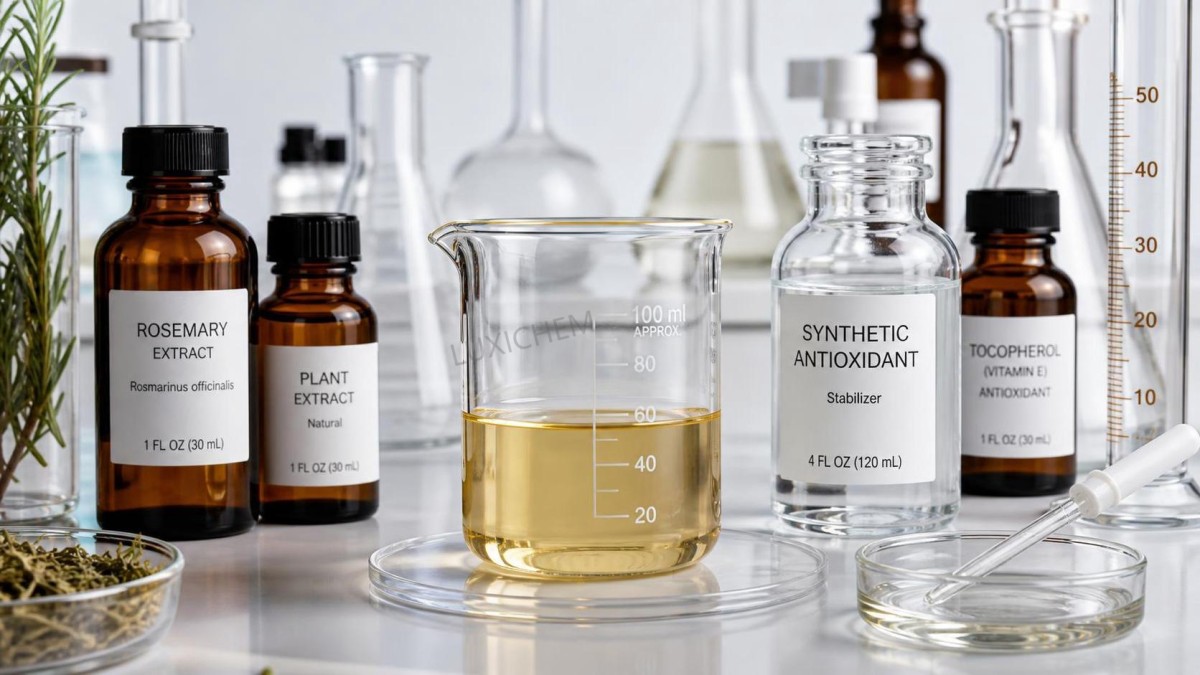
Where synthetic antioxidants retain a strong technical case
Synthetic antioxidants are typically valued for defined chemistry, dosage efficiency, lot-to-lot consistency, and established performance in demanding processes. Depending on the application, the relevant group may include hindered phenolic antioxidants, phosphites, thioesters, gallates, or other approved food and industrial stabilizers. Their suitability is not universal, and permitted use levels or applications can vary by jurisdiction, but their controlled composition often makes formulation development more predictable.
For heat-sensitive polymer systems, the advantage may be less about a single additive than about a balanced stabilization package. A primary antioxidant can control radical reactions, while a secondary component helps manage hydroperoxide decomposition during processing. This approach can be more reliable than attempting to solve high-temperature degradation with one multifunctional ingredient.
Synthetic options can also simplify analytical control. When an active substance has a clearly defined assay, impurity profile, and addition rate, incoming inspection and formulation troubleshooting are usually more straightforward. This matters for manufacturers producing at multiple sites or supplying regions where traceability, documentation, and reproducibility are central to qualification.
The trade-off is that a technically effective material may not fit the finished product’s market position, customer restricted-substance list, or local food-contact and chemical requirements. Regulatory status should always be confirmed for the specific substance, application, concentration, and destination market. It should never be assumed from its use in another product category.
The formula matrix changes the decision
A meaningful comparison has to be matrix-specific. In edible oils or fat-containing food ingredients, evaluators may focus on peroxide development, sensory changes, and compatibility with processing and labeling requirements. In creams, cleansers, and fragrance-bearing daily chemical products, oxidation control may need to coexist with emulsion stability, fragrance integrity, color standards, and preservative systems. In coatings, films, and PVC compounds, thermal history, migration behavior, transparency, electrical performance, and long-term mechanical properties may take priority.
Plasticized polymer formulations illustrate why antioxidant selection cannot be isolated from the rest of the bill of materials. A plasticizer affects viscosity, flexibility, processing temperature, clarity, and the mobility of ingredients in the finished matrix. When evaluating a heat-resistant, clear liquid plasticizer such as Dioctyl terephthalate CAS#6422-86-2, the antioxidant package should be tested in the final PVC or copolymer formulation rather than in the resin alone. Processing through calendering, extrusion, or injection molding can expose the entire system to heat and shear that are absent from a bench-scale compatibility check.
DOTP is commonly considered where a replacement for DOP or DINP is being assessed and where clarity and durability are relevant. Yet a stable plasticizer does not remove the need to evaluate the oxidative stability of resins, pigments, conductive additives, and any co-stabilizers. In composite blends involving materials such as polyaniline or ethylene dimethacrylate, interactions become more complex and should be assessed against the intended electrical, visual, and aging requirements.
A more useful evaluation framework
Shortlisting materials by origin is efficient only at the earliest stage. Before selecting Botanical Antioxidants or synthetic alternatives, technical teams should define the performance window and the constraints that cannot be compromised. The following questions tend to reveal the real decision path:
- What component is most vulnerable: unsaturated oil, fragrance, active ingredient, polymer, pigment, or the interface between phases?
- What are the actual temperature, residence-time, oxygen-exposure, and light-exposure conditions during manufacture and distribution?
- Is a colorless, low-odor, or low-taste profile essential to finished-product acceptance?
- Does the candidate dissolve and remain uniformly distributed in the relevant phase at the intended dosage?
- Which destination-market rules, customer specifications, and restricted-substance requirements apply?
- Can the supplier provide stable specifications, batch documentation, and a realistic continuity plan?
Testing should reflect these answers. For an oil-based formula, accelerated oxidation screening may be useful, but it should be paired with real-time observation of odor, color, and package interaction. For a thermoplastic compound, repeated processing or heat-aging tests may be more informative than a single melt trial. The purpose is not to generate the most favorable result for one candidate; it is to identify the candidate that remains acceptable when normal production variation occurs.
Common mistakes in botanical-versus-synthetic comparisons
One frequent mistake is treating the extraction source as proof of antioxidant strength. A botanical extract needs an active-marker range, carrier information, and relevant application data. Another is comparing candidates at equal addition rates without considering active content. Equal percentages do not necessarily mean equal antioxidant activity, cost-in-use, or sensory impact.
A second mistake is assuming that a single antioxidant must do all the work. Synergistic systems are common because different ingredients address different oxidation pathways. This is especially relevant where metal contamination, high heat, or a broad range of raw materials is involved. Compatibility should be confirmed because synergy in theory can become haze, odor drift, precipitation, or color change in a finished formula.
The third is overlooking procurement consistency. Botanical ingredients may require closer control of harvest-linked variation and extract standardization. Synthetic materials may offer tighter compositional consistency but still require verification of quality systems, storage conditions, packaging integrity, and regional documentation. A stable formulation starts with stable incoming materials.
Choosing a system that can be manufactured repeatedly
A botanical route is often appropriate when natural-origin positioning is meaningful, the processing environment is moderate, and color, odor, and batch-standardization limits can be managed. A synthetic route is often favored where severe thermal exposure, tight specification control, or high dosage efficiency is the defining requirement. Many development programs ultimately use a hybrid approach, provided that formulation policy and local compliance requirements allow it.
Luxi Chemical (Shandong) Co., Ltd. supports global customers with chemical raw materials across food additives, organic intermediates, fertilizers, and related chemical product categories. For evaluators working across more than one formula family, a broader sourcing discussion can be useful because antioxidant performance is tied to the quality and consistency of the full material set, not only to the stabilizer selected. With supply relationships serving customers in more than 60 countries and regions, documentation needs, delivery conditions, and destination-market requirements should be addressed early in qualification.
The final decision should be based on representative trials, documented specifications, and a clear understanding of the intended market. Ask for the parameters that affect your process, test the candidate in the complete formula, and evaluate the result after processing and aging—not merely when the sample first arrives in the laboratory.
Related Picks
 Butylated Hydroxytoluene Price Drivers: Supply, Purity, and Purchasing Risk FactorsOct 21, 2026Butylated Hydroxytoluene price trends depend on supply stability, purity, logistics, and purchasing risk. Learn how to compare quotes wisely and reduce sourcing costs.
 Sodium Tripolyphosphate Price Trends: Raw Material and Energy ExposureOct 20, 2026Explore sodium tripolyphosphate price trends, from phosphate and soda ash costs to energy exposure. Learn how to compare quotes, manage sourcing risks, and make smarter purchasing decisions.
 Acetonitrile Shipment to Vietnam Successfully Dispatched; RCEP Benefits Boost Fine Chemical Trade with ASEANSep 16, 2026A shipment of industrial-grade acetonitrile from our company has recently been loaded and dispatched following the completion of standardized hazardous material packaging and container securing procedures.
 Nigerian Client’s Order of 4 Containers of Vinyl Acetate Successfully Loaded and Shipped to West AfricaSep 16, 2026We recently completed the loading of a vinyl acetate order for a Nigerian client; four containers of the product have been successfully packed and are ready for shipment to Nigeria.




Question Consultation
Send Us Your Inquiry Today

Luxi Chemical is a professional chemical product supplier with ample stock of all chemical categories and excellent quality, welcome your purchase inquiry.

