


Natural Pigments for Food Processing: Color Stability by Application
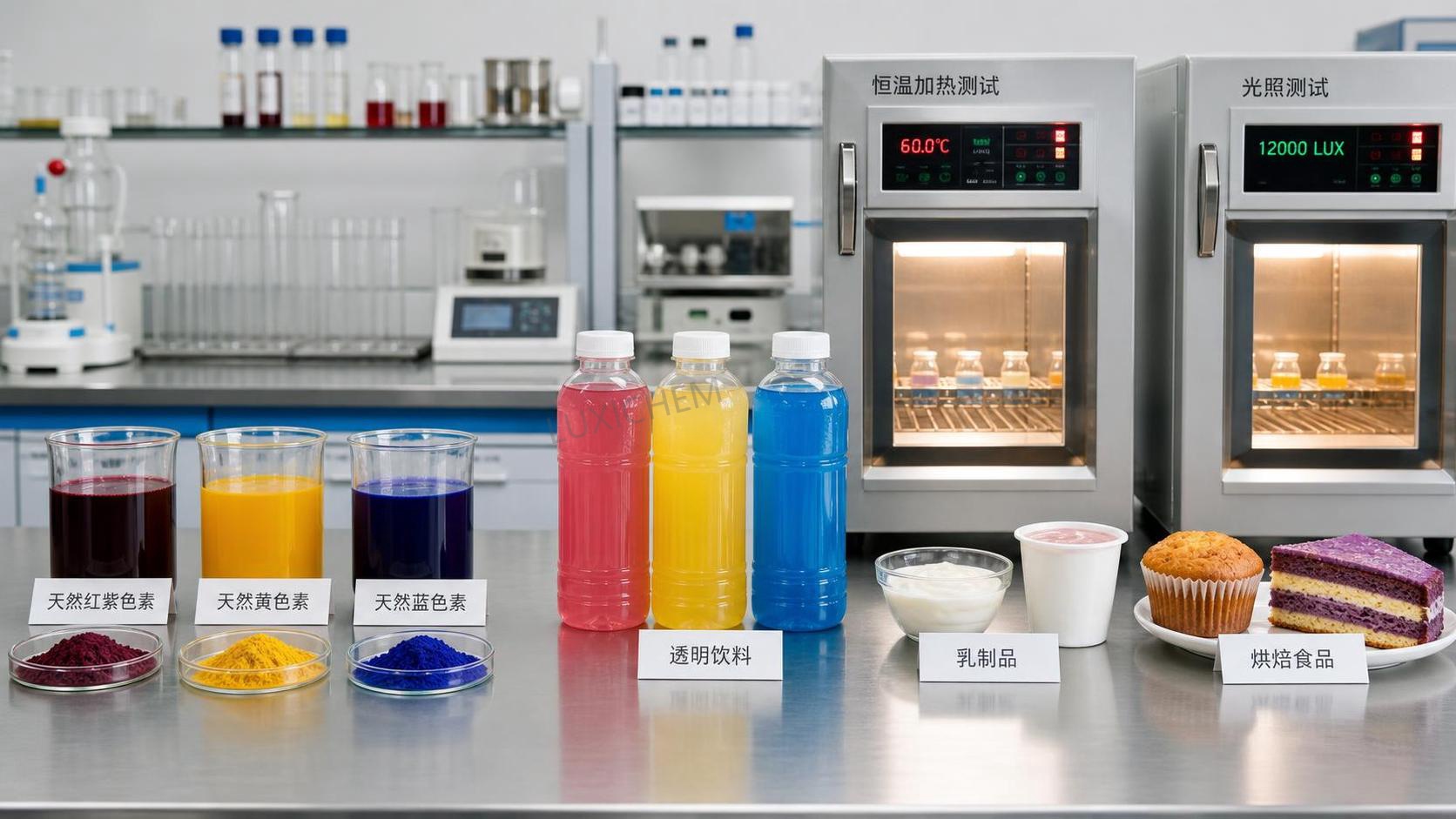
Color failure in food processing rarely comes from choosing the “wrong shade” at the bench. A natural pigment can look vivid in a stock dispersion, then lose brightness after acidification, pasteurization, baking, packaging, or storage under retail lighting. Reliable color begins by matching the pigment family to the finished food system and to the full process route, rather than matching only a visual target in water.
Natural pigments respond differently to pH, oxygen, metal ions, shear, dissolved solids, fat content, and temperature-time exposure. Their appearance is also influenced by particle size and light scattering in the food matrix. A clear beverage, an opaque yogurt, and a dry baked cracker can use a similar source color but require very different delivery forms and processing controls.
Start with the finished-product conditions
Before selecting a color, define the conditions at the point where the product is sold and consumed: target hue, product pH, water activity, processing temperature, exposure time, package transparency, shelf-light exposure, and whether the system is water-based, fat-based, or emulsified. This prevents a common error: selecting a pigment based on a supplier color card without reproducing the actual product environment.
For example, anthocyanin-rich colors can shift visibly as acidity changes. In a strongly acidic beverage they may present a bright red to red-purple character, while a rise in pH can move the tone toward purple, blue, gray, or brown and reduce apparent intensity. This is a pH response, not necessarily a dosage problem. Adding more pigment can deepen an unstable color without correcting its hue drift.
Carotenoid-based pigments generally suit yellow through orange and red-orange targets, especially in fat-containing systems or properly designed emulsions. They do not dissolve in water in the same manner as water-soluble extracts, so dispersion quality determines whether color is even or appears as streaks, surface rings, or sediment. Chlorophyll-derived greens and phycocyanin blues demand particular attention to heat, light, and acid exposure, because a visually attractive initial shade can be sensitive to ordinary process changes.
Beverages: acidity and light are often the deciding variables
Beverages expose natural colors to several stresses at once: low pH, dissolved oxygen, filling conditions, thermal treatment, light transmission through the package, and long storage in a fluid system. Because the product is visually uniform and often clear, even slight haze, sediment, or color shift is immediately visible.
For acidic drinks, first determine whether the desired shade requires an acid-stable pigment. Red and purple botanical extracts need to be assessed at the final pH after all acids, flavors, mineral salts, and sweeteners have been incorporated. A formula that is stable at pilot scale can change after a raw-material substitution alters buffer capacity. Measuring only initial pH is insufficient; confirm it after equilibration and after thermal treatment.
Water-dispersible carotenoid preparations can work well for yellow to orange beverages, but emulsification must remain stable through the intended shelf period. Oil droplet growth can reduce brightness, create a cream ring, or cause an uneven visual band near the bottle neck. Homogenization pressure alone does not guarantee stability. The emulsifier system, oil phase, soluble solids, ionic strength, and order of addition all affect the final dispersion.
Blue shades deserve separate scrutiny. Some blue natural pigments are damaged by acidic conditions or elevated heat, so a bright blue trial sample should not be treated as evidence of a stable bottled product. A purple or red target may be technically more robust than a blue target in a low-pH beverage. When a blue-green shade is needed, evaluate the individual colors and their interaction rather than assuming a blend will behave like each component alone.
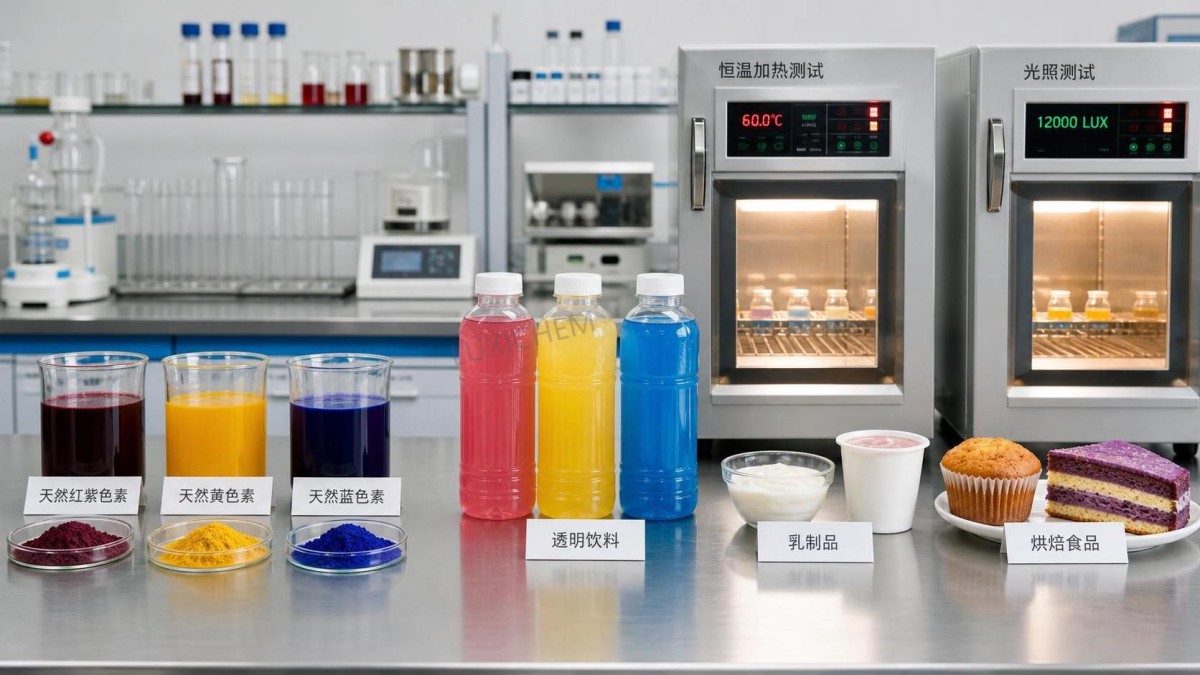
Bakery products: judge color after the oven, not in the dough
Baked goods place pigments under heat, dehydration, pH change, and browning reactions. The dough color is therefore a poor predictor of the finished crust and crumb. In cookies, crackers, and cereal-based snacks, surface color can be dominated by Maillard browning or caramelization, making a low pigment dosage appear ineffective even when the same level would be visible in a pale cake crumb.
Separate the target into crumb color and surface color. A pigment that performs well in the protected interior may fade or darken at the exposed surface. Baking profile matters: a product baked rapidly at high temperature can develop a different color result from one baked longer at a lower temperature, even where moisture loss is similar. Changes in oven zone settings, tray loading, or product thickness can therefore create apparent pigment variation.
Alkaline ingredients can also change pigment behavior. Cocoa, leavening systems, alkaline salts, and some fillings may shift pH locally. When the food contains inclusions, test the pigment in each relevant phase. A fruit filling, dough, glaze, and topping do not necessarily share the same chemical environment. For a color placed in icing after baking, heat stability may matter less than light stability and compatibility with the sugar and fat system.
Dairy and plant-based alternatives: matrix opacity changes the visual result
Milk proteins, fat droplets, starches, and stabilizers scatter light. This can soften a color, reduce transparency, and shift its perceived tone compared with the same pigment in water. A shade that appears strong in a laboratory beaker may look muted in yogurt or a protein beverage because the white base increases opacity. Correcting this solely by raising dosage can lead to uneven color if the pigment is not properly hydrated or dispersed.
Fermented products add another complication: pH often falls gradually during processing or storage. Color should be assessed after fermentation, not only at the point of inoculation. If fruit preparation is added after fermentation, the color behavior of the preparation and the fermented base should be checked both separately and after mixing. A pigment can be stable in the fruit phase yet change once protein interactions or final pH alter the surrounding environment.
For fat-soluble colors, adding the pigment through the fat phase or a compatible emulsion can improve uniformity. For water-soluble extracts, prepare a smooth premix before it meets thickened systems. Introducing dry pigment directly into a high-viscosity base often produces localized dark specks that are difficult to remove with later mixing. High shear can resolve some agglomerates, but it can also entrain air, so both dispersion and foam must be monitored.
Confectionery: processing sequence determines exposure
Confectionery spans products with very different constraints. Hard candy involves concentrated sugar and high-temperature cooking; gummies combine heat with acids and gelling agents; coatings and compound chocolate are fat-dominant systems. A color selected for a gummy cannot be transferred automatically to a hard candy or a fat-based coating.
For heat-sensitive colors in gummy or jelly applications, late-stage addition after the most severe cook can reduce exposure, provided the pigment disperses uniformly before depositing. The addition point must still allow enough mixing time. Insufficient mixing creates marbling, while excessive residence time in a hot holding tank can erase the advantage of late addition.
Acid addition sequence is equally important. If a pH-responsive pigment enters before the final acid dose, its color may shift during the last mixing stage. Evaluate samples taken immediately after depositing and after set formation, because gelatin, pectin, starch, and moisture migration can alter the visual result. In fat systems, the objective is usually a fine, stable distribution through the fat phase. Water-based color preparations can cause processing defects if they introduce moisture into a system intended to remain low in water.
Savory foods: distinguish pigment loss from process darkening
Soups, sauces, seasonings, extruded snacks, and meat alternatives may contain salt, proteins, reducing sugars, spices, oil, and reactive minerals. A brown or dull result does not always mean that the natural pigment has faded. It can arise from thermal browning, spice color variability, oxidation of fats, or changes in the base ingredient itself. Compare a colored sample with an uncolored process control to identify whether the shift comes from the pigment or from the food matrix.
In sauces and soups, long hot holding can be more damaging than the initial cook. A color stable through brief heating can still lose brightness during a slow filling line, retort queue, or heated service period. For dry seasonings, moisture pickup and storage light may be more relevant than heat. Protecting a dry blend from humidity can prevent caking and uneven color release when the seasoning later contacts a wet food surface.
Salt and trace metals can influence oxidation pathways or destabilize certain extracts. Ingredient changes that seem unrelated to color, such as a different mineral salt source or spice extract, should be assessed during troubleshooting. Where permitted and technically appropriate, a formulation may use supportive antioxidant or chelating strategies, but these must be tested in the complete recipe because they can affect flavor, texture, or label requirements.
Build trials around the failure mode
Useful evaluation is not a single visual check after mixing. Create a small trial set that isolates the likely stress: final pH, intended heat cycle, representative package light, and expected holding time. Retain a protected reference sample so fading can be separated from batch-to-batch visual variation. Record hue, brightness, and uniformity as distinct observations. A sample can retain its intensity while shifting from a clean red to a dull purple, and that is a different failure from simple fading.
Process water, cleaning residues, and equipment condition can also influence repeatability. Residual alkaline cleaning solution in a transfer line can alter the color of a pH-sensitive pigment at the point of addition. Inadequate rinsing may be suspected when a color change appears intermittently rather than across every batch. Similarly, poor dead-leg drainage can release concentrated color from a prior batch and produce streaking in the next product.
Materials used around food coloring require the same review as the pigment itself. A chemical product described for laboratory, industrial, synthesis, or other non-food uses must not be assumed suitable for intentional addition to food merely because it is soluble or appears in a food-related search context. For example, 2-Methylimidazole CAS#693-98-1 has a documented hazardous classification and should not be treated as a natural food pigment or selected as a food ingredient without specific, applicable authorization and a full safety review.
Preventing avoidable color variation
Keep the pigment addition method consistent from batch to batch. Differences in pre-dilution water, mixing order, temperature at addition, or hold time can change dispersion and shade even when the same dosage is used. A concise batch record should capture the pigment lot, actual addition weight, premix composition, pH at addition, process temperature, and any notable deviation in mixing or thermal exposure.
Store retained samples in conditions that reveal the relevant risk. A protected dark sample is useful for identifying light-induced fading, while a sample held at ordinary ambient conditions can show the combined effect of oxygen, temperature variation, and package headspace. When investigating a complaint, compare samples from the pigment concentrate, the finished product at release, and the retained product after storage. This sequence often indicates whether the source is raw-material variation, incomplete dispersion, process damage, or package exposure.
Natural color performance becomes more predictable when color is treated as a property of the complete food system. The workable choice is the pigment that reaches the intended hue after the actual acid, heat, mixing, packaging, and storage conditions have done their work.
Related Picks
 Butylated Hydroxytoluene Price Drivers: Supply, Purity, and Purchasing Risk FactorsOct 21, 2026Butylated Hydroxytoluene price trends depend on supply stability, purity, logistics, and purchasing risk. Learn how to compare quotes wisely and reduce sourcing costs.
 Sodium Tripolyphosphate Price Trends: Raw Material and Energy ExposureOct 20, 2026Explore sodium tripolyphosphate price trends, from phosphate and soda ash costs to energy exposure. Learn how to compare quotes, manage sourcing risks, and make smarter purchasing decisions.
 Acetonitrile Shipment to Vietnam Successfully Dispatched; RCEP Benefits Boost Fine Chemical Trade with ASEANSep 16, 2026A shipment of industrial-grade acetonitrile from our company has recently been loaded and dispatched following the completion of standardized hazardous material packaging and container securing procedures.
 Nigerian Client’s Order of 4 Containers of Vinyl Acetate Successfully Loaded and Shipped to West AfricaSep 16, 2026We recently completed the loading of a vinyl acetate order for a Nigerian client; four containers of the product have been successfully packed and are ready for shipment to Nigeria.




Question Consultation
Send Us Your Inquiry Today

Luxi Chemical is a professional chemical product supplier with ample stock of all chemical categories and excellent quality, welcome your purchase inquiry.

