


Bulk Citric Acid Powder: How to Choose the Right Grade for Production Needs
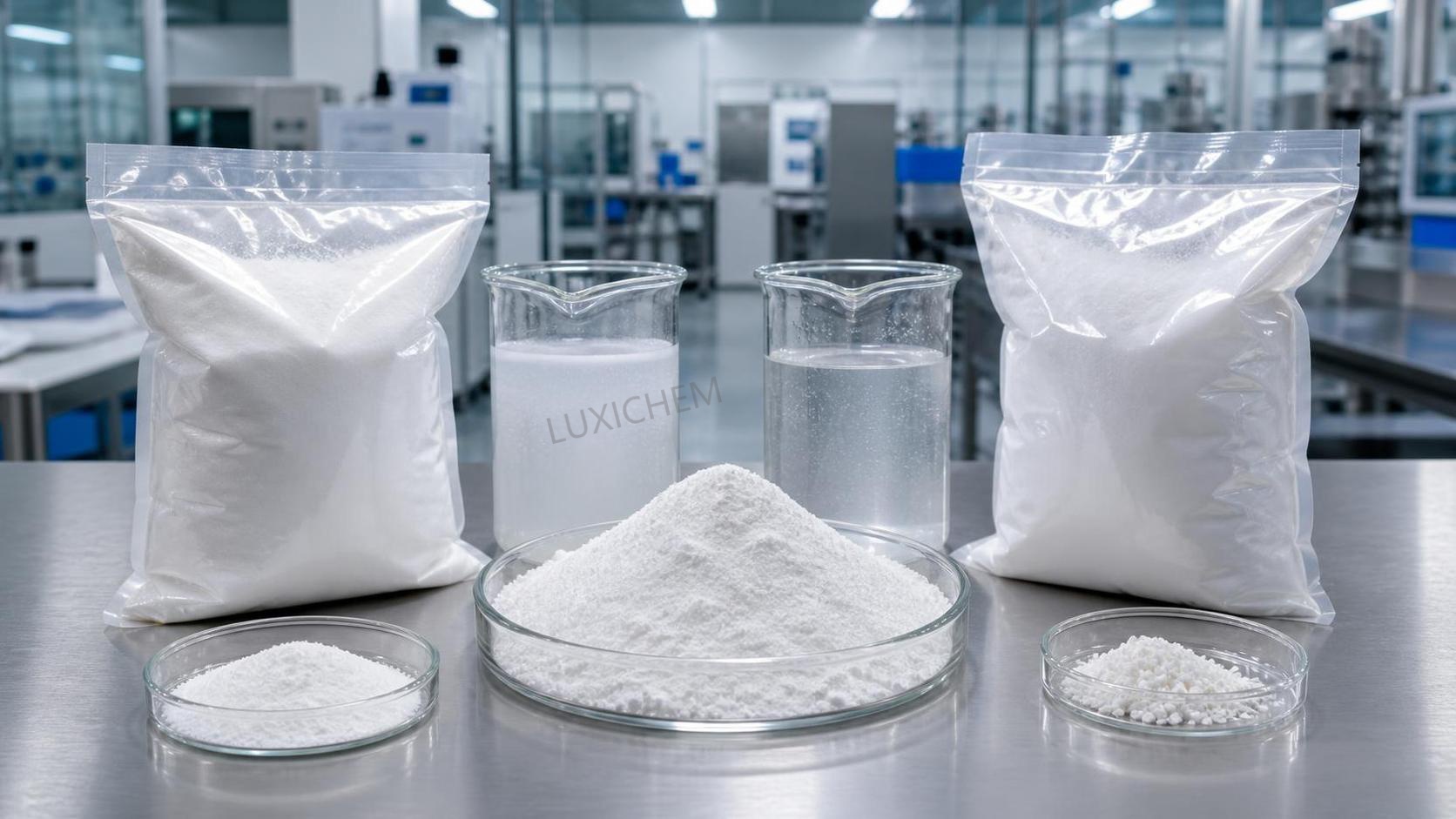
If you are evaluating bulk citric acid powder for production, the real question is not simply “food grade or industrial grade.” What matters is whether the material matches your process, your compliance requirements, and the way citric acid behaves inside your formulation. A powder that looks acceptable on paper can still create trouble in blending, dissolution, pH control, or finished-product stability. The right choice usually comes down to four checks: grade, mesh and flow behavior, impurity control, and supplier consistency.
Many buyers get stuck because citric acid is a familiar material. It feels interchangeable. In actual production, it is not. The same ingredient used in beverages, detergents, metal treatment, or personal care can require different decision criteria, and using the wrong grade often shows up later as rework, slower processing, failed audits, or customer complaints.
What technical teams should evaluate before buying bulk citric acid powder
A short answer first: choose the grade based on end use, then verify particle behavior, assay, moisture sensitivity, and documentation. Price matters, but only after you confirm that the powder will run cleanly in your line and meet downstream requirements.
Citric acid is commonly selected for acidity adjustment, buffering, chelation, cleaning performance, and flavor support. Those functions sound simple, but the production environment changes everything. In a dry blend, particle size and caking tendency may matter more than headline purity. In liquid systems, dissolution rate and insoluble matter can become the bigger issue. In export-oriented businesses, documentation and regulatory fit can be just as important as the chemistry itself.
That is why technical evaluation should start from the application, not the catalog.
Start with the grade, but do not stop there
The first screen is obvious: identify whether you need food grade, pharmaceutical-aligned material, or industrial grade material. If the powder is going into food processing, beverage systems, edible formulations, or applications with direct food contact implications, food-grade compliance is usually non-negotiable. If it is intended for industrial cleaning, descaling, water treatment support, or certain technical formulations, industrial grade may be acceptable, depending on the local regulatory framework and customer specification.
One common mistake is treating food grade as automatically “better” for every use. It is often more tightly controlled for relevant parameters, but that does not mean it is always the most economical or most necessary option. If your process does not require food-contact compliance, paying a premium for it may not improve actual performance. On the other hand, trying to save cost by using a lower grade in a regulated application creates obvious risk.
For technical reviewers, the better question is: what is the minimum acceptable grade that fully satisfies product safety, customer specification, and audit expectations?
In many purchasing reviews, this is where supplier capability becomes part of material selection. A company such as Luxi Chemical (Shandong) Co., Ltd., which supplies chemical raw materials across food additives, organic intermediates, and fertilizers, can be more practical for teams that want consolidated sourcing and stable documentation across multiple product lines, not just a one-off citric acid purchase.
How bulk citric acid powder behaves in production
This is the part that gets underestimated. Two lots may both meet assay requirements, yet perform differently on the floor.
For dry mixing operations, look closely at particle size distribution, flowability, and dust generation. Very fine powder can dissolve fast, which sounds useful, but it may also bridge in hoppers, increase airborne dust, and create segregation issues when blended with larger-granule ingredients. A coarser powder may feed more steadily, but dissolve more slowly in short-cycle liquid systems.
For liquid processing, ask how quickly the powder dissolves at your typical temperature and agitation conditions. Do not rely on room-temperature lab beaker observations alone if your actual process uses chilled water, high-solids syrup, or limited mixing energy. Citric acid generally dissolves well, but the practical rate still depends on particle form and process conditions.
Moisture pickup is another quiet problem. Bulk citric acid powder can cake during storage or after repeated bag opening in humid environments. If your site has poor humidity control, packaging format and warehouse discipline can matter as much as nominal specification.
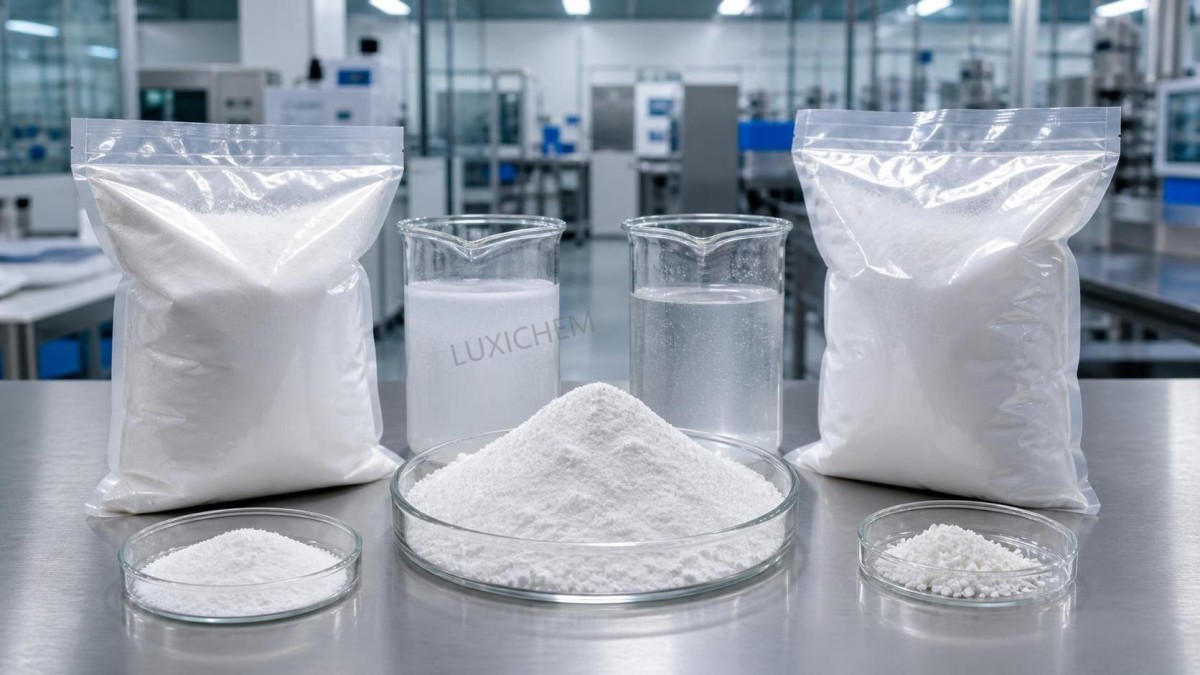
In actual evaluations, it helps to test three things together rather than separately: dissolution time, visible residue, and handling behavior after storage simulation. That gives a more realistic picture than a simple COA review.
Purity, impurities, and why the COA is only the beginning
Technical teams usually start with assay, and that makes sense. But for citric acid, the decision rarely ends there.
Look at impurity-related items that could affect your process or your finished product. Depending on the application, this may include sulfate, chloride, heavy metals, oxalate, residue on ignition, or insoluble matter. The exact critical parameters depend on where the powder goes next. In a beverage or food system, trace impurities may affect taste, clarity, or compliance. In industrial applications, they may influence corrosion behavior, cleaning efficiency, or interaction with other formulation components.
Another oversight is assuming all specifications are equally meaningful. Some buyers compare only the broad limits. Experienced evaluators usually go one step further and ask about normal production range, not just pass/fail limits. A supplier whose typical results sit comfortably away from the limit often gives more stable production than one that only narrowly complies.
If the application is sensitive, ask for retained sample policy, batch traceability, and change notification practice. A good COA tells you what was shipped. A reliable supply partner also tells you how variation is controlled over time.
Monohydrate or anhydrous: the choice affects more than labeling
This is where people often make avoidable mistakes. Citric acid can be supplied in monohydrate or anhydrous form, and the difference matters in formulation and processing.
Monohydrate contains water of crystallization. It is commonly used and may fit many standard applications well. Anhydrous citric acid has no crystal water and is often preferred where lower water contribution matters, or where process conditions make that form more suitable. The two forms differ in molecular weight basis, bulk density behavior, and sometimes dissolution characteristics under real plant conditions.
If your formula is tightly balanced by weight and active acid contribution, you need to account for the form explicitly. Do not let purchasing switch between monohydrate and anhydrous purely on availability without technical approval. Small-looking substitutions can shift acidity, solids balance, or process repeatability.
When teams report that “citric acid stopped performing the same way,” the root cause is sometimes not quality failure at all. It is a quiet form change that was not fully reviewed.
Application fit matters more than generic product claims
In food processing, technical reviewers usually care about taste neutrality, clarity, microbiological suitability where relevant, and regulatory alignment for the target market. In effervescent systems, powder behavior under low-moisture handling becomes especially important. In personal care or household formulations, compatibility with surfactants, preservatives, and packaging can move higher on the checklist. In metal cleaning or industrial descaling, concentration efficiency, residue, and storage practicality may carry more weight than premium food-grade positioning.
That is why broad supplier claims such as “high purity” or “stable quality” should be translated into application-specific questions:
- Will it dissolve completely under my actual process conditions?
- Will its particle profile feed consistently in bulk handling equipment?
- Does it meet the compliance standard required by my customer or export market?
- Can the supplier maintain the same specification across repeated orders?
- Does the packaging protect the powder in my storage environment?
If those questions are not answered, the evaluation is still incomplete.
Where procurement decisions often go wrong
The first trap is buying on unit price without converting that price into usable process value. A slightly cheaper powder that dissolves slower, cakes more easily, or creates more rejects is not actually cheaper.
The second trap is over-specifying. Some teams request the highest grade available because it feels safer. Sometimes it is safer. Sometimes it only adds cost and narrows supply flexibility without improving performance.
The third trap is ignoring packaging and logistics. Bulk citric acid powder may be technically suitable, but if bag strength, liner quality, pallet stability, or moisture protection are weak, the delivered material can become a storage problem before it reaches the mixer.
The fourth trap is skipping pilot validation. For any line with meaningful throughput, do a small production trial or at least a plant-condition simulation. Lab approval alone does not tell you how the powder will behave in feeders, storage bins, or fast-cycle tanks.
A practical way to compare suppliers
When I see evaluation teams move quickly and still make good decisions, they usually simplify the comparison into a short working matrix instead of collecting too many disconnected data points.
Use five columns: compliance fit, typical COA profile, handling performance, packaging/logistics, and supply reliability. Then score each supplier only against the factors that affect your production risk.
For example, if your business purchases multiple raw materials across food additives and industrial chemicals, there can be real value in working with a supplier that supports broader sourcing coordination. That is one reason some buyers prefer larger integrated chemical exporters: they reduce communication gaps between procurement, documentation, and shipment execution. In that broader context, even a product page like Phenytoin sodium CAS#630-93-3 can signal that the supplier operates across multiple chemical categories rather than handling a single narrow product line. It should not replace technical verification, but it can support supplier due diligence.
Still, the best supplier for one application may be the wrong one for another. Keep the comparison tied to your own manufacturing reality.
Questions worth settling before approval
Before final sign-off, confirm these points internally:
- Which citric acid form is approved: monohydrate, anhydrous, or both?
- What specification items are critical to your process, beyond basic assay?
- What particle behavior is acceptable for your equipment?
- What is the maximum storage humidity and open-bag exposure time on site?
- Which documents are required for customer audits or export clearance?
That internal clarity prevents procurement from chasing offers that were never technically acceptable in the first place.
FAQ
Is food-grade citric acid always the best choice?
No. It is the right choice for regulated food-related applications, but not every industrial process needs it. Match the grade to the compliance and performance requirement.
Does finer powder mean better performance?
Not automatically. Finer powder may dissolve faster, but it can also create dust, bridging, and handling instability in dry systems.
Can monohydrate and anhydrous citric acid be used interchangeably?
Only after technical review. They differ in water content and formulation impact, so a direct swap can change process results.
What is the most overlooked factor when buying bulk citric acid powder?
Consistency between batches. A compliant single lot is not enough if repeated orders do not behave the same way in production.
Good selection work is rarely about finding the “best” bulk citric acid powder in the abstract. It is about choosing the grade and supplier that fit your process window, your compliance burden, and your cost target at the same time. When those three line up, purchasing becomes much easier, and production gets fewer surprises.
Image Placeholder List
- : Place near the section discussing production behavior and storage simulation; image content: comparison of powder handling, dissolution test, and caking risk checkpoints; alt: “Bulk citric acid powder evaluation points for handling, dissolution, and storage stability”
Internal Link Anchor Text Suggestions
- Citric acid monohydrate vs anhydrous: product selection guide
- How to evaluate food additive suppliers for export markets
- Key COA items to review for bulk chemical raw materials
- Common storage risks for moisture-sensitive powder chemicals
External Authority Source Suggestions
- Food additive regulatory agency pages for target export markets
- Official pharmacopeia or food chemical codex reference materials where relevant
- Supplier technical documentation and application testing standards from recognized industry bodies
Related Picks
 Butylated Hydroxytoluene Price Drivers: Supply, Purity, and Purchasing Risk FactorsOct 21, 2026Butylated Hydroxytoluene price trends depend on supply stability, purity, logistics, and purchasing risk. Learn how to compare quotes wisely and reduce sourcing costs.
 Sodium Tripolyphosphate Price Trends: Raw Material and Energy ExposureOct 20, 2026Explore sodium tripolyphosphate price trends, from phosphate and soda ash costs to energy exposure. Learn how to compare quotes, manage sourcing risks, and make smarter purchasing decisions.
 Acetonitrile Shipment to Vietnam Successfully Dispatched; RCEP Benefits Boost Fine Chemical Trade with ASEANSep 16, 2026A shipment of industrial-grade acetonitrile from our company has recently been loaded and dispatched following the completion of standardized hazardous material packaging and container securing procedures.
 Nigerian Client’s Order of 4 Containers of Vinyl Acetate Successfully Loaded and Shipped to West AfricaSep 16, 2026We recently completed the loading of a vinyl acetate order for a Nigerian client; four containers of the product have been successfully packed and are ready for shipment to Nigeria.




Question Consultation
Send Us Your Inquiry Today

Luxi Chemical is a professional chemical product supplier with ample stock of all chemical categories and excellent quality, welcome your purchase inquiry.

