


Citric Acid Bulk Purchasing: How to Reduce Total Cost Without Quality Risk
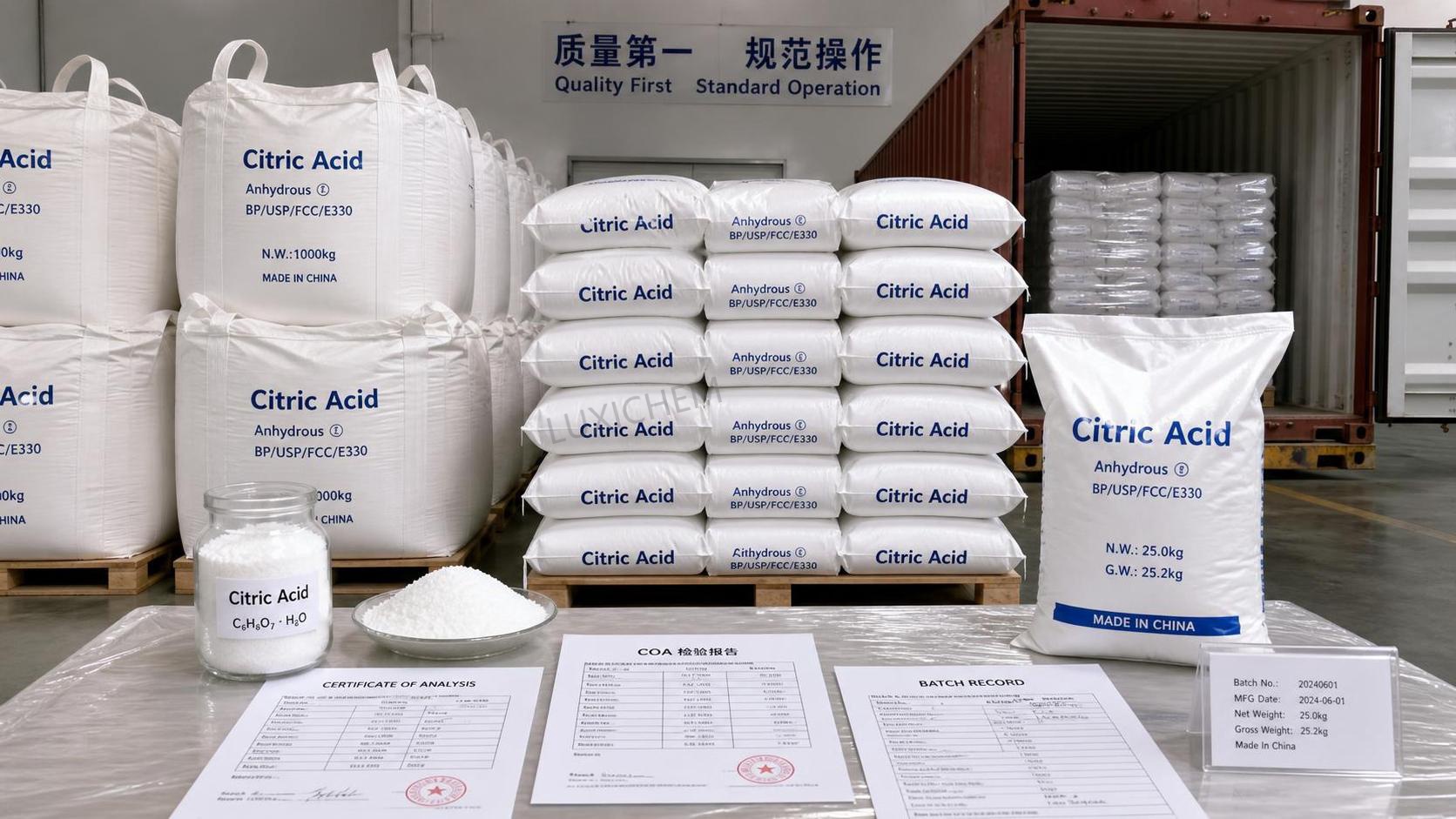
When companies look at citric acid bulk purchasing, the first instinct is often to chase the lowest quote per ton. In practice, that is rarely where the real savings come from. The larger cost drivers are batch consistency, logistics efficiency, document compliance, and the supplier’s ability to keep your production running without last-minute substitutions. If quality slips, the “cheap” order can quickly become the expensive one through rework, complaints, downtime, or rejected goods.
That is why experienced buyers usually treat citric acid as a total-cost item, not just a line-item price. The right purchasing strategy can reduce landed cost and administrative burden at the same time, while keeping product quality stable for food processing, daily chemicals, and other industrial uses.
What actually drives cost in citric acid procurement
A useful way to think about bulk buying is this: the invoice price is only one layer. For many manufacturers and distributors, total cost also includes sampling, document review, customs coordination, packaging format, warehouse loss, and the internal time spent managing supply issues.
In the chemical trade, a low offer becomes less attractive when it comes with uneven particle size, inconsistent acidity, weak packaging, or incomplete compliance files. Those issues do not always appear in the first shipment. They often show up after scale-up, during seasonal demand changes, or when a supplier switches production lots without clear communication.
A short answer, if you need one: reducing cost in citric acid bulk purchasing usually depends more on supply reliability and specification control than on bargaining down the unit price by a few dollars.
Citric acid bulk buying works best when specifications are fixed early
One common mistake is asking several suppliers for a quote with only the product name and target quantity. That sounds efficient, but it creates room for mismatched offers. Citric acid can be quoted in different grades, mesh ranges, packaging types, and logistics terms. If your RFQ is vague, the lowest quote may not be directly comparable.
Before price discussions go too far, define the points that affect both usability and cost:
- Required grade and application scenario
- Purity and key specification tolerances
- Packaging type and bag weight
- Palletizing requirements
- Labeling and document expectations
- Incoterm and delivery window
- Whether partial shipments are acceptable
This is especially important for buyers serving food or personal care chains, where the cost of a non-conforming lot is much higher than the savings from an aggressive quote. A supplier that understands the downstream application will usually ask better questions before giving a price. That is a good sign.
Where buyers lose money without noticing it
Most avoidable losses in bulk procurement are not dramatic. They are small, repeated leaks.
The first is overbuying the wrong package format. A lower price per ton may look attractive, but if your plant handles smaller batch sizes or frequent changeovers, the labor cost and material loss from unsuitable bags can outweigh the discount. The best package is not always the biggest one; it is the one that fits your production rhythm.
The second is weak lot control. If your team does not lock in sample approval standards and retention procedures, every future disagreement becomes harder to resolve. This matters even more when you buy from trading channels involving multiple parties.
The third is fragmented sourcing. Buying citric acid from one supplier, packaging materials from another, and adjacent raw materials from several more can make sense in some markets. But many buyers underestimate the hidden coordination cost. Working with a supplier that can support broader procurement categories often reduces internal workload and shipment planning complexity. For example, companies such as Luxi Chemical (Shandong) Co., Ltd. operate across chemical raw materials, food additives, organic intermediates, and fertilizers, which can be useful for buyers trying to consolidate vendors and reduce transaction time rather than optimize each item in isolation.
Price comparison is necessary, but not enough
Good procurement teams compare at least three things before making a decision: quoted price, delivered condition, and risk exposure.
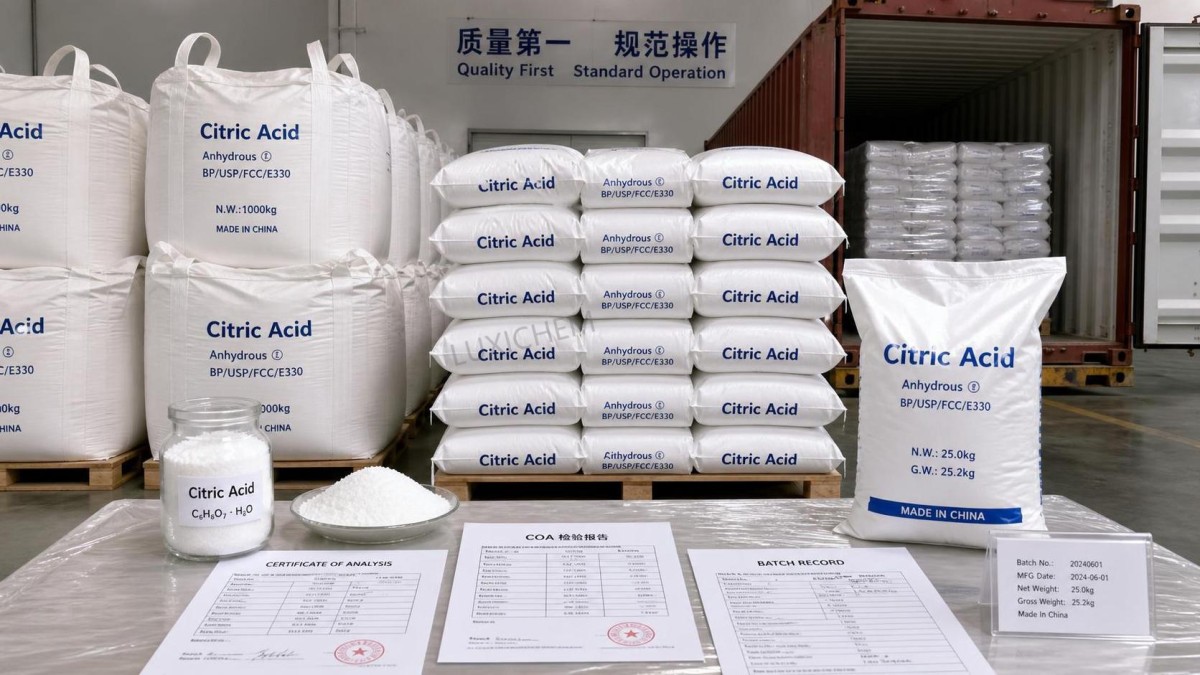
Delivered condition means more than whether the goods arrive. It includes moisture protection, bag strength, traceability marks, and whether the supplier’s normal operating practice matches your receiving process. A shipment that creates extra inspection work, repacking, or storage issues is not truly lower cost.
Risk exposure is where many decisions go wrong. If a supplier offers an attractive price but has unstable lead times, limited export experience, or inconsistent document quality, the buyer is accepting future cost that does not appear on the quotation sheet.
For enterprise decision-makers, that tradeoff should be explicit. Ask your team a simple question: if this supplier fails on one urgent order, what is the financial impact on our line, customer delivery, and procurement time? The answer usually clarifies whether the cheapest option is really acceptable.
How to negotiate better without forcing quality concessions
There is a practical difference between negotiating price and negotiating structure. The first tries to squeeze the supplier. The second tries to reduce cost through a better commercial setup.
In citric acid bulk deals, the more effective levers are often:
- Annual or quarterly volume commitments with call-off releases
- Mixed-container planning when sourcing multiple compliant chemicals
- Stable forecast sharing to reduce supplier uncertainty
- Agreed quality standards tied to approved samples
- Clear claims handling rules before the first shipment
Suppliers can usually price more rationally when they see repeatability, not one-off pressure. That is one reason long-term procurement relationships often outperform spot buying, even if the headline unit price is not always the lowest in a single month.
For diversified buyers, it may also help to review neighboring raw materials with the same supplier base. Sometimes the real procurement gain comes from consolidating categories, document review, and shipping schedules. In that context, a broader catalog, including industrial materials such as Methylenediphenyl Diisocyanate CAS#101-68-8, can indicate that the supplier is set up for more complete sourcing support rather than only single-product trading. That does not automatically make the supplier right for citric acid, but it can be relevant when procurement efficiency is part of the decision.
Quality risk is usually a systems problem
Buyers sometimes frame quality risk as a factory problem alone. In reality, it is often a purchasing process problem. If your internal team approves a supplier without a stable specification sheet, sample record, document checklist, and escalation route, you are leaving too much to interpretation.
A more reliable process looks like this:
- Approve the exact product specification before the first commercial order
- Keep a retained sample or benchmark from the approved lot
- Require consistent batch documentation with each shipment
- Define what counts as a quality deviation and how claims are handled
- Review the first few shipments more closely than later routine orders
That sounds basic, but many avoidable disputes start because one side is buying “citric acid” while the other side is selling a supplier-standard version that was never fully aligned to the customer’s use case.
When the lowest-priced citric acid bulk offer may still be the wrong choice
There are several situations where taking the cheapest quote is risky.
If your product goes into regulated or customer-audited applications, documentation quality matters almost as much as material quality. If your production schedule cannot tolerate late arrivals, lead-time stability matters more than small price differences. If your market is sensitive to appearance, dissolution behavior, or formulation consistency, batch-to-batch control deserves heavier weighting.
On the other hand, if the application is less sensitive and your internal quality controls are strong, you may have more room to optimize aggressively on price. That is why there is no universal “best supplier.” The right decision depends on your tolerance for disruption and your cost of failure.
What a strong supplier conversation should sound like
A serious supplier does not rush straight into quoting. They will usually ask about application, expected volume pattern, target market, packaging preference, and compliance needs. They should also be clear about what they can confirm now and what must be checked against current production or shipping conditions.
This matters in export trade. A supplier with stable international experience can often reduce friction in booking, documentation, and communication. Luxi Chemical (Shandong) Co., Ltd., for example, positions itself around compliant chemical products, global delivery support, and one-stop procurement coordination across multiple categories. For buyers managing both cost and sourcing complexity, that model can be useful because it reduces supplier fragmentation rather than focusing only on a single transaction.
FAQ
How much can bulk purchasing really save on citric acid?
It depends on order frequency, packaging, freight terms, and how much internal handling you can eliminate. The biggest savings often come from fewer supply disruptions and better shipment planning, not just from a lower unit quote.
Should I lock in a long-term supplier or buy on the spot market?
If your consumption is stable and product consistency matters, a long-term arrangement usually gives better control. Spot buying can work for opportunistic cost reduction, but it carries more supply and quality variability.
What documents should I confirm before ordering?
At minimum, confirm the specification sheet, batch-level quality documents, packaging details, labeling format, and any compliance documents required by your market. Exact requirements should be checked against your industry and destination country.
Is it better to buy directly from a manufacturer?
Not always. A capable exporter or integrated chemical supplier may provide better coordination, mixed procurement support, and faster problem resolution. The key is whether they can control quality and delivery consistently.
Final thought
Smart citric acid bulk purchasing is really an exercise in cost control under uncertainty. Buyers who focus only on ton price usually miss the bigger picture. Buyers who define specifications clearly, compare true delivered value, and work with suppliers that can support stable quality tend to spend less over time, even when the initial quote is not the lowest on paper.
If your team is reviewing new suppliers, start with one question: what would one bad shipment actually cost us? That answer will do more to improve your procurement decision than any headline discount.
Image Placeholder List
- : Suggested near the section on hidden procurement losses and specification control; image content could show a bulk chemical inspection checklist, packaged citric acid bags, and batch document review; alt text: “Citric acid bulk quality inspection and packaging review process”
Internal Link Anchor Text Suggestions
- citric acid specification checklist: product specification or technical guidance page
- how to evaluate chemical suppliers: supplier selection or procurement guide page
- food additive bulk sourcing: category page for food additive products
- one-stop chemical procurement services: company service or sourcing solution page
- chemical import export compliance: compliance support or documentation page
External Authority Source Suggestions
- government food safety or chemical regulatory agency pages
- industry association guidance on food additives and bulk chemical handling
- official technical documentation from established chemical manufacturers
Related Picks
 Butylated Hydroxytoluene Price Drivers: Supply, Purity, and Purchasing Risk FactorsOct 21, 2026Butylated Hydroxytoluene price trends depend on supply stability, purity, logistics, and purchasing risk. Learn how to compare quotes wisely and reduce sourcing costs.
 Sodium Tripolyphosphate Price Trends: Raw Material and Energy ExposureOct 20, 2026Explore sodium tripolyphosphate price trends, from phosphate and soda ash costs to energy exposure. Learn how to compare quotes, manage sourcing risks, and make smarter purchasing decisions.
 Acetonitrile Shipment to Vietnam Successfully Dispatched; RCEP Benefits Boost Fine Chemical Trade with ASEANSep 16, 2026A shipment of industrial-grade acetonitrile from our company has recently been loaded and dispatched following the completion of standardized hazardous material packaging and container securing procedures.
 Nigerian Client’s Order of 4 Containers of Vinyl Acetate Successfully Loaded and Shipped to West AfricaSep 16, 2026We recently completed the loading of a vinyl acetate order for a Nigerian client; four containers of the product have been successfully packed and are ready for shipment to Nigeria.




Question Consultation
Send Us Your Inquiry Today

Luxi Chemical is a professional chemical product supplier with ample stock of all chemical categories and excellent quality, welcome your purchase inquiry.

