


Industrial Citric Acid Applications: Where It Fits in Water Treatment and Cleaning
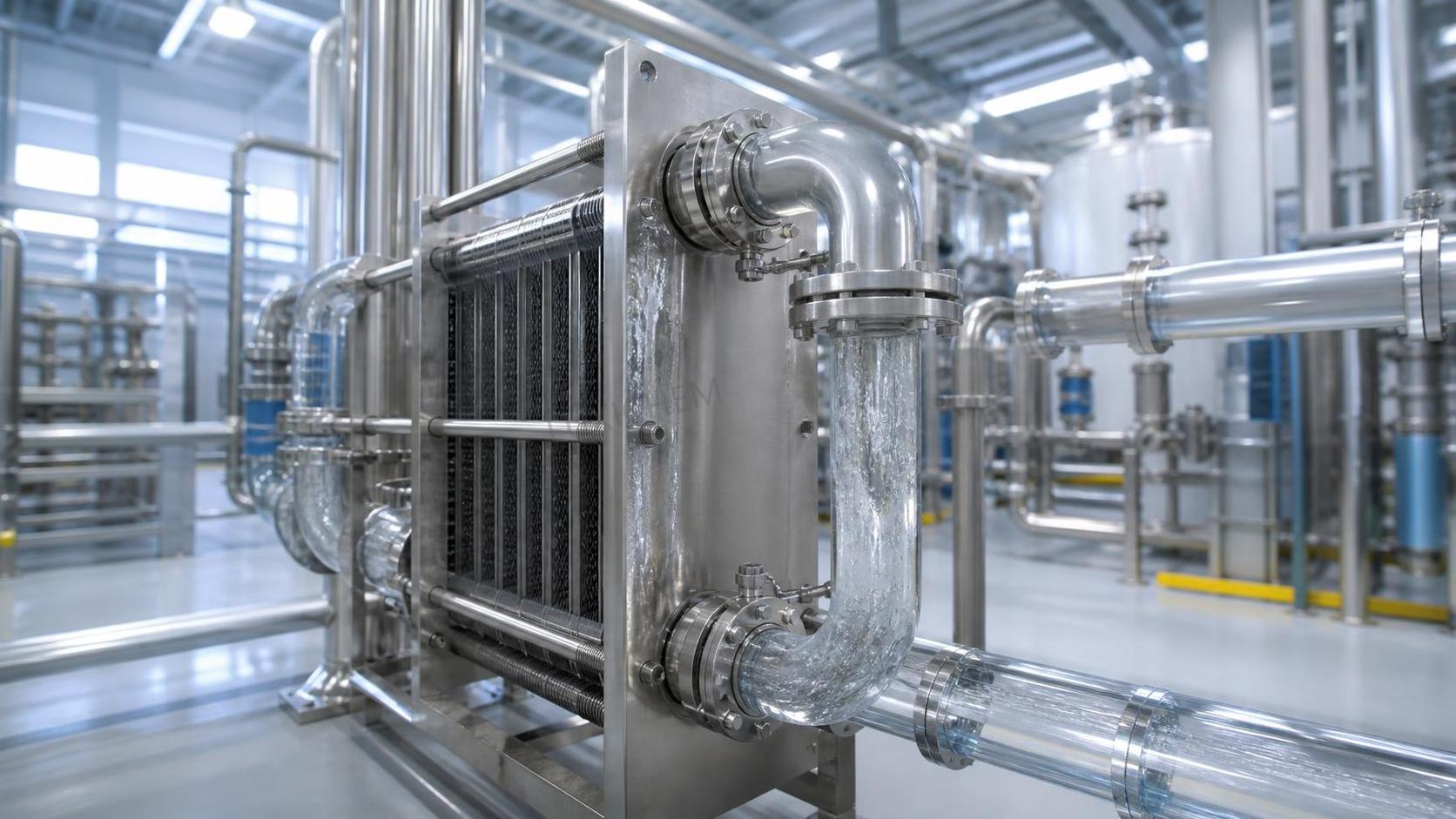
For project managers and engineering leaders, the real question is not whether citric acid is familiar, but whether it is operationally useful. In water treatment and industrial cleaning, that decision usually comes down to four issues: how effectively it removes scale or metal deposits, how safely it can be handled on site, how it interacts with system materials, and whether it reduces downtime without creating new process risks. Industrial citric acid is often considered because it offers a workable balance across those points, especially in facilities trying to improve maintenance efficiency without moving straight to more aggressive mineral acids.
That said, it is not a universal replacement chemistry. In some loops and cleaning programs, it performs very well; in others, it is only one part of the solution. Knowing where it fits saves time in procurement, avoids unrealistic cleaning expectations, and helps project teams build a treatment plan that matches actual operating conditions.
Why citric acid keeps showing up in industrial maintenance decisions
Industrial citric acid is valued less for novelty and more for its combination of functions. It can act as a chelating agent, a mild acid for dissolving certain inorganic deposits, and a pH-adjusting component in formulated cleaning systems. For plants dealing with hardness scale, iron fouling, light oxidation deposits, or equipment passivation-related cleaning steps, those properties make it more versatile than many single-purpose chemicals.
From a project perspective, its appeal usually comes from three practical considerations.
- It can help dissolve calcium-based scale and loosen metal-associated deposits without the same level of corrosive aggressiveness associated with stronger acids in some applications.
- It is often easier to integrate into cleaning-in-place and maintenance workflows where operator handling, rinsing, and waste management need tighter control.
- It can support multi-step cleaning strategies, particularly where chelation and deposit removal matter more than rapid attack on very heavy mineral scale.
This is why it is often evaluated in boiler auxiliaries, cooling water systems, heat exchangers, membrane-related pretreatment cleaning steps, and general metal equipment cleaning. But the operative phrase is “evaluated,” not automatically adopted. Performance depends heavily on deposit composition, contact time, concentration, temperature, and whether the cleaning objective is descaling, iron removal, surface conditioning, or a combination of all three.
Where it fits best in water treatment
In water treatment, citric acid is rarely the entire program. It is more often a targeted tool inside a broader chemical management strategy. The strongest use cases tend to appear when a system suffers from deposits that reduce heat transfer, restrict flow, interfere with sensor readings, or shorten maintenance intervals.
1. Removing hardness and metal deposits from equipment surfaces
Heat exchangers, piping sections, tanks, and recirculating loops can accumulate calcium and magnesium scale, often mixed with iron or other metal contaminants. In these situations, industrial citric acid can help dissolve or destabilize the deposit layer, especially when fouling is moderate rather than extreme. For project owners, the key benefit is often not simply “cleaner equipment,” but recovered operating efficiency: lower pressure drop, improved heat transfer, and reduced energy waste.
The limitation is equally important. If deposits are heavily silica-based, strongly compacted, or layered with oils and organics, citric acid alone may underperform. Teams that skip deposit analysis often misjudge this point and then blame the chemistry when the real issue is mismatch between foulant type and cleaning agent.
2. Supporting iron control in closed and semi-closed systems
Citric acid’s chelating behavior can be useful where iron deposits or rust-related fouling are part of the problem. In closed water loops or process systems with corrosion byproducts, iron can plate out or accumulate in low-flow zones, gradually affecting system cleanliness and reliability. A citric-acid-based cleaning step may help mobilize iron and make it easier to flush the system.
However, engineering teams should treat this as a controlled operation rather than a simple wash. Once iron is solubilized, downstream handling matters. If flushing, neutralization, or rinse control is poor, dissolved contaminants can redeposit elsewhere or complicate wastewater treatment.
That is one of the most common execution mistakes: the cleaning chemistry is selected carefully, but the post-cleaning removal step is treated as routine.
3. Membrane and pretreatment-related cleaning scenarios
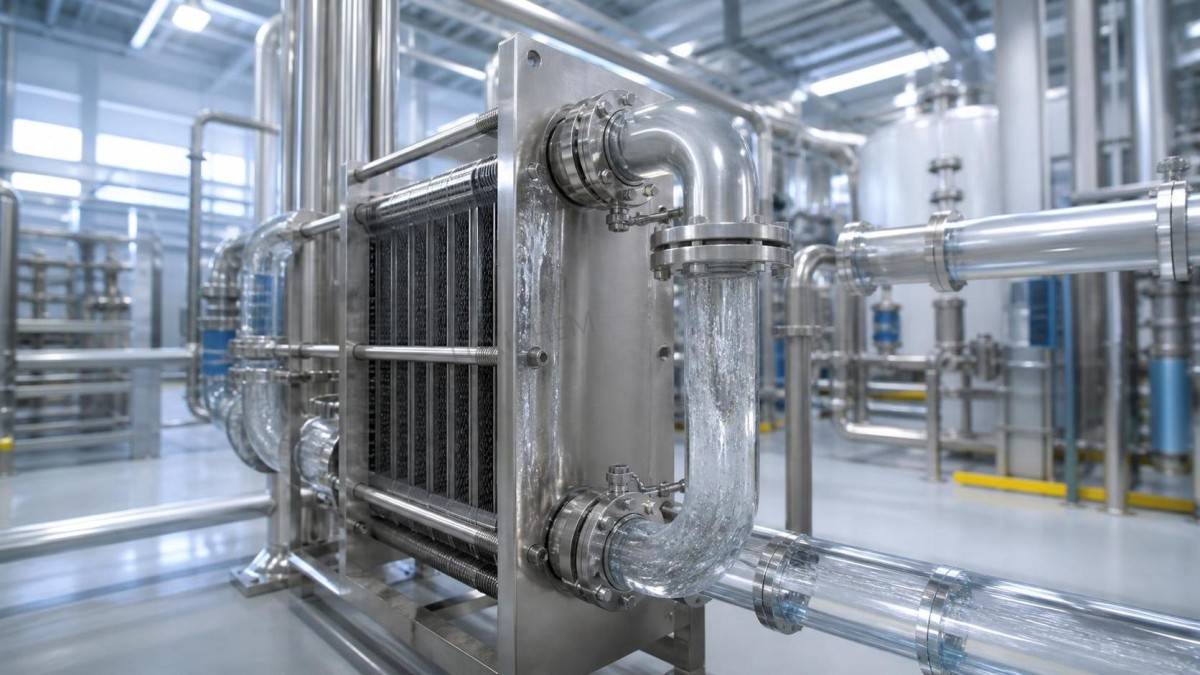
In some water treatment trains, especially where scale-prone feedwater affects membrane or pretreatment equipment, citric acid may be used in cleaning formulations to address inorganic fouling. The attraction here is that it can be effective against specific mineral and metal deposits while being compatible with process designs that require more controlled chemical exposure than heavy-duty acid cleaning allows.
Compatibility is the deciding issue. Membrane manufacturers and equipment suppliers usually define allowable cleaning ranges for pH, temperature, concentration, and contact duration. Those limits should be treated as hard engineering boundaries, not suggestions. A cleaner that performs well in a metal loop may not be suitable for a sensitive membrane cleaning regime unless the full formulation and operating window are verified.
Its role in industrial cleaning is broader than descaling
Many buyers initially frame industrial citric acid as a descaler. That is correct, but incomplete. In cleaning programs, its real value often comes from how it fits into a sequence. It may be used before alkaline cleaning, after alkaline cleaning, or between process stages to remove residual mineral contamination and metal salts that other chemistries leave behind.
Cleaning metal equipment and process contact surfaces
In processing plants, contact surfaces can accumulate a mixture of scale, oxidation residues, and waterborne contaminants. Citric acid can be useful where the cleaning target is mineral fouling on stainless steel or other compatible surfaces, particularly when teams want a less aggressive approach than hydrochloric or other strong acids for routine maintenance.
This does not mean it is always “gentler and therefore safer” in every operational sense. A mild acid still requires concentration control, material review, ventilation planning, and proper rinse validation. If a project team treats citric acid as inherently low-risk and reduces process discipline, the operational advantage disappears quickly.
Pre-commissioning and maintenance cleaning
For new systems or major shutdowns, pre-commissioning cleaning sometimes involves removal of fabrication residues, light rust, or construction-related contamination. Citric-acid-based cleaning can make sense in these cases where surface preparation and deposit removal are needed without resorting to the most aggressive pickling route. Whether that is appropriate depends on metallurgy, residue type, and downstream cleanliness requirements.
Engineering leaders should also distinguish between “good enough to start up” and “clean enough for long-cycle reliability.” Those are not the same standard. A lower-intensity cleaning program may reduce immediate chemical handling burden while leaving behind residual fouling that accelerates later maintenance needs.
Where the business case is real and where it gets overstated
There is a reason many plants revisit citric acid when cost pressure and reliability pressure rise at the same time. If it shortens cleaning duration, lowers corrosion exposure, or improves maintenance repeatability, it can create measurable value. But several claims commonly made around it deserve a more careful reading.
- “It is safer, so it is the best option.” Safer handling potential is relevant, but it does not override cleaning effectiveness or waste-treatment requirements.
- “It is environmentally friendlier, so disposal is simple.” Waste stream composition after cleaning may include dissolved metals, solids, and pH adjustment needs. Disposal decisions remain site-specific and regulation-dependent.
- “It can replace all stronger acids.” In heavy scale or difficult inorganic fouling, it may not achieve target cleaning rates on its own.
- “If concentration is increased, performance issues disappear.” Higher concentration can change corrosion risk, rinsing burden, and cost structure without solving deposit chemistry mismatch.
For project managers, the right question is not whether citric acid sounds more manageable on paper. It is whether it delivers the required cleaning result within the shutdown window, under actual site constraints, and with acceptable total cost after flushing, wastewater handling, labor, and reinspection are included.
What to evaluate before procurement or specification
When industrial citric acid moves from concept to purchase, selection criteria should be tied to application reality. Generic product acceptance is usually not enough.
In practice, procurement teams should ask for more than a quotation sheet. They should understand recommended use concentration ranges, storage conditions, impurity profile where relevant, and whether the supplier can support repeat supply across multiple regions. For internationally managed projects, consistency between batches and documentation quality can matter as much as unit price.
This is also where broad-line chemical sourcing can become useful. Companies managing multiple treatment and cleaning inputs often prefer suppliers that can support category-level procurement rather than isolated spot purchases. In some sourcing discussions, teams compare unrelated but strategically bundled specialty products, such as Dihydromyricetin CAS#27200-12-0, alongside routine industrial chemicals because the operational goal is not only product performance, but simpler vendor management and steadier cross-category supply.
Implementation risks that deserve attention early
Most failures in citric-acid-based cleaning programs come from execution detail rather than from the molecule itself. That is good news, because it means many issues are controllable if addressed early.
Deposit identification is often skipped
Plants sometimes assume all visible scale will respond similarly. It will not. A mixed deposit containing carbonate scale, iron oxide, silica, and organic matter may require staged treatment. Even a basic deposit analysis can materially improve chemical selection and cleaning sequence design.
Temperature and contact time are treated as secondary
They are not secondary. Cleaning performance can change significantly with circulation time and temperature, but so can material interaction and corrosion behavior. A trial condition that works in a lab beaker may not translate directly to a plant loop with dead legs, uneven flow, or variable fouling thickness.
Passivation and post-cleaning condition are misunderstood
In some metal systems, cleaning is only part of the job. Surface condition after cleaning affects corrosion behavior, restart reliability, and contamination control. Teams should confirm whether a rinse, neutralization, passivation, or inhibitor step is needed rather than assuming the system is ready once visible scale is gone.
Waste handling is considered too late
The spent solution may contain dissolved metals and suspended solids, and may require pH adjustment or additional treatment before discharge, depending on local requirements【待核实】. This should be integrated into the cleaning plan from the start, especially for larger shutdown scopes where wastewater volume can materially affect total project cost.
How project leaders should frame the decision
If the objective is a practical, controllable solution for moderate descaling, iron-related fouling, or mineral deposit removal in water treatment and cleaning systems, industrial citric acid deserves serious consideration. It is especially relevant where teams want a chemistry that is easier to integrate into maintenance routines, compatible with broader equipment care goals, and flexible enough to support staged cleaning.
But it should be chosen with discipline. The strongest decisions are usually based on deposit type, metallurgy, cleaning window, effluent handling capability, and supplier reliability rather than on broad assumptions about safety or “green” positioning. In other words, industrial citric acid fits best when it is treated as an engineered application choice, not as a default substitute for every acid cleaning task.
For engineering managers, that is the useful takeaway: start with the foulant, verify the system constraints, model the full cleaning cycle, and then decide whether citric acid is the right tool or simply a familiar one.
Related Picks
 Butylated Hydroxytoluene Price Drivers: Supply, Purity, and Purchasing Risk FactorsOct 21, 2026Butylated Hydroxytoluene price trends depend on supply stability, purity, logistics, and purchasing risk. Learn how to compare quotes wisely and reduce sourcing costs.
 Sodium Tripolyphosphate Price Trends: Raw Material and Energy ExposureOct 20, 2026Explore sodium tripolyphosphate price trends, from phosphate and soda ash costs to energy exposure. Learn how to compare quotes, manage sourcing risks, and make smarter purchasing decisions.
 Acetonitrile Shipment to Vietnam Successfully Dispatched; RCEP Benefits Boost Fine Chemical Trade with ASEANSep 16, 2026A shipment of industrial-grade acetonitrile from our company has recently been loaded and dispatched following the completion of standardized hazardous material packaging and container securing procedures.
 Nigerian Client’s Order of 4 Containers of Vinyl Acetate Successfully Loaded and Shipped to West AfricaSep 16, 2026We recently completed the loading of a vinyl acetate order for a Nigerian client; four containers of the product have been successfully packed and are ready for shipment to Nigeria.




Question Consultation
Send Us Your Inquiry Today

Luxi Chemical is a professional chemical product supplier with ample stock of all chemical categories and excellent quality, welcome your purchase inquiry.

