


Citric Acid E330 Explained: Why It Matters in Food Labels and Formulation Control
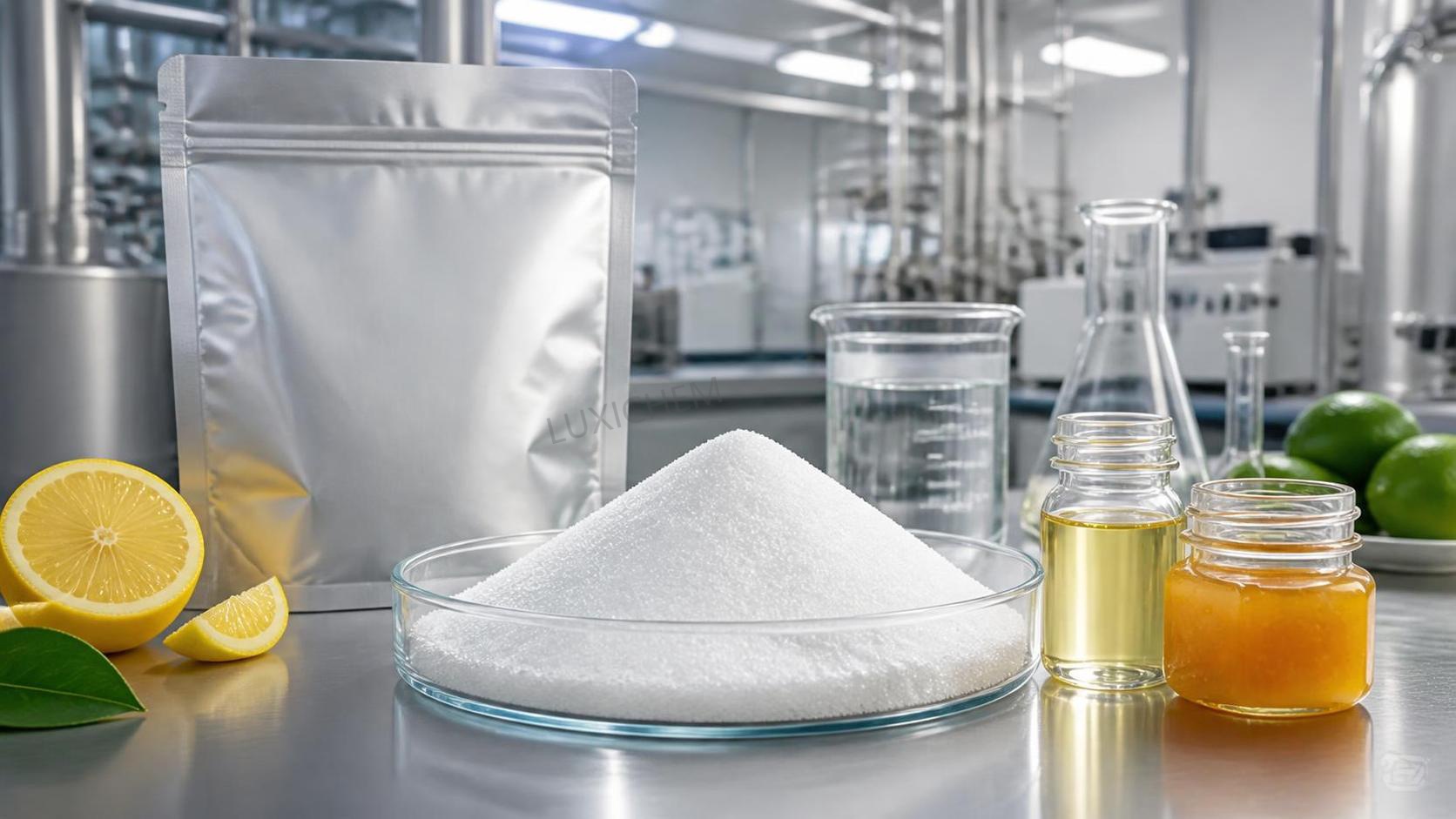
On a busy production day, few label terms cause as much quiet confusion as “E330.” It looks simple enough, yet for quality control and safety management teams, that short code carries decisions about specification review, allergen communication, batch consistency, and shelf-life performance. In food manufacturing, citric acid e330 is not just a name on a declaration panel. It is a functional ingredient tied to acidity regulation, flavor balance, metal ion chelation, microbial control support, and process stability.
That is why understanding citric acid e330 matters beyond basic compliance. When a product label lists E330, it signals both a regulatory identity and a technological purpose. For manufacturers, importers, and private-label buyers, getting that interpretation right helps reduce formulation drift, avoid documentation gaps, and support smoother inspections. For teams responsible for release decisions, supplier qualification, and internal audits, the details behind E330 are practical, not theoretical.
Luxi Chemical (Shandong) Co., Ltd., as a comprehensive supplier of chemical raw materials and compliant chemical products for global markets, works with customers who need stable quality, consistent documentation, and efficient sourcing across food additives and related industrial categories. That broader supply perspective matters because formulation control rarely depends on one ingredient alone; it depends on how specifications, logistics, and cross-functional purchasing all work together.
What citric acid E330 actually means on a food label
E330 is the European food additive code for citric acid, a widely used organic acid found naturally in citrus fruits and also produced industrially, commonly through fermentation processes. In finished foods, it is typically used as an acidity regulator, preservative-supporting component, sequestrant, flavor enhancer, and stabilizer aid. Depending on the product category, it may appear as “citric acid” or by its additive number, depending on local labeling rules.
For QC personnel, the key point is that the label term identifies a legally recognized additive, but it does not by itself explain grade, particle size, moisture level, assay, impurity profile, or processing suitability. Two suppliers may both offer compliant citric acid E330, yet their material behavior during blending, dissolution, pH adjustment, or storage can differ in ways that affect line performance and final product consistency.
That gap between “label identity” and “formulation reality” is where many avoidable problems begin.
Why E330 is so common in food processing
The popularity of citric acid is not accidental. It is one of the most versatile ingredients in food systems because it performs several functions at once. In beverages, it sharpens taste while helping maintain target acidity. In jams, confectionery, sauces, and fruit-based products, it contributes to flavor brightness and can help optimize pectin performance or control browning-related reactions. In processed foods with mineral-sensitive ingredients, its chelating effect can reduce instability caused by metal ions.
For safety management teams, the relevance goes further. Citric acid does not replace a full preservation strategy, but pH control is often part of a broader hurdle approach to food safety. A small variation in acid addition may alter not only taste but also microbial growth conditions, preservative efficacy, and product robustness during distribution.
In other words, E330 often sits at the intersection of sensory quality and control risk.
Where quality teams should look beyond the label
When a purchase specification simply states “citric acid e330,” it may seem complete, but it is usually not enough for strong formulation governance. Quality teams should verify a wider set of technical and documentary points before approval or batch release:
- Grade and intended use: food grade confirmation is essential, especially where a supplier serves multiple sectors.
- Chemical assay: purity range affects dosing confidence and batch-to-batch repeatability.
- Moisture and physical form: powder flow, caking tendency, and dissolution rate influence production handling.
- Particle size distribution: relevant in dry mixing, sachets, seasoning systems, and rapid-dissolution applications.
- Impurity limits: heavy metals and other regulated parameters must align with destination-market requirements.
- Microbiological suitability where applicable: depending on product type and internal risk assessment.
- Packaging integrity: critical for hygroscopic materials exposed to humid storage conditions.
- Traceability documentation: certificates, batch records, origin details, and change notification protocols.
This is the practical difference between merely buying an additive and controlling an ingredient system.
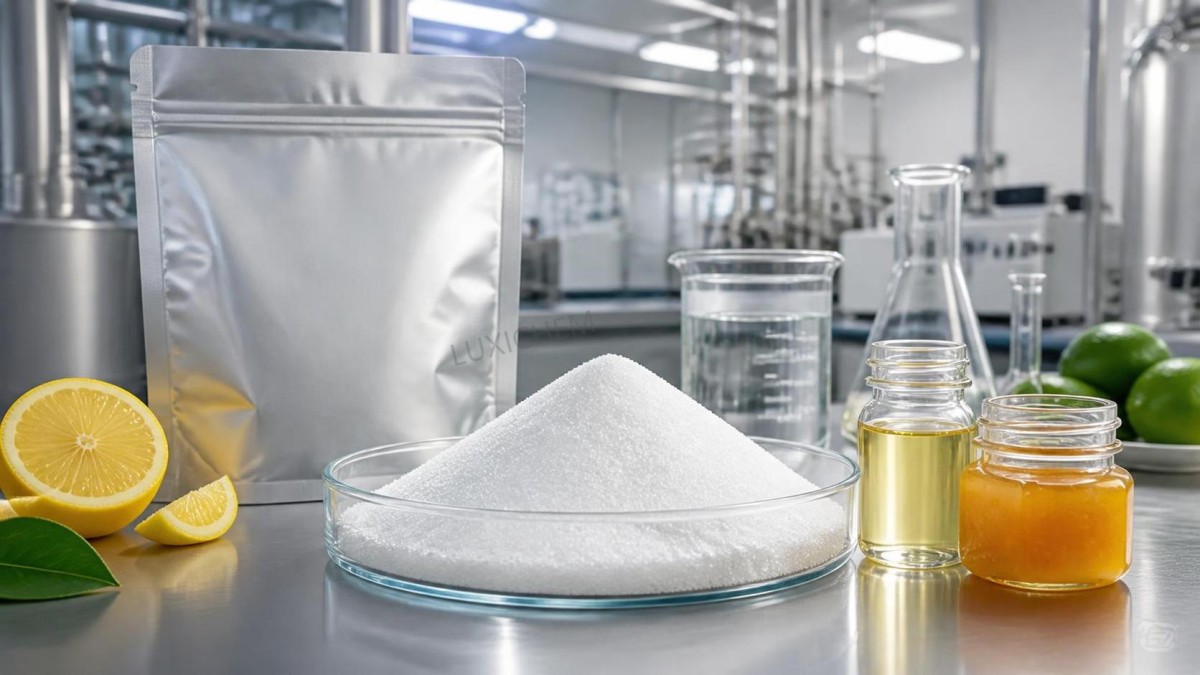
Formulation control: why a small acid change can create a large product shift
Citric acid is often treated as a routine ingredient because usage levels can be modest. Yet in real manufacturing, even modest ingredients can trigger noticeable variation. A slight over-addition may push a beverage from crisp to harsh. In a gelled product, pH movement can change texture set. In powdered applications, poor flow or uneven blending may create localized acid pockets, resulting in inconsistent flavor, instability, or consumer complaints.
For QC teams, three control points deserve particular attention.
1. pH target versus acid dosage
Many products are controlled by final pH, not simply by ingredient weight. Water composition, sugar content, buffering ingredients, salts, fruit solids, and thermal processing all influence the effect of citric acid addition. A formula that works in pilot trials may behave differently after scale-up if dosing order or mixing time changes. Relying only on theoretical dosage can leave a blind spot.
2. Interaction with other additives
Citric acid often works alongside preservatives, stabilizers, sweeteners, color systems, and mineral fortification ingredients. These interactions are not always dramatic, but they are important. A pH shift may improve preservative performance, alter color stability, or affect emulsification behavior. In fortified beverages or supplements, chelation can influence ingredient compatibility and appearance over time.
3. Storage and handling conditions
Even a compliant batch may underperform if exposed to moisture, stored too long after opening, or transferred under poor housekeeping conditions. Lump formation, inconsistent feeding, and weighing errors often originate in storage practices rather than in the original material itself.
Common compliance misunderstandings around citric acid E330
One common mistake is assuming that because citric acid is familiar and widely accepted, it requires less supplier scrutiny. In reality, its routine nature can make teams less alert to subtle risks such as specification simplification, labeling mismatches across export markets, or undocumented supplier changes.
Another misunderstanding is treating additive code recognition as sufficient proof of suitability. E330 confirms additive identity within a regulatory framework, but it does not replace review of legal status in the destination country, nor does it guarantee that internal product standards are met. Some markets prefer additive numbers, others favor functional class plus specific name, and multilingual labeling rules can create avoidable errors if regulatory review is rushed.
There is also a formulation misconception: that citric acid is interchangeable with all acidulants. It is not. Malic acid, lactic acid, phosphoric acid, and fumaric acid each create different sensory profiles, buffering behaviors, and processing outcomes. Swapping one for another without validation can disrupt both compliance and product identity.
What safety managers should ask suppliers before approving E330
A strong supplier conversation is often more valuable than a generic brochure. Before adding a source to an approved vendor list, safety and quality teams should ask clear, operational questions:
- Is the product manufactured and documented specifically for food applications?
- Can the supplier provide a stable, version-controlled specification and certificate of analysis format?
- How are lot traceability and change control managed?
- What packaging options are available to protect against moisture pickup during transport and storage?
- How does the supplier support export documentation for different regulatory destinations?
- What is the process if a batch shows handling differences despite meeting assay requirements?
These questions matter especially for international buyers balancing technical review with procurement efficiency. A supplier’s ability to support one-stop sourcing can be helpful, but only when paired with consistent compliance discipline. This is one reason many buyers prefer working with companies that understand both product quality and the documentation rhythm of cross-border chemical trade.
How broader raw-material sourcing affects food additive control
Food manufacturers do not operate in isolation from the wider chemical supply chain. Purchasing teams often manage multiple categories at once, from food additives to processing aids and other industrial inputs. A supplier with broad category experience may contribute to smoother coordination across documentation, shipping schedules, and specification management. Even in businesses where food additives are the core focus, adjacent chemical knowledge can improve sourcing discipline.
For example, companies active across diversified chemical portfolios may also handle industrial materials such as Caprolactam CAS#105-60-2. While that product belongs to a different application field, the operational value lies in supplier familiarity with technical data control, batch traceability, export handling, and specification-based trade. For quality-driven buyers, that kind of systems thinking can reduce friction in multinational procurement environments.
Building a more reliable internal standard for citric acid E330
If your facility uses citric acid regularly, the best control measure is not simply checking incoming labels. It is building an internal standard that connects purchasing, formulation, warehousing, production, and release testing. That standard might include an approved specification template, validated dosing procedures, a pH verification plan, humidity control requirements for storage, and a formal process for evaluating supplier changes.
It also helps to define what “acceptable variation” really means in your product categories. In one line, a small shift in acidity may be barely noticeable. In another, it may alter sensory acceptance or process safety margins. Without category-specific limits, teams can end up accepting technically compliant material that still introduces operational risk.
For imported materials, document alignment deserves equal attention. Product name, additive code, country-of-origin paperwork, batch coding format, and certificate details should all match internal records. A clean audit trail is not a luxury for safety managers; it is part of preventive control.
Why this small code deserves serious attention
There is a reason citric acid E330 appears so often on food labels: it is useful, flexible, and familiar. But familiar ingredients can create the false impression that they no longer need close technical attention. For quality control and safety management teams, that is exactly when vigilance matters most.
Understanding citric acid e330 means more than knowing its name. It means recognizing its role in pH management, sensory consistency, additive interaction, supplier qualification, and market-compliant labeling. It means asking whether the ingredient on paper behaves the same way on the line. And it means building controls that protect not only the formula, but the decisions surrounding it.
In daily manufacturing, the difference between a smooth release and a preventable deviation is often hidden in details that seem ordinary. E330 is one of those details. Handled carefully, it supports safer products, cleaner labels, and more predictable production.
Related Picks
 Butylated Hydroxytoluene Price Drivers: Supply, Purity, and Purchasing Risk FactorsOct 21, 2026Butylated Hydroxytoluene price trends depend on supply stability, purity, logistics, and purchasing risk. Learn how to compare quotes wisely and reduce sourcing costs.
 Sodium Tripolyphosphate Price Trends: Raw Material and Energy ExposureOct 20, 2026Explore sodium tripolyphosphate price trends, from phosphate and soda ash costs to energy exposure. Learn how to compare quotes, manage sourcing risks, and make smarter purchasing decisions.
 Acetonitrile Shipment to Vietnam Successfully Dispatched; RCEP Benefits Boost Fine Chemical Trade with ASEANSep 16, 2026A shipment of industrial-grade acetonitrile from our company has recently been loaded and dispatched following the completion of standardized hazardous material packaging and container securing procedures.
 Nigerian Client’s Order of 4 Containers of Vinyl Acetate Successfully Loaded and Shipped to West AfricaSep 16, 2026We recently completed the loading of a vinyl acetate order for a Nigerian client; four containers of the product have been successfully packed and are ready for shipment to Nigeria.




Question Consultation
Send Us Your Inquiry Today

Luxi Chemical is a professional chemical product supplier with ample stock of all chemical categories and excellent quality, welcome your purchase inquiry.

